Weekend links 318

wellinger.jpg

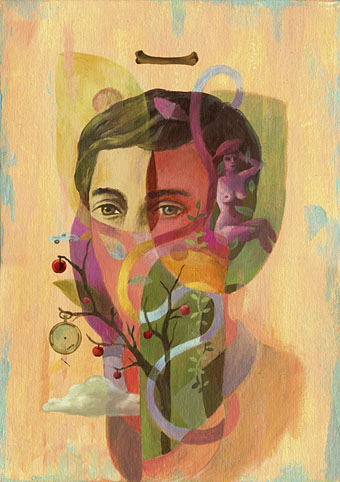
The Meaning of Life by Alice Wellinger.

• A Kickstarter for A Hidden Landscape Once A Week edited by Mark Sinker: “How UK music-writing became a space for unruly curiosity, in the words of those who made it happen”.

• RIP Steven Young, one of the musicians in a cult group of mine, Colourbox, and the “S” in M|A|R|R|S, creators of Pump Up The Volume in 1987.

• At Greydogtales: The Pale Brown Thing & A Dose of De Quincy—Fritz Leiber, Dario Argento, Megapolisomancy, and The Three Mothers.

Pye Corner Audio lists some influences. Zones by Head Technician, another Martin Jenkins project, has just been reissued on vinyl.

• Mixes of the week: The Middle Eastern & African playlist For July by John Doran, and a Pye Corner Audio mix for 20jazzfunkgreats.

Evan Kindley on how the Proust Questionnaire went from literary curio to prestige personality quiz.

• To Surprise a Voice: Max Nelson on the subtitling and translation of foreign-language films.

• How the ’70s dethroned the ’60s as popular music’s Golden Age: Judy Berman investigates.

• “It puts a spell on people.” Ryan Gilbey on Stanley Kubrick’s Barry Lyndon.

• “Dennis Cooper fears censorship as Google erases blog without warning.”

Charlie Kaufman on freedom, the future, and the failure of Anomalisa.

Danny Heitman on why Nabokov’s Speak, Memory still speaks to us.

Daphne Oram‘s radical turntable experiments finally come to life.

Adam Kirsch on Walter Benjamin’s genius for surreal visions.

Shotgun (1983) by Colourbox | Baby I Love You So (1986) by Colourbox | Looks Like We’re Shy One Horse/Shoot Out (1986) by Colourbox
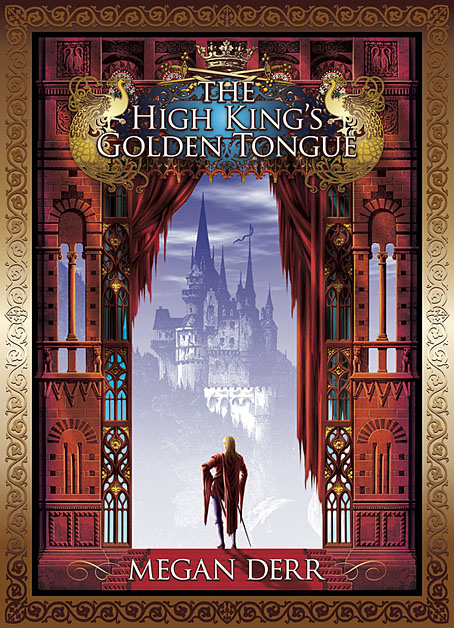
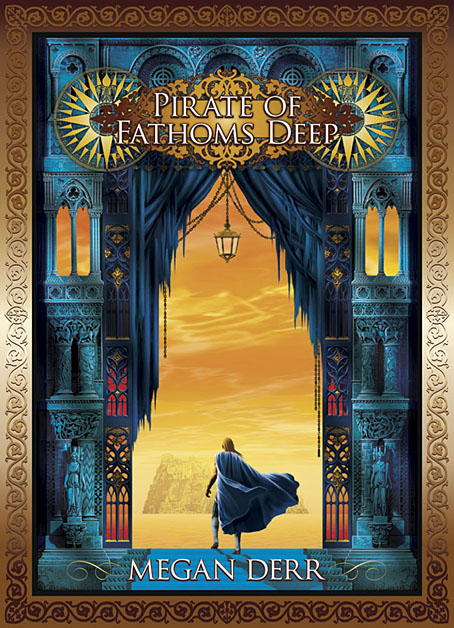
Tales of the High Court

derr1.jpg

I thought I’d already written something about my cover for Megan Derr’s gay fantasy novel, The High King’s Golden Tongue, but it seems not. This appeared last year from Less Than Three Press, and the next volume in the Tales of the High Court series, Pirate of Fathoms Deep, has been published this week. My earlier omission allows me to show both covers together.

derr2.jpg

When working on the first volume I didn’t expect I’d also be working on a sequel so there was no need to consider whether the design could be carried over. The architectural frame is from a book about French architect Eugène Viollet-le-Duc, taken from one of Viollet-le-Duc’s illustrations for a study of the architecture of old France. I added the windows and curtains before colouring the stones and providing shadows and highlights. This became a problem for the second cover because my Viollet-le-Duc book only had one example of this kind of stonework. After some lengthy searches at Gallica I was able to find enough scans of other pages from the books that Viollet-le-Duc illustrated to piece together a new frame. The Gothic window frames on both covers are from another French volume, and I’ve now exhausted all those examples so a third volume in this series will no doubt present further challenges.

Weekend links 317

mucha.jpg

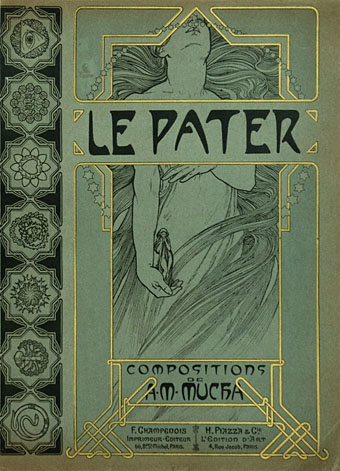
Alphonse Mucha’s Le Pater, a book of mystical Symbolism written, designed and illustrated by the artist, was published in a limited edition in 1899. The book has been out of print ever since but Thomas Negovan at Century Guild will be reprinting it later this year.

• “Five axioms to define Europe: the coffee house; the landscape on a traversable and human scale; these streets and squares named after the statesmen, scientists, artists, writers of the past; our twofold descent from Athens and Jerusalem; and, lastly, that apprehension of a closing chapter, of that famous Hegelian sunset, which shadowed the idea and substance of Europe even in their noon hours.” George Steiner explores his idea of Europe.

Journey To The Edge Of The Universe by Upper Astral, 43 minutes of cosmic ambience, is a cassette-only release from 1983. The album has never been reissued so secondhand copies command excessive prices but it may be downloaded here.

• Mixes of the week: Three hours of ambience by Gregg Hermetech, XLR8R Podcast 446 by [Adrian] Sherwood x Nisennenmondai, and Secret Thirteen Mix 190 by Shxcxchcxsh.

Today [Angela] Carter is well known, widely taught in schools and universities, and much of what she presaged—in terms of recycling and updating (“old wine in new bottles”, she called it), or gender role play and reversal—has become commonplace in the culture. Despite this, many critics find it difficult to situate her work properly. This is partly because Carter is so sui generis (she has literary offspring but few antecedents), and partly because many struggle with the relationship of politics and aesthetics in her writing.

Kate Webb reviews two new books about Angela Carter

• Words that will forever pursue us: Tim Page on the late Michael Herr, “rock’n’roll voice of the Vietnam War”.

• From 2015: Luigi Serafini on how and why he created an encyclopedia of an imaginary world.

James Campbell on Ginsberg, Kerouac and Burroughs: celebrating the Beats in Paris.

Fragile Beasts, an exhibition of grotesque print ornaments at Cooper Hewitt, NYC.

• Not before time, Guy Gavriel Kay wants to see an end to the plague of writing tips.

• David Bowie and Buster Keaton by Steve Schapiro.

Tom Charity on the films of Michael Cimino.

Alison Goldfrapp: photographer.

Golem Mecanique

European Man (1981) by Landscape | Europe After The Rain (1981) by John Foxx | Trans Europe Express (1994) by The One You Love

Weekend links 316

pca.jpg

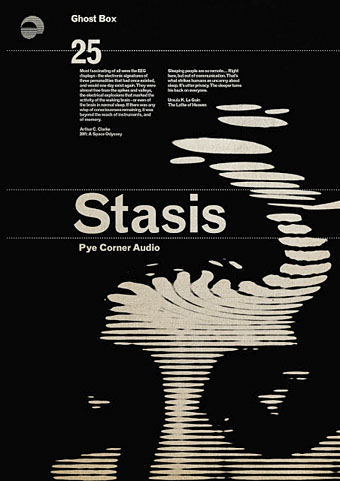
Stasis, the second album by Pye Corner Audio for the Ghost Box label, will be released at the end of August. Design, as always, is by Julian House.

• “In the modern internet world you have what I talk about as the ‘War of the Certain’: people insisting that their absolutist viewpoint, in 140 characters, is exactly the right way to think, and anyone who doesn’t agree with them is terrible. If you’ve grown up reading Robert Anton Wilson this is awful. Having all of these certain people with no nuance or doubt, and no understanding of multiple-model agnosticism, is not going to go anywhere good.” Writer John Higgs talking to Ben Graham about RAW, Discordianism and related matters. A related matter: Higgs talks to Alan Moore about virtual-reality mysticism, creating a new counterculture, reinventing magick, and the eternal nature of time.

• Nicolas Winding Refn’s The Neon Demon is out this month so features and interviews are proliferating. I’ve been avoiding them for the usual spoiler-shunning reasons, but this was worth noting: Refn’s mood-establishing playlist for the production. More Neon Demon: Cliff Martinez talks about working with Refn.

• ” ‘Paint me like one of your French girls” takes on a whole new meaning in Nicole G. Albert’s book Lesbian Decadence: Representations in Art and Literature in Fin-De-Siècle France,” says Rachel Wexelbaum.

The decaying low-baroque tableau of conjugal tenderness, features eaten away by the syphilis of time, played so well, on an anvil of whitewashed cement, alongside a municipal bowling green, that it became the provocation for a pedestrian expedition testing the Brexit boundaries of a timeless mead-hall England, before the fleet of plundering Papist Normans came sailing over the horizon. Just as tabloid gangs of Albanian drug-trafficking white slavers were now reputed to be sneaking ashore on Romney Marshes, at Deal and Camber Sands, on their Rigid Inflatable Boats, kayaks and leaking air mattresses. Could anyone bring themselves actually to cast a vote for Brexit, a commodity that sounds like a cereal bowl of Nordic cattlecake manufactured from wood shavings with an added ingredient to purge the bowels?

Iain Sinclair and company head south in turbulent times

• At Dangerous Minds: a video recording of Psychic TV live in Manchester, 1983 (I’m in the audience but up on the balcony so you won’t see me), and an interview with dub maestro Adrian Sherwood.

The Columbia Years, 1968–1969: fabled recording sessions by Betty Davis are to receive an official release by Light In The Attic.

We’re Here Because We’re Here – Jeremy Deller’s silent commemoration of the soldiers of the Somme.

• Inside Las Pozas, Edward James’ Surrealist Garden in the Mexican Jungle.

• The body as amusement park: A history of masturbation by Barry Reay.

Nicholas Olsberg on the mirage of an ideal metropolis.

The Strange World of…David Toop

Static Electrician (1994) by ELpH | Static (1998) by Redshift | Static (2001) by Monolake

The Mountain of Dead Selves

bradburn.jpg

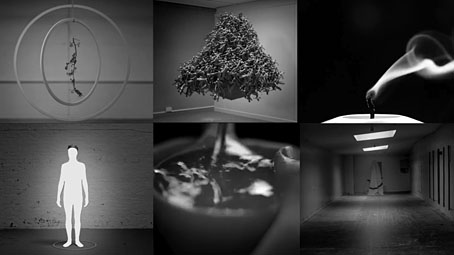
John Bradburn, an artist/filmmaker who also performs as Ferric Lux, notified me recently about his David Bowie-related project, The Mountain of Dead Selves, a video piece that was showing earlier this month at Vivid Gallery, Birmingham. Bradburn’s video, part of a group show, Constructing The Self: David Bowie, takes the occult influences of the Station To Station album as its subject. A short version of the video may be seen here although the gallery version was a looping piece which would no doubt appear very different when seen in situ.

Back in January I linked to some of the posthumous theorising around Bowie’s final album, Blackstar, including musings which looked back to Station To Station‘s Kabbalistic elements. It used to seem that discussion of Bowie and the occult would remain fixed on the 1970s so one of the many surprises about his final statement was the way the esoteric was brought to the fore again. The Mountain of Dead Selves won’t be the last exploration of this. There’s more from Ferric Lux here.