Weekend links 201

kettelwell.jpg

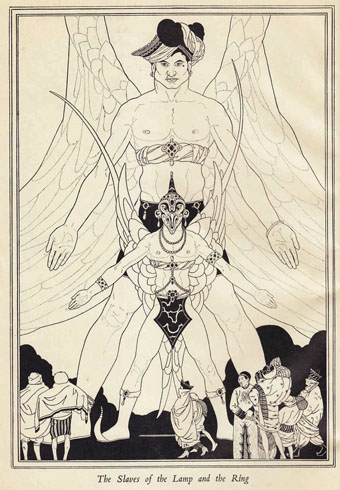
An illustration by John Kettelwell for The Story of Aladdin and the Wonderful Lamp (1928).

• “The strain in everything I write, of not being taken with the bounteousness of humankind, was also the attitude of both my parents.” Jonathan Meades talking to James Kidd about his forthcoming memoirs.

• 7 Trumps From the Tarot Cards and Pinions (1969), and album of electronic music by Ruth White, is being given a limited vinyl reissue. Related: Ruth White—An American Composer.

• 82 minutes of Michael Moorcock talking in 1972 to Jean-Pierre Turmel, co-founder of the Sordide Sentimental record label.

If Verne’s protagonists often seem to stop short of revelation, it’s because the revelation is not meant to be known. Revelation has a way of putting man back at the front of the evolution chart, moving neatly toward a happily progressing future, out of the darkness and into the light. The characters who embark upon the Voyages Extraordinares move backward and forward and all about, spun around like blindfolded children trying to pin the tail on the donkey. The point of the adventure, after all, is not to have a conclusion; it is to get knocked off your feet.

Stefany Anne Golberg on Journey to the Center of the Earth at 150.

• Photographs of pre-Haussmann Paris by Charles Marville, and photographs by Amy Heiden of industrial ruins.

• Mixes of the week: FACT Mix 427 by Wild Beasts, and Secret Thirteen Mix 108 by Kangding Ray.

• Hear Italo Calvino read selections from Invisible Cities, Mr Palomar and others.

William S. Burroughs in Dub conducted by Dub Spencer & Trance Hill.

• Cycles, Returns & Rebirth: Alexander Tucker on Derek Jarman.

Harold Budd: the composer with no urge to make music.

The Museum of Imaginary Musical Instruments.

• 80 minutes of Monolake playing live in 1999.

• At 50 Watts: Dyl’s Dance.

Owls And Flowers (2006) by Belbury Poly | Learning Owl Reappears (2011) by The Advisory Circle | The Owls (2013) by Félicia Atkinson
Weekend links 200

fukaya.jpg

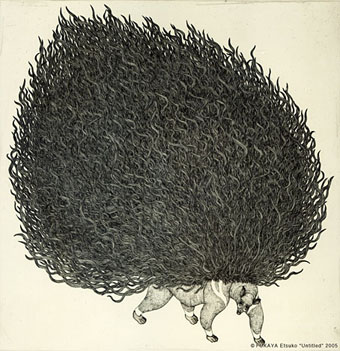
Untitled etching by Etsuko Fukaya, 2005.

• “By the time Scorsese met Powell, in 1975, the British director had fallen on hard times and was largely ignored by the UK film establishment.” A London office used by Michael Powell and Emeric Pressburger is given the Blue Plaque treatment.

• Ambient reminiscences at The Quietus: Wyndham Wallace on the genesis of Free-D (Original Soundtrack) by Ecstasy Of St Theresa, and Ned Raggett on Aphex Twin’s Selected Ambient Works II.

• “Even Queen Victoria was prescribed tincture of cannabis,” writes Richard J. Miller in Drugged: the Science and Culture Behind Psychotropic Drugs. Steven Poole reviewed the book.

I don’t relate to standard psychologizing in novels. I don’t really believe that the backstory is the story you need. And I don’t believe it’s more like life to get it—the buildup of “character” through psychological and family history, the whole idea of “knowing what the character wants.” People in real life so often do not know what they want. People trick themselves, lie to themselves, fool themselves. It’s called survival, and self-mythology.

Rachel Kushner talking to Jonathan Lee

Sound Houses by Walls is a posthumous collaboration based on a collection of “weird sonic doodles” by electronic composer Daphne Oram. FACT has a preview.

The skeletal trees of Borth forest, last alive 4,500 years ago, were uncovered in Cardigan Bay after the recent storms stripped the sand from the beach.

Stephen O’Malley talks to Jamie Ludwig about Terrestrials, the new album by Sunn O))) and Ulver. There’s another interview here.

• At BibliOdyssey: Takushoku Graphic Arts—graphic design posters by contemporary Japanese artists.

• The Unbearable Heaviness of Being: Dave Segal on the rumbling splendour of Earth 2.

So Much Pileup: “Graphic design artifacts and inspiration from the 1960s – 1980s.”

• Lots of illustrations by Virgil Finlay being posted at The Golden Age just now.

• Mix of the week: Episode #114 by Lustmord at Electric Deluxe.

Lucinda Grange’s daredevil photography. There’s more here.

Experimental music on Children’s TV

Kazumasa Nagai at Pinterest.

• Teeth Of Lions Rule The Divine (1993) by Earth | He Who Accepts All That Is Offered (Feel Bad Hit Of The Winter) (2002) by Teeth Of Lions Rule The Divine | Big Church (megszentségteleníthetetlenségeskedéseitekért) (2009) by Sunn O)))

Spanish Salomés

salome1.jpg

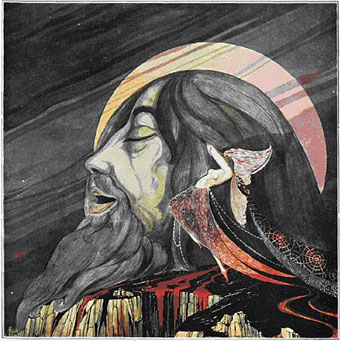
Uncredited painting based on Modern Salomé (1927), a poem by Emilio Carrere.

Yet more on this indefatigable theme, the examples this time being by Spanish artists and illustrators. All the pieces are from this page, and the artists involved aren’t well-known at all so checking details isn’t easy. Take the references with a pinch of salt. Thanks to Thom for the tip!

salome2.jpg

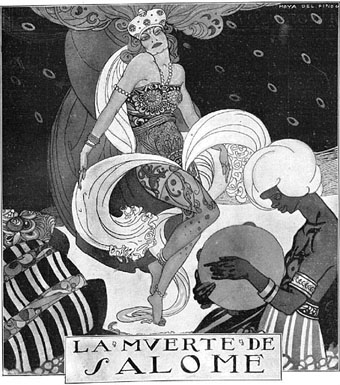
Illustration by José Moya del Pino for The Death of Salomé (1915), a poem by Emilio Carrere.

Continue reading “Spanish Salomés”

The Royal Picture Alphabet

royal1.jpg

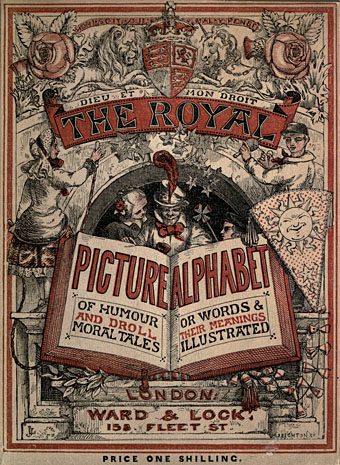
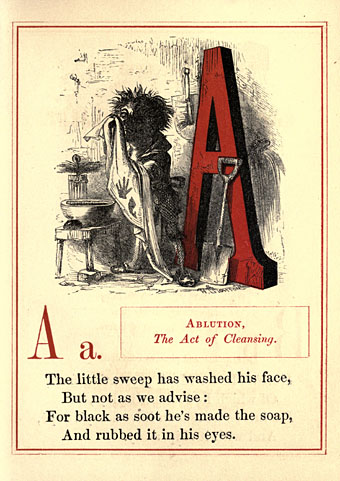
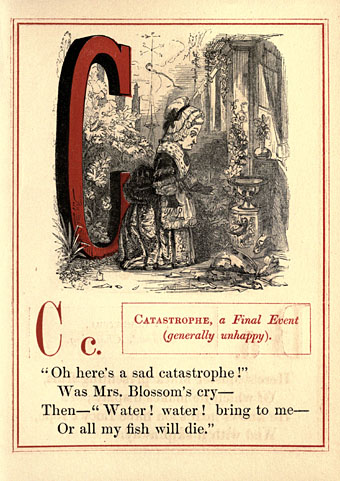
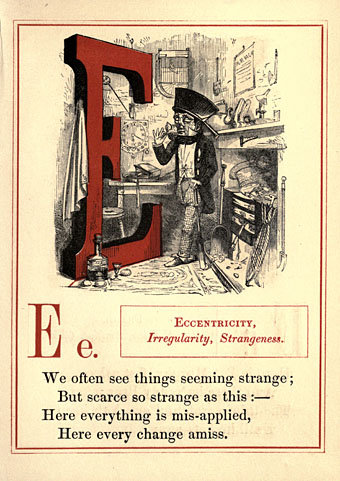
Another pictorial alphabet but no architecture this time. “Royal” is used here in the more general sense of “grand” or “first-rate”, and this isn’t the only example of an instruction book for children that calls its alphabet a royal one. John Leighton’s Royal Picture Alphabet is a finer example than others to be found at the Internet Archive, however, where the results are either very simple or, in the case of Walter Crane’s Absurd ABC, might have benefitted from additional pages. It’s surprising that Leighton’s book is a more substantial piece of work than Crane’s when Crane wrote a history of book design. Leighton’s alphabet is also surprisingly polysyllabic; you can’t imagine anyone today choosing “Eccentricity” to represent the letter E.

Books such as this always have trouble with the letters at the end of the alphabet, especially that tricky X. The Royal Picture Alphabet chooses “Xantippe”, the wife of Socrates, while its earlier counterpart has “Xanthus”, a horse from Greek mythology. (That old stand-by, the xylophone, didn’t become established until later in the 19th century.) Both books, and Crane’s volume, offer “Zany” for the letter Z.

royal2.jpg

royal3.jpg

royal4.jpg

Continue reading “The Royal Picture Alphabet”

Lynd Ward’s Frankenstein

ward1.jpg

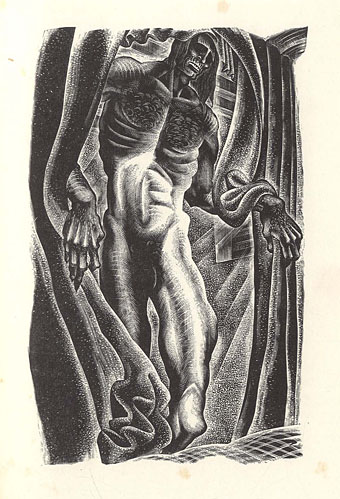
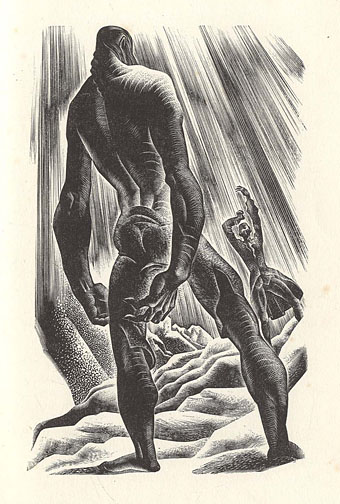
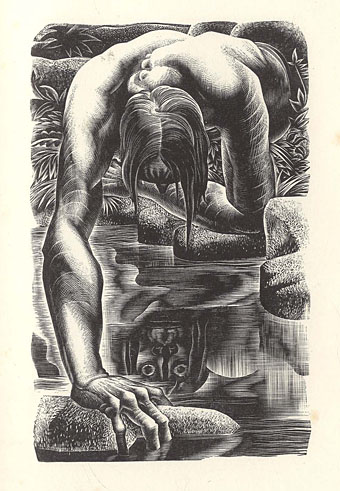
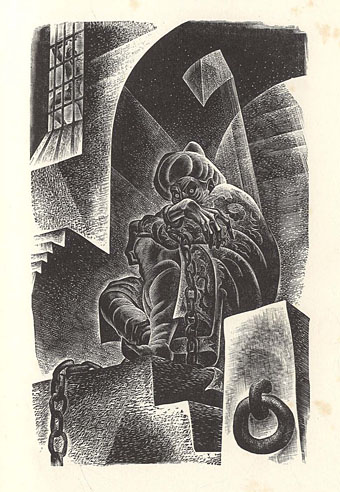
Mary Shelley’s novel illustrated in woodcuts by the great Lynd Ward (1905–1985). This edition appeared in 1934, a couple of years after the release of James Whale’s first Frankenstein film whose popularity may have led to its commission. It’s good to see Dover Publications keeping this one in print when first editions go for hundreds of pounds. VTS has more of the illustrations (there’s also this site), and many more examples of Ward’s work.

ward2.jpg

ward3.jpg

ward4.jpg

Elsewhere on { feuilleton }
The illustrators archive

Previously on { feuilleton }
Two Brides
Berni Wrightson’s Frankenstein
Cain’s son: the incarnations of Grendel
Gods’ Man by Lynd Ward