Sibilla by Giulio Aristide Sartorio

sartorio1.jpg

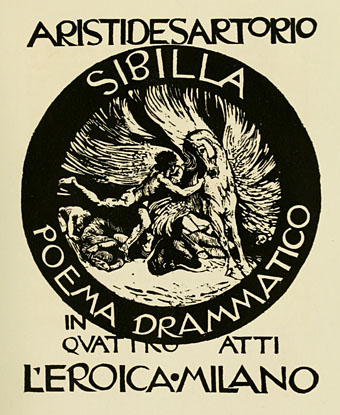
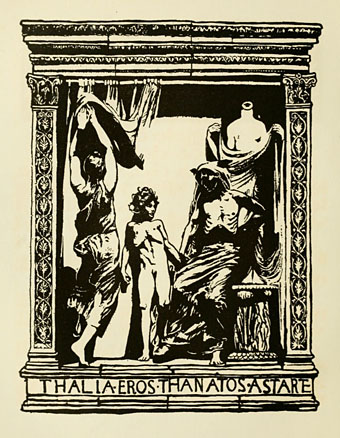
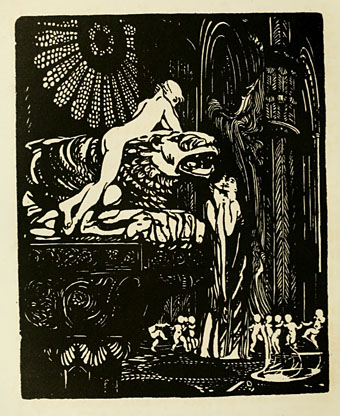
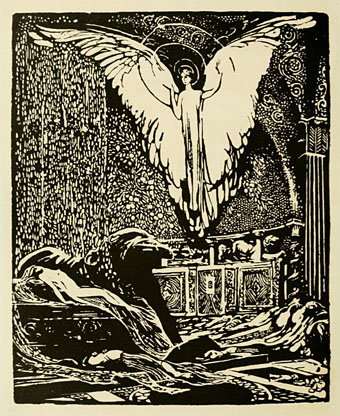
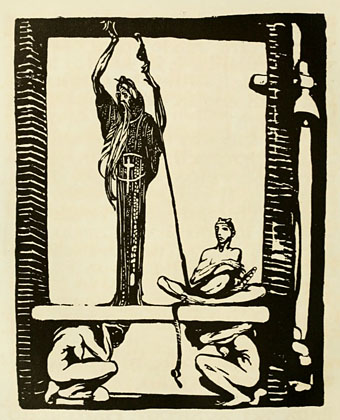
When the paintings of Giulio Aristide Sartorio were featured here a while back I wasn’t aware of Sibilla: poema drammatico in quattro atti, a book written and illustrated by the artist and published in a numbered edition of 1333 copies in 1922. Not content to merely write a lengthy dramatic poem then add some illustrations, Sartorio hand-crafted some 240 pages, text as well as illustrations, in what looks like woodcut printing but this page tells us was a style of relief etching which gives a woodcut appearance. At least half the book comprises full-page illustrations so it’s no surprise that Sartorio spent the best part of a decade working on it. The copy at the Internet Archive is one of the original printings, signed by the author/artist and his publisher, Ettore Cozzani. This page shows preliminary sketches for what has to be one of the final breaths of fin de siècle excess.

sartorio2.jpg

sartorio3.jpg

sartorio4.jpg

sartorio5.jpg

Elsewhere on { feuilleton }
The illustrators archive

Previously on { feuilleton }
Lussuria, Invidia, Superbia
The art of Giulio Aristide Sartorio, 1860–1932

Weekend links 53

egyptian.jpg

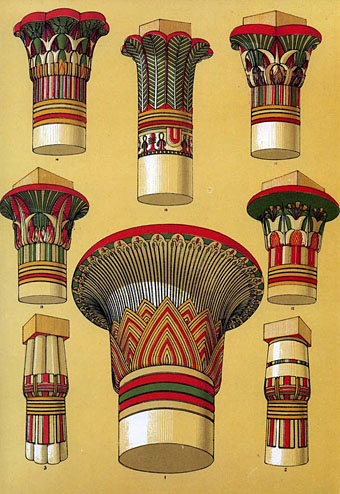
Ancient Egyptian capitals from The Grammar of Ornament (1856) by Owen Jones at Egyptian Revival.

• Golden Age Comic Book Stories has been pulling out all the stops recently with entries for Will Bradley, Alphonse Mucha’s Documents Decoratifs (a companion volume to Combinaisons Ornementales), and pages from My Name is Paris (1987) illustrated by Michael Kaluta, an Art Nouveau-styled confection which features scenes from the Exposition Universelle of 1900. Related: Alphonse Mucha in high-resolution at Flickr.

The Sinking Of The Titanic by Gavin Bryars at Ubuweb, the first release on Brian Eno’s Obscure label in 1975. Bryars’ Titanic is an open composition which has subsequently been reworked and re-recorded as more information about the disaster has come to light. The accompanying piece on that album, Jesus’ Blood Never Failed Me Yet, is the only version you need unless you want Tom Waits ruining the whole thing in the later recording.

• Hayley Campbell claims to have the worst CV in the world but she has a better way with words than most people with bad CVs. She’ll be giving a talk with Tim Pilcher entitled Sex, Death, Hell & Superheroes at The Last Tuesday Society, 11 Mare Street, Bethnal Green, London, on April 8th. Just don’t shout “Xena!” if you attend.

Monolake live at the Dis-Patch Festival Belgrade, Serbia, 2007; 75 minutes of thumping grooves. Related: A video by Richard De Suza using Monolake’s Watching Clouds as the soundtrack.

• “I preached against homosexuality, but I was wrong.” Related: Gay Cliques, a chart, and Sashay shantay épée at Strange Flowers, the last (?) duel with swords fought in France.

• Mixtapes of the week: Electronica from John Foxx and Benge at The Quietus, and Ben Frost mashing up early Metallica, Krzysztof Penderecki, and late Talk Talk for FACT.

• A 40 gigpixel panorama of the Strahov Philosophical Library, Prague, described by 360 Cities as the world’s largest indoor photo.

How Hollywood Butchered Its Best Movie Posters; Steven Heller on Saul Bass.

• Back issues of Coilhouse magazine are now available to buy in PDF form.

Absinthe minded: The ruin of bohemians is back in all the best bars.

Fade Into You (1993) by Mazzy Star.
Deutsche Kunst und Dekoration #16

dkd16-01.jpg

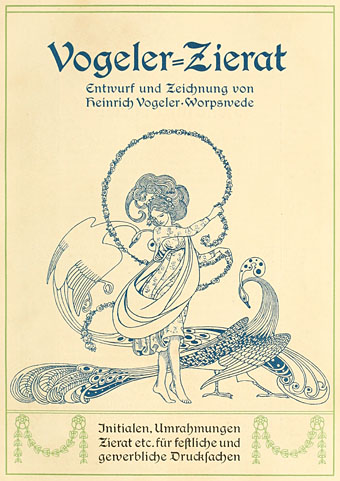
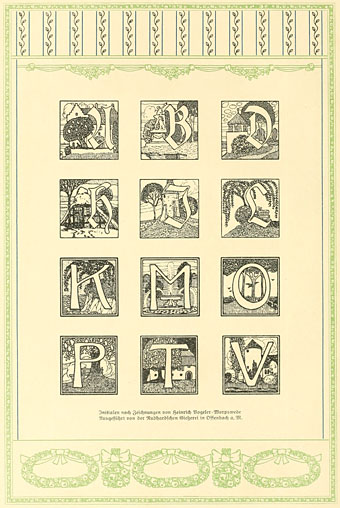
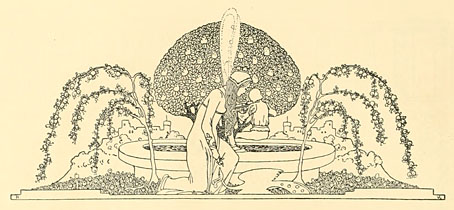
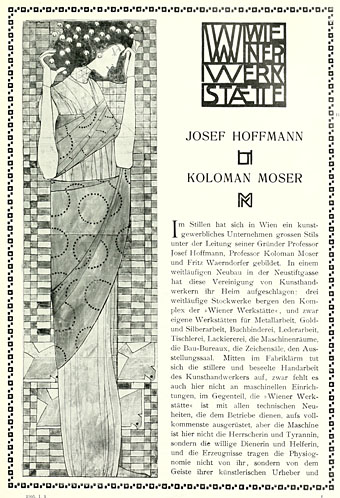
Continuing the delve into back numbers of Deutsche Kunst und Dekoration, the German periodical of art and decoration. Volume 16 covers the period from April 1905 to September 1905, and includes further rectilinear interior design from the Wiener Werkstätte. There’s a lot of architecture in this edition, not all of it very distinctive. Of more interest for me is another feature on the peacock-haunted illustrations of Heinrich Vogeler, and an article about the work of Edward Gordon Craig, an English theatre designer who we’re told was the son of Ellen Terry and, later on, one of the numerous lovers of Isadora Duncan.

As usual, anyone wishing to see these samples in greater detail is advised to download the entire volume at the Internet Archive. There’ll be more DK&D next week.

dkd16-02.jpg

dkd16-03.jpg

Continue reading “Deutsche Kunst und Dekoration #16”

Deutsche Kunst und Dekoration #15

dkd15-01.jpg

Continuing the delve into back numbers of Deutsche Kunst und Dekoration, the German periodical of art and decoration. This week there’s another jump in the running order, from volume 12 to 15, and it’s impossible to avoid feeling frustrated by this when some of the previous editions have been so good. Volume 15 covers the period from October 1904 to March 1905, and includes work by the Wiener Werkstätte whose rectilinear designs mark the transition from Art Nouveau to what would eventually be called Art Deco. There’s also another feature on the Glasgow Arts and Crafts movement based around Charles Rennie Mackintosh with a look at the designs for Hill House in Helensburgh, Scotland. As usual, anyone wishing to see these samples in greater detail is advised to download the entire volume at the Internet Archive. There’ll be more DK&D next week.

dkd15-02.jpg

dkd15-03.jpg

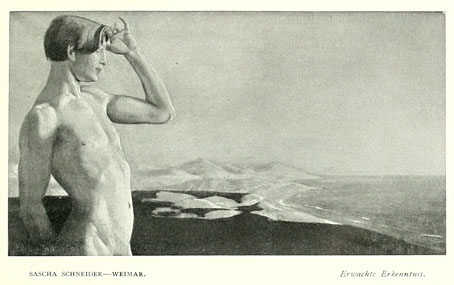
The peculiar Symbolist paintings of gay artist Sascha Schneider are featured once again, and typically for this artist there’s a profusion of male flesh on display.

Continue reading “Deutsche Kunst und Dekoration #15”

Thomas Mackenzie’s Aladdin

aladdin1.jpg

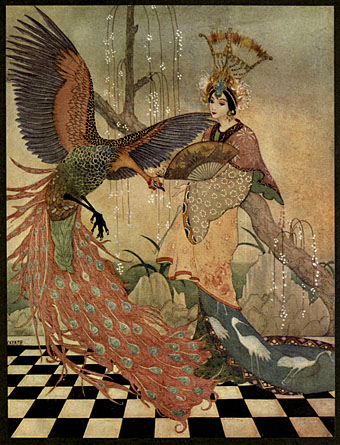
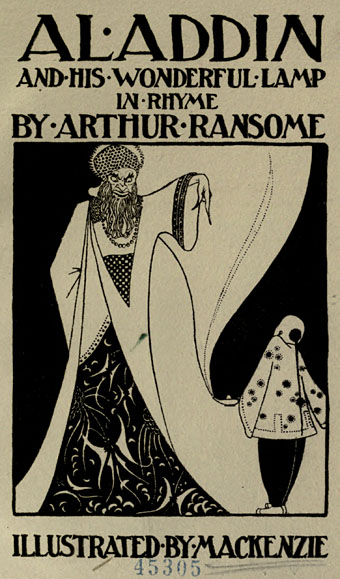
The tip for this one came via Beautiful Century. Thomas Mackenzie (1887–1944) was a minor British illustrator whose work I hadn’t seen before, and if I’d seen the picture above uncredited I might have taken it for something by Kay Nielsen or Edmund Dulac. Mackenzie’s colour plates for the 1919 edition of Aladdin and His Wonderful Lamp in Rhyme by Arthur Ransome are very similar to his more famous contemporaries, while the black-and-white pieces owe a considerable debt to Aubrey Beardsley, especially the title page below. Not all the drawing is as assured as one might hope but the book as a whole is still worth a look.

aladdin2.jpg

Continue reading “Thomas Mackenzie’s Aladdin”