Weekend links 6

dkng.jpg

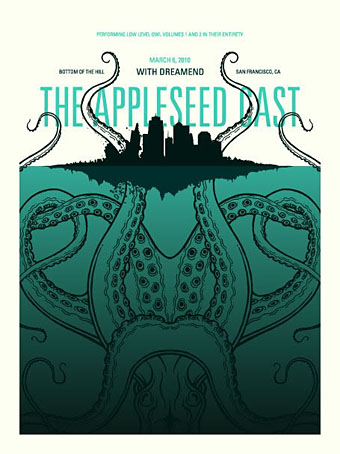
Shades of Toho: the city of San Francisco encounters its octopoid nemesis on this gig poster from DKNG. Via OMG Posters!

• Related to the above: Godzilla Haiku.

View from Another Shore: a fantastic (so to speak) and overdue interview with Franz Rottensteiner, writer and editor of landmark studies of fantasy and science fiction.

Ronald Searle: a life in pictures: an appreciation by Guardian cartoonist Steve Bell.

• 832 masks: The Maskatorium at Flickr.

The Cult of the Theremin: lots of theremin links including this page of scans from a beautiful Art Deco theremin brochure. (Thanks to Kara for the tip!) Related: the DIY IKEA lamp theremin.

Music & Science Fiction, an exhibition at Maison d’Ailleurs.

• Nathalie found a stoned angel in Rome.

• EVB’s Boy of the Week is a Spanish guy in his underwear drawn by Jacobo Labella.

• Film of the month: Sally Potter’s Orlando on DVD, featuring the luminous enigma of Tilda Swinton.

Frans De Geetere’s illustrated Maldoror

geetere1.jpg

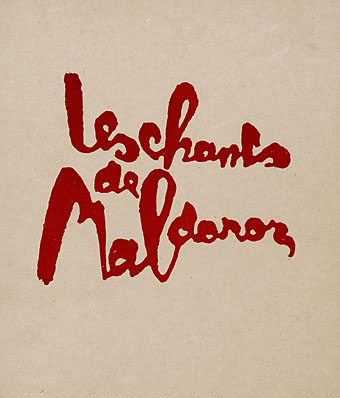
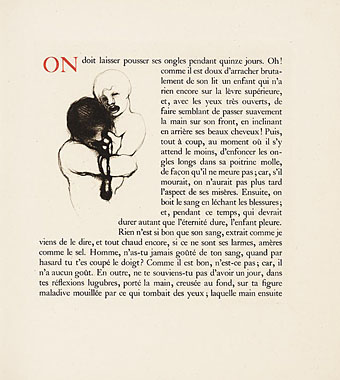
Calling this 1927 edition “illustrated” perhaps stretches the point seeing as Frans De Geetere’s illustrations are rather more minimal and restrained than you’d expect for Lautréamont’s proto-Surrealist masterwork. The Koopman Collection’s page for this book lists 65 Geetere’s etchings but only shows a handful. I’d like to see more of these even if the samples here are representative, Les Chants de Maldoror being a book more deserving of illustration than most.
geetere2.jpg

Frans De Geetere (1895–1968) was Belgian and there’s a Symbolist lineage in this work with his naming Fernand Khnopff and other Belgian Symbolists as influences. He was also a friend of the wealthy arts patron Harry Crosby whose note about the artist promises more than the artwork here delivers:

The darkness of the forest where he was born, the sombre curriculum of the monks together with the rich darkness of ecclesiastical music, the spark of revolt kindled at the Academy of Brussels and whipped into a flame of hatred by the frescoes his father compelled him to paint in the neighboring churches, his first escape (if artists can be said to escape), the year of hunger whitewashing the walls of houses (le soleil contre le mur blanc) and, at nineteen, night duty as guardian in a maison de fous, these were, for M. Frans de Geetere, the foundation stones of that strange building men call the soul. In the madhouse he worked at his painting by day, and by night snatched unsettled hours of sleep, and in this environment developed those queer, abnormal faces that stare out at us from the pages of Maldoror. …And if “Lautreamont has liberated the imagination and dispelled our fear to enter into darkness” as Mr. Jolas so significantly remarked, M. de Geetere with a smoldering rage and fearlessness of creation followed the poet into darkness–“into the occult beyond” to quote Mr. Jolas again, “where new and demonic visions” (I am reminded of Beardsley and Redon and Alastair) “people our solitude.”

geetere3.jpg

Elsewhere on {feuilleton }
The illustrators archive
The etching and engraving archive

Previously on {feuilleton }
The art of Sibylle Ruppert
Maldoror illustrated

Exposition jewellery

grasset1.jpg

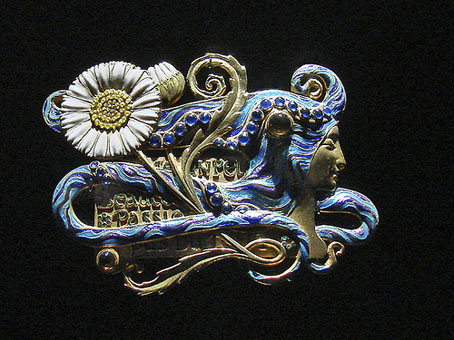
Broche Marguerite.

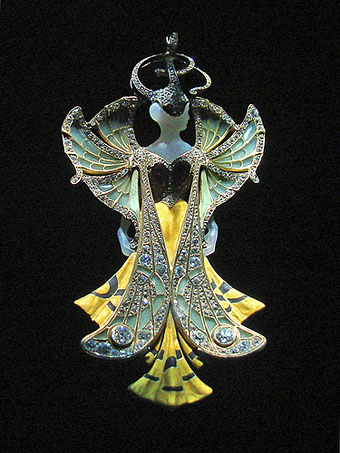
Still in the 19th century, and more contributions to the Paris Exposition Universelle of 1900. The first and third of these are collaborations between Art Nouveau designer Eugène Grasset and jeweller brothers Henri & Paul Vever. The butterfly woman is Henri Vever’s own creation.

Well-known jewellers since the 1870s, Henri and Paul Vever broke new ground at the Universal Exhibition of 1900 when they presented a new line of “artistic” jewellery alongside more traditional pieces. They asked the decorator Eugène Grasset to design the new pieces. Grasset, who was the author of the famous vignette on Larousse dictionaries: “Je sème à tous vents”, had trained as a sculptor, designed furniture, posters, stained-glass windows and ceramics and made a name as an illustrator. (More.)

vever.jpg

Sylvia.

grasset2.jpg

Apparitions.

Previously on { feuilleton }
Exposition Universelle catalogue
Jewelled butterflies and cephalopods
Exposition Universelle publications
Exposition cornucopia
Return to the Exposition Universelle
The Palais Lumineux
Louis Bonnier’s exposition dreams
Exposition Universelle, 1900
The art of Philippe Wolfers, 1858–1929
The Palais du Trocadéro
Lalique’s dragonflies
Lucien Gaillard

Jugend, 1897

jugend-97-01

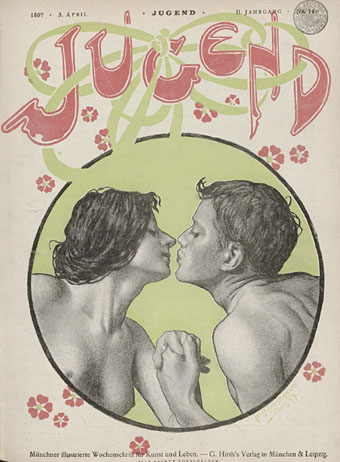
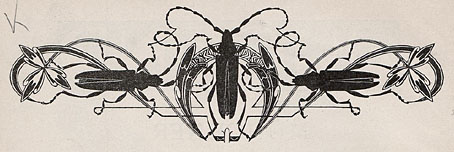
Continuing the series of posts about Jugend magazine, all these samples are from the issues for 1897. This is where things start getting really interesting graphically so I’m only posting a very small selection from 900 pages of content. As before, anyone interested is advised to examine the complete volumes which can be viewed and downloaded here and here.

jugend-97-02

jugend-97-03

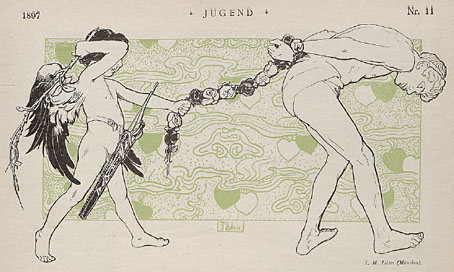
Cupid drawings abound in early issues of Jugend, with men and women falling prey to love’s vicissitudes. This is one of the more unusual examples.

Continue reading “Jugend, 1897”