Fabulas Panicas by Jodorowsky

jodo1.jpg

August 13th, 1967.

More psychedelia of a sort although it’s arguable whether Alejandro Jodorowsky’s cosmic surrealism can ever be pigeon-holed so easily. Fabulas Panicas (Panic Fables) is a comic strip that Jodorowsky was writing and drawing for a Mexican newspaper in the late Sixties. The text is all in Spanish, of course, but going by the visuals in the examples gathered on this site the concerns seem to be the usual Jodorowsky fare. Jay Babcock who provided the tip (thanks Jay!) interviewed Jodorowsky in 2003 and the conversation touched on this as well as his other comic works.

jodo2.jpg

June 9th, 1968.

Previously on { feuilleton }
Alejandro Jodorowsky’s Dune
Jodorowsky on DVD

The Dukes declare it’s 25 O’Clock!

dukes1.jpg

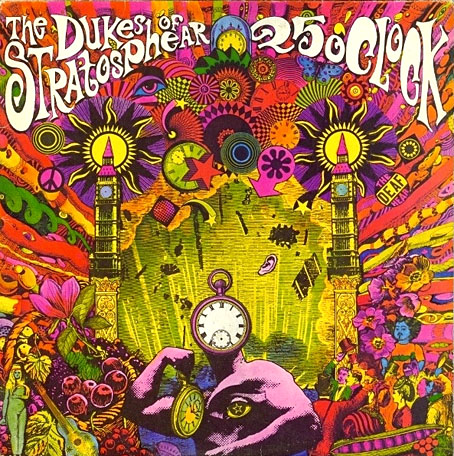
25 O’Clock (1985). Andy Partridge’s great cover design.

The DUKES say it’s time…it’s time to visit the planet smile…it’s time the love bomb was dropped…it’s time to eat music…it’s time to kiss the sun…it’s time to drown yourself in SOUNDGASM and it’s time to dance through the mirror. The DUKES declare it’s 25 O’CLOCK.

It was twenty-five years today—April 1st, 1985—that Virgin Records released what was supposed to be a reissue of a lost psychedelic album from the late 1960s, 25 O’Clock by The Dukes of Stratosphear. The catalogue number was WOW 1 and the vinyl label was printed with the old black-and-white Virgin logo by Roger Dean even though Virgin Records wasn’t founded until 1972. No one was supposed to know that the album was really a pastiche project by XTC but I don’t recall anyone actually being fooled by this, all the reviews acknowledged XTC as the originators, and band members Andy Partridge and Colin Moulding were happy to give interviews enthusing about their musical obsessions. As well as being incredibly successful artistically the album was a surprising commercial success which led the bemused record label to ask for a sequel. Psonic Psunspot followed two years later, and the Dukes’ vibe infected XTC’s own work for a while, with their 1988 album, Oranges & Lemons, pitched somewhere between the pastiches and XTC’s more usual sound .
dukes2.jpg

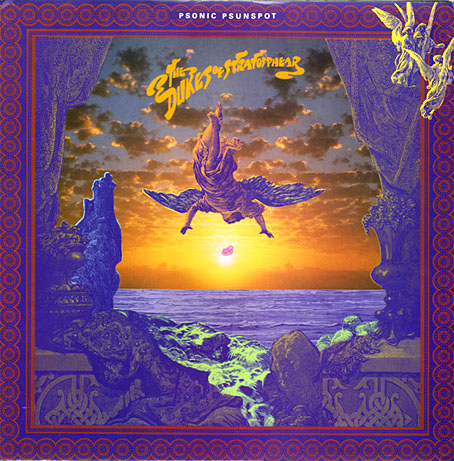
Psonic Psunspot (1987). Design by Dave Dragon and Ken Ansell.

Continue reading “The Dukes declare it’s 25 O’Clock!”
Barry Underwood

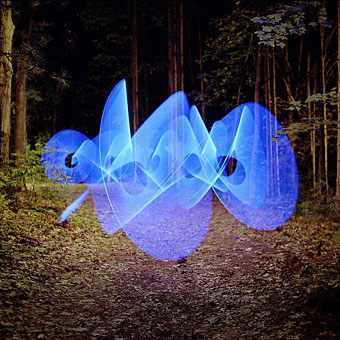
underwood1.jpg

Blue (2005).

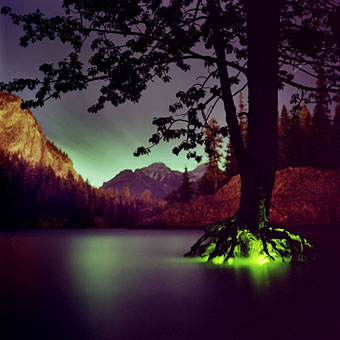
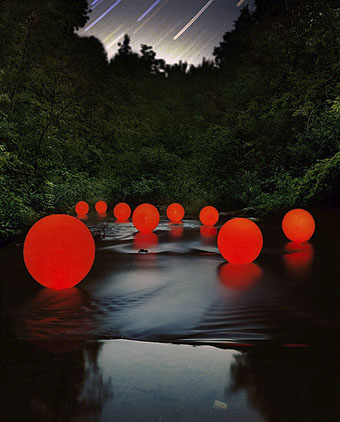
Photographs by Barry Underwood at Skew Gallery. Plenty of other people have tried the long exposure in the woods effect but these are something else.

underwood2.jpg

Aurora (Green) (2007).

underwood3.jpg

Orange Stream (2008).

Previously on { feuilleton }
The art of Rune Guneriussen
Lightmark
Maximum Silence by Giancarlo Neri
Volume at the V&A

Robert Anning Bell’s Tempest

bell1.jpg

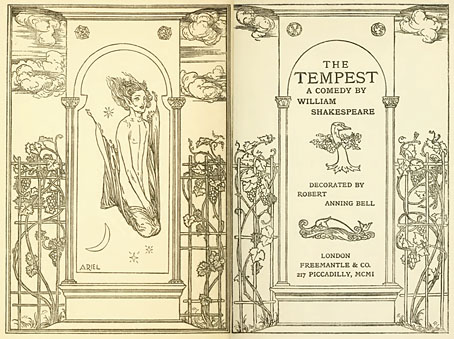
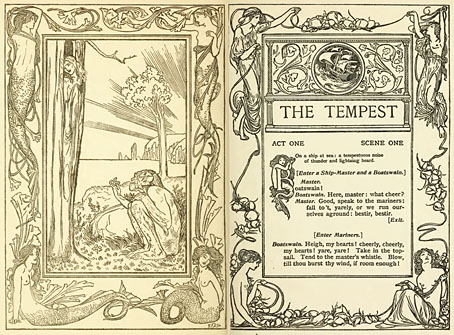
British artist and designer Robert Anning Bell (1863–1933) illustrates Shakespeare in this 1901 edition at the Internet Archive and the work seemed to give him an excuse to embellish many of the pages with writhing mer-folk. His adaptation isn’t as striking as William Heath Robinson’s Midsummer Night’s Dream from 1914 but then few books are. In style Bell is closer to his contemporary Charles Ricketts with very open line work and no heavy black areas. Ricketts produced his own version of Ariel’s Song to Ferdinand for The Magazine of Art in 1895 but doesn’t seem to have illustrated much more of The Tempest as far as I’m aware, although his Vale Press did issue an edition of Shakespeare’s complete works. It hadn’t occurred to me before how few illustrated editions there are of The Tempest; this seems surprising given the fantastic nature of the story. It might be that illustrated plays have never sold so well despite there having been a number of illustrated Midsummer Night’s Dreams. I’d love to have seen Harry Clarke tackling Ariel and Caliban.

bell2.jpg

bell4.jpg

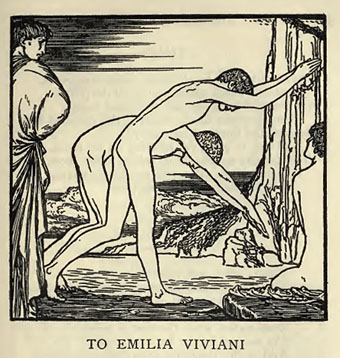
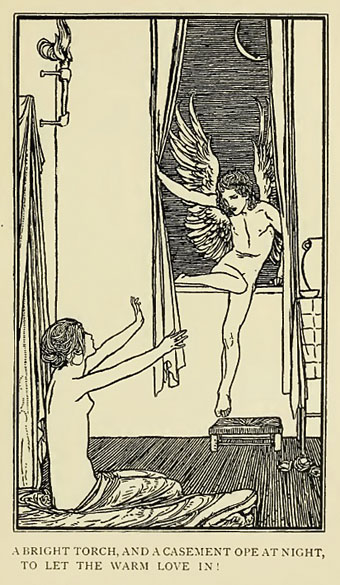
Also at the Internet Archive is a 1902 edition of Shelley’s poems illustrated by Bell (above) and an 1897 edition of Keats in the same series (below). Great poetry doesn’t necessarily lend itself to illustration so it’s no surprise that these books are less interesting than the Shakespeare.

bell3.jpg

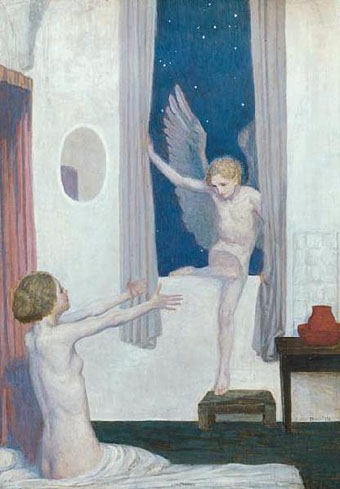
Bell later reworked his illustration for Keats’s Ode to Psyche as a painting which he called Cupid’s Visit. I much prefer the drawing to the painting.

bell5.jpg

Cupid’s Visit (1912).

Elsewhere on { feuilleton }
The illustrators archive

Previously on { feuilleton }
Charles Ricketts’ Hero and Leander
Another Midsummer Night
Arthur Rackham’s Midsummer Night’s Dream
The art of Charles Robinson, 1870–1937
William Heath Robinson’s Midsummer Night’s Dream