A hustle here, a hustle there…

gedney1.jpg

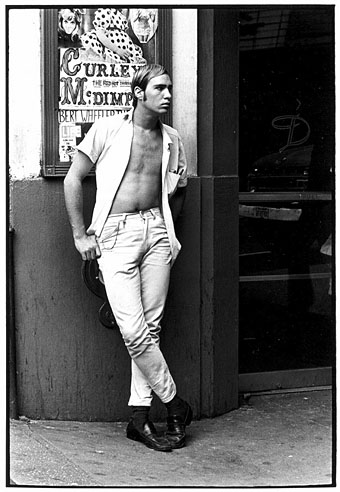
Male hustler standing on street corner (1967) photographed by William Gale Gedney.

One of those irresistible confluences of disparate things occurred this week. Watching Todd Haynes’ fabulous Velvet Goldmine for about the tenth time at the weekend had me listening to Lou Reed’s Transformer album the day after. The sight of these New York street photos by William Gale Gedney a couple of days later immediately brought to mind the lyrics of Walk On The Wild Side. The Guardian brought things full circle by posting the 1973 Lester Bangs interview with Lou Reed in which Transformer is discussed, and Reed gives the quote about the glam trend of appearing gay which Ewan McGregor’s Curt Wild character—an amalgam of small parts of Reed and a huge dose of Iggy Pop—paraphrases in Velvet Goldmine:

Wax eloquent, for once and finally, he did. Listen kids, you may think you’ve got your identity crises and sexual lateral squeeze plays touchdown cold just because you came out in rouge ‘n’ glitter for Dave Bowie’s latest show, but listen to your Papa Lou. He’s gotta nother think for you punk knowitalls: “The makeup thing is just a style thing now, like platform shoes. If people have homosexuality in them, it won’t necessarily involve makeup in the first place. You can’t fake being gay, because being gay means you’re going to have to suck cock, or get fucked. I think there’s a very basic thing in a guy if he’s straight where he’s just going to say no: ‘I’ll act gay, I’ll do this and I’ll do that, but I can’t do that.’ Just like a gay person if they wanted to act straight and everything, but if you said, ‘Okay, go ahead, go to bed with a girl,’ they’re going to have to get an erection first, and they can’t do that.”

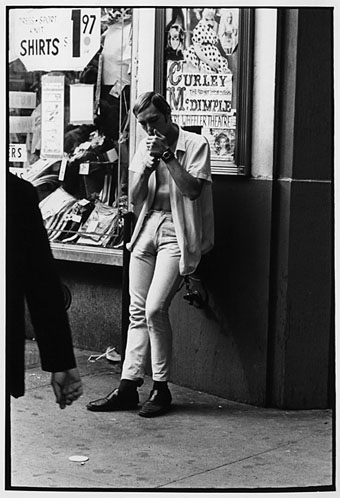
Never one to mince words is our Lou. YouTube has a video of Reed’s song which sets the music to shots of the real-life people mentioned in his lyrics, hustling Little Joe included. Those of a sensitive disposition should be warned that the surrounding videos seem to be filled with penises. The William Gedney photos are from a substantial collection at Duke University among which there’s a set from a gay march and rally commemorating the tenth anniversary of the Stonewall Riot in 1979.
gedney2.jpg

Male hustler standing on street corner and lighting cigarette; has shirt open (1967) photographed by William Gale Gedney.

Previously on { feuilleton }
Lonesome Cowboys
Les Demi Dieux revisited
Les Demi Dieux

Dalí’s discography

dalidisc1.jpg

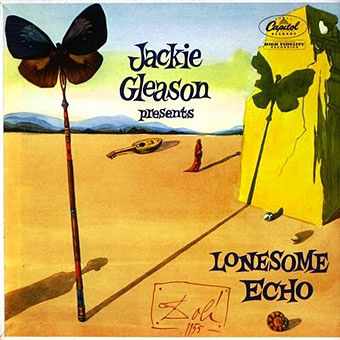
Lonesome Echo (1955) by Jackie Gleason.

Not a definitive list, I was merely browsing Discogs.com out of curiosity. For an artist eager to infiltrate every medium you’d expect there to be more involvement from Dalí with the music world. The Jackie Gleason is included here as the earliest entry for which the artist apparently provided a cover painting and a sleeve note. There’s a nice shot of the back cover on this page with its photo of Salvador and Jackie shaking hands.

dalidisc3.jpg

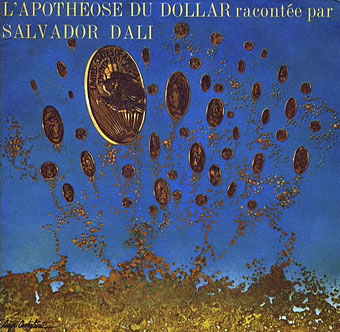
L’Apothéose Du Dollar Racontée Par Salvador Dalí (1971).

Next up is a panegyric to one of the artist’s obsessions—money—recorded on a flexidisc for Crédit Commercial de France. Difficult to imagine any bank today promoting themselves with someone dropping phrases like “divine diahrrée“. A scarce item which can however be found on Ubuweb.

dalidisc2.jpg

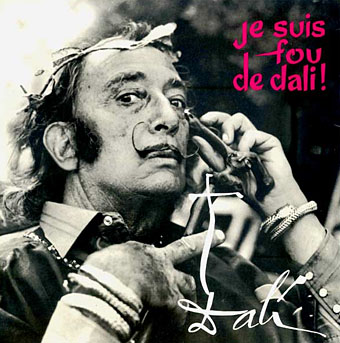
Je Suis Fou De Dalí (1975).

Here the artist extemporises (in French) to a trio of dutiful journalists. Ubuweb again has the entire album, together with a handful of other recordings. This page has some details of the discussion.

dalidisc5.jpg

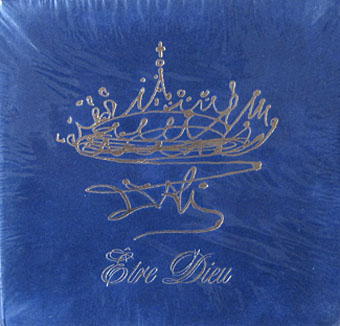
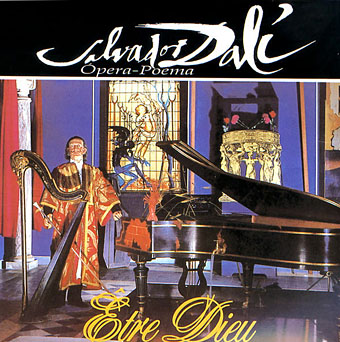
Etre Dieu has been mentioned here before owing to its connection with that cult composer of mine Igor Wakhévitch. Described as an “Opera-Poem: Audiovisual and Catarrah in six parts” it propels Dalí’s megalomania to cosmic proportions with the artist portraying a godlike version of himself. In attendance are an angel and two further Dalís, the male and female halves of an androgynous avatar with the female component being voiced by the great French actress Delphine Seyrig. The libretto is credited to Manuel Vázquez Montalban. The performance was recorded in 1974 but not released on disc until 1989. Not the best of Wakhévitch’s works at all, you’re better off with Logos or Docteur Faust.

dalidisc4.jpg

Elsewhere on { feuilleton }
The album covers archive

Previously on { feuilleton }
Soft Self-Portrait of Salvador Dalí
Mongolian impressions
Hello Dali!
Dalí and the City
Dalí’s Elephant
Dalí in Wonderland
Alejandro Jodorowsky’s Dune
Dirty Dalí
Impressions de la Haute Mongolie revisited
Dalí and Film
Salvador Dalí’s apocalyptic happening
Dalí Atomicus
Impressions de la Haute Mongolie

The Crackdown by Cabaret Voltaire

crackdown1.jpg

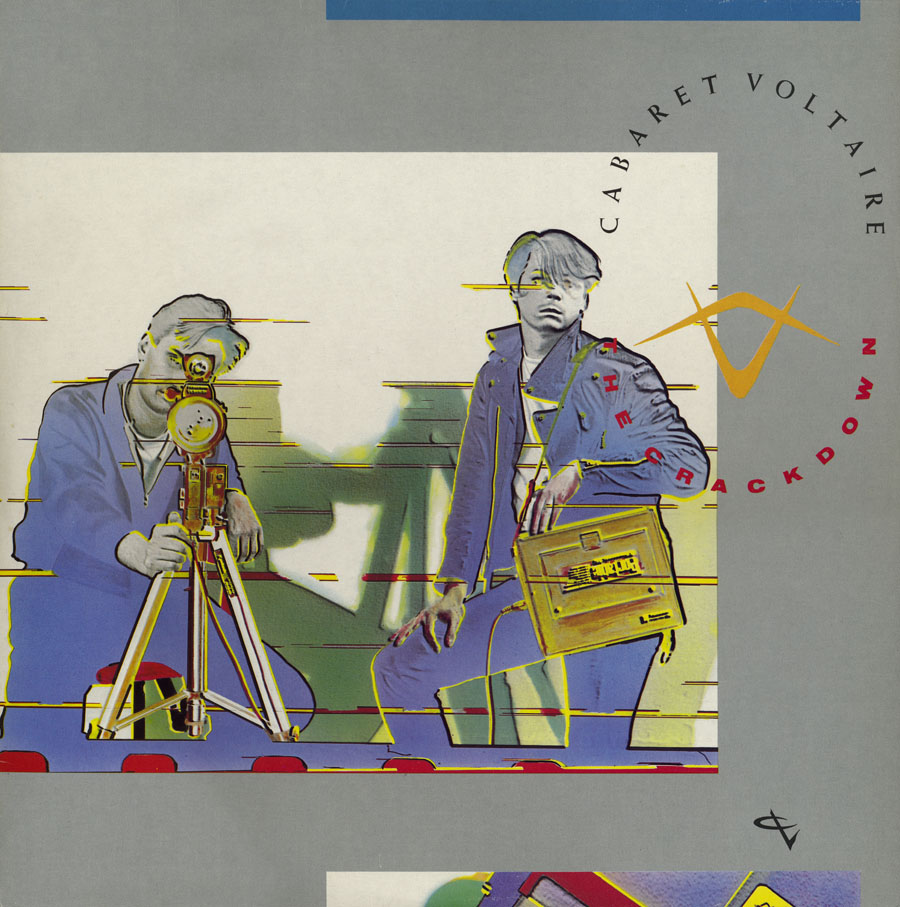
I mentioned yesterday Richard H. Kirk’s announcement that Cabaret Voltaire’s albums on the Virgin label are to be reissued next year by Mute Records. The news gives me a topical excuse to write something about the first album in that series, The Crackdown, which happens to be my favourite of all their releases. Cabaret Voltaire, like 23 Skidoo, benefited a great deal from their association with designer Neville Brody in the early 1980s, and this post mostly concerns Brody’s design for The Crackdown and its accompanying singles. The Crackdown was released in 1983 with the advance from Virgin having allowed them to buy new equipment and add a degree of polish to their recordings which earlier albums had lacked. Brody had been designing their covers for the past two years, and continued to do so for the next few releases before leaving the music business to concentrate on magazine and other design work.

crackdown2.jpg

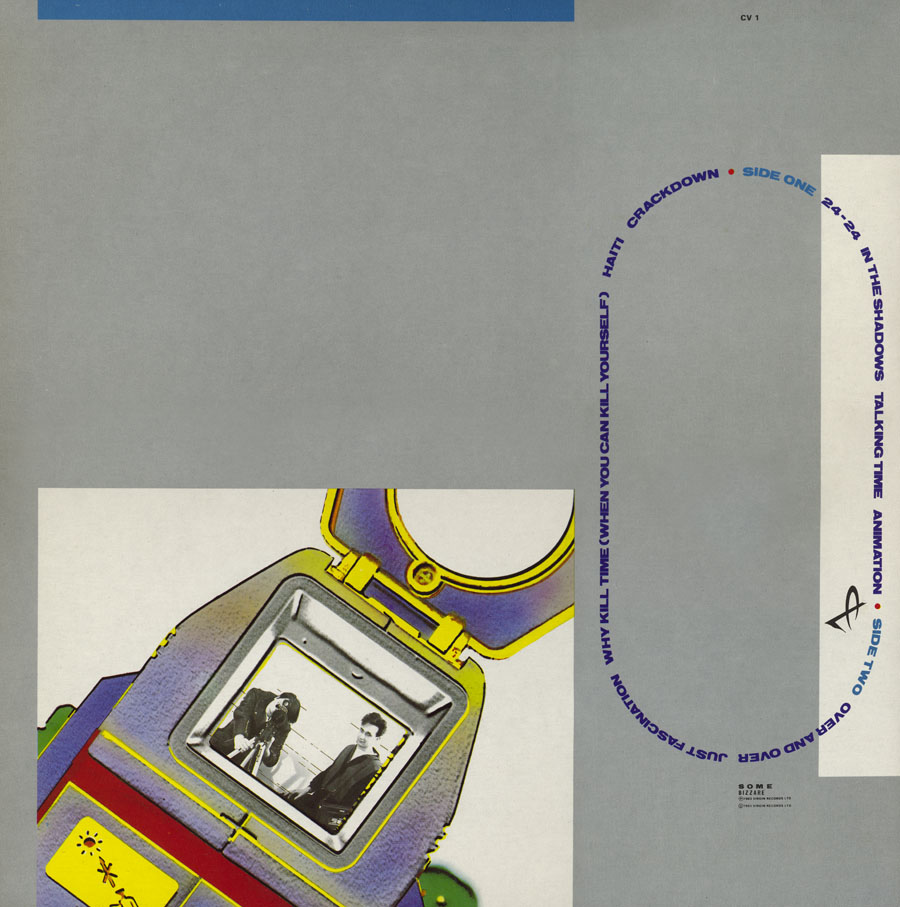
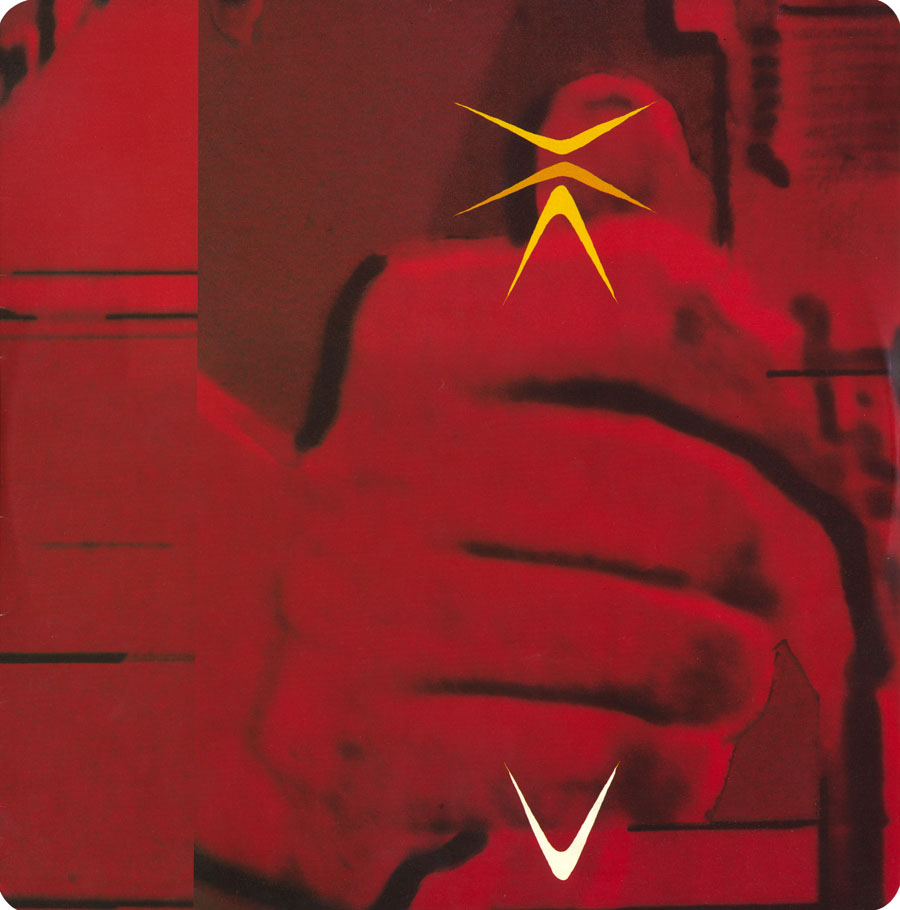
What I liked about this sleeve was the way it gets the most out of the careful arrangement of a few simple elements. The front photo showing Stephen Mallinder and Richard Kirk posing with video equipment (monitoring the viewer) is enlarged and cropped to provide backgrounds elsewhere. The sleeve photos wrap around front and back while the shape made by the titles determines the layout of track titles and credits. (The various CV graphics are credited to Phil Barnes.) The type wasn’t set digitally but was applied by hand using Letraset rub-down lettering which makes me wonder how much planning was required to get the track titles to perfectly fit their intended shape.

crackdown3.jpg

Continue reading “The Crackdown by Cabaret Voltaire”

Weekend links 83

hackett.jpg

In Memory by Caitlin Hackett who describes her astonishing drawings as “contemporary mythology”.

• David Lynch’s solo album, Crazy Clown Time has just been released so The Guardian last Friday let the artist/director/musician edit their G2 supplement. Xan Brooks tried to get Lynch to open up about his inspirations while elsewhere Lynch had a chat with ZZ Top’s Billy Gibbons. Of more interest to me was news that some of the deleted sequences from Blue Velvet have been discovered. I’ve known about these for years from a feature in Video Watchdog magazine but never thought we might get to see them. Related: a mixtape by David Lynch & musical collaborator/engineer ‘Big’ Dean Hurley.

• “Book jackets these days, for reasons I won’t unpack, seem to revel, overtly, in wit, conceptual deviousness, unusual clever or droll juxtapositions – we, as a professional community, seem to have elevated the visual bon mot above all other virtues.” Peter Mendelsund in a great post about certain problems in book design, starting with the very problematic question of what to do with Nabokov’s Lolita. Related: Covering Lolita, a gallery of covers through the ages which run the gamut of bad decisions.

• “For his sins Pinocchio is not only hanged but robbed, kidnapped, stabbed, whipped, starved, jailed, punched in the head, and has his legs burned off.” Nathaniel Rich goes back to Carlo Collodi’s original Pinocchio. Disney it ain’t.

wolpe.jpg

Some of Berthold Wolpe’s Faber cover designs are now available as prints from wire-frame whose Pelham/Ballard prints were mentioned here recently. Related (and worth another visit): Faber 20th century classics at Flickr.

Technical Vocabularies – Games for May, a small collection of poems by Alan Moore & Steve Moore, is now online with authorial permission. Alan’s Beardsley pastiche on the cover is a bonus.

• Cabaret Voltaire’s Richard H. Kirk says the group’s Virgin albums will be reissued next year by Mute. A new edition of The Crackdown? Yes, please.

• “Homo Riot can only think of six or seven street artists in the world who regularly feature gay themes in their work, and he knows all of them.”

Rub Out The Words: Letters from William Burroughs and Philip K. Dick on the language virus theory of William Burroughs.

L’exilé de Capri: the connections between Jacques d’Adelswärd-Fersen and Roger Peyrefitte explored at Strange Flowers.

• Flying cars and monorails: Soviet Russia in the 1960s also had a Gerry Anderson view of the future.

Are You An Anarchist? The Answer May Surprise You.

Baby’s On Fire (1973) by Brian Eno | Baby’s On Fire (live, 1974) by Eno & The Winkies | Baby’s On Fire (live, 1976) by 801 | Baby’s On Fire (1998) by The Venus In Furs.

Weird Fiction Review

weird.jpg

weird, a.

1. Having the power to control the fate or destiny of human beings, etc.; later, claiming the supernatural power of dealing with fate or destiny. Originally in the Weird Sisters = †(a) the Fates; (b) the witches in Macbeth.

2. a. Partaking of or suggestive of the supernatural; of a mysterious or unearthly character; unaccountably or uncomfortably strange; uncanny.

b. of sounds or voices.

3. Of strange or unusual appearance, odd-looking.

4. a. Out of the ordinary course, strange, unusual; hence, odd, fantastic. (Freq. in recent use.)

b. Colloq. phr. weird and wonderful, marvellous in a strange or eccentric way; both remarkable and peculiar or unfathomable; exotic, outlandish. Freq. ironical or derog.

5. Comb., as weird-looking adj.

Oxford English Dictionary

Weird: I’ve relished the word since I was at school for the way it managed to embody or describe so many of the things I was deeply attracted to, especially in the world of fiction. Weird Tales magazine when it was at its height in the 1930s was able to publish stories of fantasy, horror and science fiction, or hybrid stories of fantasy/horror or horror/sf, none of which needed to be alloted specific definitions when “weird” was there to cover everything. China Miéville noted the usefulness of the “weird” designation ten years or so ago, and I’ve been hoping ever since that other people might pick up the broader, more inclusive term instead of dividing the major genres into ever smaller sub-genres. “Weird” could accommodate generic work but also encompass those stories that were simply strange without possessing the usual genre trappings.

So far the term hasn’t found the widespread favour I’d been hoping for but that may change thanks to the Weird Fiction Review, a site launched this week by my friends and occasional collaborators Ann and Jeff VanderMeer whose enormous brick of an anthology, The Weird: A Compendium of Strange and Dark Stories, is published by Corvus this month. Weird Fiction Review states that:

its primary mission over time will be to serve as an ongo­ing explo­ration into all facets of the weird, in all of its many forms—a kind of “non-denominational” approach that appre­ci­ates Love­craft but also writers like Franz Kafka, Angela Carter, and Shirley Jack­son—along with the next gen­er­a­tion of weird writ­ers and inter­na­tional weird.

Already on the site is an interview with Neil Gaiman who says:

I think of Hor­ror as a sec­tion of a book­shop, gothic as a type of book that ended, truly, with North­hanger Abbey, and The Weird as an attempt to unify what­ever it was that Robert Aick­man did, that Edward Gorey did—using the tools of hor­ror to delight and trans­form.

I’m re-reading some of Aickman’s stories at the moment. He called them “strange” but I’d call them 100% weird. There’s one in Ann & Jeff’s anthology whose contents are an ideal introduction to this zone of literature.

Previously on { feuilleton }
The Vengeance of Nitocris
Die Andere Seite by Alfred Kubin
The King in Yellow
Hugo Steiner-Prag’s Golem