De Plancy’s Dictionnaire Infernal

deplancy01.jpg

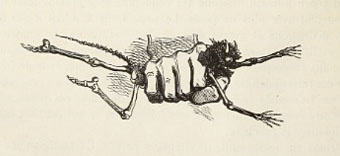
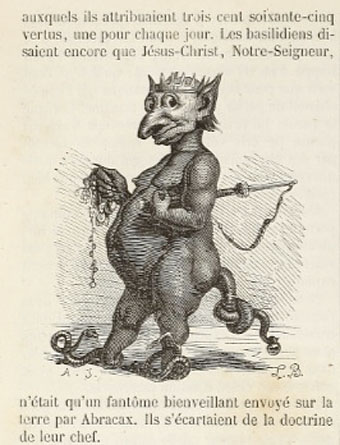
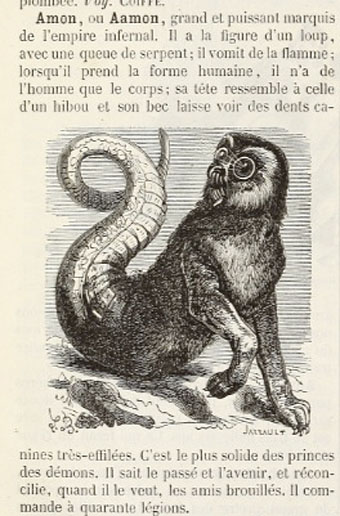
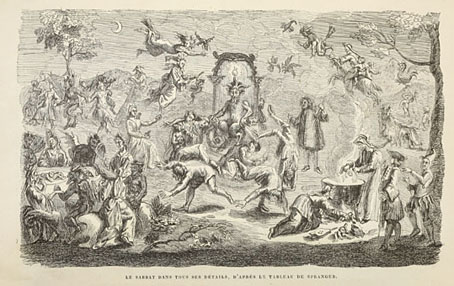
This would have been an ideal post for last week but better late than never, especially when I’ve been hoping for several years that a decent copy of Collin de Plancy’s dictionary would turn up at the Internet Archive. The Dictionnaire Infernal (1818–1863) has become famous mainly for the curious and often fanciful illustrations of demons which fill out the 1863 edition, pictures which have been plundered endlessly by occult histories, art directors, and illustrators such as myself. The demon portraits were the work of Louis Le Breton but the 1863 edition contains hundreds of other small illustrations and embellishments of varying quality. De Plancy was an author of many popular accounts of history, religion and mythology (also a book on “the food of the reptiles and the batrachians of France”) but his name is permanently wedded to this volume which the 1826 edition self-described as:

Infernal Dictionary, or, a Universal Library on the beings, characters, books, deeds, and causes which pertain to the manifestations and magic of trafficking with Hell; divinations, occult sciences, grimoires, marvels, errors, prejudices, traditions, folktales, the various superstitions, and generally all manner of marvellous, surprising, mysterious, and supernatural beliefs.

If you can read French then there’s 750 pages of this. The rest of us can enjoy the pictures.

deplancy02.jpg

deplancy03.jpg

deplancy04.jpg

Continue reading “De Plancy’s Dictionnaire Infernal”

Weekend links 282

ligotti.jpg

Thomas Ligotti photographed by Jennifer Gariepy.

• More Thomas Ligotti (he’s been marginalised for decades, the attention is overdue): “Songs of a Dead Dreamer and Grimscribe are fugues of the creeping unknown,” says Peter Bebergal who profiles Ligotti for The New Yorker, and gets him to talk about the impulses that produce his fiction; at the Lovecraft eZine eleven writers and editors ask Ligotti a question related to his work.

• As usual, Halloween brings out the mixes. This year there’s a choice of The Ivy-Strangled Path Vol. XII by David Colohan, Samhain Séance 4 : The Masks of Ashor by The_Ephemeral_Man, The Voluptuous Doom of Bava Yaga by SeraphicManta, Spool’s Out Radio #27 with Joseph Curwen, and The Edge Of The Holloween Oven – 10/26/15 by The Edge Of The Ape Oven.

Broadcast’s James Cargill has provided a soundtrack for Peter Strickland’s radio adaptation of The Stone Tape by Nigel Kneale. John Doran and Richard Augood review the new and old versions for The Quietus. Related: Peter Strickland’s favourite horror soundtracks.

My mission was to make sounds that didn’t exist in reality, whether it’s a star ship or a laser or a monster or an exploding planet. You started with basic sounds that were acoustic and then you manipulated them. There’s a scene in Raiders of the Lost Ark, when he falls into the well of souls and pushes over that statue and there are all those snakes? The sound of the snakes was made by pulling masking tape off glass. When the statue falls over and breaks the wall there’s the noise of lots of big rocks breaking. We just took some bricks and smashed them up and then slowed the tape recording down. I remember doing a lot of great scary effects using dry ice and a bunch of pots and pans out of the kitchen. You heat them up really hot and then you drop a load of dry ice into the hot pan so the rapid thermal change would make it scream.

Composer and sound designer Alan Howarth talks to Mat Colegate about working for films

Jordan Hoffman reviews Jacques Rivette’s legendary 13-hour feature film Out 1: Noli Me Tangere (1971). The film will be in cinemas next month, and available on DVD/BR in January.

The Stone Tape was originally a one-off TV drama shown at Christmas in 1972. Michael Newton looks at the BBC’s habit in the 1970s of screening ghost stories at Christmas.

Steven Arnold’s Epiphanies: A look back at some of the artist’s surrealist photographs.

Greydogtales just concluded a month of posts dedicated to William Hope Hodgson.

• At Dirge Magazine: Tenebrous Kate on seven songs based on dark literary classics.

Phil Legard opens some grimoires for a short history of signs and seals.

Micah Nathan on Tuesday’s Child, “LA’s best Satanist magazine”.

• “The Occult was a kind of awakening,” says Colin Wilson.

Shagfoal: witchcraft and horror-blues by Dante.

Jenny Hval‘s favourite albums.

The Attic Tapes (1975) by Cabaret Voltaire | Those Tapes Are Dangerous (1997) by The Bug | The Black Mill Video Tape (2012) by Pye Corner Audio
A mix for Halloween: Teatro Grottesco

Teatro Grottesco by Feuilleton on Mixcloud

Presenting the tenth Halloween playlist, and another mix of my own. This year the compilation honours the recent Penguin collection of stories by Thomas Ligotti, hence the title and dedication. Whether a Ligotti theme can be perceived in the arrangement depends on the familiarity of the listener with Ligotti’s brand of weird fiction, but even if the mix communicates little in this direction having something to aim for helped me narrow the focus. The presence of David Lynch-related pieces is justified by Ligotti’s inclusion in a collection of fiction inspired by Lynch’s films.

As to some of the other selections: French composer Igor Wakhévitch is a {feuilleton} favourite whose orchestral works are unique, bizarre and often disturbing; Jean-Claude Eloy is another French composer who (like Tod Dockstader) has used electronics to create doom-laden dronescapes; and the piece by Sinoia Caves is an extract from the nightmarish bad-trip sequence in Beyond the Black Rainbow, a film directed by Panos Cosmatos.

Recent changes at Mixcloud mean that listeners can no longer see a tracklist before playback so here’s the detail:

Alan R. Splet, David Lynch, Ann KroeberTextured Night Wind Gently Rises And Falls (2000)
Igor WakhévitchErgon (1970)
CoilCardinal Points (1988)
Tod DockstaderMyst (2005)
Julee CruiseInto The Night (1989)
Jean-Claude EloyFushike-e (1er Extrait) (1979)
Mica LeviLonely Void (2014)
Stars Of The LidTaphead (1996)
Belbury PolyA Thin Place (2005)
Einstürzende NeubautenArmenia (1983)
Igor WakhévitchAmenthi (Attente De La Seconde Mort) (1973)
Sinoia Caves1966 – Let The New Age Of Enlightenment Begin (2014)
Angelo BadalamentiDark Mood Woods/The Red Room (2007)
Bohren & Der Club Of GoreThe Art Of Coffins (2002)

Previously on { feuilleton }
A mix for Halloween: Unheimlich Manoeuvres
A mix for Halloween: Ectoplasm Forming
A playlist for Halloween: Hauntology
A playlist for Halloween: Orchestral and electro-acoustic
A playlist for Halloween: Drones and atmospheres
A playlist for Halloween: Voodoo!
Dead on the Dancefloor
Another playlist for Halloween
A playlist for Halloween

Hugo Steiner-Prag’s The Ancestress

steinerprag08.jpg

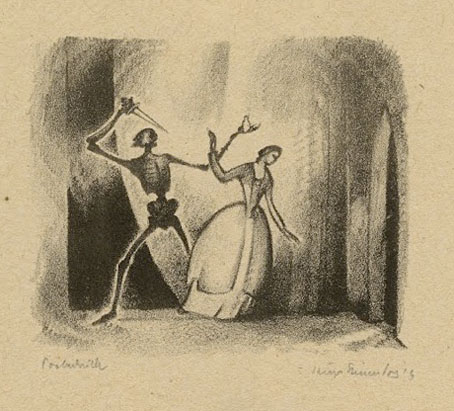
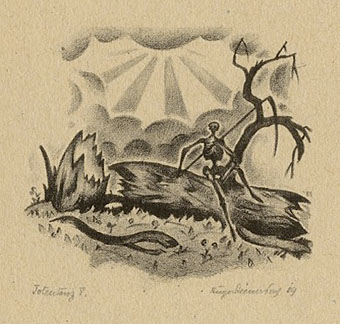
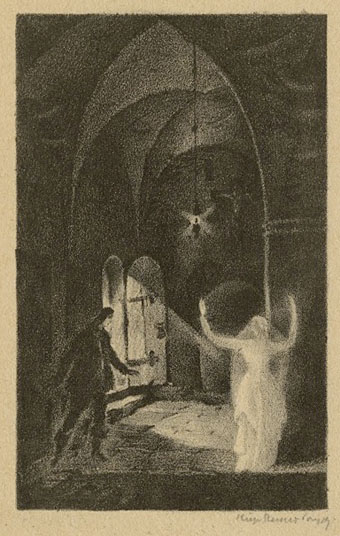
Another handful of macabre illustrations by Hugo Steiner-Prag. As before, these are minor works compared to the Golem illustrations and his illustrated Poe but it’s good to find something new. The Ancestress (1816) was a tragedy by Austrian dramatist Franz Grillparzer in which a woman killed by her husband for infidelity returns to haunt future generations. Steiner-Prag’s illustrations date from 1919, and may be seen at the Google Cultural Institute.

steinerprag09.jpg

steinerprag10.jpg

Continue reading “Hugo Steiner-Prag’s The Ancestress”

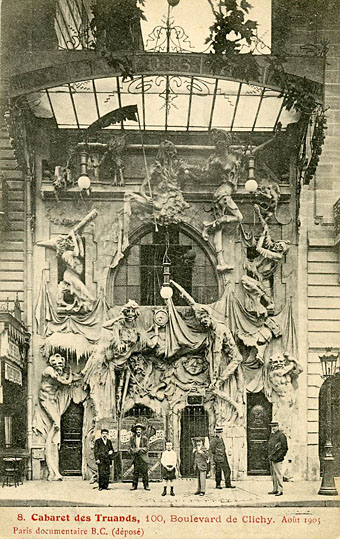
Cabaret des Truands

truands1.jpg

Up until 1950 Montmartre retained an aura of evil for provincials and foreign visitors, and did its best to satisfy them with a tawdry kind of satanism. The most famous of these places, in the Boulevard de Clichy, was called L’Enfer.

Philippe Jullian, Montmartre (1977)

L’Enfer is still the most famous of these vanished Parisian establishments thanks to photos by Eugène Atget and others of its hell-mouth entrance. Among the other novelty cabarets on the Boulevard de Clichy there was Le Ciel (Heaven) next door to L’Enfer, and the death-themed Cabaret du Néant (Cabaret of Nothingness, or Limbo as Jullian has it). The exterior of the latter was suitably funereal but otherwise mundane, although once inside you were in crypt-like surroundings.

truands2.jpg

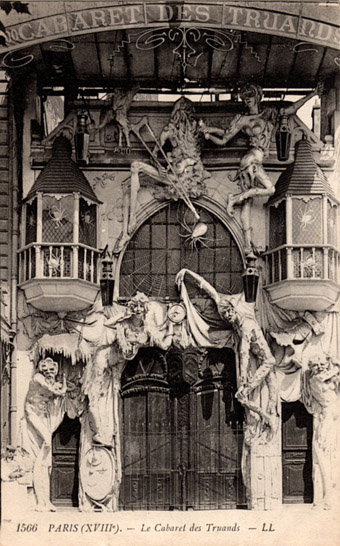
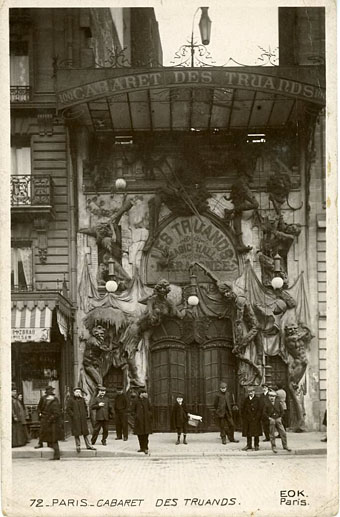
Another cabaret with a striking exterior that I hadn’t come across before was at no. 100 Boulevard de Clichy. The Cabaret des Truands (Cabaret of Truants) had a generally medieval interior with staff dressed like serving wenches and troubadours, but the exterior could almost be that of a fairground haunted house, replete with spider webs and plaster grotesques. Descriptions in English are unclear but the spiders seem to relate to a shared establishment, L’Araignée. It’s surprising to think of all these extravagant façades standing in a single (long) street in the heart of Paris, but then Montmartre in the late 19th century was the wild nighttown. Searching for photos of the Cabaret des Truands reveals an exterior changing by degrees with the passing years.

truands3.jpg

Previously on { feuilleton }
Infernal entrances