Hello Dali! revisited

dali1.jpg

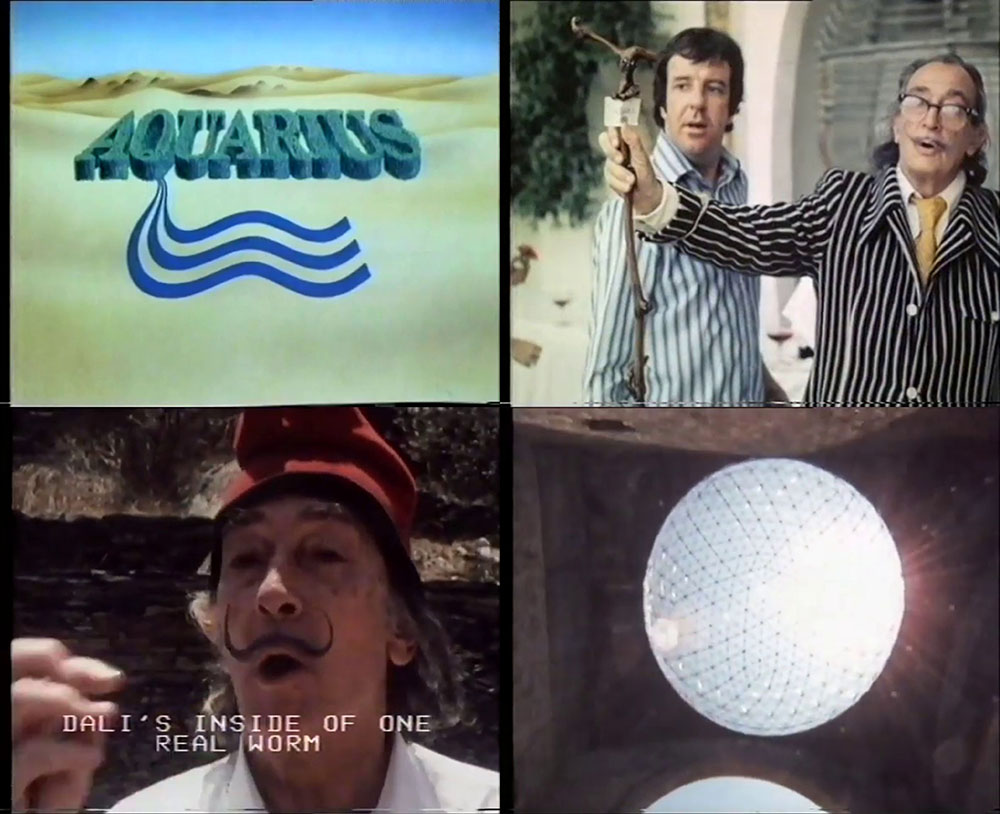
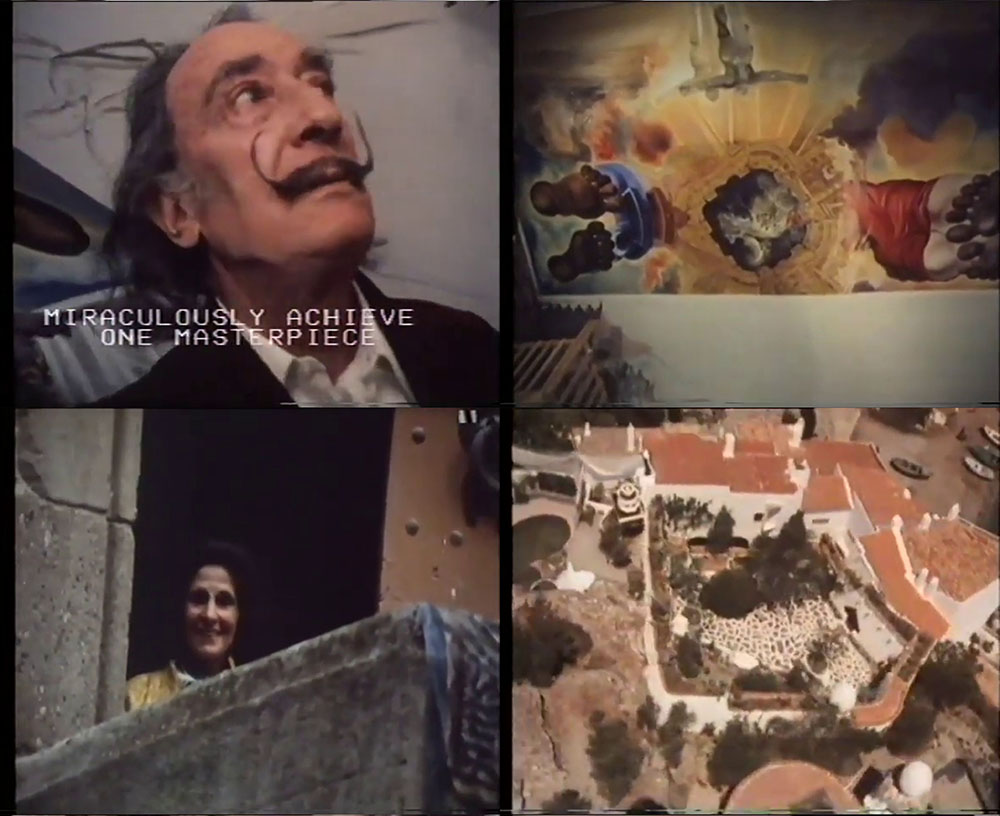
After mentioning Salvador Dalí in the previous post, here’s the man himself in a UK TV profile from 1973. I wouldn’t usually return to something like this but for years the only copy of Hello Dali! on YouTube was spoiled by having been recorded with a ghosted signal. The new copy isn’t perfect either, the sound is rather dull but this can be improved if you download the thing and watch it using VLC with the equalizer boosting the top end.
dali2.jpg

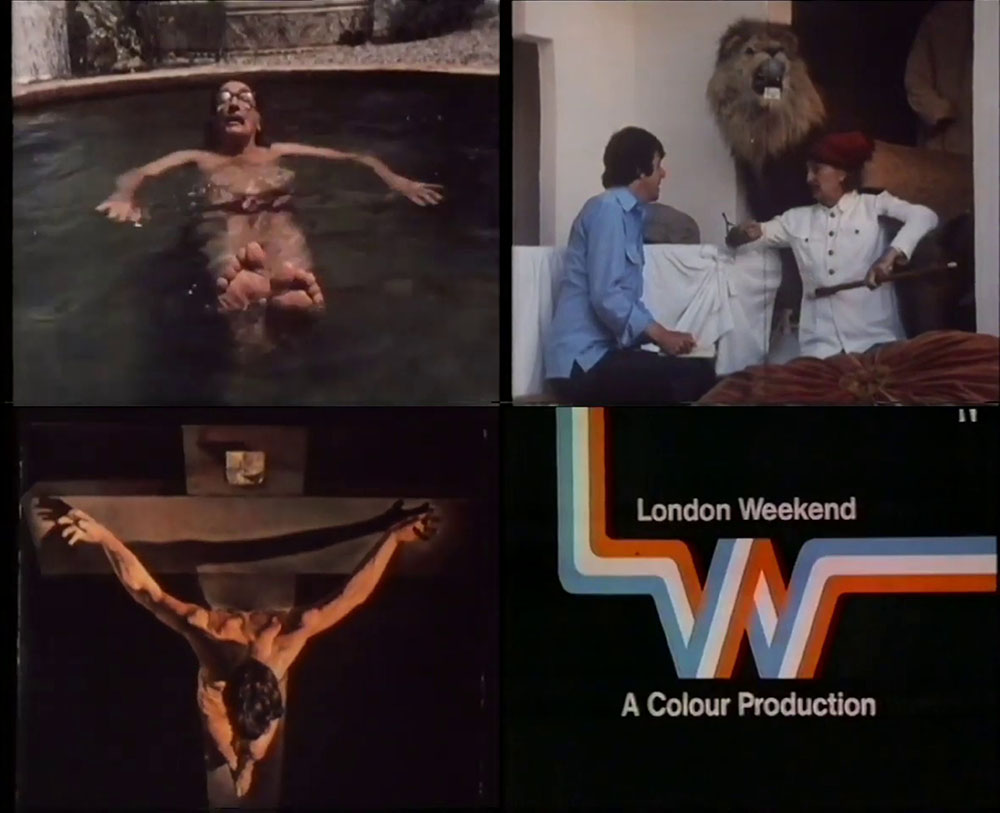
Instead of writing a new description I’ll repost the one I wrote 15 years ago. Something I didn’t mention in the original post is that this may be the last time that Gala Dalí was seen on camera, at least by foreign TV crews. She appears briefly and at a distance, hovering in the doorway of her Dalí-free castle before turning up later on the roof of Dalí’s home.
dali3.jpg

Brits who are old enough may remember Aquarius, an ITV arts programme whose weekly slot was taken over in the late 1970s by The South Bank Show, episodes of which used the same format of a short studio introduction followed by a self-contained film. In place of the SBS’s Melvyn Bragg we have Humphrey Burton introducing a film directed by Bruce Gowers. Russell Harty is the front man, seen here in the days before he achieved greater fame as a gossipy chat-show host. I’d been wanting to see this for a long time, having lost a video tape of it years ago. I never saw the original broadcast but it was screened again after Dalí’s death in 1989, and I remembered it as being particularly good for showing a slightly more human side to the eccentric and occasionally annoying artist. So it is, giving us a brief portrait of Dalí in his 69th year, preoccupied at that time with the construction of his museum in Figueres. The value of Harty and Gowers coup in getting the artist to allow a film crew into his home can be found in subsequent UK documentaries, many of which use uncredited extracts from these interviews. It’s the brief moments of interview which make this even though they reveal little. It’s refreshing seeing Dalí talking conversationally in front of a camera instead of putting on a performance.

The early 70s saw the last flare of real interest in Dalí from the world at large. Dalí and Surrealism in general had a resurgence of popularity in the late 60s as a consequence of psychedelic culture. A number of books by or about the artist were published or reprinted, among them Peter Owen’s 1973 revival of Hidden Faces, a novel which Dalí had written in 1944. Alejandro Jodorowsky was circling the Dalí camp around the same time, trying to inveigle the artist into portraying the Emperor in his planned film adaptation of Dune. One detail worth noting in the conversation with Russell Harty is mention of a golden toilet, something which Jodorowsky says Dalí wanted as his throne if he was going to appear in the feature film. We never got to see Jodorowsky’s Dune but it’s good to find this documentary available once again.

Elsewhere on { feuilleton }
The Surrealism archive

Previously on { feuilleton }
The Fame and shame of Salvador Dali
Figures of Mortality: Lawrence versus Dalí
Être Dieu: Dalí versus Wakhévitch
Chance encounters on the dissecting table
Salvador Dalí’s Maze
Dalí in New York
Dalí’s discography
Soft Self-Portrait of Salvador Dalí
Mongolian impressions
Hello Dali!
Dirty Dalí
Impressions de la Haute Mongolie revisited
The art of Helmut Wenske

wenske19.jpg

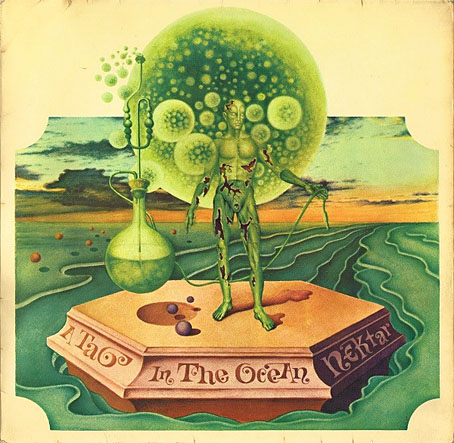
A Tab in the Ocean (1972) by Nektar.

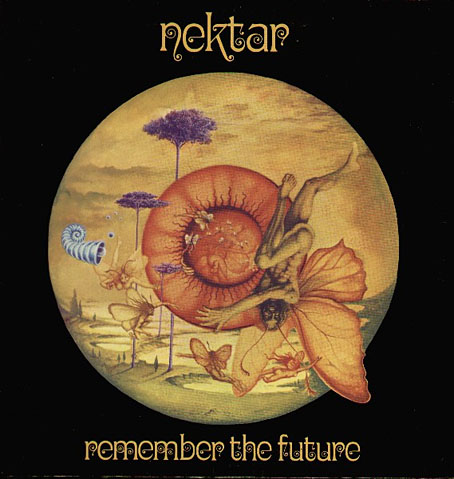
This is another post in which I refer to Franz Rottensteiner’s The Fantasy Book: The Ghostly, the Gothic, the Magical, the Unreal (Thames & Hudson, 1978) as a source of discovery. Rottensteiner is Austrian which no doubt explains why his study of fantasy and horror in art and fiction had a broader reach than you would have found in a similar study from a British or American editor. Some of the writers whose work he discusses—Stefan Grabiński, for example—hadn’t been translated into English at that time. Among the artists whose work appeared as illustration Helmut Wenske was one of several whose paintings were seldom seen in Anglophone publications, although a few album covers that featured Wenske art—those for Nektar in particular—were a common sight in British record shops in the 1970s.

wenske20.jpg

Remember The Future (1973) by Nektar.

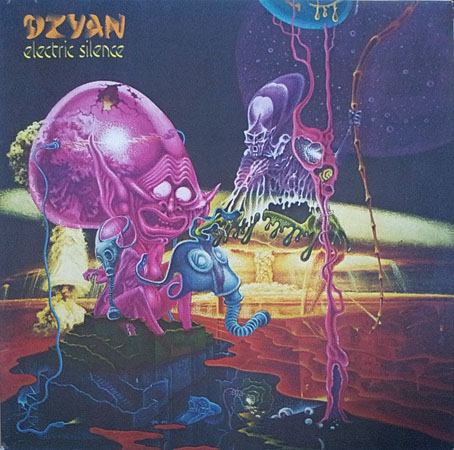
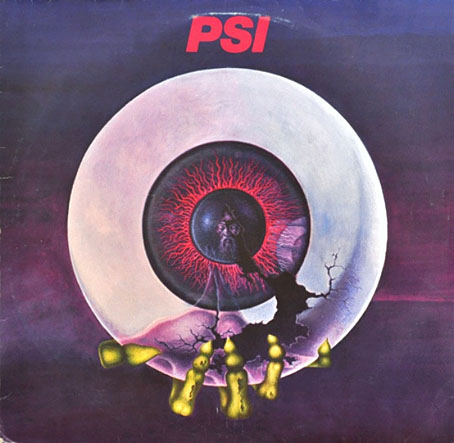
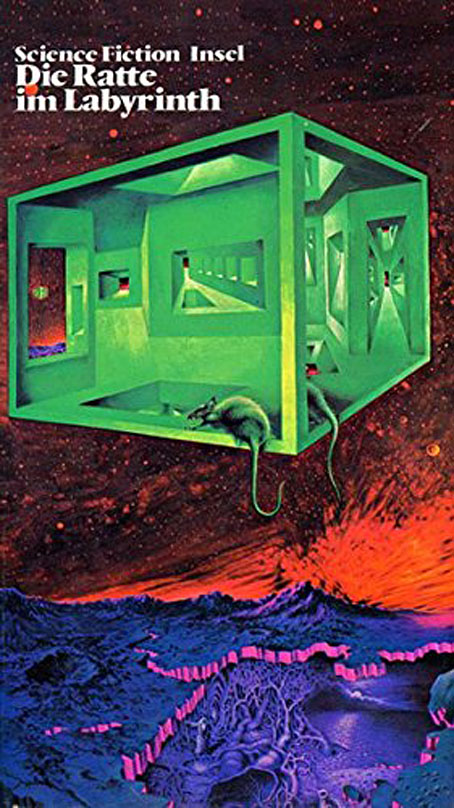
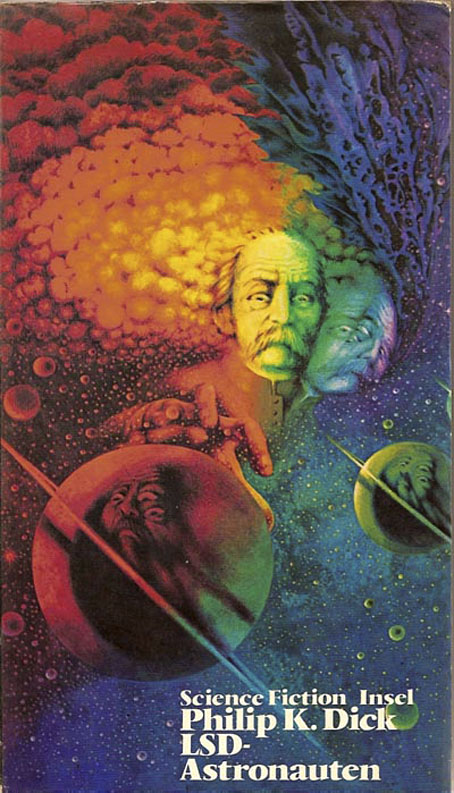
Wenske is a German artist with a penchant for Dalí-like Surrealism that might have been strained through a psychotropic filter. Most of his work in the 1970s was as an album cover designer for the Bellaphon label, and most of those covers are designs rather than paintings. There are a number of book covers, however, some of which are recycled from his album covers. From 1971 to 1975 Wenske painted the covers for a series from Insel Verlag, “Phantastische Wirklichkeit: Science Fiction der Welt”, a collection of reprints edited by Franz Rottensteiner. Wenske’s ISFDB credits list a few horror covers along with these, a small percentage of which are Lovecraft-related. In the past I’ve drawn attention to many different Lovecraft illustrators but Wenkse is one of a small number of these to have also written Lovecraftian fiction of his own (Die Krypta von Shaggay’h, 1974). He enjoys the work he’s being asked to illustrate, in other words, which isn’t something you can always expect from illustrators.

wenske22.jpg

Electric Silence (1974) by Dzyan.

The covers below aren’t the best quality but better copies have proved hard to find. For those who’d like to see more Wenske art there’s at least one German catalogue that collects his work from the early 70s on.

• Related reading: View From Another Shore: An Interview with Franz Rottensteiner.

wenske21.jpg

Horizonte (1977) by PSI.

wenske01.jpg

wenske02.jpg

Continue reading “The art of Helmut Wenske”

The Black Goat

blackgoat.jpg

I found time recently to finish another picture for the revised edition of my Lovecraft book, a picture which I almost completed several months ago then had to set aside. Last year’s steady progress on the book’s production was brought to a halt in December as a result of a substantial and time-consuming illustration commission. I can’t complain—the new work was welcome after a rather fallow year—but it left me with none of the spare time I usually try and allot to personal projects.

The latest piece is yet another addition to the Great Old Ones section, a collaboration with Alan Moore for which Alan wrote a series of short text pieces that mapped Lovecraftian gods and locations across the spheres of the Kabbalah. If you’ve heard of Shub-Niggurath then you’ll doubtless know the additional title given to the entity: “The Black Goat of the Woods with a Thousand Young”. For the Kabbalistic scheme Alan identified Shub-Niggurath with Binah, the third sphere on the Tree of Life which represents the point at which the descent of energies from the higher spheres to the lower are infused with female qualities. In Kabbalistic terms the assignation works well, Binah being a sphere where gravid entities are preparing to give birth. For the artist, Shub-Niggurath is another Lovecraftian god that’s little more than a suggestive name; the “Black Goat” is never described in Lovecraft’s own writings, and we never learn what the “Thousand Young” may be. This gives considerable latitude to an illustrator, although most of the depictions tend to incorporate goatish features of some kind. I remain undecided about this. On the one hand the creation of a goat god is a rare example of Lovecraft carrying over attributes from pagan iconography into the unearthly realm of the Great Old Ones; Pan is the obvious forerunner here even though Pan was a male deity. On the other hand there’s the question of the degree to which we should acknowledge any physical goatishness when—as with Tsathoggua and Cthulhu—the resemblance to a terrestrial organism may be a result of a mind at the end of its tether straining for a visual description: “It looked like a…goat/toad/squid-faced dragon…!”

sephiroth.jpg

The Sephiroth chart from the second edition of the book, 2006.

As I say, I’m undecided but for this piece I opted for a compromise, a goat-like head supported by a monstrous body presiding over an even more monstrous progeny. My earlier depiction was another Photoshop melange, something that looked novel in 1999 but wouldn’t pass muster today. The new version is a further evolution of a form of digital drawing I’ve been developing, a process in which you draw a portion of the picture then copy and paste it to a new layer, distort it slightly using one of Photoshop’s Distort filters, then draw over and around the new section until it blends seamlessly with the rest. This has the effect of creating unpredictable forms that underly the work as a whole, rather like the Surrealist techniques of frottage, grattage, decalcomania and so on. The Surrealist processes were all the product of physical materials but the impulse is the same whatever technique you may use: the introduction of a random element that might evade the conscious input of the artist and the habitual strokes made by the drawing hand.

This leaves me now with one last god-form to be reworked, Yig the serpent deity. I’ve no idea at the moment what to do for this but something will emerge once I start playing around. I’ll also be chipping away at the new pages for The Dunwich Horror. Progress on this has been slower than I hoped but I’m still determined to finish the story. Stay tuned for further updates.

Elsewhere on { feuilleton }
The Lovecraft archive

Previously on { feuilleton }
Tsathoggua rising
H.P.L.
The return of the Crawling Chaos
Lettering Lovecraft
Weird ekphrasis and the Dunwich Horrors
Kadath and Yog-Sothoth
Another view over Yuggoth
Nyarlathotep: the Crawling Chaos

Weekend links 831

blackhole.jpg

Black Hole Accretion Disk Visualization by NASA’s Goddard Space Flight Center/Jeremy Schnittman.

• The summer catalogue of lots for the After Dark: Gay Art and Culture online auction. Homoerotic art, photos, historic porn, etc.

• New music: The Sanctity Of Rust by Hollan Holmes; Heavy Water by Magic Tuber Stringband; Sorry I Didn’t Realize by iNFO.

• In another of those foolhardy numbered lists, Alexis Petridis attempts to rank Laurie Anderson’s greatest songs.

“The best of mathematics is a way of thinking,” [Klainerman] said. Progress in the field is made through discoveries rather than inventions, by following its own version of the scientific method. In 1911, for example, Roald Amundsen and four fellow explorers were the first people to reach the South Pole. “The South Pole was there to be discovered,” Klainerman noted, “but the path you take to get there, and the equipment you bring, depends on human inventiveness.” When he and Christodoulou spent six and a half years proving that Minkowski space is stable, they too had to invent the tools to get there. But the stability itself was not their creation. It was a fact to be divined.

A long read by Steve Nadis on Sergiu Klainerman and his conviction that mathematics has an existence that precedes human thought

• At the BFI: Tony Rayns on Lino Brocka’s Macho Dancer (1988), a trip into Manila’s gay underworld.

• Read an extract from In Another World: The Four Seasons Of Talk Talk by Graeme Thomson.

• At The Daily Heller: The Serene Surrealism of Guy Billout.

• At Dennis Cooper’s it’s a Malcolm Le Grice Weekend.

Mathematics And Electronics (1995) by Gas | True Mathematics (2002) by Ladytron | Music Is Math (2002) by Boards Of Canada

Weekend links 829

hoffmeister.jpg

In the Constellation of Pisces by Adolf Hoffmeister.

• “Comb through many of the numerous ‘greatest post-punk albums of all time’ lists that you’ll find dotted around the internet and one fairly continual omission is Thirst, which is something of a travesty. It’s difficult to think of many albums that embody the more pioneering and progressive elements of the post-punk spirit than Thirst.” Daniel Dylan Wray on the early, anarchic performances of Clock DVA.

• Warner Brothers have decided at long last to allow the world to see a complete print of Ken Russell’s The Devils, a film they’ve effectively been censoring since 1971.

• A psychedelic Texas company powered hippie culture—then vanished. Gwen Howerton explores the history of the Houston Blacklight & Poster Company.

• “What is the world made of?” A long read by Felix Flicker looking at the nature of reality via the properties of fundamental and emergent entities.

• “My body ached from the volume”: Makoto Kubota remembers his time with the enigmatic and fearsome Japanese rock band Les Rallizes Dénudés.

• New music (and a psychedelic video by Robert Beatty): Introit / Prophecy At 1420 MHz by Boards Of Canada.

Stellar Iris, a new short film by Thomas Blanchard.

• Steven Heller’s font of the month is Puffery.

• At Dennis Cooper’s it’s Zoetrope Day.

This Website Cannot Save You

Der Prophet (1982) by Rolf Trostel | Prophecy Theme (1984) by Brian Eno, Daniel Lanois & Roger Eno | Prophecy Of The White Camel / Namoutarre (2011) by Master Musicians Of Bukkake