A playlist for Halloween: Orchestral and electro-acoustic

kass.jpg

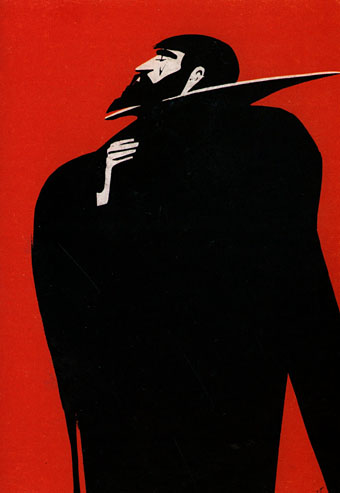
Bluebeard (1982) by János Kass.

I thought I might not be able to do a fresh playlist this year, so much has already been covered by the previous lists (see the links below to earlier posts).

The search for new tonalities and timbres in 20th-century orchestral music led many composers to produce works that sound like—and have been used as—horror film soundtracks although you’ll never find critical discussion acknowledging such a vulgar reaction. This is a very masculine list although some of the performers are women. I might have included Diamanda Galás but she was in the first list, as was Delia Derbyshire with her associates in White Noise, the subject of a longer post here.

The Isle of the Dead (1909) by Sergei Rachmaninov
Mentioned here a few days ago, Rachmaninov’s suitably sombre piece is one of many compositions to borrow the medieval Dies Irae hymn for one of its themes.

Bluebeard’s Castle (1911) by Béla Bartók
Frank Zappa once said that his initial response upon hearing the music of Edgard Varèse was “These chords are mean; I like these chords.” I feel the same about Bartók’s music which can get very mean indeed. The obvious piece to mention would be the Adagio from Music for Strings, Percussion and Celeste which Stanley Kubrick used in The Shining. Instead I’ve selected Bartók’s only opera, a psychodrama for two performers and orchestra in which Bluebeard’s new wife, Judith, explores the castle (which also represents her husband’s character) only to find everything there stained with blood.

Visage (1961) by Luciano Berio
In which Berio records his wife and frequent collaborator, Cathy Berberian, then dissects her vocalisations to disturbing effect. “Visage contains no singing, and virtually no words,” says Martin Butler. “The product of days of gruelling recording for Berberian (leaving her physically damaged), it instead consists of her laughter, moans and groans, snorts and wheezes, and gibberish, all brilliantly edited, filtered, distorted and mixed with electronic backing. It is a remarkable demonstration of the power of the wordless voice. The effect is shocking and extreme, but also hilarious and touching – and often all these things simultaneously.”

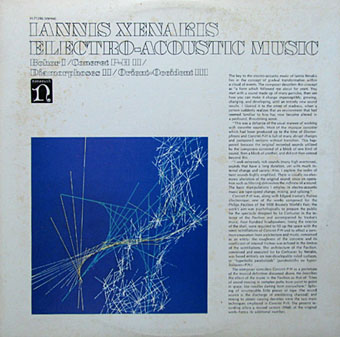
Bohor (1962) by Iannis Xenakis
In addition to making some of the most thrilling and advanced new music of the 20th century, Xenakis chose great titles for his compositions, frequently unusual words. Bohor is a recording of layered sound sources that include a Laotian mouth organ, prepared piano, Iraqi and Hindu jewellery, and should ideally be heard with the sounds surrounding the listener. Intended by its composer to represent “the onset of madness”.
xenakis.jpg

Design by Paula Bisacca.

Uaxuctum: The Legend of the Maya City, Destroyed by Themselves for Religious Reasons (1966) by Giacinto Scelsi
And speaking of great titles… The Italian composer uses orchestra, a choir and an Ondes Martenot to convey an ancient apocalypse. Part III was selected by Robbie Robertson (along with works by other composers listed here) for the Shutter Island soundtrack.

Lontano (1967) by György Ligeti
Stanley Kubrick used Ligeti’s music in three of his films. Lontano‘s piercing harmonics and growling chords prowl through The Shining together with pieces by Bartók and Penderecki.

Black Angels: Thirteen Images from the Dark Land (1970) by George Crumb
Many of the pieces here jangle the nerves but none more than Crumb’s composition for string quartet, glass and metal instruments, a part of which is used in The Exorcist. Composed “in time of war”, it’s a howl of despair whose opening manages to be even more disturbing than Penderecki’s Threnody for the Victims of Hiroshima. The 1990 Kronos Quartet recording is essential.
logos.jpg

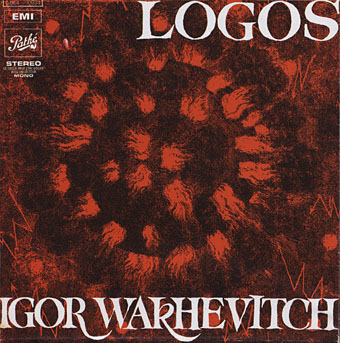
Logos (Rituel Sonore) (1970) by Igor Wakhévitch
“Sound ritual for pop group, mixed choir and magnetic tape.” The first album by the elusive French composer, a composition for a ballet, described by Alan Freeman as “a soprano singer, strange orchestral textures and percussives (drums, cymbals, gongs, etc.) blended with effects and processing. As the ominous percussion sets off with drum-rolls and ritualistic tension, the mood is of a looming anticipation of what is to come. Here we go through phases of weird swirling effects, vivid reverb and atmosphere. The tension becomes overpowering, yet we are led on…”

The Dream of Jacob (1974) by Krzysztof Penderecki
The Polish composer wrote for film soundtracks as well as the concert hall so it’s no surprise that his work can be heard in The Exorcist, The Shining and Shutter Island. The atmosphere of sustained malevolence in this piece is perfect for Kubrick’s haunted house. Whatever Jacob was dreaming about, it wasn’t pleasant.
zorn.jpg

Design by Heung-Heung Chin.

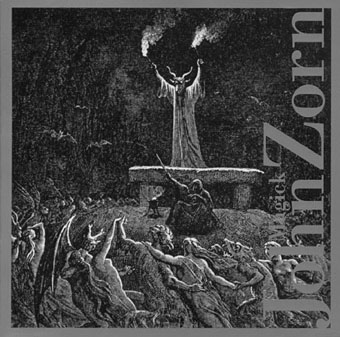
Necronomicon (2004) by John Zorn
A five-part composition for string quartet from Zorn’s Magick album.

Previously on { feuilleton }
Powell’s Bluebeard
A playlist for Halloween: Drones and atmospheres
A playlist for Halloween: Voodoo!
Dead on the Dancefloor
Another playlist for Halloween
A playlist for Halloween
The music of Igor Wakhévitch

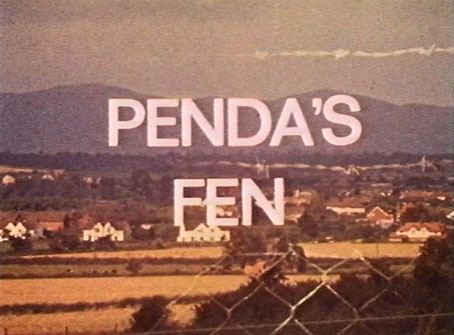
Penda’s Fen by David Rudkin

penda4.jpg

This is a post I’d been intent on writing for the past four years but kept putting off: why go to great lengths to describe another television drama which people can’t see? And how do you easily appraise something which haunted you for twenty years and which remains a significant obsession? My hand has been forced at last by a forthcoming event (detailed below) so this at least has some fleeting relevance, but before getting to that let’s have some facts.

penda3.jpg

Penda’s Fen was a TV play first screened in March 1974 in the BBC’s Play For Today strand. It was shot entirely on film (many dramas in the 1970s recorded their interiors on video) and runs for about 90 minutes. The writer was David Rudkin and it was directed by Alan Clarke, a director regarded by many (myself included) as one of the great talents to emerge from British television during the 1960s and 70s. The film was commissioned by David Rose, a producer at the BBC’s Pebble Mill studios in Birmingham, as one of a number of regional dramas. Rudkin was, and still is, an acclaimed playwright and screenwriter whose work is marked by recurrent themes which would include the tensions between pagan spirituality and organized religion, and the emergence of unorthodox sexuality. Both these themes are present in Penda’s Fen, and although the sexuality aspect of his work is important—pioneering, even—he’s far from being a one-note proselytiser. Alan Clarke is renowned today for his later television work which included filmed plays such as Scum (banned by the BBC and re-filmed as a feature), Made in Britain (Tim Roth’s debut piece), The Firm (with Gary Oldman), and Elephant whose title and Steadicam technique were swiped by Gus Van Sant. Penda’s Fen was an early piece for Clarke after which his work became (in Rudkin’s words) “fierce and stark”.

The most ambitious of Alan Clarke’s early projects, Penda’s Fen at first seems a strange choice for him. Most scripts that attracted Clarke, no matter how non-naturalistic, had a gritty, urban feel with springy vernacular dialogue (and sometimes almost no dialogue). David Rudkin’s screenplay is different: rooted in a mystical rural English landscape, it is studded with long, self-consciously poetic speeches and dense with sexual/mythical visions and dreams, theological debate and radical polemic—as well as an analysis of Elgar’s The Dream of Gerontius. But though Penda’s Fen is stylistically the odd film out in Clarke’s work, it trumpets many of his favourite themes, in particular what it means to be English in the last quarter of the twentieth century.

Howard Schuman, Sight & Sound, September 1998

Spencer Banks is the principal actor in Penda’s Fen, playing Stephen Franklin, an 18-year-old in his final days at school. The BBC’s Radio Times magazine described the film briefly:

Young Stephen, in the last summer of his boyhood, has somehow awakened a buried force in the landscape around him. It is trying to communicate some warning, a peril he is in; some secret knowledge; some choice he must make, some mission for which he is marked down.

penda2.jpg

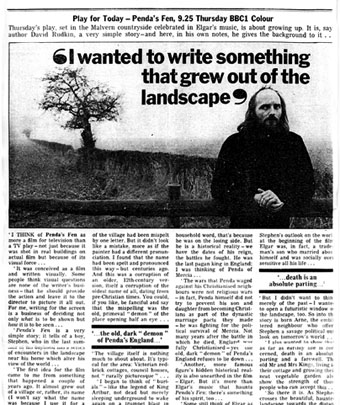
The magazine also interviewed Rudkin about the film:

“I think of Penda’s Fen as more a film for television than a TV play—not just because it was shot in real buildings on actual film but because of its visual force…

“It was conceived as a film and written visually. Some people think visual questions are none of the writer’s business—that he should provide the action and leave it to the director to picture it all out. For me, writing for the screen is a business of deciding not only what is to be shown but how it is to be seen…

Penda’s Fen is a very simple story; it tells of a boy, Stephen, who in the last summer of his boyhood has a series of encounters in the landscape near his home which alter his view of the world…
Continue reading “Penda’s Fen by David Rudkin”

Naked furniture

blazquez.jpg

Taking a break from the psychedelic overload today with a return to (what else?) black and white photographs of naked men. The subjects this time are from Mobilario Humano, fanciful suggestions for furniture designs by David Blázquez which use the photographer himself as the subject, collaged into a series of pliable clones. Allen Jones produced similar work with female figures in the 1960s—and Stanley Kubrick borrowed Jones’ idea for A Clockwork Orange—but this is the first time I’ve seen male figures used this way.

Thanks to Carmine for the tip!

Readouts

hal9000.jpg

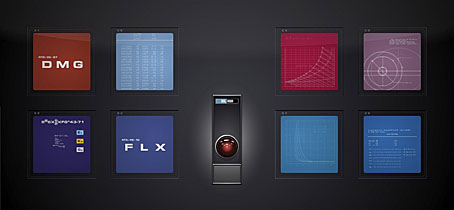
The HAL Project.

January flew by in a blizzard of work so posting here tended to rely more on pictures than words. As usual the things I’ve been designing will be unveiled when they’re closer to being published or released but for now here’s some new or not-so-new items worthy of note.

The HAL Project screensaver. I’ve never had much time for gaudy screensavers, I prefer something which doesn’t get annoying when I’m otherwise engaged. For a while now I’ve been using the Mac-only Lotsawater which turns your monitor into a vertical water tank with slow motion ripples. I replaced that this week with Joe Mackenzie’s HAL Project screensaver (for Mac and Windows) which throws up random samplings of the HAL 9000 monitor animations from 2001: A Space Odyssey. Sounds a bit dull until you see it in action, very crisp and detailed graphics, many of which mimic the animations of those in the film. I’ve belatedly realised how similar these fields of colour and their lines of white type are to the opening titles of A Clockwork Orange, yet another connection between the two films. Now I can sit trying to figure out some of the less obvious 3-letter codes for the spacecraft’s systems; Stanley Kubrick was so thorough you just know they all mean something.

Via the Kubrick obsessives at Coudal.

A pair of new blogs. Designer Barney Bubbles should need little introduction here but if you require one then read this. Paul Gorman has been in touch to inform me of a new online companion to his BB book, Reasons To Be Cheerful, which already looks like a treat with displays of Bubbles creations that didn’t make the book.

Writer Russ Kick was also in touch this week with news of his books and book culture blog, Books Are People, Too. Russ is the author of several books for Disinformation and his Memory Hole website notoriously caused a headache for the Bush regime when he forced photos of flag-draped coffins returning from Iraq onto the front pages of American newspapers.

Songs of the Black Würm Gism. And speaking of books, the much delayed sequel to DM Mitchell’s landmark Lovecraft anthology, The Starry Wisdom comes shambling into the light of day at last. The Creation Oneiros website describes it thus:

The Black Würm Gism Cult – oceanic insect porn – a vortex of cosmic mayhem stalked by ravening lysergic entities – a post-human psychedelic seizure of Lovecraftian text, art and fragments. SONGS OF THE BLACK WÜRM GISM picks up where the acclaimed anthology THE STARRY WISDOM left off and goes beyond – way beyond! – what H.P. Lovecraft dared to show. Editor D.M. Mitchell presents an illustrated brainstorm of visceral deep-sea dream currents, aberrant trans-species sex visions, and frenzied ophidian entropy.

Contributors include: alan moore (cover illustration), john coulthart (introduction), grant morrison, david britton, ian miller, john beal, david conway, kenji siratori, herzan chimera, james havoc, reza negarestani, & many others

Yes, the rather pompous introduction for this volume is mine and the cover is Alan Moore’s psychedelic arachnoid rendering of the demon Asmodeus, the same picture I used to create my little hidden film on the Mindscape of Alan Moore DVD. The Starry Wisdom roused a vaporous fury among the more staid Lovecraft readers so I look forward to seeing what squeaks of outrage this new book inspires. Publication is set for September 2009 but you can order it now from Amazon and other outlets.

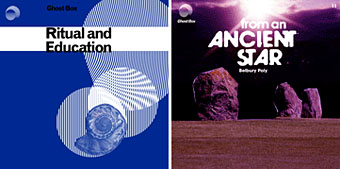
ghost_box.jpg

Ghost Box haunts again. And if anything was going to provide a suitable soundtrack to “aberrant trans-species sex visions, and frenzied ophidian entropy” you could do worse than some of the works of the Ghost Box collective, especially the spooky and abrasive Ouroborindra by Eric Zann. Ritual and Education is a new download-only sampler of Ghost Box tracks and probably an ideal place to start if your curiosity is piqued by my recurrent raves about these releases. From An Ancient Star is the latest CD from Belbury Poly which swaps the Pelican Books graphics of earlier works for a convincing piece of crank lit. cover art which wouldn’t look out of place in the RT Gault archives.

Previously on { feuilleton }
The Demon Regent Asmodeus
The Séance at Hobs Lane
Ghost Box
2001: A Space Odyssey program

Pablo Ferro on YouTube

ferro1.jpg

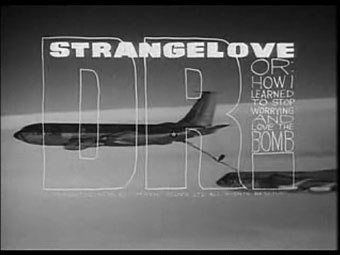
Dr. Strangelove titles (1964).

There’s less of his work around than there should be, unfortunately. Saul Bass is justly celebrated for his title sequences and poster designs yet Pablo Ferro—whose titles were equally innovative and memorable—is rarely heard of even though you’ll have seen a lot of his work.

ferro2.jpg

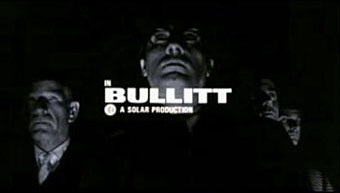
Bullitt titles (1968).

Ferro’s advertising films brought him to the attention of Stanley Kubrick for whom he created titles and trailers for Dr. Strangelove and A Clockwork Orange (1971). The hand-drawn quality of the Strangelove titles was revisited for Stop Making Sense (1984) and Men In Black (1997), while the frenetic pace of the Clockwork trailer still seems advanced over thirty years later. This collection lacks his titles for the original Thomas Crown Affair (1968) but you can see a mix of Ferro’s split-screen work (which includes parts of the titles) here.

By Pablo Ferro:
Dr. Strangelove trailer
Dr. Strangelove titles
Bullitt titles
A Clockwork Orange trailer
Stop Making Sense titles
To Die For titles
LA Confidential titles

This Is Pablo Ferro

About Pablo Ferro:
• Pablo Ferro documentary clips: I | II

Quick Cuts, Coarse Letters, Multiple Screens—an article by Steven Heller
• Free Ferro-derived fonts! Pablo Skinny | Major Kong

Previously on { feuilleton }
Juice from A Clockwork Orange
Clockwork Orange bubblegum cards
Alex in the Chelsea Drug Store