Saki: The Improper Stories of HH Munro

saki.jpg

I thought I’d written about this some time ago but it appears not so the present post can serve as a way to honour the talents of the late Fenella Fielding. The obituaries this week have inevitably emphasised her roles in the Carry On films, a series of alleged comedies that I’ve never liked, and which weren’t much liked by several of the actors who appeared in them. Fenella Fielding did much more than this, of course, especially in the theatre, on radio and in television, including appearances such as the one here from a collection of adaptations of the peerless short stories of Hector Hugh Munro, better known as Saki. Granada TV made a whole series of these in 1962, broadcasting this anthology in 1985 following the death of producer Philip Mackie. Fenella appears in the second story, A Holiday Task, as the forgetful Mary Drakmanton, and she fits so well with into Saki’s world that I really wish I’d suggested to my colleagues at Savoy Books a reading or two by Fenella from Saki. She enjoyed reading Colette for Savoy, and chose the selections herself, one of which concerned Colette’s homosexual friends. Given this, I can imagine Fenella teasing out some of the sly gay humour that runs like a scarlet thread through Saki’s Clovis stories.

The other pieces in this Granada collection are The Stampeding of Lady Bastable, The Way to the Dairy, Sredni Vashtar and A Defensive Diamond. The story editor was Gerald Savory who later did such an excellent job adapting Dracula for the BBC.

Previously on { feuilleton }
Fenella Fielding reads Colette

Weekend links 335

oelze.jpg

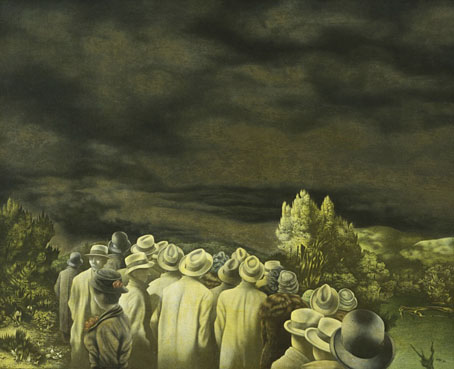
The Expectation (1936) by Richard Oelze.

Richard Oelze, 1900–1980 is an exhibition of paintings and drawings at the Michael Werner Gallery, London, which runs until January 2017. More Surrealist works by Oelze may be seen at But Does It Float and Ubu Gallery.

Will McMorran on the problems of translating the Marquis de Sade’s most obscene work. Related: Jay Sina on Sexistential Horror: HP Lovecraft and the Marquis de Sade as perverse peers.

• Mixes of the week: More Halloween horror at No Condition Is Permanent, Secret Thirteen Mix 200 by JK Flesh, and a mix for The Wire by Botany.

The Chronicles of Clovis (1911), a story collection by Saki (HH Munro) who died 100 years ago this week.

• “Jack is 24, sometimes he’s a drag queen named Sabrina.” The Queen (1968).

• The Mindset of the Macabre: An interview with Abigail Larson.

• “The world is full of bloviators,” says MAD cartoonist Al Jaffee.

Ginette Vincendeau on how the French birthed film noir.

• How to throw a dinner party like Salvador Dalí.

Sastanàqqàm, another new song by Tinariwen.

• At A Year In The Country: more Quatermass.

• Photographs by Klaartje Lambrechts.

Paul Bailey on Pasolini’s lost boys.

Adam Shatz on Leonard Cohen.

Subterranean London

Joan Of Arc (1986) by Jennifer Warnes with Leonard Cohen | Who By Fire (1986) by Coil | The Future (1992) by Leonard Cohen

Weekend links 322

quays.jpg

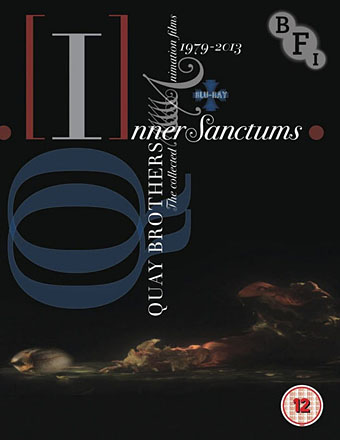
• Cover art by the Quays for Inner Sanctums—Quay Brothers: The Collected Animated Films 1979–2013, a Blu-ray collection which will be released by the BFI next month. Being something of an obsessive where the Quays are concerned I have a lot of this material already (some of the films in multiple copies), but I’ve been hankering for a BR collection for some time. The new set will include everything that’s on the BFI’s DVD collection plus more recent films, some of which have been the subject of previous { feuilleton } posts.

• Aubrey Beardsley: “The subjects were quite mad and a little indecent. Strange hermaphroditic creatures wandering about in Pierrot costumes or modern dress; quite a new world of my own creation.” Alan Hollinghurst reviews the catalogue raisonné of Beardsley’s work.

• How to find the spirit of HP Lovecraft in Providence. Related: there’s now a funding page for the statue of Lovecraft by Gage Prentiss being proposed for downtown Providence. Read about it here.

• At The Quietus: Robert Barry on KPM and the history of library music, and James De Carteret on Mike Hodges’ underrated The Terminal Man (1974).

Michael Newton reviews Erica Wagner’s First Light, “a festschrift of essays, reminiscences, poems and stories dedicated to Alan Garner and his work”.

Cosey Fanni Tutti‘s forthcoming memoir Art Sex Music should prove more interesting than some of the recent music business autobiographies.

• Mixes of the week: A New Age mix by Matthewdavid, FACT mix 563 by Deerhoof, and Secret Thirteen Mix 193 by Nite Fields.

Underground music, echoes of war: using the vast Inchindown storage chamber for its resonant properties.

Totally Lost: a photographic and video exploration of abandoned European totalitarian architecture.

• More animation: Nonsense, Cartoons, and My Post-Soviet Adolescence by Naré Navasardyan.

Annie Rose on the allure of the predatory lesbian vampire in film.

• “Let’s write an encyclopedia of things blue,” says Bernd Brunner.

• Ferrets can be gods: Katherine Rundell on the inimitable Saki.

• The Mystery of Hieronymus Bosch by Ingrid D. Rowland.

iO-808: A TR-808 drum machine for browsers.

A Good Book

Terminal Hotel (1981) by Synergy | Sataan Is Real (1992) by Terminal Cheesecake | Terminal (1999) by Monolake

Kwaidan

kwaidan1.jpg

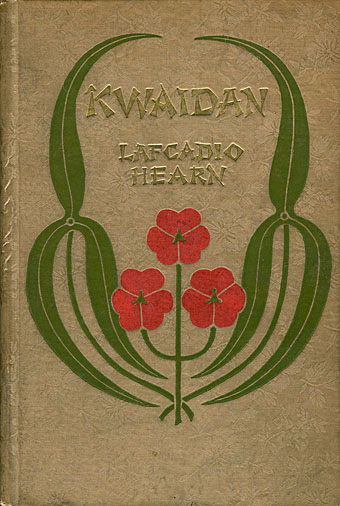
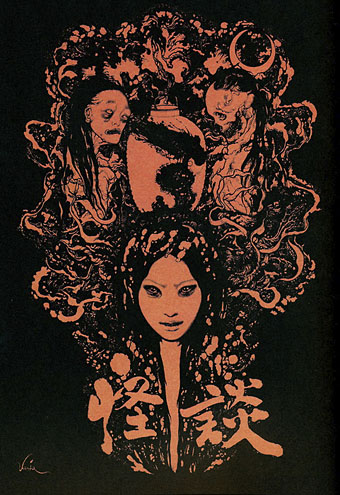
Kwaidan: Stories and Studies of Strange Things (1904), a book by Lafcadio Hearn retelling Japanese ghost stories. Later an incredible film by Masaki Kobayashi and a drawing by Vania Zouravliov.

kwaidan2.jpg

Kwaidan (aka Kaidan; 1964).

kwaidan3.jpg

Kwaidan by Vania Zouravliov (no date).

Kwaidan, Stories and Studies of Strange Things by Lafcadio Hearn with an introduction by Oscar Lewis (1932).

Previously on { feuilleton }
The art of Bertha Lum, 1869–1954
The Boy Who Drew Cats
The art of Takato Yamamoto

The Great God Pan

pan_daphnis.jpg

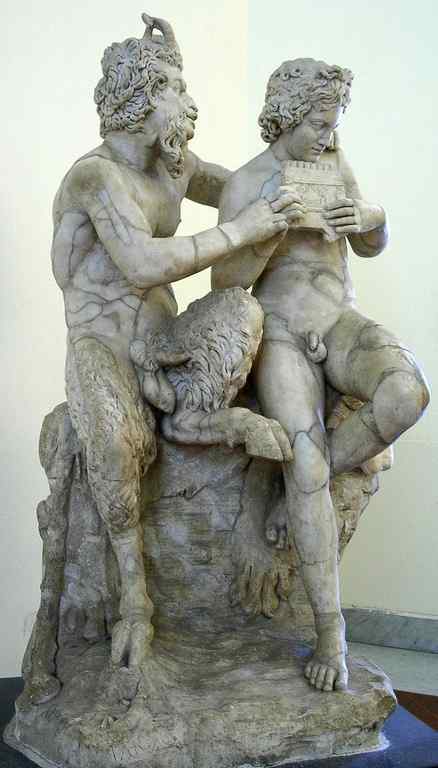
Pan teaching Daphnis to play the panpipes; Roman copy of a Greek original from the 3rd-2nd centuries BCE by Heliodoros.

“The worship of Pan never has died out,” said Mortimer. “Other newer gods have drawn aside his votaries from time to time, but he is the Nature-God to whom all must come back at last. He has been called the Father of all the Gods, but most of his children have been stillborn.”

So says a character in The Music on the Hill, one of the slightly more serious stories from Saki’s The Chronicles of Clovis (1911). Saki’s Pan is a youthful spirit closer to a faun than the goatish creature of legend. But being a gay writer whose tales regularly feature naked young men (surprisingly so, given the time they were written) I’m sure Saki would have appreciated the Roman statue above. There’s nothing chaste about this Pan with his “token erect of thorny thigh” as Aleister Crowley put it in his lascivious 1929 Hymn to Pan, a poem which caused a scandal when read aloud at his funeral some years later. The Roman statue was for a long while an exhibit in the restricted collection of the Naples National Archaeological Museum where all the more scurrilous and priapic artefacts unearthed at Pompeii were kept safely away from women, children and the great unwashed. These are now on public display and include the notorious statue of a goat being penetrated by a satyr.

Continue reading “The Great God Pan”