Weekend links 450

redon.jpg

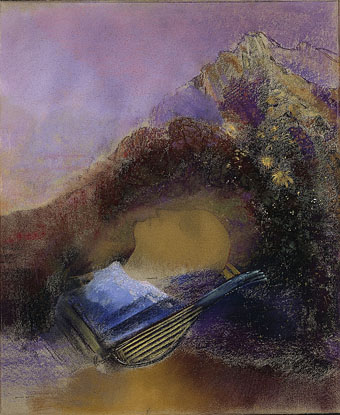
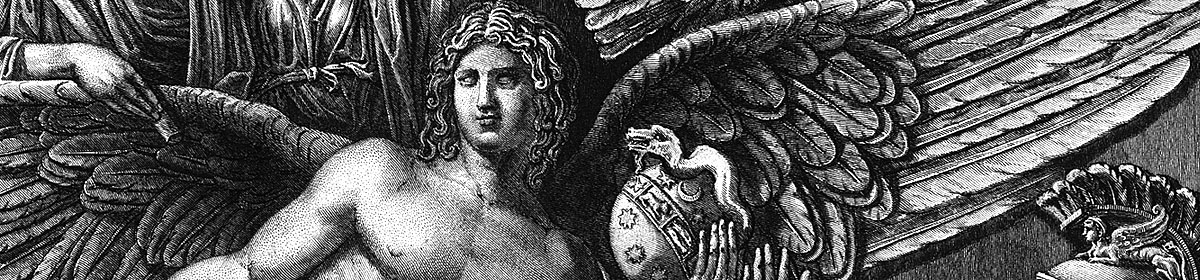
Orpheus (c. 1903–1910) by Odilon Redon. One of 30,000 public-domain images from the Cleveland Museum of Art’s collection.

• Network DVD has announced the premiere home release of Orson Welles’ Great Mysteries, a British TV series that ran from 1973 to 74. Welles’ involvement was limited to introducing each episode but the series itself was one I enjoyed a great deal: 26 short adaptations of period mystery stories that featured a wealth of British and American acting talent. The theme by John Barry was an additional bonus.

• The trailer for Apollo 11, a documentary by Todd Douglas Miller which presents for the first time the 70mm footage recording the Earth-bound parts of the Moon mission. Related: Michelle Santiago Cortés on how NASA used art to shape our vision of the future.

• At Dangerous Minds: a preview of Third Noise Principle, the latest in an excellent series of electronic music compilations from Cherry Red, and Cosey Fanni Tutti talks about her first solo album since 1983.

“The way I understood theory, primarily through popular culture, is generally detested in universities,” Mark [Fisher] told me in 2005, when I interviewed him for the Village Voice. “Most dealings with the academy have been literally clinically depressing.” He darkly surmised that his blog, K-Punk, and the surrounding blogosphere, “seemed like the space—the only space—in which to maintain a kind of discourse that had started in the music press and the art schools, but which had all but died out, with appalling cultural and political consequences.” Mark and the Village Voice are both dead now, leaving unfathomable voids in their wake.

Geeta Dayal on Mark Fisher

• At The Witch Wave: Peter Bebergal and Pam Grossman discuss Bebergal’s latest book (also my current reading), Strange Frequencies: The Extraordinary Story of the Technological Quest for the Supernatural.

• At Bandcamp: another release from the retro-synth cosmos of Jenzeits, and Ufology , an investigation of Britain’s flying-saucer landscape by Grey Frequency.

• Surprising collaboration of the week: Beth Gibbons and Krzysztof Penderecki have made a new recording of Henryk Górecki’s Third Symphony.

Alchemy (1969) the debut album by the Third Ear Band, receives an expanded reissue next month.

The Burn: a science-fiction story by Peter Tieryas with illustrations by Arik Roper.

• Mix of the week: Self-Titled Needle Exchange 275 by Black To Comm.

Amy Turk plays Bach’s Toccata and Fugue in D Minor on her harp.

Chrismarker.org is seeking donations.

Mystery Train (1955) by Elvis Presley | Mystery R.P.S. (No 8) (1981) by Holger Czukay, Jah Wobble, Jaki Liebezeit | Mystery Room (1985) by Helios Creed

Weekend links 428

willink.jpg

Straat met standbeeld (1934) by Carel Willink.

• “[Edward] Gorey, who died in 2000 at 75, was the unequaled master of—of what? Gothic whimsy? The high-camp macabre? Existential black comedy in the Firbankian mode? Essentially unclassifiable, he was, at the end of the day (and it’s always twilight, in Gorey’s stories), simply, inimitably Edwardian.” Mark Dery’s Born to be Posthumous: The Eccentric Life and Mysterious Genius of Edward Gorey, the first full-length biography, will be published in November.

• “In an East Prussian manor house, a Bohemian library, a Bulgarian railway station; in a Venetian citadel, a Breton harbour, a city in the Caucasus, characters encounter not only the vicissitudes of history but also the subtle influences of the uncanny.” Inner Europe by John Howard and Mark Valentine.

• “To the good men I offer the hand of friendship, to the foes of our sex I offer resistance and annihilation!” The next title from Rixdorf Editions (due in November) will be We Women Have no Fatherland (1899), a novel by Ilse Frappan.

• At Dangerous Minds: “The career of Penny Slinger, intrepid surrealist artist of the 1970s, is ripe for rediscovery,” says Martin Schneider.

• Mixes of the week:  FACT mix 668 by Smerz, and XLR8R Podcast 557 by re:ni.

• Dreaming of Walter Benjamin on Walter Benjamin Platz by Roger Gathman.

Alison Kinney on Ludwig II’s obsession with the operas of Richard Wagner.

• A trailer for The Other Side of the Wind, the final film by Orson Welles.

• A happy tenth anniversary to The Quietus.

Wizards (1982) by JD Emmanuel.

The Wizard (1964) by Albert Ayler Trio | The Wizard (1970) by Black Sabbath | Dancin’ Wizard (1973) by Sopwith Camel

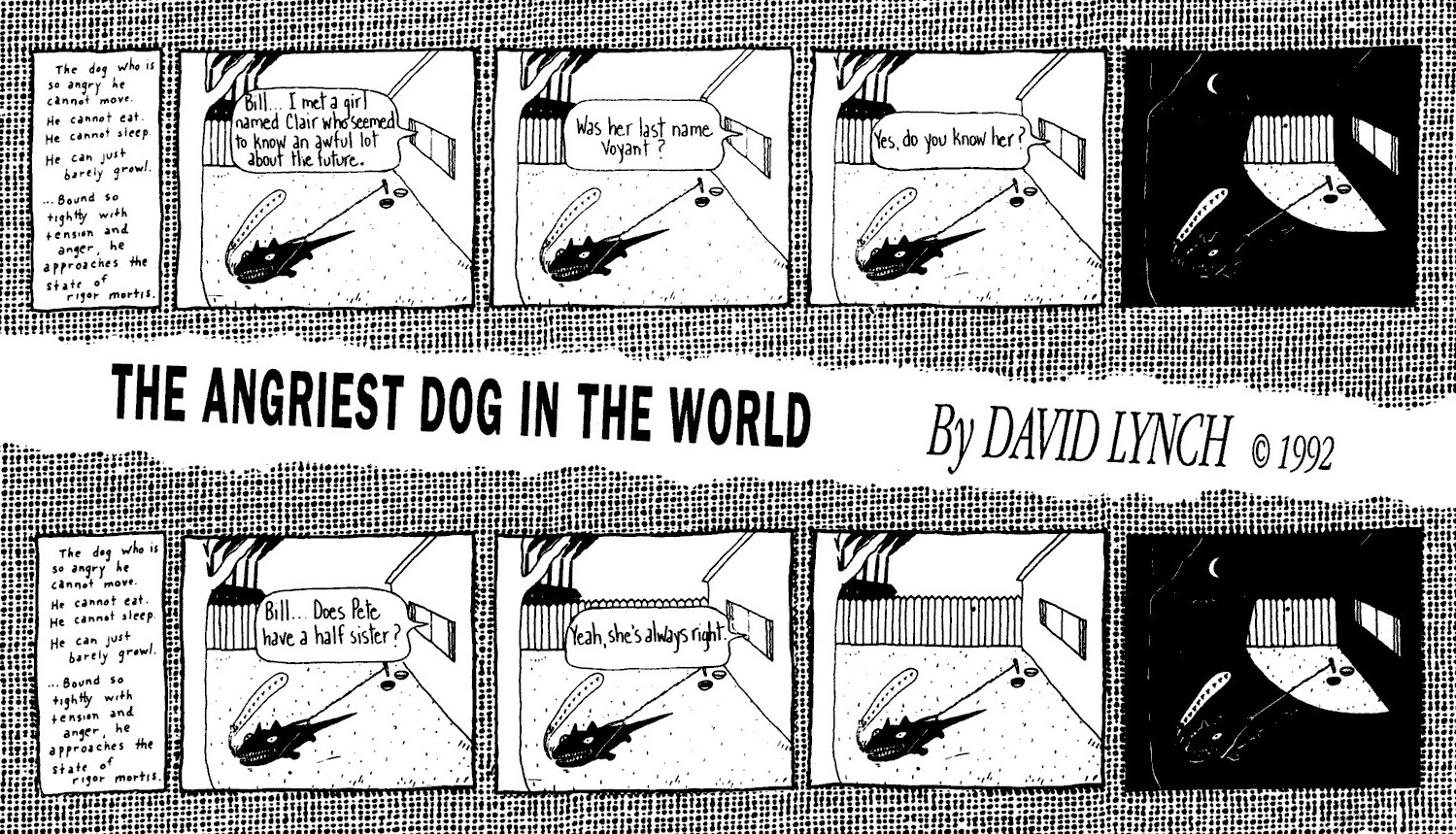
Lynch dogs

angriestdog.jpg

Last year I decided that rather than watch the new series of Twin Peaks via whatever dubious downloads were available, I’d wait until the whole thing was released on disc. Last weekend I finally pressed “play” on the first episode, but prior to this I’d spent the past couple of months working through David Lynch’s filmography, from his earliest shorts to Inland Empire. I also watched a couple of episodes from the first two seasons of Twin Peaks (the pilot and the final episode of season two).

Watching a director’s collected works used to be a difficult thing without an obliging repertory cinema or TV channel. In the days when the BBC and Channel 4 (UK) still treated cinema as an art form we were given seasons of films by Orson Welles, François Truffaut, Ingmar Bergman, Robert Altman and many others. When was the last time a (non-Swedish) television channel showed all of Bergman’s films, I wonder? It was memories of watching an Altman season that led me to spend the summer of 2016 watching all of the director’s films from That Cold Day in the Park (1969) through to A Prairie Home Companion (2006), 33 films in all. I followed this with a viewing of nearly all the Hitchcock films that are currently available on blu-ray. Watching a director’s oeuvre in this manner makes you notice things that seem less obvious when the same films are viewed in isolation: the recurrent use of actors becomes more notable, while themes, obsessions and directorial tics make themselves more apparent.

David Lynch shares with Altman and Hitchcock a compulsion for using the same actors from one film to the next, but I’d not noticed before how often dogs appear in his films. So that’s what this post examines, some of the canine moments from his feature films. Since I didn’t watch the whole of the first two seasons of Twin Peaks they’re omitted from this listing (unless you know of a dog in any of the episodes) while some of  Lynch’s minor works such as the short-lived On the Air series, and one-offs such as The Cowboy and the Frenchman (1988), I either haven’t seen for years or haven’t seen at all.

The Grandmother (1970)

grandmother.jpg

The Grandmother not only introduces the elderly woman/suited boy pairing that recurs later in the Twin Peaks mythos, but it also establishes the canine theme when the boy’s parents are shown mewling and barking like dogs. Whatever other qualities dogs may possess, Lynch is drawn to the disturbing and often threatening nature of the sounds they make.

Eraserhead (1977)

eraserhead.jpg

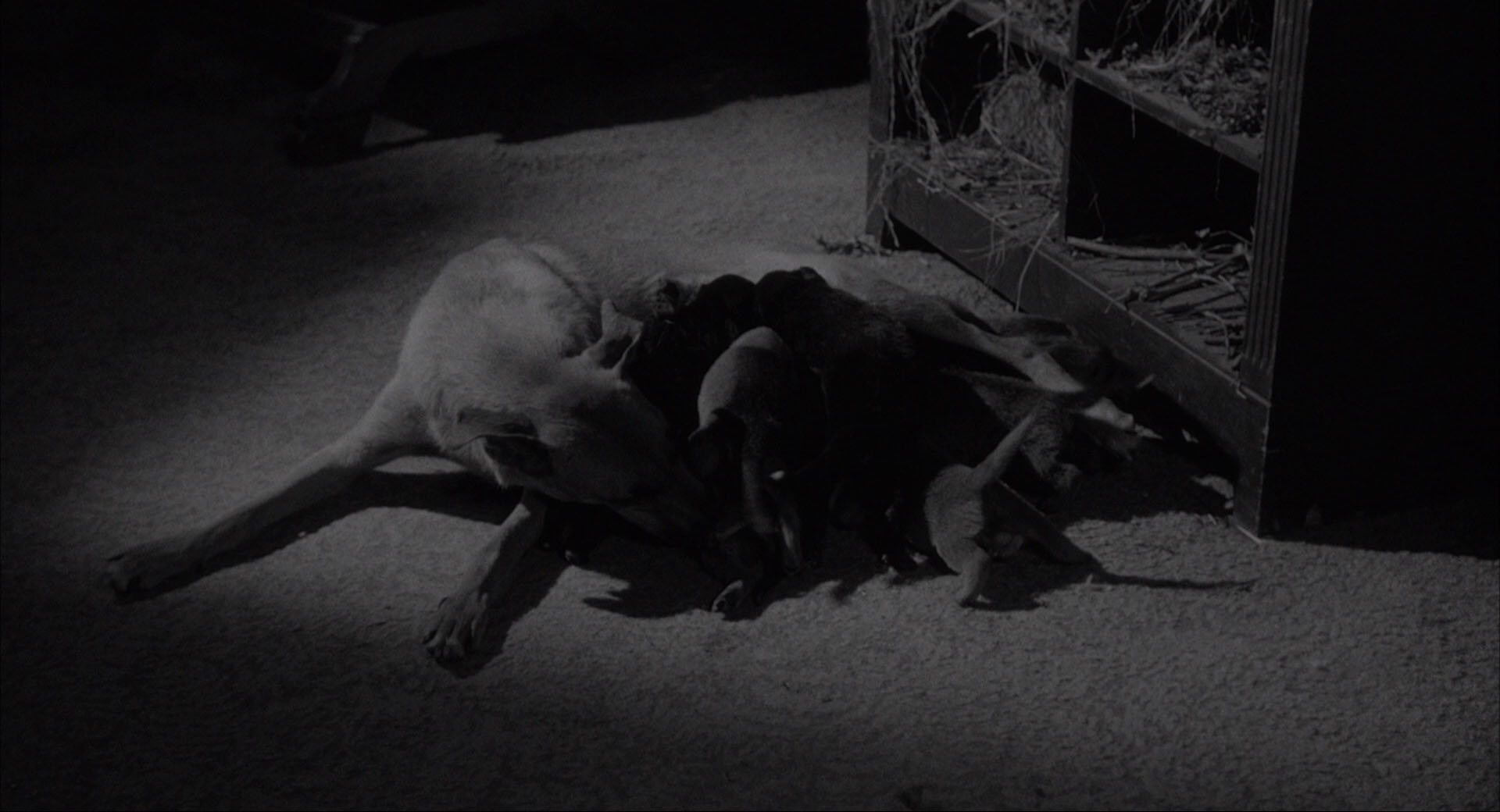
The potential for threat is reinforced in Eraserhead when Henry is startled by barking dogs on his way to visit Mary. The only dogs that appear before the camera are the puppies and their mother on the floor of Mary’s home.

Continue reading “Lynch dogs”

Weekend links 352

taggart.jpg

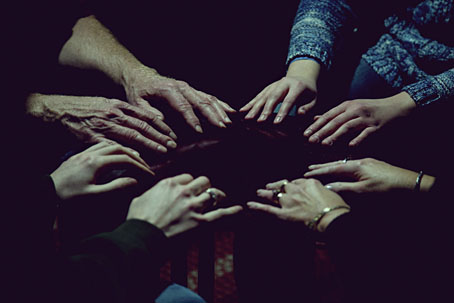
Table-Tipping Workshop at Rev. Jane’s House, Erie, Pennsylvania, 2014 by Shannon Taggart.

• Canadian electronic musician Sarah Davachi talks to Erik Davis about analogue synthesizers, reverberating cathedrals, attention spans, and her ambient drone album All My Circles Run.

• Orson Welles’ The Other Side of the Wind may now be released by Netflix. (I’m restraining my excitement for the moment since this one has been a long time arriving.)

• Mixes of the week: VF Mix 86: Jah Shaka by Roly Porter, Secret Thirteen Mix 215 by Twins, and What Good Is God? (1:11:11.111 Melon Collie Mix) by Gregg Hermetech.

• Making sense of The Weird and the Eerie: Roger Luckhurst reviews the final book from the late Mark Fisher.

• Pye Corner Audio has been very productive this year (I’m not complaining); the latest release is The Spiral.

• “I don’t like acceptance,” says Cosi Fanni Tutti, “it makes me think I’ve done something wrong.”

• Jon Brooks on the Continental inspiration for his next album, Autres Directions.

Séance: Spiritualist Ritual and the Search for Ectoplasm by Shannon Taggart.

• Corny and clichéd: Matthew Bown on bad painting in the twentieth century.

• At Wormwoodiana: Douglas A. Anderson on Borges and a forgotten book.

• At the BFI: Samuel Wigley chooses 10 great films set in the jungle.

Jungle Flower (1951) by Les Baxter | Jungle Fever (1973) by The Upsetters | The Jungle Dream (1973–1980) by Patrick Cowley

Weekend links 329

vyletal.jpg

Josef Vyletal borrows figures from Aubrey Beardsley’s Salomé for a Czech poster promoting The Immortal Story (1969) by Orson Welles. Vyletal’s own paintings were often strange and surreal.

Pale Fire is Nabokov’s “great gay comic novel,” says Edmund White. A surprising but not inappropriate reappraisal. White has noted in the past that Nabokov “hated homosexuality” despite having a gay brother and uncle. The portrayal of Charles Kinbote in Pale Fire isn’t unsympathetic if you overlook his being delusional, and possibly insane…

• At Folk Horror Revival: details of the charity donations raised by sales of the Folk Horror Revival books, the first of which featured my David Rudkin essay. A one-day Folk Horror Revival event takes place later this month at the British Museum, London.

• Mixes of the week: The Bug presents Killing Sound Chapter 2: Inner Space, a 2-hour blend of “sci-fi scores, expansive atmospheres and synthesized psychedelia”; Decoded Sundays presents Scanner; Secret Thirteen Mix 197 is by LXV.

Stars Of The Lid unveil a James Plotkin remix of their Music For Twin Peaks Episode #30 Pt. 1. Related: the hype for the new Twin Peaks series gets into gear with a teaser.

• Robert Aickman’s only novel, The Late Breakfasters (1964), is being given its first US publication by Valancourt Books.

• “Don’t dream it, bet it.” Evan J. Peterson on 40 years of The Rocky Horror Picture Show.

• Anna von Hausswolff’s sister, Maria, directs a video for Come Wander With Me / Deliverance.

• RIP Michael O’Pray, film writer and curator of many festivals of experimental cinema.

• Oli Warwick talks to electronic musicians about the influence of the late Don Buchla.

Breakfast In Bed (1969) by Dusty Springfield | Alan’s Psychedelic Breakfast (1970) by Pink Floyd | Another Breakfast With You (2001) by Ladytron