Weekend links 292

splendor.jpg

The Black Sun from Splendor Solis (1582) “attributed to the legendary figure Salomon Trismosin”.

Topic B predominates this week. The Black Sun of alchemy was the first thing I thought of when the title of David Bowie’s final album was announced late last year. The Black Sun symbolises the nigredo stage of the alchemical process when putrefaction or decomposition takes place; Carl Jung in Psychology and Alchemy equates the nigredo with the dark night of the soul. At the time I didn’t seriously think that the Bowie of 2015 would have had this in mind as a primary reference even though the Bowie of the early 1970s was immersed in Golden Dawn occultism, the Kabbalah, and a reader of Pauwels & Bergier’s The Morning of the Magicians, a book that informs the lyrics of the Hunky Dory album, and which contains a great deal of discussion about alchemy and other esoteric matters. And yet… Of all the outfits that Bowie might have worn in his final video the one that he chose for Lazarus is a match for the one he wore during the Station To Station Kabbalah-drawing photo session. At Sol Ascendans Alex Sumner and his commenters explored this twilight zone.

Back in the sublunary world, Jonathan Barnbrook’s cut-out sleeve design for the Blackstar album gained additional resonance this week: the black star as the hole that’s left when a more familiar star has been removed from its setting. Hindsight also makes poignant the observation that this was the only album without a picture of the artist on the cover. Elsewhere there were speculations about the title being a reference to Black Star by Elvis Presley (who shared a birthday with Bowie) or a term from oncology, two suggestions that fit so well they’re hard to ignore.

He began to develop a science fiction sensibility, drawing on the New Wave SF movement of Michael Moorcock and JG Ballard, other writers who used the genre such as Anthony Burgess and William S Burroughs, and an older fantasy tradition found in HP Lovecraft and Edward Bulwer-Lytton (whose The Coming Race is name-checked in Oh! You Pretty Things, 1971).

Jake Arnott on David Bowie’s literary influences

• In something-else-also-happened-this-week news, 2016 may see the long-awaited release of Andrei Tarkovsky’s films on Region B Blu-ray. Fingers crossed.

• International posters for The Man Who Fell To Earth. More Nicolas Roeg (and more shiny discs): Eureka (1983) will receive a Blu-ray release in March.

• Cracking the codes of Leena Krohn: Peter Bebergal on the Finnish writer of strange stories.

• Anthems for the Moon: Jason Heller examines David Bowie’s connections to science fiction.

• From 2013: Jon Savage on Bowie’s first meeting with William Burroughs in 1974.

• Mixes of the week: Bowie-esque Vol 1 and Bowie-esque Vol 2 by Abigail Ward.

David Bowie Doing Shit: a Tumblr

“Heroes” (1978) by Blondie & Robert Fripp | “Heroes” (2003) by King Crimson | “Helden” (2007) by Apocalyptica ft. Till Lindemann
The Nicolas Roeg Guardian Lecture, 1983

roeg.jpg

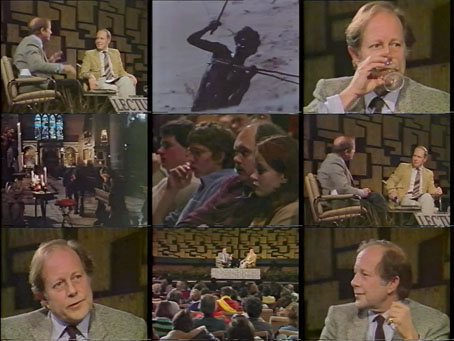
More Roegery. The recent BBC documentary about Nicolas Roeg has yet to appear on YouTube but this Guardian Lecture appeared there a few days ago. Roeg was in the news in 1983 following the release of Eureka, a film with a solid reputation today but one which the distributors weren’t happy with at the time. There’s no mention of these problems in this 37-minute interview with the late Philip Strick which ranges throughout Roeg’s career, and even includes some mention of his ill-fated plan to direct Flash Gordon for Dino De Laurentiis. It’s too short, of course, as these things always are, and Roeg has always been a somewhat rambling interviewee, but for Roeg-philes it’s worth a watch. The documentary I’d really like to see again is Nothing As It Seems: The Films of Nicolas Roeg, made the year before by Paul Joyce, and featuring contributions from two key collaborators: Donald Cammell and Paul Mayersberg.

Previously on { feuilleton }
Beyond the Fragile Geometry of Space
Canal view

Beyond the Fragile Geometry of Space

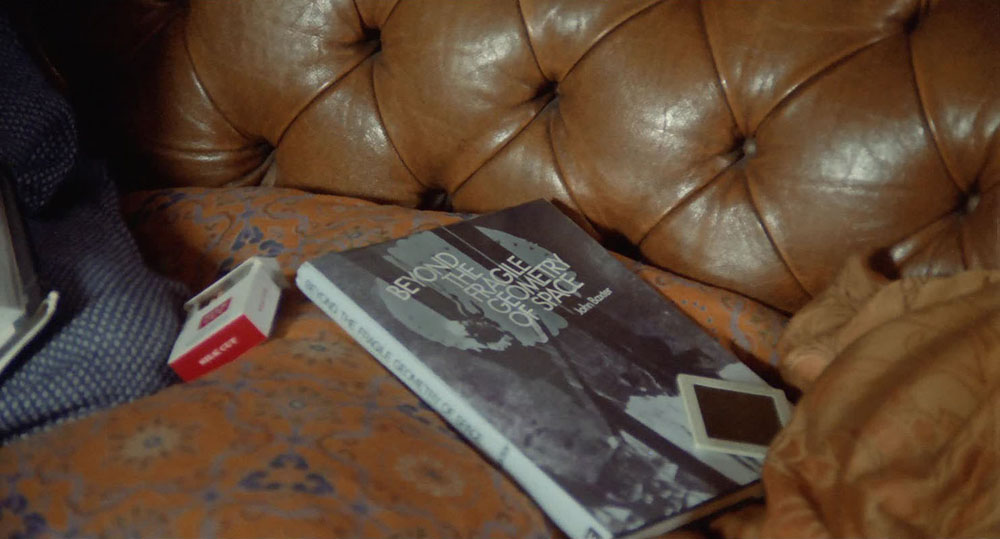
1: A fictional book by a fictional character.

beyond1.jpg

Don’t Look Now (1973): written by Allan Scott & Chris Bryant, directed by Nicolas Roeg. In the published screenplay Laura Baxter is described consulting a book written by her husband, John, but no title is given.


2: An architectural proposal for Venice.

beyond3.jpg

Beyond the Fragile Geometry of Space. Studio 6 (Tutors Eamonn Canniffe and Renata Tyszczuk) – University of Sheffield School of Architecture: Exhibition at Sylvester Works Sheffield (Location, exhibition now closed). The studio projects dealt with the possibilities for the northern edge of Venice of the proposal to build a ‘sublagunare’ underground rapid transit system between Marco Polo Airport and the island. Stretching from the Sacca della Misericordia to the Arsenale the projects were developed as a group masterplan with a series of individual interventions, each of which dealt with the down-at-heel historic fabric or proposed new islands for transport, museological or environmental uses. As an ensemble the projects in effect create a new facade to the city, opposite to David Chipperfield’s extension to the cemetery on the island of San Michele.


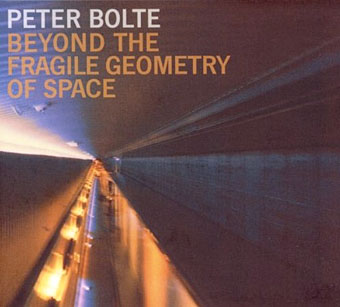
3: A jazz album by Peter Bolte.

beyond2.jpg

Beyond the Fragile Geometry of Space (2007).


4: A mix by cat_dentures.

beyond4.jpg

Beyond the Fragile Geometry of Space (2011) at 8tracks.

Previously on { feuilleton }
Canal view
Petulia film posters

Weekend links 265

rainbowhouse.jpg

The White House, Washington DC, on the evening of June 26, 2015.

I can remember that after the cops cleared us out of the bar we clustered in Christopher Street around the entrance to the Stonewall. The customers were not being arrested, but a paddy wagon had already hauled off several of the bartenders. Two or three policemen stayed behind, locked inside with the remaining members of staff, waiting for the return of the paddy wagon. During that interval someone in the defiant crowd outside called out “Gay Power”, which caused us all to laugh. The notion that gays might become militant after the manner of blacks seemed amusing for two reasons—first because we gay men were used to thinking of ourselves as too effeminate to protest anything, and second because most of us did not consider ourselves to be a legitimate minority.

At that time we perceived ourselves as separate individuals at odds with society because we were “sick” (the medical model), “sinful” (the religious model), “deviant” (the sociological model) or “criminal” (the legal model). Some of these words we might have said lightly, satirically, but no amount of wit could convince us that our grievances should be remedied or our status defended. We might ask for compassion but we could not demand justice. Many gays either were in therapy or felt they should be, and the words gay liberation would have seemed as preposterous to us as neurotic liberation (now, of course, Thomas S. Szasz in the United States, RD Laing in Britain and Felix Guattari on the Continent have, in their different ways, made even that phrase plausible enough).

What I want to stress is that before 1969 only a small (though courageous and articulate) number of gays had much pride in their homosexuality or a conviction that their predilections were legitimate. The rest of us defined our homosexuality in negative terms, and those terms isolated us from one another. We might claim Plato and Michelangelo as homosexuals and revere them for their supposed affinities with us, but we could just as readily dismiss, even despise, a living thinker or artist for being gay. Rich gays may have derived pleasure from their wealth, educated gays from their knowledge, talented gays from their gifts, but few felt anything but regret about their homosexuality as such. To be sure, particular sexual encounters, and especially particular love relationships, were gratifying then as now, but they were explained as happy accidents rather than as expected results.

Edmund White writing on The Political Vocabulary of Homosexuality (1980). Reprinted in The Burning Library: Writings on Art, Politics and Sexuality (1994).

• “…after seeing Don’t Look Now, The Wicker Man looked just so dull and flat. What Don’t Look Now has that The Wicker Man doesn’t is a complete mastery of cinema. Don’t Look Now is almost a silent movie, a brilliant, coherent, original and fantastic film that has an enormous emotional impact.” Bernard Rose emoting at length about Nicolas Roeg. Related: Wild Hearts Run Out Of Time, the Roy Orbison video that Rose mentions directing.

• “The male sex organ is depicted not so much as a body part, but more as a fetish object in its own right—a thing independent of the male body, worthy of intense, delirious veneration.” Jason Farago reviewing Tom of Finland: the Pleasure of Play. Related: Same-sex desire through the ages at the British Museum.

• “Sphinx is a typical love story only in the way that it’s the tale of two people who have fallen in love, and things don’t go smoothly. Beyond that…as reader, you have no idea of the gender of either half of this romantic equation.” Chris Clarke reviewing Sphinx, a novel by Anne Garréta.

• “To give space to the musical elements was really a thrill—how far can you get without using too much stuff?” Moritz von Oswald on “the sounds of emptiness”.

• “The problem is not always Helvetica but that Helvetica is all too often the default, the fall-back, the I-really-can’t-be-arsed choice,” says John Boardley.

• Mix of the week: Shaft’s Old Man: An Imaginary Soul Jazz Soundtrack by Aquarium Drunkard.

• “What is the Cut-Up Method?” Ken Hollings explains in a BBC magazine piece and radio feature.

• Nigel Kneale’s Quatermass, the final TV serial, will be released on Blu-ray next month.

• Relevant to the week’s reading: an archived Italo Calvino site.

Drÿad: a Tumblr.

Sphinx (1989) by Syd Straw | The Sodom And Gomorrah Show (2006) by Pet Shop Boys | Pattern 1 (2009) by Moritz Von Oswald Trio

Donald Cammell and Kenneth Anger, 1972

cinema.jpg

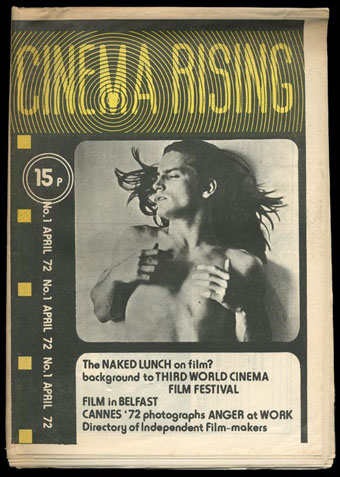
Another resurrected article. Cinema Rising was a short-lived newsprint film magazine that ran for three issues in the UK in 1972. I have a few pages from the rare first issue that was part of a batch of old underground newspapers I was given a few years ago. (The Frendz Hawkwind strip is from the same haul.) Cinema Rising was edited by Simon Hartog and Tony Rayns, the latter being a long-time Kenneth Anger aficionado which would explain both the magazine title and the presence of a photo feature about Anger’s Lucifer Rising. The bulk of this post is a short interview with Donald Cammell that’s of interest for his comments about the gender roles in Performance and his opinion of Jorge Luis Borges whose recurrence as both signifying text and presiding magus in Performance is never really explained.

Cammell’s next film after Performance would have been Ishtar (no relation to the notorious Warren Beatty flop), the themes of which Cammell discusses at the end of the piece. The Cammell biography describes a script concerning a film star and Hollywood producer who want to make a film in Morocco. While there they get involved with a woman who embodies various mystical/mythological feminine attributes; there’s also a sub-plot about the pair kidnapping an American judge. Mick Jagger was down for the role of the film star while William Burroughs was slated to play the judge. Given how wayward Cammell’s later films became it’s difficult to say whether this would have been good or not. Performance could very easily have been terrible but that film also had Nicolas Roeg on board.

After the Cammell piece there are photos from Cinema Rising‘s Kenneth Anger feature which show the director at work on the new version of Lucifer Rising. I’ve not seen any of these stills or the two black actors before—what happened to their parts? Note that some of the captions are misspelled: the photos should be credited to Diarmid Cammell—Donald’s brother—while the Adept (not “Lucifer”) is Haydn Couts.

dc1.jpg

DONALD CAMMELL: PERFORMANCE TO ISHTAR, Cinema Rising, no. 1, April 1972

Donald Cammell’s first movie was Performance, made in collaboration with Nicolas Roeg; the most unexpected British movie of recent years, and one of the very few products of the British industry capable of holding its own in an international context. Cammell’s new script is Ishtar, originally written with Mick Jagger in mind for the lead again, but possibly to be made without him; Cammell is currently in America to raise the backing for the film.

In the following extracts from a conversation with John du Cane (recorded last year), Cammell speaks of his background and interests…matters that inform his new script at least as much Performance.

Collaboration

“In the recent past, reverence for the director of a film as sole creator has been vastly exaggerated, through critical efforts. I’m thinking particularly of the Cahiers du Cinema ‘author’ concept—I’ve been living in Paris, and have been quite aware of it for a long time. The kind of theory of creativity that’s arisen there (and in related worlds in New York) is, succinctly, crap. It’s a way of trying to demonstrate the view that cinema is an artform, and that therefore there must be a single creative mind controlling the artefact, through to its ultimate form. It’s a way of justifying movie-making, socially and culturally.

“But leaving aside the reasons for the concept, I think it’s contradicted by the facts. I think that many of the greatest artefacts things that have moved people most throughout history—have been collectively produced. You don’t even have to look for examples: the whole of Egyptian culture, arcane cultures generally. Today in tribal cultures, the vast majority of the products are collectively produced. The hangup is the concept of one ego necessarily controlling the production in order for that ego to be expressed; the notion that the expression of an ego is the final goal of any artwork, that this is what it’s for. I think that an artwork expresses itself, that the creators involved will all see in it their own egos, each one individually satisfied when looking at the final work. My analogy is with contemporary music, where people go into it collectively, and their egos are satisfied collectively and individually. Look at Mick and Keith and their confreres: they see in their work as The Rolling Stones what they each wanted to say. Working in the film medium is ideally suited to interaction of different heads; it’s the ideal medium for all the good functions of collective work.”

Continue reading “Donald Cammell and Kenneth Anger, 1972”