JG Ballard, 1930–2009

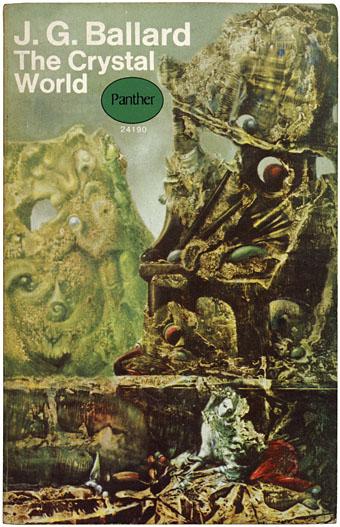
crystal_world.jpg

Panther Books paperback edition, 1968; cover painting: The Eye of Silence by Max Ernst.

If I can’t remember when I first encountered JG Ballard’s work, it’s not because I was reading him at a very early age, more that a childhood enthusiasm for science fiction made his books as omnipresent in my early life as any other writer on the sf, fantasy and horror shelves. I know that when I started to read the New Wave sf writers his work immediately stood out, not only for its originality but also for the numerous references to Surrealist painting which litter his early fiction, references which meant a great deal to this Surrealism-obsessed youth. Ballard was a lifelong and unrepentant enthusiast for the Surrealists, with repaintings by Brigid Marlin of two lost Paul Delvaux pictures prominent in one of his rooms (often featured in photo portraits). I always admired the way he never felt the need to apologise for Salvador Dalí’s excesses, unlike the majority of art critics who dismiss Dalí after he went to America. The paintings of Dalí, Delvaux, Tanguy and Max Ernst became stage sets which Ballard could populate with his affectless characters.

Once I’d encountered the New Worlds writers—Ballard, Michael Moorcock, M John Harrison, Brian Aldiss and company—and their American counterparts, especially Harlan Ellison, Samuel Delany and Norman Spinrad, there was no returning to the meagre thrills of hard sf with its techno-nerdery and bad writing. Ballard and Moorcock were the gateway drug to William Burroughs, Jorge Luis Borges and countless others, and I thought enough of his work in 1984 to attempt a series of unsuccessful illustrations based on The Atrocity Exhibition. It’s been an axiom during the twenty years I’ve worked at Savoy Books that Ballard, Moorcock and Harrison were (to borrow a phrase from Julian Cope) the Crucial Three of British letters, not Rushdie, Amis and McEwan. One of the books I designed for Savoy, The Exploits of Engelbrecht by Maurice Richardson, was a Ballard and Moorcock favourite, and included appreciations of Richardson by both writers. I wish Ballard could have seen the new (and still delayed) edition of Engelbrecht but he got a copy of the earlier book. Sometimes once in a lifetime is more than enough.

Ballardian.com
Pages of obits and MM comment at Moorock’s Miscellany
Ballard interview by V Vale at Arthur with an special intro by Moorcock
Jeff VanderMeer at Omnivoracious
Guardian | Times | Independent | Telegraph

Previously on { feuilleton }
Ballard in Barcelona
1st Ballardian Festival of Home Movies
Revenant volumes: Bob Haberfield, New Worlds and others
JG Ballard book covers

Patrick McGoohan and The Prisoner

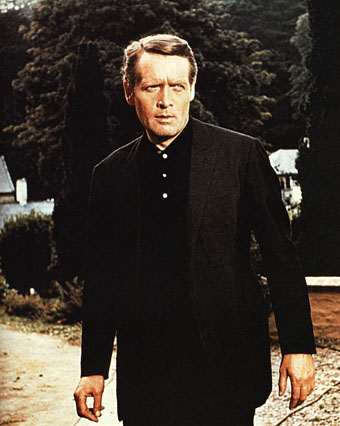
prisoner1.jpg

Patrick McGoohan as The Prisoner.

“I will not be pushed, filed, stamped, indexed, briefed, debriefed or numbered. My life is my own.”

The Prisoner, which ran for seventeen episodes from 1967 to 1968, was the best original drama series there’s ever been on television. Period, as Harlan Ellison would say. Best because it grabbed the format of the TV adventure series with both hands to subvert the expectations of the audience and the people who were paying for it. Best because it dared to do this at a time when there was little precedent for experiment in a medium that was barely a decade old. Best because it had something important to say while still being entertaining. And best because it had Patrick McGoohan in the central role at the peak of his acting career.

Fiction can be anything, but to look at what we’re offered by TV channels you wouldn’t know it. Cop shows, hospital shows, detective shows and soap operas proliferate, ad infinitum. The Prisoner came out of Danger Man, an immensely successful post-James Bond spy series which may have been popular but, McGoohan’s presence aside, has little to recommend it today. It lacked the camp bravura of The Avengers and couldn’t compete with the budgets of the Bond films. But it’s fair to say that without it McGoohan wouldn’t have had the chance to do something radical. ITC’s Lew Grade thought he was getting Danger Man 2 with better production values; what he received—to his eventual dismay—was the kind of television one would expect if the staff of Michael Moorcock’s speculative-fiction magazine New Worlds had been given a fat budget and free reign. Like New Worlds, The Prisoner seized familiar genre themes but took them as a means to an end, not an end in themselves. The series borrowed from science fiction and spy thrillers—brainwashing and mind control, Cold War paranoia, the limitless surveillance and duplicity of Orwell’s Nineteen Eighty-Four—and used a drama format to say something direct and personal to its audience about individual freedom, the limits and excesses of the state, and the importance of being able to say “No” when the world insists that you capitulate.

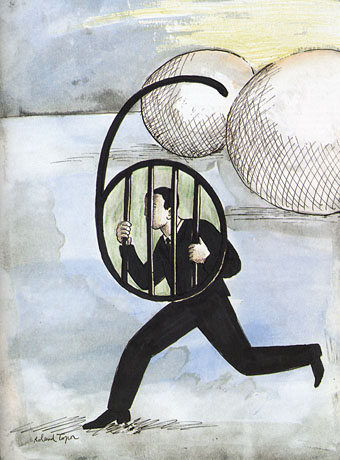
prisoner3.jpg

Number Six by Roland Topor.

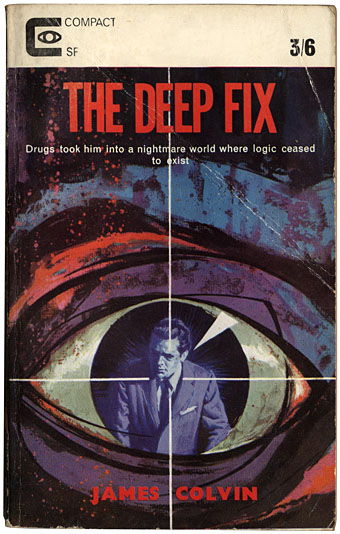
McGoohan was the driving force as well as the star. His own company, Everyman Films, produced the series for ITC; he planned everything with the writers, wrote three episodes and directed five of them himself. The Prisoner only lasted for a season and a half—cut short after Grade lost his patience—but the form was potentially endless, flexible enough to present a familiar Cold War spy story on the one hand, while having an entire episode play as a Western, on the other. In one of the later episodes McGoohan is largely absent when his mind is transferred to another man’s body and he finds himself living a new life, ostensibly a free man. (But freedom in The Prisoner is always circumscribed.) The last three episodes collapse everything that’s preceded them into intense and increasingly surreal psychodrama. Like Moorcock’s fluid character Jerry Cornelius, whose exploits were running in New Worlds while The Prisoner was being broadcast, McGoohan had found a vehicle to say what he wanted about the world using popular culture. It’s a coincidence but I’ve always found it apt that the cover illustration for Moorcock’s novella The Deep Fix (1966) included a figure obviously modelled on McGoohan’s Danger Man. The book’s tagline “Drugs took him into a nightmare world where logic ceased to exist” could be a description of a later Prisoner episode. Apt too that the first novel based on the series in 1969 was by New Worlds regular Thomas M Disch.

prisoner2.jpg

(James Colvin was a Moorcock nom-de-plume.)

The Prisoner was produced in the era of the social dramas of The Wednesday Play and Play for Today yet it remains relevant in a way its worthier contemporaries could scarcely manage. Social realism dates as quickly as yesterday’s news but allegory stays fresh. And it’s a dismal truth that the world of infinite surveillance has crept closer in a way that few would have imagined possible in 1968. The cameras that follow McGoohan’s Number Six everywhere are a familiar sight on Britain’s streets; a headline in yesterday’s Independent newspaper read: “Big Brother database a ‘terrifying’ assault on traditional freedoms“. McGoohan, who was raised in Ireland, would have appreciated the adherence of another Irishman, James Joyce, to the Luciferian cry of disobedience in Ulysses, “Non serviam!”—”I will not serve”. Joyce’s Stephen Dedalus defies God and his family; McGoohan’s Number Six defies everything else. That example, of the man who can “make putting on his dressing gown appear as an act of defiance”, is something we need as much now as we did in 1968. Hollywood is currently threatening a big-screen version but why wait for more compromised studio product when you can go to the source. Get yourself a deep fix—it’s a masterpiece.

Previously on { feuilleton }
Thomas M Disch, 1940–2008
Revenant volumes: Bob Haberfield, New Worlds and others

The Sonic Assassins

assassins1.jpg

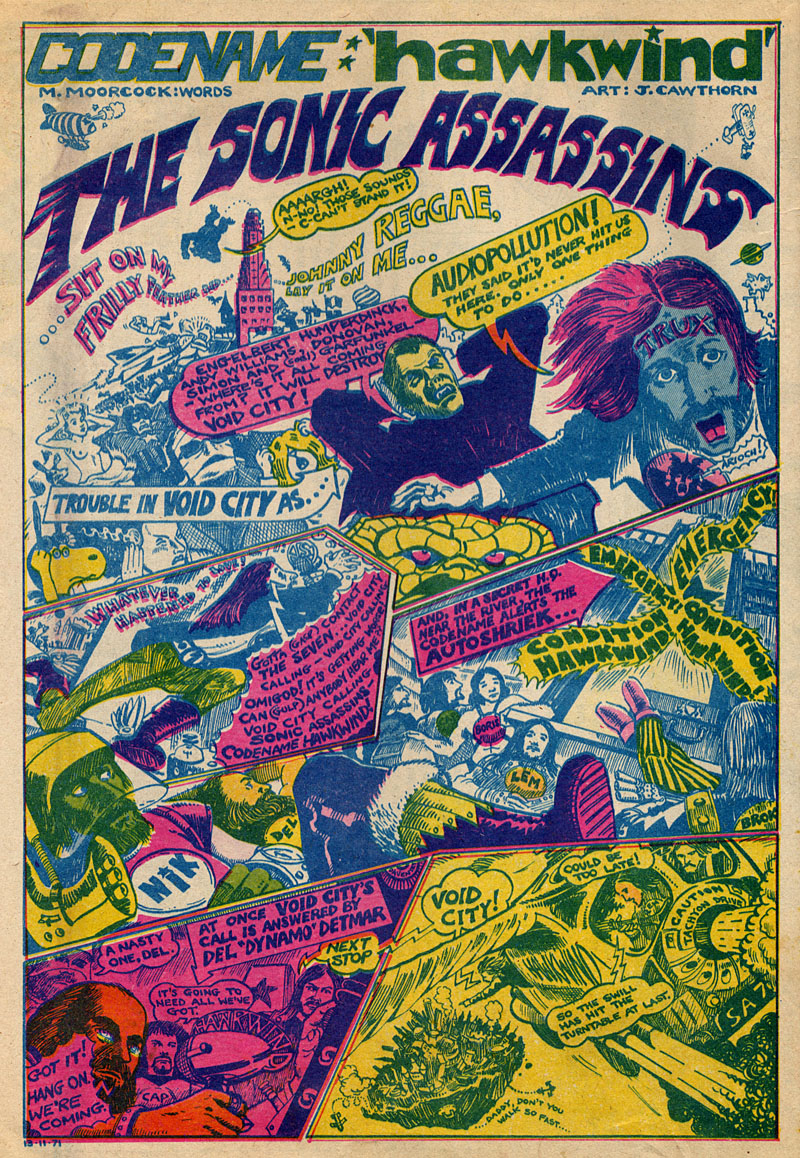
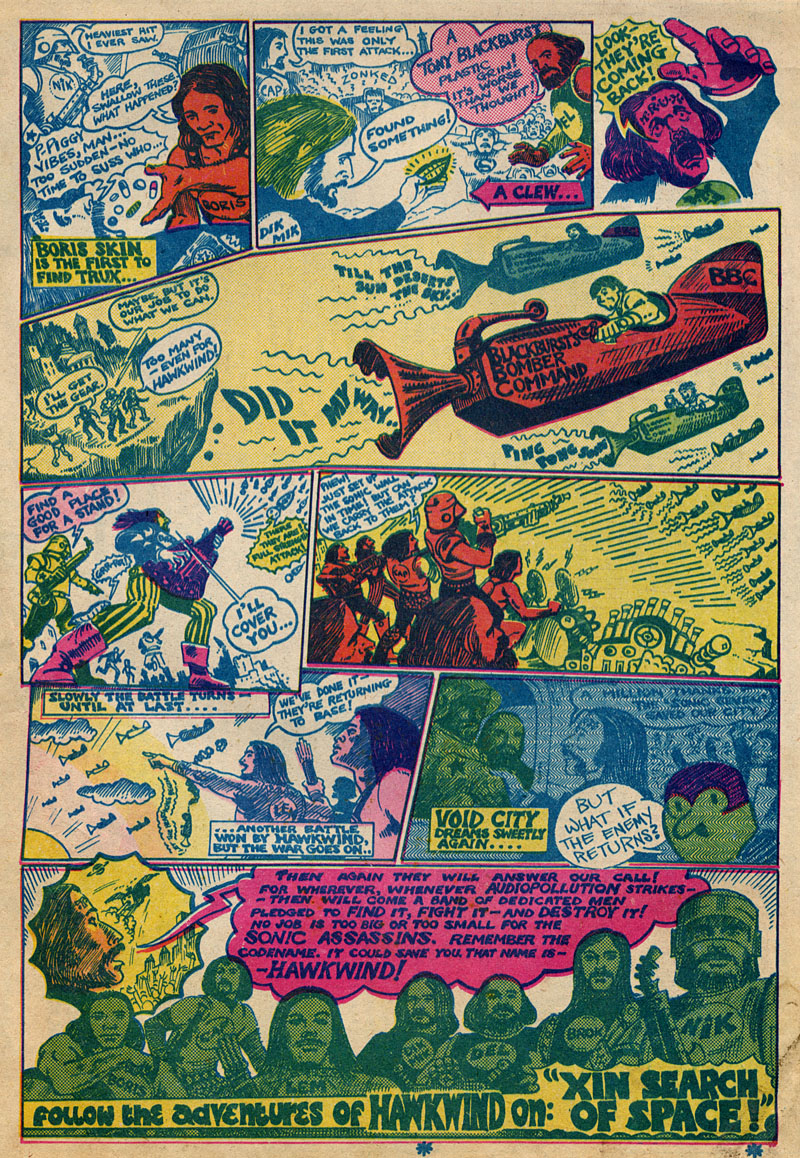
Searching through discs for scans of Jim Cawthorn art turned up this comic strip curio from a November 29th, 1971 issue of UK underground magazine Frendz. Cawthorn and writer Michael Moorcock present rock band Hawkwind as musical superheroes and although this is done largely as a promotional piece for that year’s new album, In Search of Space, the Sonic Assassins tag was one which stuck, becoming almost a secondary name for the band in later years. The name Void City also recurred later as the name of a track on the Choose Your Masques album. It may have been around this time that Cawthorn painted special T-shirt designs for Hawkwind; up to 1980 Dave Brock was still wearing his Baron Meliadus shirt on stage.

assassins2.jpg

Previously on { feuilleton }
Jim Cawthorn, 1929–2008
Design as virus #7: eyes and triangles
Barney Bubbles: artist and designer

Jim Cawthorn, 1929–2008

cawthorn1.jpg

“Jim Cawthorn and I have been inseparable for over twenty-five years, sometimes to the point where I can’t remember which came first—the drawing or the story. It is his drawings of my characters which remain for me the most accurate, both in detail and in atmosphere. His interpretations in strip form will always be, for me, the best.” Michael Moorcock.

Jim Cawthorn—illustrator, comic artist and fantasy historian—died this week. Cawthorn was the first illustrator employed by Savoy Books and one of the key factors in drawing me to their doors in the early 1980s. His illustrations made their books special and his comics adaptation of Moorcock’s The Jewel in the Skull was a big influence on my early black and white work.

Mike Moorcock, Dave Britton and I seem to be in a minority in regarding Cawthorn as one of the finest fantasy illustrators of his generation. His carefully stipled drawings of the late Fifties and early Sixties are all miniature masterpieces and I don’t care how many artists attempt lavish paintings of Moorcock’s Elric character, for me the definitive representation remains the drawing used on the cover of the first edition of Stormbringer in 1965. Cawthorn was Moorcock’s illustrator of choice for many years and was involved with the Moorcock-edited run of New Worlds right from the start with his cover illustrating Ballard’s Equinox story. He also provided reviews for New Worlds, and his critical faculties were demonstrated to the full in 1987 with Fantasy: The 100 Best Books, an overview of the genre credited to Cawthorn and Moorcock for which Cawthorn himself wrote most of the entries.

I wrote in more detail about Cawthorn’s work for the Savoy site several years ago. For an overview of his career and influences, there’s Dave Britton’s interview from 1979.

Update: some extra pictures added.

cawthorn2.jpg

Jagreen Lern and Elric (1963).

Continue reading “Jim Cawthorn, 1929–2008”

More Barney Bubbles

reasons.jpg

For those who’ve been eagerly awaiting Paul Gorman’s Barney Bubbles monograph, here’s the latest. Readers in the UK may also like to know there’s a feature about the book in the current issue of The Word. By coincidence, if you turn the page in the magazine there’s another feature about the Rob Gretton book I designed recently, 1 Top Class Manager. And for coincidence overload, designer Peter Saville turns up in both volumes.

Reasons To Be Cheerful: The Life and Work of Barney Bubbles
By Paul Gorman

“Barney Bubbles is the missing link between pop and culture” Peter Saville

REASONS TO BE CHEERFUL is a lavishly illustrated celebration of the creative legacy of one of the most mysterious yet influential figures in graphic design: Barney Bubbles.

Bubbles – who died 25 years ago – links the colourful underground optimism of the 1960s to the sardonic and manipulative art which accompanied punk’s explosion a decade later.

Producing extraordinary artwork under the shroud of anonymity and a number of pseudonyms, in the 60s Bubbles created early posters for the Rolling Stones, brand and product design for Sir Terence Conran and psychedelic lightshows for the Pink Floyd.

He was also responsible for the art direction of underground magazines Oz and Frendz and the masthead for rock weekly the NME, and is best known for a plethora of stunning record sleeves, logos, insignia and promo videos for musicians and performers, from counter-culture collective Hawkwind to new wave stars Elvis Costello, Ian Dury, Nick Lowe, Graham Parker, The Damned, Billy Bragg, Squeeze, Depeche Mode and The Specials.

Meticulously researched with 600 images, REASONS TO BE CHEERFUL is the first and definitive investigation into Bubbles’ life and work, with interviews and contributions from family and close friends, college pals and workmates as well as collaborators including pop artist Derek Boshier, author Michael Moorcock and photographer Brian Griffin.

Incorporating many previously unpublished images, REASONS TO BE CHEERFUL is also the only comprehensive collection of Bubbles’ output over a 30-year period: every important record sleeve, poster and advertisement as well as examples of his excursions into abstract portraiture, book design and furniture, supported by student sketchbooks, working drawings, film proposals and personal photographs and correspondence.

Singer-songwriter Billy Bragg has contributed the foreword, graphic designer Peter Saville an essay on the significance of Bubbles’ oeuvre and his contemporary Malcolm Garrett a personal memoir.

REASONS TO BE CHEERFUL is published on December 4 2008.

Trim size: 280mm x 230mm
Binding: Hardback
Pages: 224
Words: 55,000
Images: 600
RRP: £24.99

And while we’re on the subject, Barney Bubbles enthusiasts Rebecca & Mike left news on the original BB posting about a forthcoming exhibition of work by photographer Brian Griffin.

On show will be the newspaper ‘Y’, the books ‘Copyright 1978′ and ‘Power’, and associated posters, including the ‘coat hanger and scarf’ poster for Brian’s photo show in 1980. All of these (apart from ‘Power’) will be available to buy too (we think)… so, if you want to, you can bag yourself an early Christmas present (and help put some turkey on Brian’s table!)

Here’s the details: Brian Griffin, 15 November – 8 December 2008 , Monday – Saturday 11 – 6, at ‘England & Co.’, 216 Westbourne Grove, London W11 2RH.

The ‘Y’ newspaper’s got a real chunky red button on the cover (in a little plastic bag); symbolic of the nuclear button we-thinks, and there’s a great concentric circle graphic on the cover too, which is reminiscent of a few things, like the back of the not-used Dury ‘4000 Weeks Holiday’ LP sleeve design and also the front of the never released ‘Station BPR’ LP sleeve (which was due to be the second release on Billy Bragg’s ‘Utility’ label). There’s also an illustration in ‘Y’ by Nazar Ali Khan of ICU fame.

The ‘Copyright 1978′ booklet is cool too; with nearly every one of Brian’s photos in it being accompanied by thumbnail graphics by Barney, which contain cryptically encoded comments. The one that always sticks in our mind is the one that questions whether it is good or bad to receive awards for your work.

Previously on { feuilleton }
Reasons To Be Cheerful, part 2
Reasons To Be Cheerful: the Barney Bubbles revival
Barney Bubbles: artist and designer