Listen to the Colour of Your Dreams: Part One

mojo.jpg

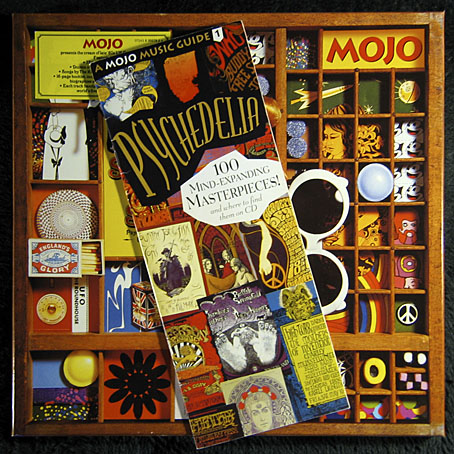
Blame these things: the Jon Savage booklet, and Mojo Presents Acid Drops, Spacedust & Flying Saucers (design by Phillip Savill).

One of the commissions for the New Year is psychedelia-related so to get in the mood I’ve been listening to the six CD compilations of psychedelic songs I made some years ago. I must have spent about five years gathering everything on these discs which comprise 132 selections in all, three for UK music and three for the USA, covering the years 1966–1969. The impetus was an annotated booklet listing “100 mind-expanding masterpieces” that Jon Savage had compiled for Mojo magazine in 1994; a revised list was published in 1997 along with some debatable contemporary additions. Things came to a head (so to speak) in 2001 when Savage and fellow Mojo journalists put together a four-CD collection of prime UK psychedelia for EMI, Acid Drops, Spacedust & Flying Saucers, which included many of the songs from Savage’s list. That collection and the Rhino Records Nuggets box began the mania to accumulate everything on Savage’s list. Once I’d started burning my own compilations the Savage 100 quickly expanded when I realised that I ought to include more favourites of my own.

To start the year, then, I’m uploading all six compilations to Mixcloud beginning with the UK selection. Despite all the effort and the number of songs this still isn’t a definitive collection. As Savage observes in his notes, the late 1960s was a time of massive over-production by record companies with hundreds of singles released, especially in the UK. Many one-off releases by obscure bands are as good as those that topped the charts which is why psychedelic compilations are so numerous, and why omissions are unavoidable.

With that proviso here’s the first part of the UK collection covering the years 1966 to 1967. The tracklist below indicates in bold the songs from the Savage 100 with notes about my additions. The listing is by order of release although this isn’t strictly accurate throughout. I’ll be uploading the rest of the compilations over the next few weeks.

UK Psychedelia, Part One by Feuilleton on Mixcloud

Dialogue — Alice In Wonderland (From Jonathan Miller’s BBC film, 1966.)
The Beatles — Tomorrow Never Knows
The Rolling Stones — Paint It Black
The Creation — Making Time
Craig — I Must Be Mad (A ferocious single by a band that only released one other 45 before splitting. Carl Palmer is on drums.)
Donovan — Season Of The Witch
The Yardbirds — Happenings Ten Years Time Ago
The Misunderstood — I Can Take You To The Sun (An American band who moved to London in 1966. This was their second and final single, and one of John Peel’s all-time favourites.)
Cream — I Feel Free
The Beatles — Strawberry Fields Forever
Pink Floyd — Interstellar Overdrive (Savage has the version from Tonite Let’s All Make Love In London which runs for almost 17 minutes. The version here is the shorter one from Piper At The Gates Of Dawn.)
The Smoke — My Friend Jack
The Poets — In Your Tower
The Move — I Can Hear The Grass Grow
The Troggs — Night Of The Long Grass
Traffic — Paper Sun
The Jimi Hendrix Experience — Are You Experienced?
Tomorrow — My White Bicycle (Savage has a later single, Revolution, but I much prefer this earlier 45.)
John’s Children — Midsummer Night’s Scene
Dialogue — Yellow Submarine
The Beatles — It’s All Too Much
The Attack — Colour Of My Mind
Small Faces — Green Circles

Previously on { feuilleton }
What Is A Happening?
My White Bicycle
Ogdens’ Nut Gone Flake
Tomorrow Never Knows
The Dukes declare it’s 25 O’Clock!
Yellow Submarine comic books
A splendid time is guaranteed for all

Atmospherics

jamoul1.jpg

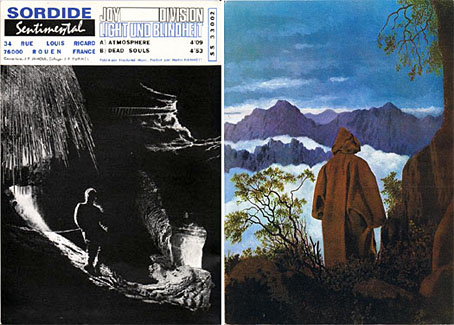
Listening to Joy Division over the weekend prompted another of those idle speculations that are immediately answered these days (so to speak…) by a few seconds of web searching. While Atmosphere was playing I’d remembered a conversation with a friend about the identity of the painting of a cowled figure that appears on the original Atmosphere/Dead Souls single for the Sordide Sentimental label. Neither of us had a copy of the Holy Grail of JD collectors, nor did we know anybody who owned one, so the discussion wasn’t very fruitful.

jd.jpg

Licht Und Blindheit (1980) by Joy Division.

Sordide Sentimental were (and still are) a French company run by Jean-Pierre Turmel and Yves von Bontee whose speciality was limited releases of exclusive material often by bands with a cult following. The typical Sordide Sentimental release would be a 7-inch single in a numbered edition, packaged in an A4-sized sleeve with inserts and an idiosyncratic essay by Monsieur Turmel. Licht Und Blindheit, as the Atmosphere single was called, sold out immediately, and since 1980 has been one of the most collectible (and costly) releases of the era: the cheapest of two copies currently for sale at Discogs is over £1,500. (Many bootleg copies also exist: beware.)

As to the Licht Und Blindheit packaging, the cover collage was by Jean-Pierre Turmel while the enigmatic painting on the back turns out to be an untitled work by Jean-François Jamoul (1925–2002), not Caspar David Friedrich as my friend suspected, although it is very Friedrich-like. Jamoul was evidently a friend of Turmel who used more of his paintings on other Sordide Sentimental releases. During the 1970s Jamoul had been a regular contributor to French SF magazines, both as cover artist and essayist. In 2006 Sordide Sentimental released Temps Incertains, a DVD/book devoted to Jamoul’s art and writings.

jamoul2.jpg

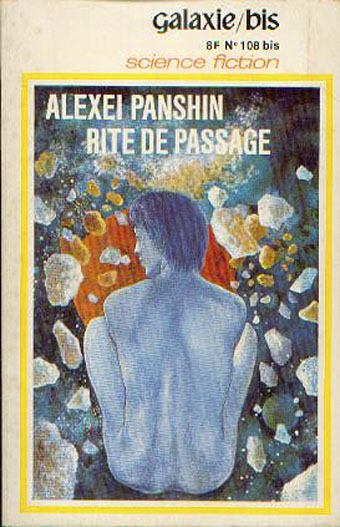
Rite de Passage (1968) by Alexei Panshin.

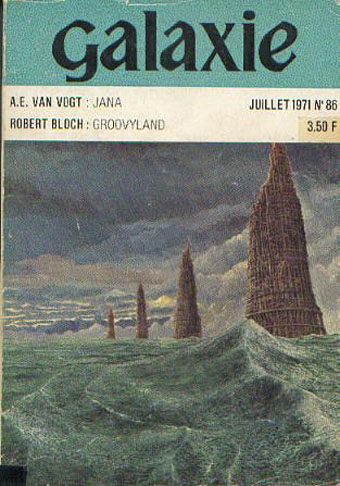
It’s interesting looking at some of Jamoul’s other art in light of all this: one painting on the cover of Galaxie magazine looks distinctly Lovecraftian while another piece was used by a publication named Nyarlathotep. Back in 2008 journalist Jon Savage was corresponding with my colleagues at Savoy Books prior to writing a piece for the Guardian about Ian Curtis’s reading material. (The Savoy bookshops in Manchester during the 1970s and 80s were notable for their comprehensive stock of Burroughs, Ballard and other essential material.) One of the questions was whether Curtis had read (or bought) any HP Lovecraft, something that neither Dave nor Mike could answer. These French magazines at least show one very tenuous connection (which Curtis wouldn’t have known about, of course) via Jamoul’s paintings. Savage’s Guardian piece has since been expanded into an introduction for the recent Faber book of Ian Curtis lyrics; HP Lovecraft receives a passing mention there during discussion of Licht Und Blindheit‘s B-side, Dead Souls.

jamoul4.jpg

Continue reading “Atmospherics”

The Use and Abuse of Books

savoy.jpg

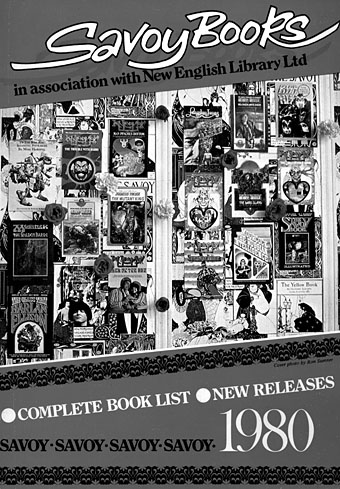
Savoy • Savoy • Savoy: The first wave of book covers pinned to the Beardsley wallpaper of the Deansgate office.

I often feel I’m in a minority in never having been desperate to see my work in a gallery. We are, after all, living in the Age of Mechanical Reproduction (thanks, Walter), and the idea of having to visit a physical location in order to see a work of art can seem like a rather antiquated affair. (Plenty of arguments counter this, of course, but I don’t create anything that needs to be experienced in situ, and I’m also not enmeshed in the art market.) So it’s been surprising this month to realise that examples of my work are currently on display in Monterey, California (the Tentacles exhibition), London (Comics Unmasked: Art and Anarchy in the UK at the British Library which ends today) and in Manchester (The Exhibition Centre for the Use and Abuse of Books at the International Anthony Burgess Foundation). If all goes according to plan, some of my steampunk book covers will also be exhibited in Beijing next month; more about that later.

dbmb.jpg

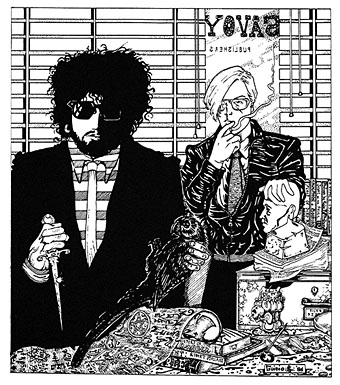
Britton & Butterworth by Kris Guidio (1986).

The Use and Abuse of Books is a necessarily brief overview of the 40-year history of Savoy Books, a notable moment in the life of the company since this is the first time any Manchester institution has acknowledged the existence of a local publisher with such a long, varied and often controversial history. In part this is a result of the cultural histories of Manchester concentrating almost exclusively on the music scene. Many of the books and features written about Manchester arts have been produced by DJs or ex-musicians who appear tone-deaf to literary culture despite the existence of Carcanet Press (established 1969), Savoy Books, and other more recent publishers who are happy to operate outside London. (The venerable Jon Savage gets a pass here.) Carping aside, The Use and Abuse of Books describes itself thus:

Featuring text, images and rare promotional content from Savoy’s infamous 1989 publication Lord Horror, the exhibition tackles the question of whether the depiction and description of horrific acts is justified in satire. In 1992 Lord Horror was declared by Judge Gerrard Humphries as ‘a glorification of racism and violence’ whereas writer Michael Moorcock believed the book to belong to ‘a tradition of lampoon, of exaggeration. Its purpose is to show up social evils, and the evils within ourselves.’ Displaying artwork from Sinister Legends and Meng and Ecker alongside other panels from rare comics and graphic novels (including Reverbstorm), The Use and Abuse of Books also examines the relationship between text and imagery within Savoy’s publications, revealing how artwork from John Coulthart, Kris Guidio and James Cawthorn supplements and enhances the storytelling through visual references to architecture, cultural figures or specific works of art. The exhibition will be open 10am–4pm weekdays and in the evenings during events from Friday 15th August until Friday 5th September. (more)

Some of my pages from Lord Horror: Reverbstorm have been printed large-size for the walls, and there’s also a life-size cardboard figure of my Beardsley-style Lord Horror. Savoy publications past and present are on display, including some of my book designs. It’s fitting that this should be taking place under the aegis of the Anthony Burgess Foundation; Burgess was a great Joycean and a champion of two Savoy favourites: William Burroughs and JG Ballard. I can’t imagine him getting too enthusiastic about many of Savoy’s publications but I’d hope he might have appreciated the spirit of Mancunian bloody-mindedness in which they were produced.

Weekend links 184

lefler.jpg

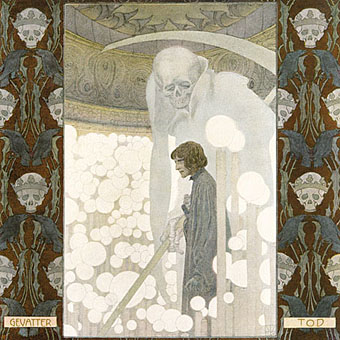
Gevatter Tod (Godfather Death, 1905) by Heinrich Lefler. Via Beautiful Century.

An inevitable hangover from Halloween this week. At 50 Watts: A Modern Dance of Death (c. 1894) by Joseph Sattler, Harry Clarke Revisited, and more Ex Libris Mr Reaper | At Design Observer: Keith Eggener on When Buildings Kill: Sentient Houses in Fiction and Film | At Dangerous Minds: An interview with horror soundtrack composer Fabio Frizzi | Clive Hicks-Jenkins on illustrating the ghost stories of MR James.

Punk 45: The Singles Cover Art of Punk 1976–80, a book by Jon Savage & Stuart Baker with an accompanying compilation album on Soul Jazz Records. Savage & Baker selected a handful of favourite covers here.

De humani corporis fabrica by Vesalius is back in print as a beautiful two-volume hardback edition. See sample pages here.

…the business of the writer is to find something out for yourself and to stick by it. To forge a new mythology out of materials pertinent to the moment. Otherwise you’re at the mercy of their mythology, which is a destruction of language, above everything else. This non-language, this bureaucratic-speak of the global corporate entities, is a horror in the world. So that strange language we started with – that piece of Kerouac – I think is more valuable than ever.

Iain Sinclair (yes, him again) talking to James Campbell about his new book, American Smoke.

Bob Mizer & Tom of Finland, an exhibition at the Museum of Contemporary Art, Los Angeles.

• From 2010: The Bridget Riley Look, The Bridget Riley Sound, Bridget Riley’s Rolling Papers.

The Strange and Mysterious History of the Ouija Board. Related: Ouija Boards at Pinterest.

Highway 62 posted some close-ups of my adaptation of The Call of Cthulhu.

• “This is not a coincidence”: Max Dax talks to Andrey A. Tarkovsky.

Anthony Lane‘s Foreword to The Big New Yorker Book of Cats.

• At AnOther: Nicolas Roeg on Mirrors and Memory.

Toys and Techniques: a blog.

Death And The Lady (1970) by Shirley & Dolly Collins | Clang Of The Yankee Reaper (1975) Van Dyke Parks | All And Everyone (2011) by PJ Harvey

Weekend links 150

feanne.jpg

One of A Pair of Peacocks (2012) by Feanne.

Jonathan Barnbrook reveals his package design for the new David Bowie CD. The Barnbrook studio has also designed the catalogue for the forthcoming V&A Bowie exhibition. And there’s more (don’t worry, it’ll be over soon): Jon Savage on When Bowie met Burroughs.

• “Witches have a fashion moment,” says the NYT. Nice clothes but the writing trots out too many of the usual lazy clichés. Related: A Tale of Witches, Woodland and Half-remembered Melodies…, a new mix by Melmoth the Wanderer.

Calidostópia! is a free album (FLAC & mp3) from Marcus Popp aka Oval: “an enticing 16-track collaboration…with seven wonderful singers/musicians from all over South America”.

Before meeting Moorcock in person, [Hari] Kunzru went on to say, ‘I didn’t realise the role he’d played in connecting so many different scenes and undergrounds together – the psychedelic music scene, the science fiction scene, the hip experimental literature scene around people like William Burroughs, pop art’.

Brave New Worlds: A Michael Moorcock Retrospective by Carol Huston. Moorcock’s Elric novels will be published by Glénat in new bande dessinée adaptations later this year.

• More art by Michael W. Kaluta at The Golden Age. And more fantastic comics/illustration by Philippe Caza at 50 Watts. There’s more Caza here.

• Mine and David Britton’s new book, Lord Horror: Reverbstorm, was reviewed at The Spectator.

Google Street Scene: “Moments of cinema captured by Google Street View cameras”.

Cosmic Sentinels and Spiral Jetties: JG Ballard, Robert Smithson & Tacita Dean

• Strange Flowers showcases the heads of Pavel Tchelitchew, 1949–1952.

Setting in the East: Diamanda Galás on Women and Real Horror

Little Joe: “A magazine about queers and cinema, mostly.”

Nanoparticles loaded with bee venom kill HIV.

Treatises on Dust: Antic Found Texts

The Wizard Blew His Horn (1975) by Hawkwind (with Michael Moorcock) | Brothel In Rosenstrasse (1982) by Michael Moorcock’s Deep Fix | Running Through The Back Brain (1983) by Hawkwind (with Michael Moorcock)