The Demons of King Solomon

demon01.jpg

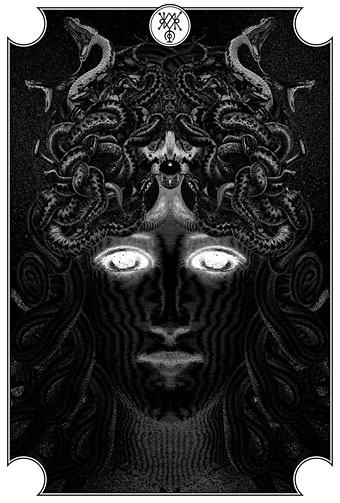
Abyzou.

Presenting my illustrations for The Demons of King Solomon, a horror anthology edited by Aaron French. This is a follow up to Aaron’s The Gods of HP Lovecraft which was published by JournalStone in 2015. I did 6 illustrations for the Lovecraft volume, covering half the stories whereas the new book has illustrations of mine for every story.

demon02.jpg

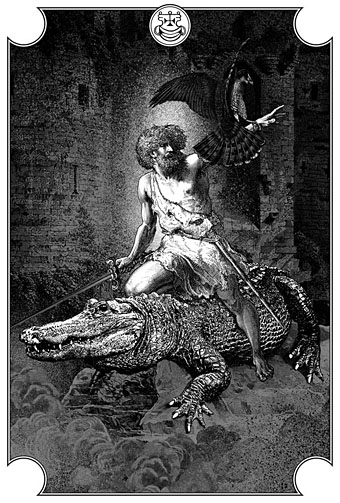
Agaras.

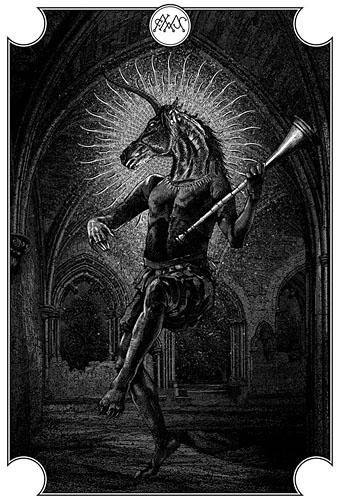
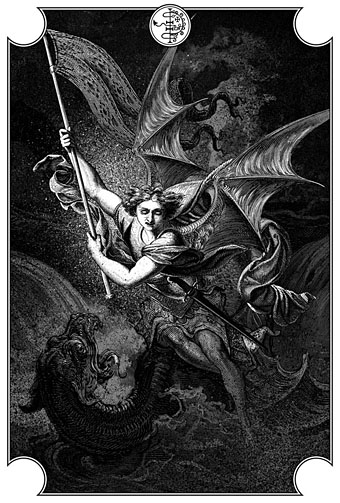
The brief for the authors this time was to write a story incorporating a Solomonic demon of their choosing. There are many of these, from the ones described in the Testament of Solomon to the 72 listed in the Ars Goetia (or Lesser Key of Solomon), the latter being familiar to many people via their often comical depictions in De Plancy’s Dictionnaire Infernal. My original intention for the illustrations was to do a series of pictures based on each story. Some of the stories were late in arriving, however, and I only had a month free for the work so I changed the plan to a series of depictions of the demons as they’re described in the grimoires. This makes more sense when many of the stories have the demons masquerading in human guise, so the illustrations not only show something new but also act as a connection back to their infernal history. Agaras (or Agares), for example, is described by the grimoires as an old man riding a crocodile with a hawk on his arm. Most of the seals on each picture are taken from the ones for the demons shown in the Ars Goetia. Not all the demons in the anthology are listed there so I had to invent a few seals to fill out the collection. I’ll let people guess which are genuine and which are inventions. The Demons of King Solomon is out now from JournalStone. Larger copies of the illustrations may be seen here.

demon03.jpg

Amdusias.

demon04.jpg

Asmodeus.

Continue reading “The Demons of King Solomon”

The Thing on the Doorstep

thing1.jpg

Workwise, this year has been a major one for interior illustration. So far I’ve completed about 80 illustrations for different titles, and I’m still not finished. The majority of the work has been for a Spanish publisher, Editorial Alma, based in Barcelona. Earlier this year they launched a line of reprints of classic works of fiction, each of which is illustrated. To date I’ve worked on three of the titles, the first of which, Narraciones extraordinarias by Edgar Allan Poe, will feature in a later post.

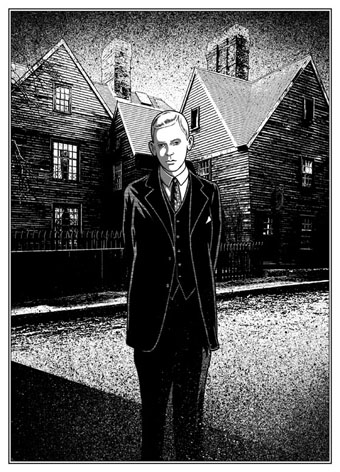
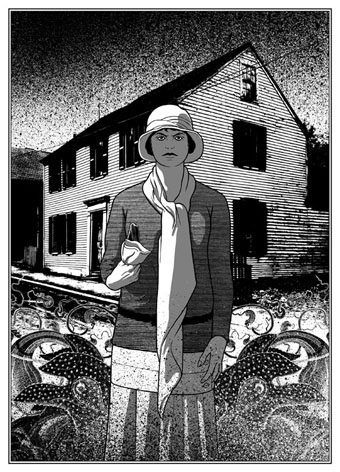
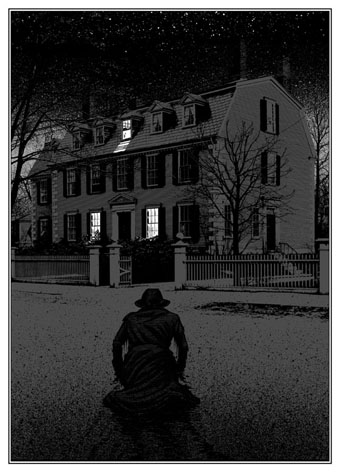
The second title, La llamada de Cthulhu by HP Lovecraft, is a small collection comprising the rather odd pairing of The Call of Cthulhu with The Thing on the Doorstep, two very different stories that you wouldn’t usually expect to see together. I provided six illustrations, three for Cthulhu which are slightly reworked pages from my comic-strip adaptation of the story, and three new ones for The Thing on the Doorstep. This is a story I’d never considered illustrating before when so much of its horror is psychological. It does, however, feature two characters who (by Lovecraft’s standards) are well-defined: the ineffectual Edward Pickman Derby and his sinister future wife, Asenath Waite. So that’s what you see here: portraits of the two main characters plus a view of the climactic scene that gives the story its title. Ideally, I would have liked to have done a fourth picture showing Derby’s surprise awakening at a nightmarish ritual but the deadlines on these books have been tight and there simply wasn’t time.

thing2.jpg

For those interested in this title, the only purchase link I have is an Amazon one. All the books are hardbacks (without dustjackets) complete with decorated endpapers—I provided a tentacle pattern for this one—and a bookmark ribbon. Deadlines aside, it’s been a very pleasant experience working for Alma. The next two books are the big ones so watch this space.

thing3.jpg

Elsewhere on { feuilleton }
The Lovecraft archive

Weekend links 385

picasso.jpg

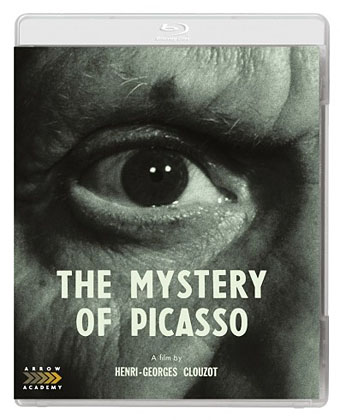
• It won’t be out until late January—and then in the UK only—but the blu-ray premiere of The Mystery of Picasso (1956) by Henri-Georges Clouzot was announced this week. The initial run of the discs (there’s also a DVD) will include a booklet containing my essay about the film, something I was very pleased and honoured to be asked to write. Clouzot’s remarkable study of Picasso drawing and painting for the camera was made immediately after his masterwork, The Wages of Fear (also newly available on UK blu-ray), and this new edition will include two short extras, one of which, A Visit to Picasso (1949) by Paul Haesaerts, is an excellent precursor/companion to the main feature. More on this subject later.

• At the Internet Archive: an almost complete run of The Twilight Zone Magazine (1981–1989). While masquerading as a TV-series spin-off, TZ under the editorship of TED Klein was an excellent periodical devoted to horror and dark fantasy. In addition to running original fiction by major authors (Stephen King was a regular), the magazine contained features about older writers such as Lovecraft and Machen along with book reviews by Thomas Disch, film reviews by Gahan Wilson, interviews and more.

• “Bram Stoker was gay,” says Tom Cardamone in a review of Something in the Blood: The Untold Story of Bram Stoker, the Man Who Wrote Dracula by David J. Skal. I’ve not read Skal’s book so can’t comment on its claims but his earlier Hollywood Gothic (about Dracula on page and screen) includes some discussion of “sexual ambiguity” in Stoker’s work.

• Mixes of the week: FACT mix 625 by Elena Colombi, Secret Thirteen Mix 235 by Rhys Fulber, and XLR8R Podcast 514 by Tommaso Cappellato.

Help, Help, The Globolinks! is a previously unreleased electronic soundtrack by Suzanne Ciani, out next week.

La Région Centrale (1971), Michael Snow’s epic of landscape gyrations in two parts, here and here.

Alexander Calder and the Optimism of Modernism: Jed Perl in Conversation with Morgan Meis.

• Illustrations by Lynd Ward for The Haunted Omnibus (1935) edited by Alexander Laing.

Daniel Dylan Wray on the gay-porn music of disco pioneer Patrick Cowley.

• It’s that man again (and his drawings): Ernst Haeckel: the art of evolution.

• At Dennis Cooper’s: Steve Erickson presents A Black Psychedelia Primer.

Bootsy Collins‘ favourite albums.

Picasso (1948) by Coleman Hawkins | Pablo Picasso (1976) by The Modern Lovers | Picasso Suite pt. 1 (1993) by David Murray Octet

Two albums

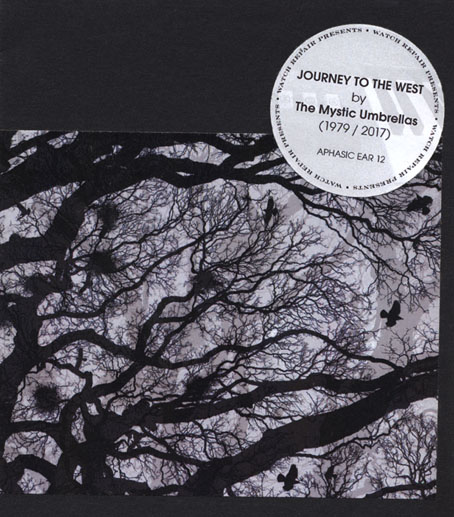
mu1.jpg

A pair of albums by friends of mine are released this month: the first, Journey to the West (1979–2017) by Watch Repair presents The Mystic Umbrellas, has been gestating for several years; the second, Dreaming Dangerous Rainbows by Albatross Project, came together very quickly earlier this year after song sketches led to an album that none of the participants had originally planned. I designed both releases so I have more than a passing interest.
mu3.jpg

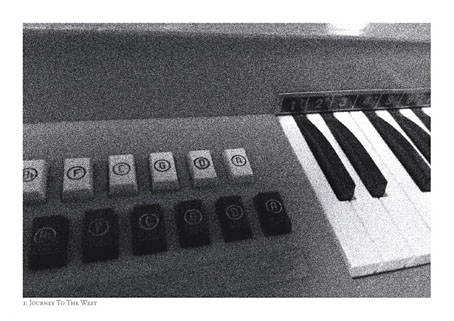
The Mystic Umbrellas project will probably be of most interest to regular readers since it evolved from a couple of very minimal organ recordings made in 1979 by Mark Valentine. Mark is well-known today as a writer of weird fiction, and also an editor and publisher of the same, but in the early 1980s he was involved briefly with the British wing of the independent cassette scene, a micro-budget offshoot of the post-punk DIY ethos which spurred many amateur (or non-) musicians to create and release their own musical works on limited-edition cassettes. The UK manifestation of this scene tended either to imitate higher profile post-punk artists (some of the better examples may be heard on the recent Cherry Red compilation, Close To The Noise Floor) or indulge in a very British form of what might be called Low Surrealism, although “absurdity” is probably a more accurate definition. (A UK label of the time was even named Absurd Records.)
mu4.jpg

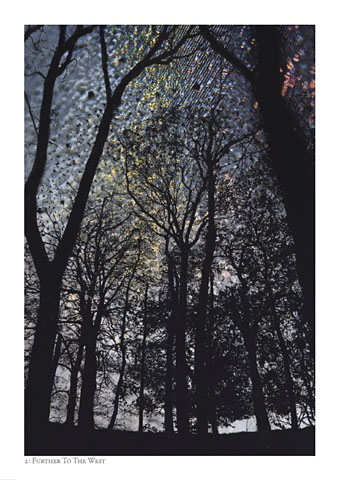
Photocard by Deborah Judd.

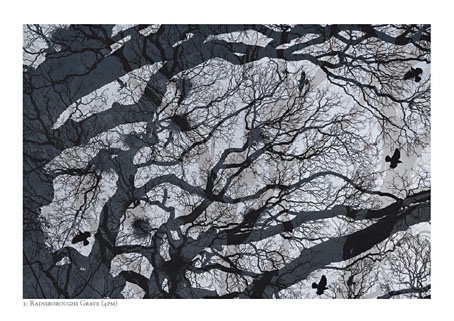
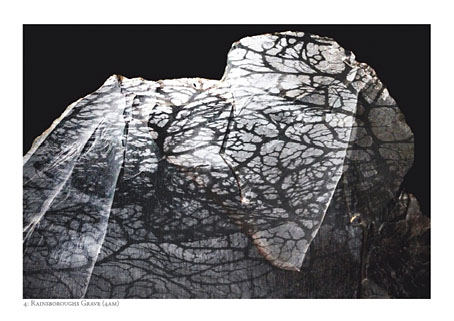
Mark’s Mystic Umbrellas pieces—Journey To The West, Radio Dromedary (a short-wave radio capture) and Rainsborough’s Grave 1 & 2—were released on separate cassette compilations, Deleted Funtime (1980) and National Grid (1981). My friend in Watch Repair (who is happy to remain otherwise anonymous) bought both cassettes, and marked out the Mystic Umbrellas pieces as favourites for their qualities of melancholy and restraint; the organ recordings were very different from the post-punk fumblings or the absurdity in evidence elsewhere. The cassettes sat in a box for years until the same friend decided to try using them as source material for some of his sound processing experiments; these experiments eventually yielded a suite of marvellously atmospheric extensions/transmutations which mutate the recordings beyond recognition but which remain faithful to the haunting qualities of the originals. The precedence for this kind of repurposing would include Jon Hassell’s Magic Realism (1983) and some of the recent works of Thomas Köner, but Mystic Umbrellas and Watch Repair are in a territory of their own.
mu5.jpg

Photocard by Deborah Judd.

While working on the design for this release I kept ruminating on the curious net of connection and coincidence around these recordings. After buying the Deleted Funtime cassette my Watch Repair friend contacted one of the other artists, “Stabmental”, to ask about similar recordings. Stabmental was a name used by Geoff Rushton for his post-Throbbing Gristle musical experiments and an Industrial music fanzine; a couple of years later he joined Psychic TV and changed his name to John Balance. Geoff/John was later in Coil, of course, and a decade after this was in correspondence with me having been greatly impressed with my Lovecraft art in The Starry Wisdom anthology. My earlier Lovecraft story, The Haunter of the Dark, had been published in a large-format edition in 1988 by Caermaen Books, an imprint run by a pair of Arthur Machen enthusiasts, Roger Dobson and Mark Valentine. It was shortly after my first meeting with Mark and Roger that my Watch Repair friend realised that Mark must be the Mystic Umbrellas person so the Lovecraft artwork helped remind us of the Deleted Funtime cassette. The same cassette surfaced again a few years ago when it was sold to an obsessive Coil collector who wanted it for the Stabmental piece. That sale led to the cassette being digitised before it was let go, and the digitisation process led to these recordings.
mu6.jpg

Photocard by Deborah Judd.

Things got even more tangled earlier this year when I was working on the final layout while also reading the expanded edition of England’s Hidden Reverse, David Keenan’s fascinating history of Coil, Current 93 and Nurse With Wound. Keenan discusses the independent cassette scene (and mentions Stabmental) so all the above was circling in my head once more; but I really wasn’t expecting the instance when Keenan goes into David Tibet’s enthusiasm for Arthur Machen by including a page of explanation from a Machen expert…Mark Valentine. In Mark’s notes for the Watch Repair release he describes the origin of the Mystic Umbrellas name which came about during a rainy day-trip to Glastonbury. Somerset’s most mystical town includes Chalice Well among its complement of New Age tourist traps; shortly after finishing England’s Hidden Reverse I was re-reading a typically wild interview with Alejandro Jodorowsky in which he proposes that the humble umbrella is in fact a black chalice, and that the knights of the Round Table are searching for a Holy Grail that’s actually an umbrella. A mystic umbrella, in other words. Elsewhere in the same interview he expounds on the symbolism of the Black Sun, a favourite symbol of Coil’s. (And Coil for a short while had a Chalice record label…) By this point I’d ceased to be surprised, the endless chain of connections seemed inevitable.

albatross1.jpg

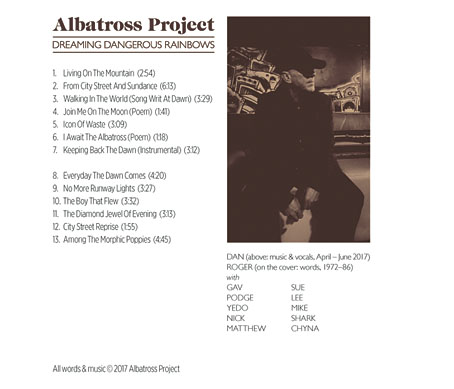
After all the above the album by Albatross Project risks seeming a little mundane, although grounded (one meaning of “mundane”) would be better. The origin this time was a series of poems written by Roger (that’s him on the cover) from 1972 to 1986. These were set to music by Dan of Warper’s Moss and Watch Repair. (Nobody in this group is offering their surnames so you’ll have to accept the circumspection.) Everyone involved was surprised by the quality of the resulting songs, not least Roger who wrote the words sporadically while travelling the world in his youth. Dan and friends have been writing songs and playing in bands since the 1980s which is why they were able to produce such an accomplished album in a matter of months. Musically, this is quite straightforward: well-crafted songs in a rock idiom which had me thinking at times of Pink Floyd circa 1972 (fitting since several of the musicians are from the Floyd-worshipping environs of Merseyside). But it also owes something to the Elektra years of the early 70s (as does my design), and the period flavour harks back to the time and experiences that Roger was writing about.
albatross2.jpg

Both albums are available via Bandcamp. The hard format of Dreaming Dangerous Rainbows is a CD-R in a jewel case while the Mystic Umbrellas hard format is a lavish hand-crafted package that includes copious notes and four art cards, three of which feature Deborah Judd’s evocative photo montages. The latter package will be strictly limited. Original copies of the Deleted Funtime cassette command high prices among Coil collectors but the curious (or foolhardy) may download a copy at Die or DIY?

Previously on { feuilleton }
The Polarities by Watch Repair
Seven Harps by Warper’s Moss
The Tidal Path by Watch Repair
Watch Repair

Weekend links 369

popovic.jpg

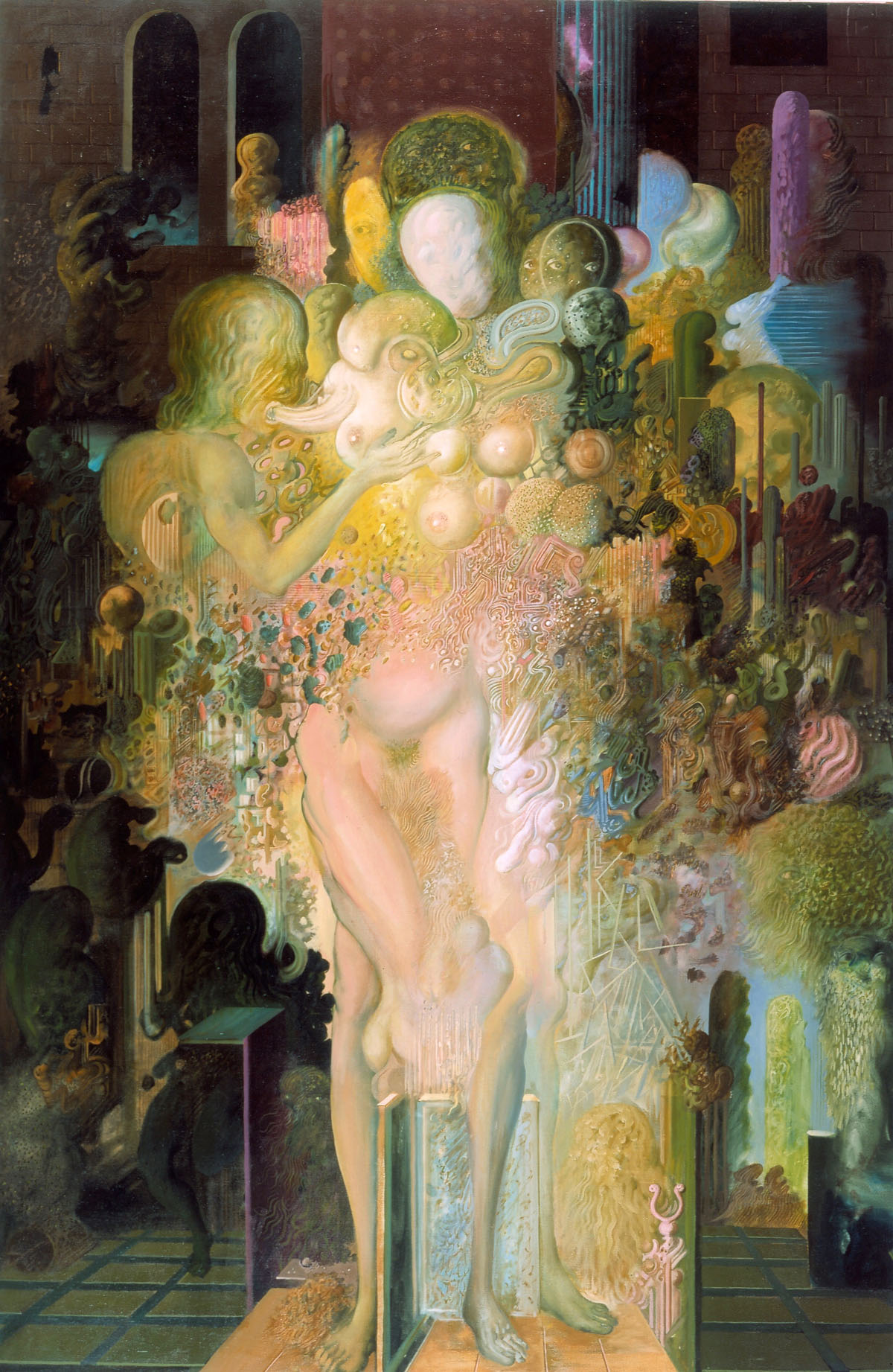
Untitled painting by Serbian Surrealist Ljuba Popovic (1934–2016). I missed the announcement of Popovic’s death last year.

Bryan Washington on the radical grace of Gengoroh Tagame: My Brother’s Husband and the tradition of gay manga. Where bara artists are concerned, I favour the work of Mentaiko Itto. Bruno Gmünder recently published a collection in English.

• At madrotter-treasure-hunt: Post punk from old tapes; “Some live recordings from concerts in Holland from Charles Hayward and from This Heat, Metabolist, Pere Ubu, Holger Hiller…”

Dennis Cooper‘s favourite fiction, poetry, non-fiction, film, music, art & internet of 2017 so far. (Thanks again for the nod to this blog!)

The Weird and the Eerie is an evocative and carefully-written short study in cultural aesthetics. Far from the familiar line-up of vampires, zombies, and demons, Fisher’s eclectic examples speak directly to one of the central themes of the horror genre: the limits of human knowledge, the metamorphic shapes of fear, and the blurriness of boundaries of all types. His simple conceptual distinction quickly gives way to reversals, permutations, and complications, ultimately refusing any notion of a monstrous or alien unhumanness “out there”; with Fisher, the unhuman is more likely to reside within the human itself (or as Lovecraft might write it, “the unhuman is discovered to reside within the human itself”).

Many books on the horror genre are concerned with providing answers, using varieties of taxonomy and psychology to provide a therapeutic application to “our” lives, helping us to cathartically purge collective anxieties and fears. For Fisher, the emphasis is more on questions, questions that target the vanity and presumptuousness of human culture, questions regarding human consciousness elevating itself above all else, questions concerning the presumed sovereignty of the species at whatever cost – perhaps questions it’s better not to pose, at the risk of undermining the entire endeavour to begin with.

Eugene Thacker reviewing The Weird and the Eerie by Mark Fisher. I’ve not read Fisher’s book yet (I’m intending to) but I was pleased to see one of my illustrations of R’lyeh accompanying the piece.

• At Dirge Magazine: Gwendolyn Nix on Twisted Labyrinths, Dark Mazes, and Ancient Methods of Reflection.

• Mixes of the week: XLR8R podcast 498 by Nicola Kazimir, and Secret Thirteen Mix 227 by Sculpture.

AO Scott reviews Endless Poetry, Alejandro Jodorowsky’s surreal self-portrait.

Maze Of Love (1968) by The Dave Clark Five | Audiomaze (2000) by Tabla Beat Science | Into The Maze (2012) by Pye Corner Audio