El Lissitzky record covers

genx.jpg

Your Generation (1977) by Generation X. Design by Barney Bubbles.

Continuing an occasional series about the work of particular artists or designers being used on record sleeves. El Lissitzky (1890–1941) is an interesting candidate in this area since his pioneering abstractions have greatly influenced subsequent generations of graphic designers. As a result of this you’re just as likely to find his Suprematist style being pastiched on an album cover as find one of his paintings decorating the sleeve. Pastiches are difficult to locate unless you already know they exist—or unless the album credits acknowledge the style they’re imitating—so this list will no doubt be incomplete.

Barney Bubbles’ design for the debut single by Generation X is the earliest example I’m aware of that makes use of the El Lissitzky style. It was also one of Bubbles’ first sleeves for a punk band, and a significant break with his often florid hippy designs.
kraftwerk1.jpg

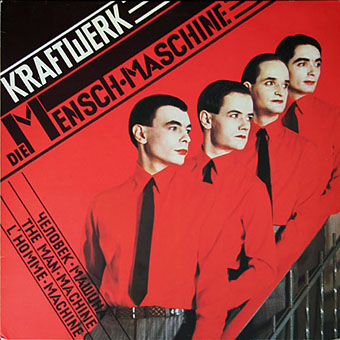
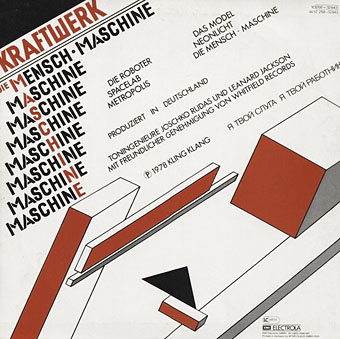
Die Mensch Maschine (1978) by Kraftwerk. Design by Karl Klefisch, “inspired by El Lissitzky”.

Kraftwerk’s seventh album uses Lissitzkian typography and graphics on its front and back covers. A very popular album with the post-punk crowd that would have been the first introduction for many people to El Lissitzky’s name. Kraftwerk still use that vibrant arrangement of black, red and white in their stage shows.
kraftwerk2.jpg

sakamoto1.jpg

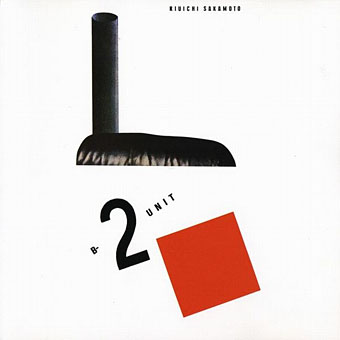
B-2 Unit (1980) by Riuichi Sakamoto. Design by Tsuguya Inoue.

More pastiche, this time borrowing from El Lissitzky’s Suprematist book for children: About Two Squares: In 6 Constructions: A Suprematist Tale (1922). The book’s two characters of a red square and a black square appear on the vinyl labels. This is a great album, incidentally, still my favourite by Sakamoto.

sakamoto2.jpg

Continue reading “El Lissitzky record covers”

Dick Smith, 1922–2014

smith1.jpg

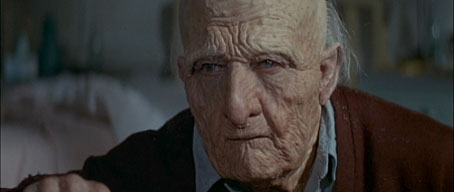
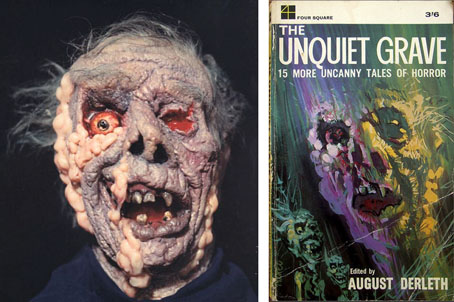
left: Dummy head by Dick Smith for The Picture of Dorian Gray (1961); right: Cover art by Michel Atkinson (aka Michel) for The Unquiet Grave (1963).

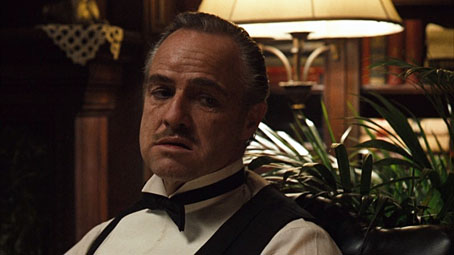
Cinema in the 1970s would have been very different without Dick Smith‘s makeup artistry.

smith2.jpg

Dustin Hoffman in Little Big Man (1970).

smith3.jpg

Marlon Brando in The Godfather (1972).

smith4.jpg

Linda Blair in The Exorcist (1973).

Continue reading “Dick Smith, 1922–2014”

Tuxedomoon on La Edad de Oro, 1983

tuxedomoon1.jpg

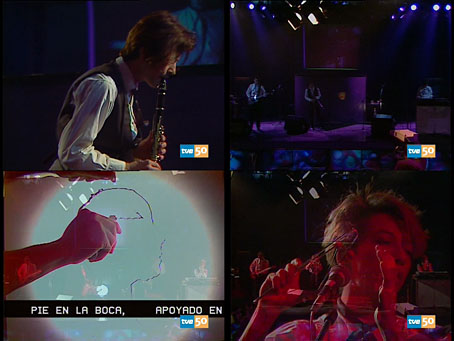
La Edad de Oro (The Golden Age) was a Spanish television show which only ran from 1983 to 1985 but during that time it managed to cause a considerable stir, first by showcasing in lengthy programs many musical groups that would have been unknown to the Spanish public (or the public of their native countries, for that matter), and secondly by scandalising that public with irreligious performances from some of those bands. La Edad de Oro was part of a general attempt to bring Spain up to speed with the rest of European culture following the end of the Franco regime, as a result of which a number of leftfield groups were given far more attention than they would have received in the UK. Psychic TV were one of the groups offered a carte blanche two-hour slot, and I remember Genesis P Orridge mentioning this with some surprise in interviews.

tuxedomoon2.jpg

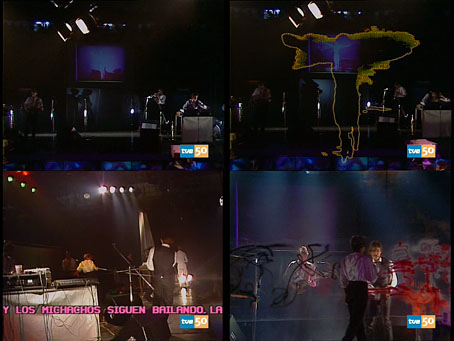
Tuxedomoon’s own edition of La Edad de Oro was broadcast on May 24, 1983. I’ve been fortunate to acquire a pristine copy of a later screening from one of the tape trading sites, and it’s a remarkable thing, cutting between couch interviews with the band members and a complete studio performance of their songs. The latter can been seen on YouTube, of course, so there’s no need to go hunting down rare files. This is the first Tuxedomoon concert I’ve seen, I don’t recall them ever being on British TV although some of their videos must have been screened somewhere. What’s fascinating is seeing how theatrical their performance is. In addition to screening some of Bruce Geduldig’s films on a backdrop, there are shadow vignettes and bits of stage play such as the ropes that bind each of the band members together during The Cage. Later on, Blaine Reininger and Winston Tong graffitise a sheet of film stretched over the stage. (Tuxedomoon’s “Joeboy” designation originated in some San Francisco street art.) I’m wondering if the rope business was borrowed from David Bowie: in the Cracked Actor film he does a similar thing during the Young Americans tour.

Wikipedia has a list of La Edad de Oro‘s artistas invitados not all of which are essential—China Crisis…please—but I’d love to see some of the other editions, the Cabaret Voltaire one especially. Time to go hunting.

Previously on { feuilleton }
Tuxedomoon designs by Patrick Roques
Pink Narcissus: James Bidgood and Tuxedomoon

Victor Vasarely album covers

vasarely05.jpg

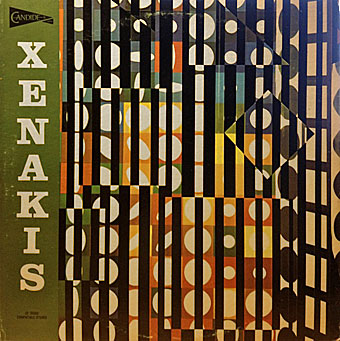
Terretektorh / Nomos Gamma (no date; late 60s) by Iannis Xenakis.

Xenakis and Victor Vasarely are paired again on this album cover from the late 1960s. Given how often record companies have used abstract artwork on the sleeves of classical recordings, especially those by 20th-century composers, you’d expect there to be more examples. There may well be but Discogs (always the easiest place to search) only turns up the following examples.

vasarely01.jpg

Chamber Concerto For 11 Instruments / Symphonic Variations (no date) by
Neils Viggo Bentzon / The Royal Danish Orchestra conducted by Jerzy Semkow.

vasarely04.jpg

Kontakte For Electronic Sounds, Piano And Percussion / Refrain For Three Instrumentalists (1968) by Aloys Kontarsky, Christoph Caskel, Karlheinz Stockhausen.

vasarely06.jpg

David Bowie (1969) by David Bowie.

I confess that until I began searching for Vasarely covers I hadn’t known that this was an early example. That’s partly down to David Bowie’s second album (the first in his official canon) having been reissued for years in a different cover with Bowie’s face filling the sleeve. The album reissues in 1999 restored the original design, one of the artist’s Folklore Planetaire series. The credit is to “Vaserelli”.

Continue reading “Victor Vasarely album covers”

The weekend artists, 2013

fournier.jpg

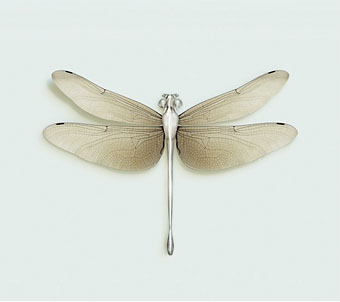
“Chloromgonfus detectis, a dragonfly that can detect volatile pollutants.” A speculative insect by artist Vincent Fournier.

The annual review of artists/designers/photographers featured in the weekend posts should have run at the end of December but MR James got in the way. Big thanks, and happy new year to Form is Void and Beautiful Century for pointing the way to many of these people.

strongowski.jpg

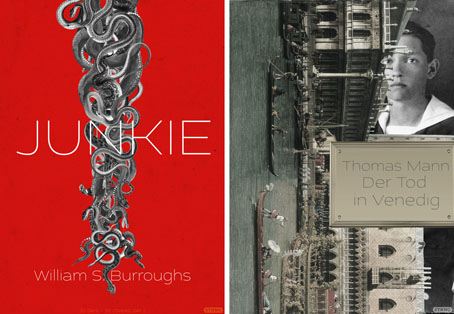
Two cover designs from Eliash Strongowski’s 30 Days—30 Covers project.

gebbie.jpg

Pink Boy by Melinda Gebbie.

lipton.jpg

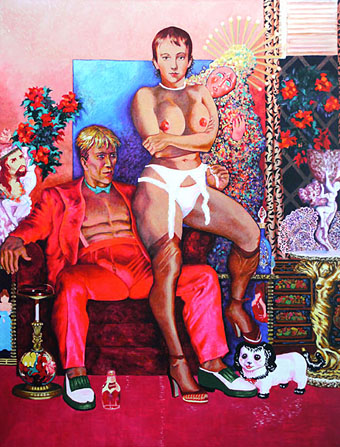
Seam Stress (1987) by Laurie Lipton. The Drawings of Laurie Lipton is out now from Last Gasp.

blackwell.jpg

The Baron in the Trees (2011), a book-cut sculpture by Su Blackwell.

Continue reading “The weekend artists, 2013”