Just the ticket: Cabaret Voltaire

cv01.jpg

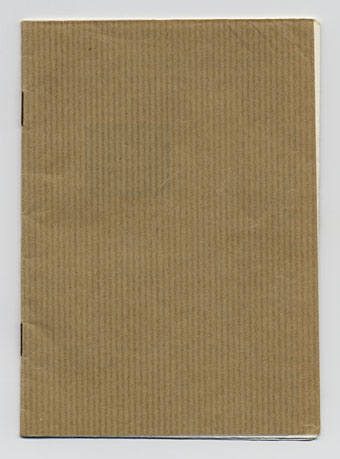
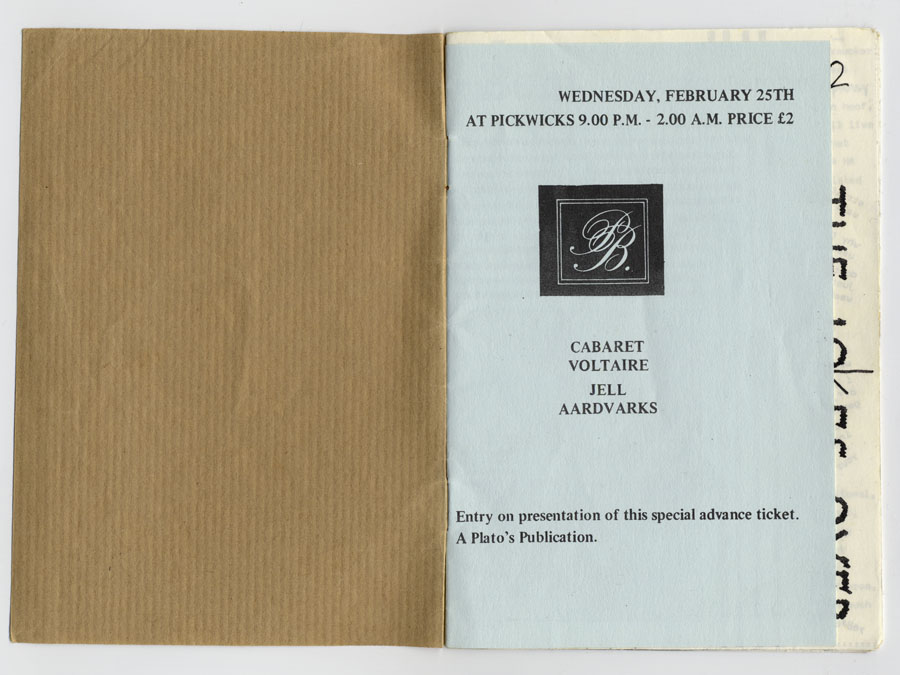
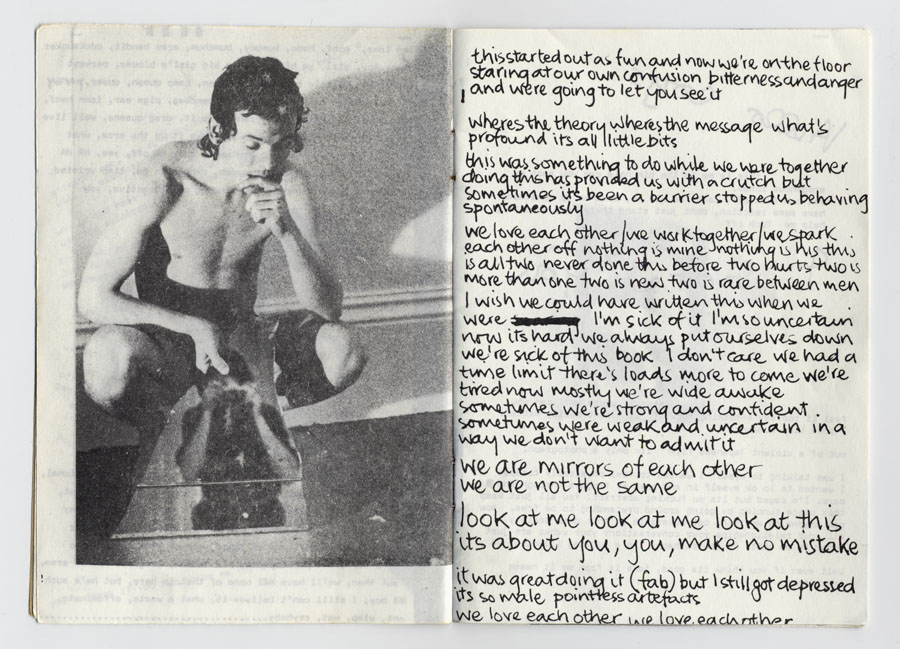
The current issue of The Wire has a great appraisal by Keith Moliné of the musical history of Cabaret Voltaire, a well-timed piece given the recent announcement of forthcoming reissues from Mute Records. Having been a Cabophile from the start I’m rather biased, but the Wire piece has had me listening to the early albums and singles this week (between bouts of Zdenek Liska), and finding the passage of time has made those early recordings seem increasingly strange. Cabaret Voltaire were one of the few groups I liked obsessively enough to collect ephemera from newspapers and magazines. Knowing this, a friend gave me this curious fanzine/ticket from a gig the group played in Liverpool in February, 1981. The venue was Plato’s Ballroom at Pickwicks, and judging by the wording inside—”A Plato’s Publication”—it seems it was the venue’s idea to make the ticket a small (10.5 x 15 cm) booklet.
cv02.jpg

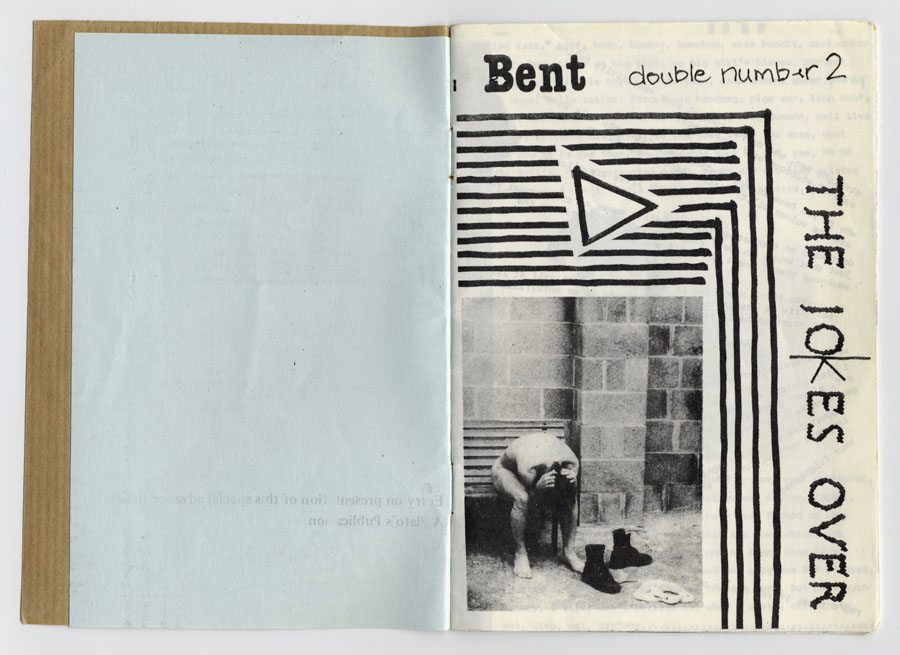
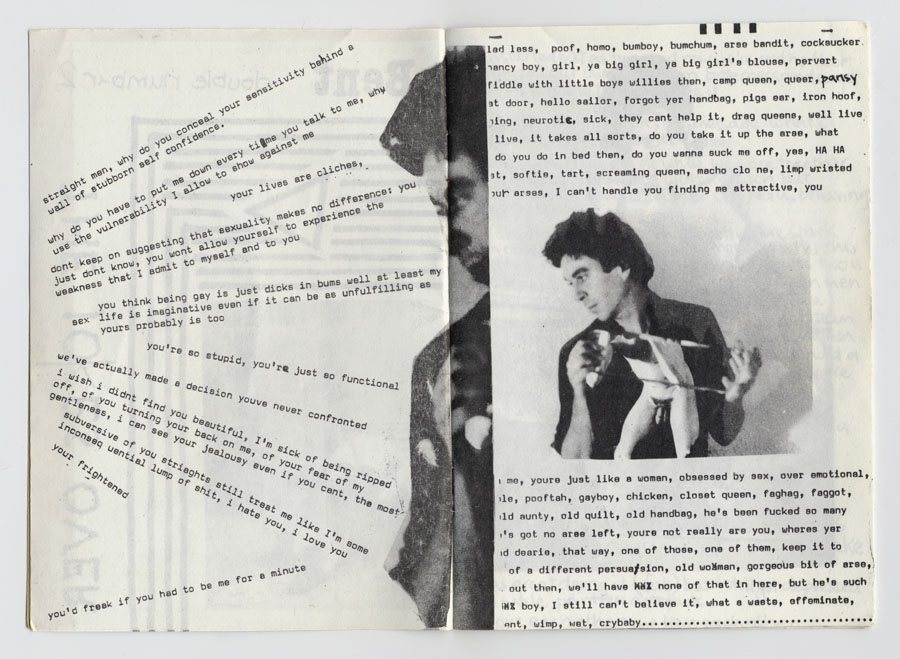
What’s surprising about this is that the fanzine the ticket is bundled with has nothing at all to do with music (or that other perennial of 80s post-punk culture, left-wing politics) but is a glimpse of life as a gay man in Liverpool. I’ve always found this fascinating for the daring it took to foist the thing on a bunch of unwitting Cabs fans, most of whom would have been straight men and not especially sympathetic to the subject matter. In the context of 1981 forcing people to look at grainy shots of naked men with accompanying text (by another man) declaring them to be a turn-on was a transgressive act. The only representations of anything gay in the popular media were a few camp (and therefore safe) comedians; Derek Jarman was still an underground figure, and as late as 1984 a BBC play about gay men was prefaced with a warning about its “contentious” subject.
cv03.jpg

I’ve no idea who was responsible for the fanzine, there are no credits, and it’s possible that the people involved didn’t want to be too easily identified. If the tone of the writing seems rather dramatic then, again, it’s important to see it in context of a country which wasn’t much more amenable to gay people than Russia is today. Saying things in public that most people didn’t want to hear was a challenging act; emotions often ran high.
cv04.jpg

Looking for information about the gig turned up this newspaper ad. (Who were Jell and Aardvarks, I wonder?) By an odd coincidence only the day before I’d found this upload from the same person of a very scarce compilation tape that happens to be from the same year, and which features contributions from Cabaret Voltaire’s Chris Watson and Richard Kirk. The Men With The Deadly Dreams was compiled by Geoff Rushton, aka John Balance of Coil, and was apparently limited to 200 copies. Among the other highlights there’s a track from Eyeless in Gaza, whose early work I like a great deal, and an electronic piece by Throbbing Gristle’s Chris Carter which I think is exclusive to this collection. Two artefacts—fanzine and tape—with brown paper covers that give a snapshot of Britain’s underground culture in 1981.
cv05.jpg

Continue reading “Just the ticket: Cabaret Voltaire”

Weekend links 155

austin.jpg

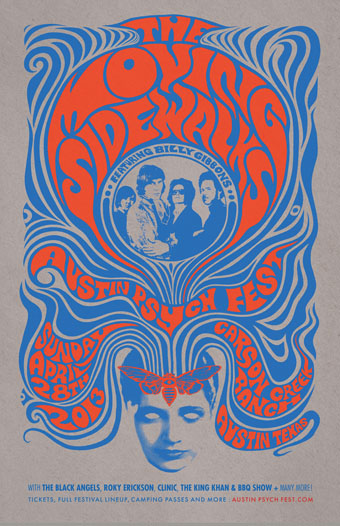
Poster design by Mishka Westell for this month’s Austin Psych Fest. Billy Gibbons’ pre-ZZ Top psychedelic outfit, The Moving Sidewalks, surprised everyone by reforming for a New York gig last month, their first performance together in 44 years.

• Pye Corner Audio played the Boiler Room, London, last week, and remixed a track from FC Judd’s Electronics Without Tears. Also on the latter is Chris Carter who talks about his own remix (and the “Radiophonic” Mr Judd) here.

Tom Bianchi’s Fire Island Pines, Polaroids of New York’s gay enclave from 1975–1983. Related: In Conversation with the Violet Quill: Andrew Holleran, Felice Picano, and Edmund White.

• From 2011: Sex, prison and lost ligatures: The story of Herb Lubalin’s Avant Garde typeface. Related: The ITC Avant Garde Gothic group at Flickr.

• Music reissues: Tape Works 1981–1982 by Laughing Hands is out now, and Scott Walker’s early solo albums will be reissued in the summer.

fraser.jpg

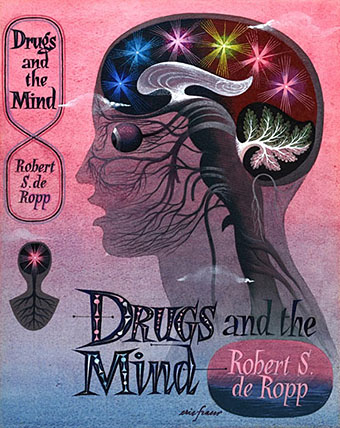
Drugs and the Mind (ii), a cover design from 1957 by Eric Fraser (1902–1983) whose illustrations and designs are in exhibition at the Chris Beetles gallery, London.

• At Ubuweb: William S. Burroughs + Brion Gysin + Genesis P-Orridge – Cold Spring Tape (1989).

The World According to John Coltrane, an hour-long documentary.

Neko Font: for when you need a word made of cats.

Fuck yeah, Sarah Bernhardt

Sordid Spheres!

99th Floor (1967) by The Moving Sidewalks | Over Fire Island (1975) by Brian Eno | Ledge (1980) by Laughing Hands

Weekend links 148

lanna.jpg

Quantum Entanglement by Duda Lanna.

An hour-long electronica mix (with the Düül rocking out at the end) by Chris Carter for Ninja Tune’s Solid Steel Radio Show.

• “…a clothes-optional Rosicrucian jamboree.”: Strange Flowers on the paintings of Elisàr von Kupffer.

• A Paste review of volume 2 of The Graphic Canon has some favourable words for my contribution.

It is an entertaining thought to remember that Orlando, all sex-change, cross-dressing and transgressive desire, appeared in the same year as Radclyffe Hall’s sapphic romance The Well of Loneliness. The two novels are different solar systems. The Well is gloomy, beaten, defensive, where women who love women have only suffering and misunderstanding in their lonely lives. The theme is as depressing as the writing, which is terrible. Orlando is a joyful and passionate declaration of love as life, regardless of gender. The Well was banned and declared obscene. Orlando became a bestseller.

Jeanette Winterson on Virginia Woolf’s androgynous fantasia.

Jim Jupp discovers the mystical novels of Charles Williams.

Michael Andre-Driussi on The Politics of Roadside Picnic.

Les Softs Machines: 25 August 1968, Ce Soir On Danse.

• At 50 Watts: Illustrations and comics by Pierre Ferrero.

Soviet posters: 1469 examples at Flickr.

Oliver Sacks on drugs (again).

• At Pinterest: Altered States.

• Farewell, Kevin Ayers.

Darkest London

Why Are We Sleeping? (1969) by The Soft Machine | Lady Rachel (1969) by Kevin Ayers | Decadence (1973) by Kevin Ayers

Weekend links 139

barnes.jpg

Lucy in the Sky with Diamonds (2012) by Lesley Barnes. She also has peacock wrapping paper.

Big thanks to Dennis Cooper for including this blog in his favourite music, fiction, poetry, film, art & internet lists for 2012. Lots of good company there. One benefit of end-of-year lists is the way they suggest things to look for in January.

• “…the best pictures of dicks that I’ve ever seen…” Rudy Rucker reviews Malcolm McNeill’s The Lost Art of Ah Pook Is Here and Observed While Falling, out at last from Fantagraphics. Rucker notes that William Burroughs’ text is still only available in out-of-print editions in which case you’ll need a book dealer. Elsewhere, Burroughs: The Movie has cleared 50% of its restoration Kickstarter goal but still needs supporters.

• Julia Holter has been a recurrent presence in these posts since the release in March of her acclaimed second album, Ekstasis. FACT has an alternate version of the album’s opening song, Marienbad, one of the extra tracks on the recent UK reissue.

Suttree’s saga carried me down, down, down to the bottom of a heightened surrogate reality, a nadir where the rarest jewels of clarity are found. The fourth time through the novel I arrived at a state of barometric equipoise, a balancing between my mental state and Suttree’s. Then, as he descended again, I began to rise. There was a hypnotic poetry to his fall — his life disintegrated, then the fragments disintegrated, then those fragments followed suit ad infinitum.

Jim White on the life-preserving qualities of Suttree by Cormac McCarthy.

• “An 18-year-old boy who discovers he has a fetish for the aged gets a job in a nursing home and develops an intimate relationship with one particular old man.” Gerontophilia, a proposed film by Bruce LaBruce, is looking for funding.

• Can’t wait for this: Groenland Records announces Who’s That Man?, a four-CD set of music produced and performed by Conny Plank. FACT has a track list.

• At BUTT magazine: Pink Courtesy Phone Mix by Richard Chartier, a great selection of electronica old and new.

• Another end-of-year list: Volumes 1 & 2 of The Graphic Canon are in NPR’s Indie Bookseller best of 2012 selection.

The Nightmare Paintings: art by Aleister Crowley currently touring Australia.

• Christmas with Monte: Colin Fleming on the ghost stories of MR James.

• “The war on drugs is a war on human nature” says Lewis Lapham.

Alan Moore: why I turned my back on Hollywood.

• More electronica: Chris Carter discusses synths.

Saul Bass poster sketches for The Shining.

• At Pinterest: The Pan Within.

Ah Pook Is The Mayan God Of Death (1975) by William Burroughs | Panic (1985) by Coil | Light Shining Darkly (1992) by Coil.

European Rendezvous by CTI

cti3.jpg

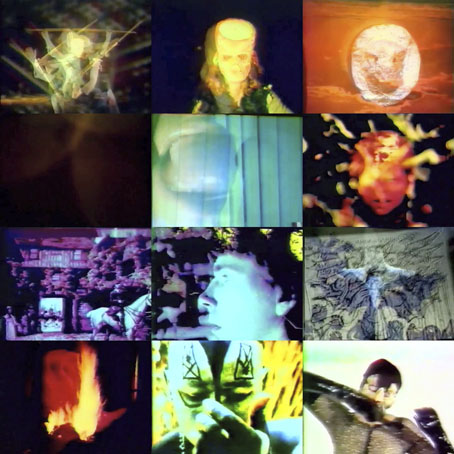
A final post about the releases on Cabaret Voltaire’s Doublevision label. European Rendezvous (1984) was a follow-up to the Elemental 7 release by Chris & Cosey with the pair performing again under their Creative Technology Institute name. As with the earlier release the visuals are a collaboration with John Lacey while the music was recorded live during their 1983 tour of Europe. Once again, I knew this from the soundtrack album (also on Doublevision) and didn’t get to see the video which has never been reissued. Visually this is further impressionistic layering of images à la Elemental 7 but with greater emphasis on Chris & Cosey themselves. Musically, I always preferred the earlier CTI release which worked perfectly well without the visuals so it’s interesting to see that the visuals for European Rendezvous help music which lacks the finesse of their studio recordings. The fifty-minute tape is rounded off with a promo video for October (Love Song).

The YouTube version of European Rendezvous is in great condition compared to some of the other things I’ve been linking to; here’s hoping someone eventually uploads a complete copy of TV Wipeout. Most of the other Doublevision video releases including Tuxedomoon’s Ghost Sonata, Einstürzende Neubauten’s Halber Mensch and Cabaret Voltaire’s Johnny YesNo have since been reissued on DVD.

Previously on { feuilleton }
TV Wipeout
Seven Songs by 23 Skidoo
Elemental 7 by CTI