Dune: some French connections

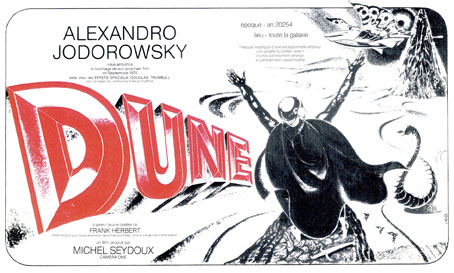
landi.jpg

French poster by Michel Landi for the ill-fated Jodorowsky film.

There’s more to French music than Air and Daft Punk, and there’s more to cosmic French music than Magma, although you wouldn’t always know it to read Anglophone music journalists. I’ve been championing the electronica recorded by Bernard Szajner for a long time, and even tried without success to get one of his albums reissued a few years ago. (Which reminds me: Gav, you’ve still got my Szajner albums!) That album (credited to “Zed”), Visions Of Dune (1979), has been out-of-print since 1999 so it’s good to know it’s being reissued on vinyl and CD next month by Finders Keepers’ Andy Votel. FACT has a mix of extracts to give the curious some idea of its buzzing analogue soundscapes.
szajner.jpg

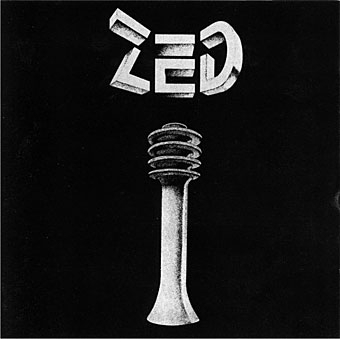
Visions Of Dune (1979) by Zed (Bernard Szajner). Artwork by Klaus Blasquiz.

Visions Of Dune attempts to illustrate Frank Herbert’s novel in musical form; you wouldn’t really know this without the track titles but that’s the way it often is with instrumental music. The album has gained a surprising cult reputation in recent years although it’s difficult to tell whether this is merely a consequence of its rarity or whether it’s because people like Carl Craig have taken to listing it as a favourite electronic record. It’s a decent enough album but I’ve always preferred Szjaner’s follow-up, Some Deaths Take Forever (1980), a conceptual polemic against the death penalty which is ferocious enough in places to be classed among the post-punk electronica being produced in the same year by Throbbing Gristle and Cabaret Voltaire. Szajner later recorded an album with Howard Devoto, Brute Reason (1983), which puts him even more firmly in the post-punk camp. I suspect Some Deaths… offends the hardcore synth-heads with its squalls of electric guitar and other traces of the rock milieu. More amenable is another Szajner album, Superficial Music (1981), which remixes the Visions Of Dune tracks into seven chunks of doom-laden ambience. I’ve never thought of the resulting sound as very superficial, “unsettling” is closer to the mark which is why I included an extract in my Halloween mix last year.
pinhas.jpg

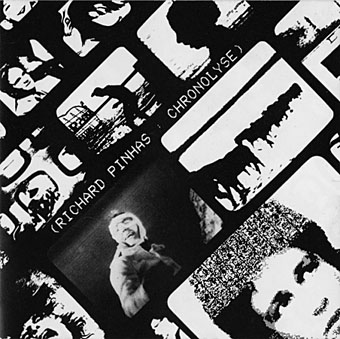
Chronolyse (1978) by Richard Pinhas. Artwork by Patrick Jelin.

Visions Of Dune isn’t the only Dune-related synth album from France. Chronolyse (1978) is the second solo album by Richard Pinhas, another musician you won’t find many Brit writers discussing even though he’s been recording since 1974. Pinhas’s inspirations are an unusual amalgam of science fiction and contemporary French philosophy, a subject he studied at the Sorbonne; prior to going solo he was performing with Heldon, a French prog band whose name is taken from Norman Spinrad’s The Iron Dream. Heldon may be classed as a prog group but their first album, Electronique Guerilla (1974), has one side dedicated to William Burroughs, features a track with “lyrics by Nietzsche”, and also contains an appearance by Gilles Deleuze. Deleuze and Norman Spinrad appeared on later Pinhas solo albums although neither of them are on Chronolyse which, like Visions of Dune, is a wordless (and often tuneless) meander through synthesised soundscapes named after Dune characters. The music on the first side is much more sparse than Szajner’s, and less satisfying as a result; the second side improves with the 29-minute Paul Atreïdes, a typical Pinhas guitar-and-synth jam with extended Fripp-like soloing. As with Szajner, all the Heldon/Pinhas output tends towards the abrasive, and looking at the recent Pinhas discography the man is showing no sign of growing soft, having played shows recently with notorious noise merchants Merzbow and Wolf Eyes.
dune.jpg

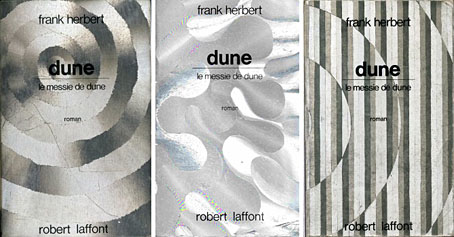
Dune paperbacks from Robert Laffont (1975–1983). Designer unknown.

Has there been any other Dune-related music from France? Given the French enthusiasm for science fiction I wouldn’t be surprised. A search for French covers of Frank Herbert’s novels turned up these strikingly abstract examples from Robert Laffont which I’d not seen before. That combination of foil backing and lower-case Helvetica is clearly derived from the celebrated Prospective 21e Siècle series of new music albums released by Philips in the late 1960s. Many of those albums featured exclusive recordings of musique concrète or electro-acoustic compositions (and many of them featured French composers) so there’s another electronica connection. Incidentally, if you ever find one of those Philips albums going cheap in a shop, buy it! The series is very collectible and some of them command high prices. Even if you don’t like the music, they’re worth having for the shiny sleeves.

Update: Further investigation reveals another French album with Dune connections, Eros (1981) by Dün, a Magma-like band whose name is taken from Herbert’s novel. So too are some of the track titles on their sole release: L’Epice and Arrakis.

Previously on { feuilleton }
Alejandro Jodorowsky’s Dune

A mix for Halloween: Ectoplasm Forming

Ectoplasm Forming by Feuilleton on Mixcloud

Presenting the eighth Halloween playlist, and this year I decided it was time to finally make a proper mix of my own. Reluctance in years past has been mainly a result of the time it takes me to put things like this together, hours spent pondering the order of the tracks, and fine-tuning transitions.

This year’s mix is rather heavy on the drones and eldritch atmospherics with little in the way of songs. There are some rhythms, however. I’ve also taken the opportunity to highlight the ongoing excellence of Emptyset, some of whose recordings I’ve been helping design recently. Their Medium album involved installing a quantity of electronic equipment in an allegedly haunted building, a process similar to that undertaken by the unfortunate doctor in The Legend of Hell House, albeit with better results.

The tracklist is on the Mixcloud page but I’m repeating it here with dates added for each recording. One likes to be thorough.

The Legend of Hell House – Dialogue (1973)
Emptyset – Demiurge: Of Blackest Grain To Missive Ruin (Paul Jebanasam Variation) (2012)
Arne Nordheim – Solitaire (1969)
David Lynch – The Air Is On Fire Pt. 7 (2007)
Ben Frost – The Carpathians (2009)
The Wyrding Module – Subtemple Session II (edit) (2013)
:Zoviet*France: – On The Edge Of A Grain Of Sand (1996)
John Zorn – Lucifer Rising (2002)
Jarboe – A Sea Of Blood And Hollow Screaming… (2009)
The Haxan Cloak – Excavation (Part 1) (2013)
Emptyset – Medium (2012)
Jon Brooks – Experiments With A Medium (2011)
Wendy Carlos – Visitors (2005)
The Advisory Circle – Eyes Which Are Swelling (2007)
Bernard Szajner – Chant Funèbre (1981)
Emptyset – Function: Vulgar Display Of Power (Roly Porter Variation) (2012)

Previously on { feuilleton }
A playlist for Halloween: Hauntology
A playlist for Halloween: Orchestral and electro-acoustic
A playlist for Halloween: Drones and atmospheres
A playlist for Halloween: Voodoo!
Dead on the Dancefloor
Another playlist for Halloween
A playlist for Halloween

Weekend links 76

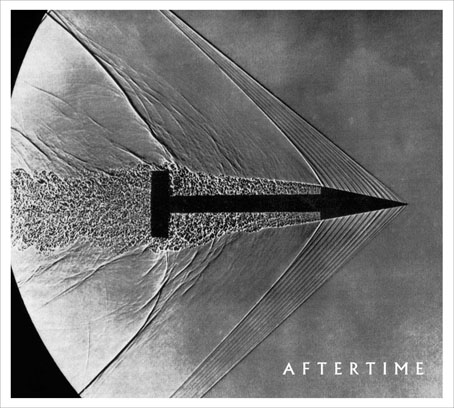
aftertime.jpg

Despite appearances I’m still doing bits of design and layout work for various musicians. In the past week I’ve been trying to reorganise this sprawling website a little so it’s easier to add new work quickly and easily. One recent job was more layout than design, a CD and vinyl package for a Roly Porter collection of instrumentals entitled Aftertime. Each track on the album is named after a different planet from Frank Herbert’s Dune books although the music isn’t as illustrative as that implies. Porter’s use of an Ondes Martenot and various acoustic instruments which he subjects to degrees of distortion is just the kind of thing I like hearing. One track can be heard at FACT where Porter is interviewed about his work. Aftertime is released this month on the Subtext label.

It is a rollicking saga that involves all sorts of things not normally associated with think tanks – chickens, pirate radio, retired colonels, Jean-Paul Sartre, Screaming Lord Sutch, and at its heart is a dramatic and brutal killing committed by one of the very men who helped bring about the resurgence of the free market in Britain.

Adam Curtis on the strange history of Britain’s think tanks and their hidden agendas.

• Other assorted music business: Getting down to the Cabinessence: “This is the first of what may become an intermittent series of observations about Smile, and how Brian Wilson tried to put his dream on this planet.” | After The Flood: Talk Talk’s Laughing Stock 20-Years On: a lengthy and detailed Quietus piece on one of the best albums of the 1990s. | Jonathan Barnbrook uses an old analogue video synth to create a visual accompaniment for Interplay by John Foxx & The Maths. The HD version is an eye-searing delight.

Meredith Yayanos favours the sister instrument of the Ondes Martenot, the theremin, which she uses to provide a spooky score for a new film, Empty Rooms. There’s more spectral ambience at her SoundCloud page.

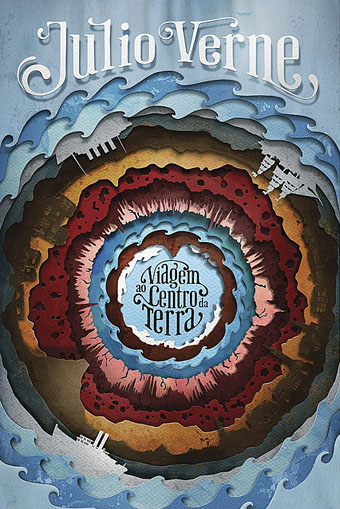
giovani.jpg

A Jules Verne cover by Carlo Giovani for Editora Ática.

• Sculptor and writer Josiah McElheny transforms the Whitechapel Gallery into a hall of mirrors.

Jacob’s Lament, an animated collaboration between illustrator Ian Miller and Stijn Windig.

Pornographic Poem (1967) by John Giorno.

Oscar Wilde grandson scorns “new” play.

• Manhattan in marble by Yutaka Sone.

Paul Atreides pt. 1 (1978) by Richard Pinhas | Harkonnen (1979) by Zed (Bernard Szajner) | Prophecy Theme (1984) by Brian Eno.

The music of Igor Wakhévitch

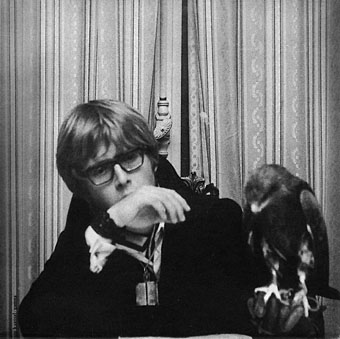
igor1.jpg

Igor Wakhévitch and feathered friend.

Continuing the Francophile theme, I felt that now was a good time to plumb the mysteries of the enigmatic Igor Wakhévitch. Who? Well… In 20th century music there’s strange and there’s weird and then there’s off-the-wall unclassifiable which is the place where we have to file Igor’s compositions. After half a lifetime spent trawling record shops for unusual music these albums had somehow managed to remain off the radar until a CD reissue set, Donc…, appeared courtesy of Fractal Records and a friend with similarly outré tastes (hi Gav!). The obscurity of these remarkable recordings can’t solely be due to Monsieur Wakhévitch being French; Richard Pinhas, Bernard Szajner and (of course) Magma, have been given enough attention over the years.

So what does this stuff sound like? Thankfully the redoubtable Alan Freeman tackled the problem of describing the albums in Audion (reproduced below), a task I would have found rather daunting. Docteur Faust is probably my favourite, a crazily eclectic and doomy album which lurches from rock freakout to contemporary orchestral/choral to electro-acoustics and back again. Imagine the witch cult from Rosemary’s Baby jamming with Alpha Centauri-era Tangerine Dream while Peter Maxwell Davies and Amon Düül 2 slug it out in the background. The clincher is a great cover by French comic artist Philippe Druillet.

One other notable album that the Donc… collection omits is the 1974 recording of Salvador Dalí’s opera, Être Dieu. Dalí wrote the libretto in 1927 with Federico Garcia Lorca but the piece wasn’t recorded until Wakhévitch provided a score. The result is pretty much the same as Wakhévitch’s other work, with the added bonus of the Surrealist master declaiming and frequently shrieking over the music.

For more information about Donc… and Igor Wakhévitch see the Fractal Records review page.

Continue reading “The music of Igor Wakhévitch”