Weekend links 802

grimshaw.jpg

November (1879) by John Atkinson Grimshaw.

• As usual, the first links in November are heavy with the spirit of Halloween. At the BFI: Zombies in the Lake District: how locations from The Living Dead at Manchester Morgue look today; Adam Scovell looks back at one of the more curious zombie films of the 1970s, a Spanish/Italian production directed by Jorge Grau in and around my home city. Also at the BFI: Georgina Guthrie selects 10 great erotic horror films.

• “We must recognise that reality without mystery is impossible.” In a recently digitised film clip, René Magritte is interviewed (in French) by Belgian TV in 1961.

• The Italian edition of The Moon and Serpent Bumper Book of Magic is out now from Panini. Thanks to Smoky Man for posting photos!

• Among the new titles at Standard Ebooks, the home of free, high-quality, public-domain texts: Short Fiction by Saki.

• At Smithsonian Mag: Elizabeth Djinis explains how an Italian town came to be known as the “City of Witches”.

• New music: The Whole Woman by Anna von Hausswolff ft. Iggy Pop; Forces, Reactions, Deflections by Scanner.

• RIP Jack DeJohnette, jazz drummer; Prunella Scales, actor; Peter Watkins, film-maker.

Space Type Generator

Algiers November 1, 1954 (1965) by Ennio Morricone | November Sequence (2011) by Pye Corner Audio | Richter: November (2019) by Mari Samuelsen

Jean Epstein’s House of Usher

usher1.jpg

There’s always more Poe. A couple of years ago I wrote about the short American film adaptation of The Fall of the House of Usher co-directed by James Sibley Watson and Melville Webber. Watson and Webber’s experimental take on Poe was made in 1928, and happens to be one of two films based on the story that were made that year.

usher2.jpg

This week I watched the longer French adaptation (La Chute de la Maison Usher) directed by Jean Epstein, a very impressive silent film which changes a few details—Roderick and Madeline Usher are now husband and wife rather than brother and sister—but otherwise remains close to Poe’s tale. Epstein’s film is notable for having Luis Buñuel’s name on its screenplay credits but disputes between Buñuel and Epstein means few of Buñuel’s contributions survived. The film is also noted for its dream-like atmosphere, a quality the director favours over storytelling to such a degree that it helps if you’re already familiar with the story.

usher3.jpg

Epstein’s house of Usher is toy-like castle in exterior shots whose interior reveals cavernous spaces as vast as Charles Foster Kane’s Xanadu living room, with billowing curtains that make the place a precursor of the magical castle in Cocteau’s La Belle et la Bête. Jean Debucourt is a Roderick Usher who spends his time obsessively painting the doomed Madeline (Marguerite Gance), paying no attention to her increasing fraility. Poe’s visiting guest in this version is an aged man (Charles Lamy) with sight and hearing difficulties which contribute to the general ignorance of Madeline’s plight. In one of the opening scenes, director Abel Gance (the husband of Marguerite) may be seen inside an inn. Gance is best known today for the bravura cinematic invention of his 1927 Napoleon (which I recommend), but Epstein shows himself a match for Gance in the range of effects he brings to the Ushers’ plight: rapid edits, slow motion, double-exposures, low-angle shots, and a remarkable point-of-view sequence where Roderick seems to be floating through the hall. Later in the film the camera drifts along the mansion corridors following wind-blown leaves, a forerunner of all the Steadicam shots of the 1980s.

I was watching this copy of the film, an excellent print (no doubt swiped from disc) with French intertitles. The downloadable files include a subtitle file but with Portuguese subtitles only. English subs may be found here.

Previously on { feuilleton }
Robert Lawson’s House of Usher
The Fall of the House of Usher, 1928
Burt Shonberg’s Poe paintings

A feast of Poe

martini1.jpg

King Pest by Alberto Martini.

My thanks to the estimable Mr Shea for bringing to my attention this website devoted to the many illustrated editions of Edgar Allan Poe. Quite a few of the older illustrations have been featured here in the past but most of the later ones are new to me. The site is comprehensive enough to include my own illustrated edition from 2017, a book whose shortcomings I often find myself apologising for. (I was very pressured for time with that commission, and would welcome an opportunity to redo some of the pictures.)

martini2.jpg

A Descent into the Maelström by Alberto Martini.

I could draw attention to the later editions but I’ll single out the work of Alberto Martini (1876–1954), an Italian artist whose work I find especially attractive for the way it provides a bridge between Decadence and Surrealism. His Poe illustrations appear now and then in books or articles about horror fiction but you seldom see all of them together.

martini3.jpg

The Murders in the Rue Morgue by Alberto Martini.

Meanwhile, Ted Parmelee’s short but very effective animated adaptation of The Tell-Tale Heart (1953) turned up recently at the Internet Archive in a copy that’s the best I’ve seen to date. Watch it here.

tell-tale.jpg

Elsewhere on { feuilleton }
The illustrators archive

Previously on { feuilleton }
Robert Lawson’s House of Usher
Edmund Dulac’s illustrated Poe
The Fall of the House of Usher, 1928
The Purloined Eidolon
Martin van Maële’s illustrated Poe
Mask of the Red Death, 1969
Narraciones extraordinarias by Edgar Allan Poe
Fritz Eichenberg’s illustrated Poe
The Pendulum, the Pit and Hope
Hugo Steiner-Prag’s illustrated Poe
Burt Shonberg’s Poe paintings
Illustrating Poe #5: Among the others
Illustrating Poe #4: Wilfried Sätty
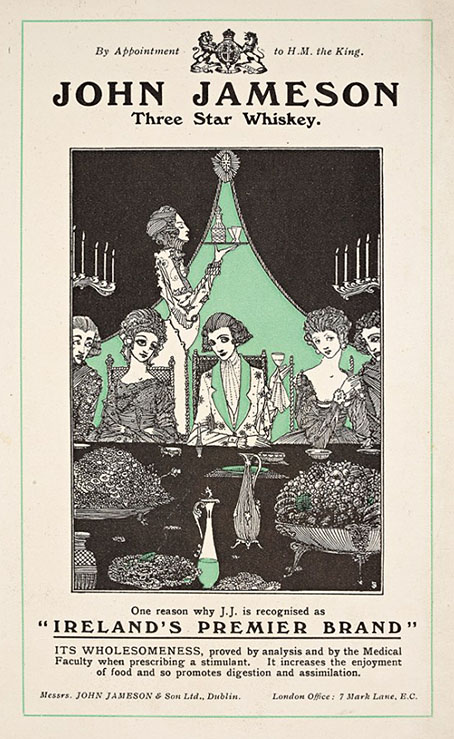
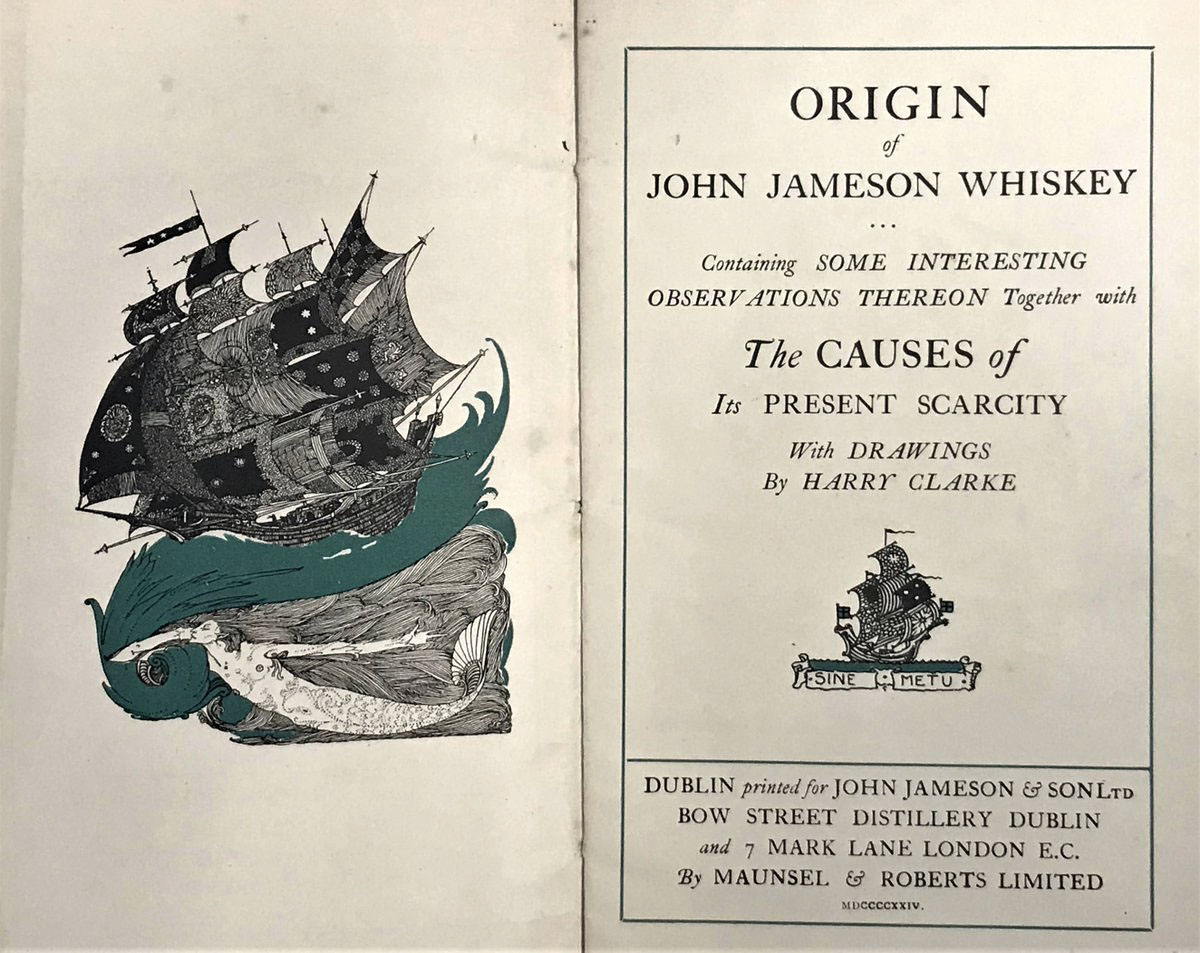
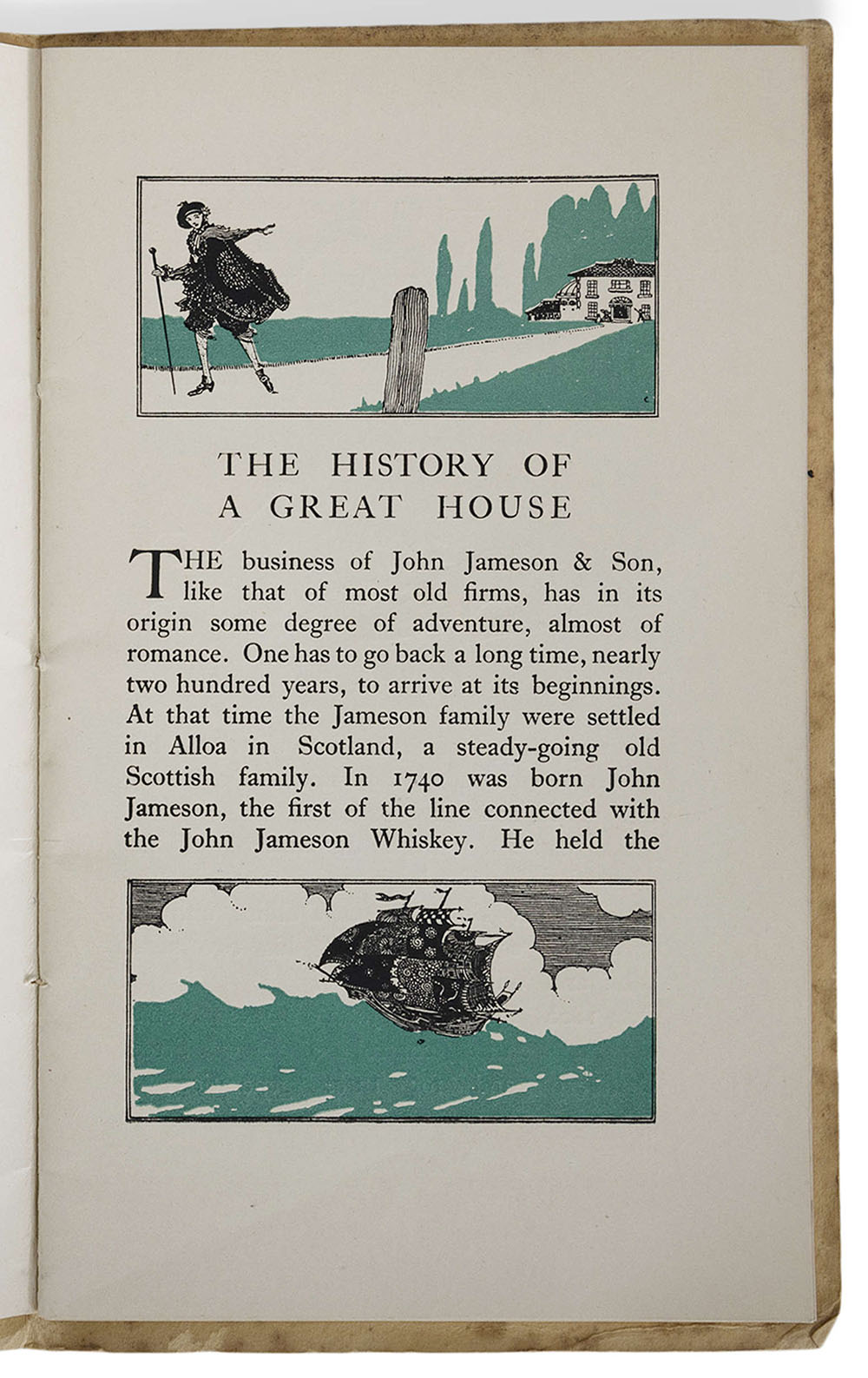
Illustrating Poe #3: Harry Clarke>
Illustrating Poe #2: William Heath Robinson
Illustrating Poe #1: Aubrey Beardsley
Poe at 200
The Tell-Tale Heart from UPA
William Heath Robinson’s illustrated Poe

Weekend links 801

waterhouse.jpg

The Magic Circle (1886) by John William Waterhouse.

The Moon and Serpent Bumper Book of Magic has just been published in France by Editions Delcourt. A preview here shows how carefully they’ve managed to translate and reletter my page designs.

• Among the new titles at Standard Ebooks, the home of free, high-quality, public-domain texts: Algernon Blackwood’s stories of John Silence, occult detective.

• Relevant to some of my recent reading: The Necronomicon Wars, an examination of the many attempts to give life to HP Lovecraft’s fictional grimoire.

Altered States is tremendously exciting to watch—and not only during its psychedelic interludes when goat Jesus is being crucified and writhing red figures are toppling, Hieronymus Bosch–like, into hell and abstract splotches give the impression of cells endlessly dividing or murky membranes dissolving and beautiful women stare into Magritte skies and waves of lava crash as though the molten core of humanity itself were erupting. Even in its quieter moments, it is a beautiful film, with Hurt’s every appearance shot by cinematographer Jordan Cronenweth to emphasize his character’s alien otherworldliness.

Jessica Kiang explores the creation of Ken Russell’s flawed but fascinating psychedelic feature, Altered States

• A new catalogue of lots at another After Dark: Gay Art and Culture online auction. Homoerotic art, photos, historic porn. etc.

Tarot decks through the ages: a video showing some of the cards from Victoria and Albert Museum’s collection.

• More psychedelia: Neuroscientist Grigori Guitchounts asks “What is your brain doing on psychedelics?”

• At the Daily Heller: Ryan Hughes has published a weighty collection of his typeface designs.

• Old music: Caged (25th Anniversary Edition) by Ian Boddy & Chris Carter.

• At the BFI: Rory Doherty selects 10 great Technicolor melodramas.

• At Dennis Cooper’s: The Old School Horrors of Terence Fisher.

Photographs from the 2025 Wildlife Photographer of the Year.

Ambientblog celebrates 20 years of existence.

• RIP Dave Ball.

Necronomicon (1970) by Les Baxter | Liriïk Necronomicus Kahnt (1975) by Magma | Necronomicon–The Magus (2004) by John Zorn

Kosmische vampires

vampira4.jpg

Here at last is something I’ve been waiting many years to see. Vampira is a strange German TV film which shouldn’t be confused with the horror comedy from 1974 that shares its name. Descriptions of the German Vampira make it sound like a drama-documentary but it’s really a kind of illustrated lecture with vampires as the predominant theme. George Moorse directed for the WDR TV channel which broadcast the film in 1971. Vampira is almost solely of interest today for the soundtrack by Tangerine Dream, a unique collection of short pieces totalling around 34 minutes which have never been officially released. The music offers the same spectral timbres that you hear on the group’s early kosmische albums—Alpha Centauri (1971), Zeit (1972) and Atem (1973)—and is close enough to the atmospherics of Zeit to sound like rehearsals for their droning meisterwerk.

vampira1.jpg

The existence of the music always raised the question of what Vampira might actually look like, especially when the musicians sound as though they’re playing more for themselves than accompanying anything on a screen. Moorse’s film is stranger than the low-budget horror I was expecting. The first thing we see is Manfred Jester, a bespectacled man surrounded by old books, who proceeds to describe (in unsubtitled German) the history of vampires. After a minute of two of this there’s a cut to the first interlude which illustrates the preceding sequence—or so I’m guessing since I had to rely on my rudimentary schoolboy German to understand what Herr Jester was talking about. The rest of the film follows this format: a minute or two of Jester’s lecturing (with references to the Tarot, Montague Summers, Baudelaire and so on) separated by dramatised interludes, all of which are scored by Tangerine Dream. The dramatisations are the oddest part of the whole enterprise. Aside from the music these sequences are almost completely silent (with one brief exception), and acted in a manner which is more symbolic than conventionally dramatic, giving the appearance in places of Kenneth Anger directing one of Jean Rollin’s vampire films. Moorse’s visuals are quite striking in places; if you clipped out all the Jester sequences you’d have 34 minutes of languid Gothic weirdness with a kosmische soundtrack.

vampira2.jpg

The remaining mystery is why the film and its music have been buried for so long, especially when the Tangerine Dream estate has been releasing old recordings for the past few years. I’d guess that the tapes have been lost, but then the same might once have been said about the 1974 Oedipus Tyrannus score until the whole thing was released for the first time six years ago. Vampira was so scarce that I thought it too might have been lost for good, or destroyed like many of the BBC productions from the early 1970s. The music was at least available in unofficial form in the Tangerine Tree bootleg set, a fan-made series which still circulates today if you know where to look. Many of the Tangerine Tree concerts have since been officially reissued, as have other soundtrack recordings the group made for German television. More recently, the Vampira score turned up on another bootleg, a vinyl release limited to 38 copies. All the isolated cues don’t provide a great deal of music for a standalone album but any future release which added the short Oszillator Planet Concert (which also dates from 1971) would push things to a more substantial 42 minutes. It’s likely that the Vampira music was originally a single improvised piece that was then edited to match the film; the pieces certainly blend very easily if you mix their beginnings and ends together.

vampira3.jpg

George Moorse followed Vampira with many more TV films including HP Lovecraft: Schatten aus der Zeit (1975), an adaptation of The Shadow Out of Time starring Anton Diffring. Now that I’ve finally seen the vampire film I’m a little more inclined to see how Moorse treats Lovecraft.

Previously on { feuilleton }
Cosmic music and cosmic horror
Tangerine Dream in concert
Drone month
Pilots Of Purple Twilight
A mix for Halloween: Analogue Spectres
Edgar Froese, 1944–2015
Tangerine Dream in Poland