Weekend links 366

kashiki.jpg

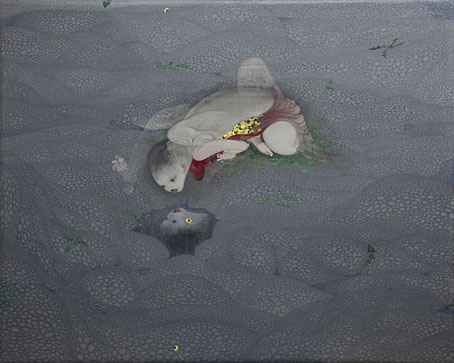
Dandelion (2009) by Tomoko Kashiki.

• “Standard Ebooks takes ebooks from sources like Project Gutenberg, formats and typesets them using a carefully designed and professional-grade style guide, lightly modernizes them, fully proofreads and corrects them, and then builds them to take advantage of state-of-the-art ereader and browser technology.”

Obscenity and the Arts, a previously unpublished essay by Anthony Burgess, will appear in book form later this year via Pariah Press.

• Mixes of the week: VF Mix 97: Talk Talk by The Last Dinosaur, and Secret Thirteen Mix 225 by Janek Schaefer.

Rub any two writers together and similarities will show. No two writers, however different, are completely different. Here’s a crucial instance: Lovecraft and Ballard both put architecture at the heart of their fiction, even though neither had the slightest formal training in the subject. And it is via this interest that the two intersect in an unexpected way. They are connected, through time and space, by that most humble of architectural events: the corner, the junction between two walls. What Lovecraft and Ballard did was to make the corner into a place of nightmares — and in doing so, they reveal its secret history.

Will Wiles in a long and rewarding essay, The Corner of Lovecraft and Ballard

• Dungeons Deep, Forests Dark – A beginner’s guide to Dungeon Synth by Daniel Pietersen.

Alex Ross on Joséphin Péladan, the Symbolists and the occult roots of Modernism.

• Cooling the Tube: engineering heat out of the [London] Underground by IanVisits.

Caroline on the mysteries of Pye Corner: Flames, poltergeists and bodysnatchers.

• The Saint of Sin City – Tony Kail Visits Las Vegas’ Santuario de la Santa Muerte.

• Photographs of Art Nouveau architecture by Keiichi Tahara.

• A stream of the new Porter Ricks album, Anguilla Electrica.

Jasper Sharp on 100 years of Japanese animation.

• At Dennis Cooper’s: 197 clocks.

On The Corner [Take 4] (1972) by Miles Davis | Corner Crew Dub (1976) by Augustus Pablo | Empty Avenues And Dark Corners (Pye Corner Audio Mix) (2013) by John Foxx and the Belbury Circle
Weekend links 365

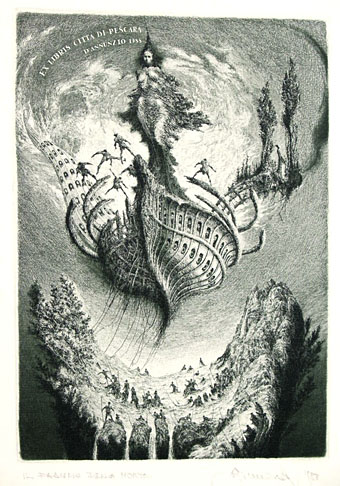
brunovsky.jpg

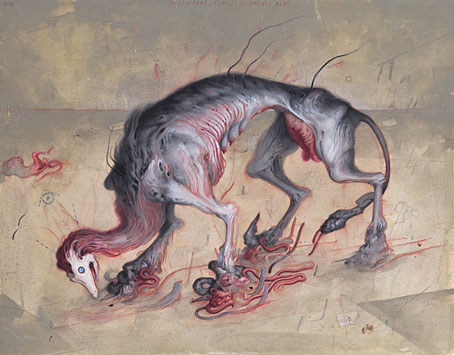
Il Fascino Della Morte (1988) by Albin Brunovsky.

• One of the forthcoming books featuring my cover art is Behold! Oddities, Curiosities, & Undefinable Wonders, a story collection due to be published next month by Crystal Lake Publishing. Bleeding Cool talked to editor Doug Murano about the collection and its contributors.

Six episodes of Tom Keating on Painters, a TV series from 1983 presented by Britain’s most well-known art forger. In six further episodes Keating examines the work of the Impressionists and Post-Impressionists.

• Opening at the Guggenheim, NYC, at the end of this month: Mystical Symbolism: The Salon de la Rose+Croix in Paris, 1892–1897.

The most potent form of gatekeeping is religion. When certain beliefs are deemed sacred, they are put beyond questioning. To challenge such beliefs is to commit blasphemy. The accusation of cultural appropriation is a secular version of the charge of blasphemy. It’s the insistence that certain beliefs and images are so important to particular cultures that they may not appropriated by others.

In Defence of Cultural Appropriation by Kenan Malik

• Mixes of the week: FACT Mix 605 by Anthony Parasole, and Secret Thirteen Mix 224 by Fanny Kaplan.

• Artist Tom Phillips at 80: “I’m still reading books. Nothing changes and everything changes.”

Negative Chambers is a new album by Yair Elazar Glotman and Mats Erlandsson.

• “Pornhub is the Kinsey Report of our time,” says Maureen O’Connor.

• “Postmodernism is dead. What comes next?” asks Alison Gibbons.

Cat Street View

Mystic Eyes (1965) by Them | Mystical Dream (1965) by The Roland Kirk Quartet | Mystic Green (1985) by Rain Parade

A Portrait of the Author

jj4.jpg

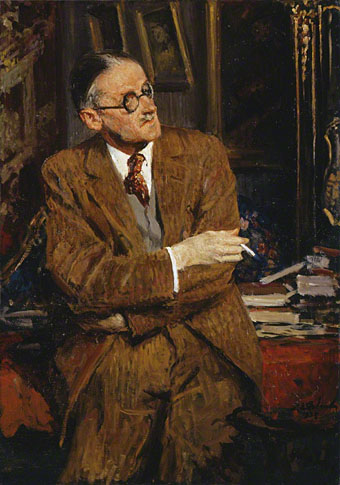
Portrait of James Joyce (1929) by Constantin Brancusi.

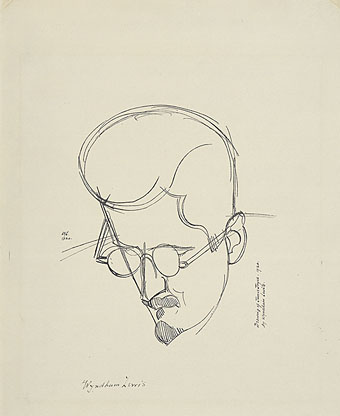
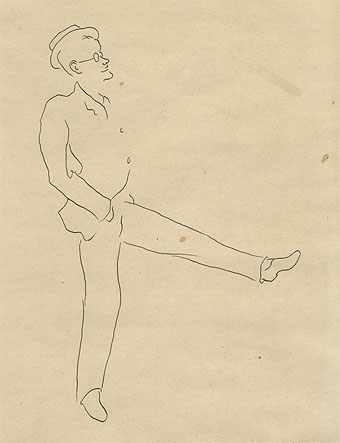
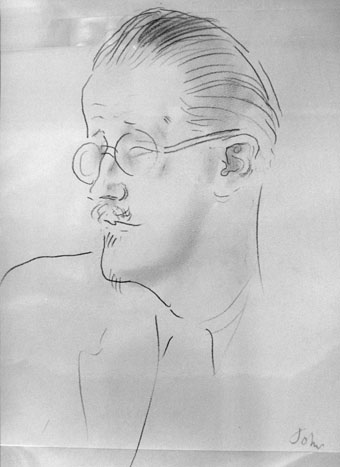
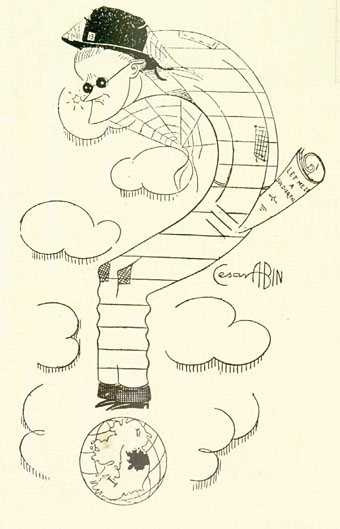
A post for Bloomsday. Joyce’s writing was always concerned more with words and phonics than with the appearance of things—understandable given his failing eyesight—but throughout his life he was a persistently attractive subject for portraits and caricatures. This was partly a consequence of being surrounded by artists but it’s also the case that the figure he cut as a man, especially in his younger years, is striking enough to be recognisable in a hasty sketch as much as a study in oils. Prior to John Lennon, Joyce’s round spectacles are the most famous in the arts of the 20th century; when added to a high forehead, a trim moustache and beard, a broad-brimmed hat and a lanky figure you have a subject that even a non-caricaturist such as myself was able to deal with when drawing the Reverbstorm series.

I’ve limited the examples here to portraits produced when Joyce was still alive. There are further examples to be found (the Augustus John is one of a series), while those produced after Joyce’s death proliferate without end.

jj2.jpg

Portrait of James Joyce (1920) by Wyndham Lewis.

jj1.jpg

Joyce at Midnight (c. 1930) by Desmond Harmsworth.

jj5.jpg

James Joyce (1930) by Augustus John.

jj3.jpg

James Joyce (1932) by César Albin.

jj6.jpg

James Joyce (1935) by Jacques-Emile Blanche.

Previously on { feuilleton }
The Labyrinth
The Duc de Joyeux
Dubliners
Covering Joyce
James Joyce in Reverbstorm
Joyce in Time
Happy Bloomsday
Passages from James Joyce’s Finnegans Wake
Books for Bloomsday

The Work of Walter Crane

crane01.jpg

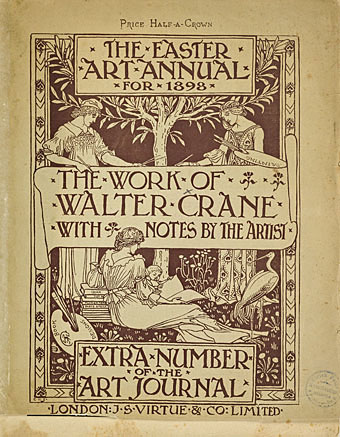
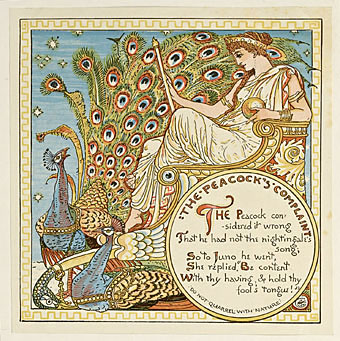
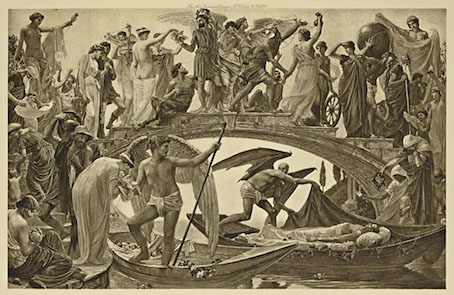
Not the first time Walter Crane has been featured here but this slim volume (62 pages) is a useful overview of the artist’s work which covers all aspects of his career: fine art, book illustration, political design (Crane was a lifelong Socialist), textiles for William Morris, and interior design. There’s more Walter Crane at Wikimedia Commons.

crane02.jpg

crane03.jpg

crane04.jpg

Continue reading “The Work of Walter Crane”

Weekend links 363

sommers.jpg

The Constant Drumbeat of Terrible News (no date) by Allison Sommers.

• Nadia Khomami on Gay UK: Love, Law and Liberty, an exhibition at the British Library. Related: Simon McCallum‘s potted history of LGB characters on British screens. Elsewhere: writer and philanthropist Chuck Forester on gay sex in the 1970s.

The Panic Fables: Mystic Teachings and Initiatory Tales by Alejandro Jodorowsky. Finally available in English, a collection of all the comic strips written and illustrated by Jodorowsky when he was living in Mexico in the 1960s.

• A trailer for the restored print of The Fabulous Baron Munchausen (1961) by Karel Zeman. Related: collage designs by Graphic Manipulator for a Japanese collection of Zeman’s films.

• “Whether divining ancient wisdoms or elevating the art of cold reading, Tarot is a form of therapy, much like psychoanalysis,” says James McConnachie.

James Reith on “the Icelandic publisher that only prints books during a full moon – then burns them”.

• Mixes of the week: Wire 400 Mix #6 by Emptyset, and Secret Thirteen Mix 223 by Constantine.

• Mud And Flame: Penda’s Fen re-examined by Matthew Harle and James Machin.

Tilda Swinton in a Leonora Carrington-inspired fashion shoot for i-D magazine.

• At Dennis Cooper’s: Spotlight on William Burroughs’ The Wild Boys.

Applied Ballardianism: A Theory of Nothing by Simon Sellars.

• At Dangerous Minds: The Dark Rift by Jim Jarmusch’s Sqürl.

French Underground Rock: 1967–1980; a Discogs list.

Suzanne Ciani‘s favourite albums.

Infinite artwork: Untitled, 2017

Rip, Rig And Panic (1965) by The Roland Kirk Quartet | Panic (1984) by Coil | Flash Of Panic (1994) by Axiom Ambient