Weekend links 630

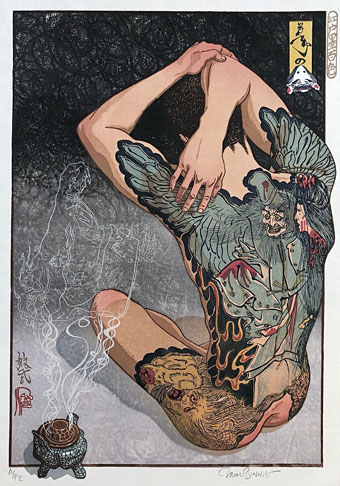
mishima.jpg

Photo by Roger Phillips, 1977.

• “…these films seem decidedly more modern than the films that followed close behind them.” Pamela Hutchinson on pre-code Hollywood.

• Space travel is time travel: NASA shows us galaxies as they were billions of years ago.

• Reverb Machine explains how Brian Eno created Ambient 1: Music For Airports.

• At Dennis Cooper’s: Spotlight on…Yukio Mishima Confessions of a Mask (1949).

• Mix of the week: The Chill Out Tent Kosmische Mix by Tarotplane.

• Old music: The Glastonbury Experience (Live 1979) by Steve Hillage.

• Deep Space 13: Stephen Mallinder’s favourite soundtracks.

• Sex and pathology: David Robb on 80 years of Cat People.

• New music: Expo Botanica by Cosmic Analog Ensemble.

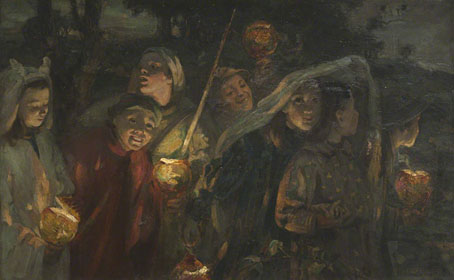
Behind The Mask (1979) by Yellow Magic Orchestra | Red Mask (1981) by Cabaret Voltaire | A Ritual Mask (1983) by Peter Hammill

The Others, a film by Hugo Santiago

others1.jpg

The Others (1974) is the second of the feature-length collaborations directed by Hugo Santiago from screenplays developed with Adolfo Bioy Casares and Jorge Luis Borges. The film was produced in Paris with a French cast, together with two of Santiago’s collaborators from Invasion: cinematographer Ricardo Aronovich and composer Edgardo Cantón. The association of Borges with this one seems to have been little more than providing a very simple idea which I won’t reveal here since doing so would give away the entire story. In later years Borges was dismissive about film adaptations derived from his works but this one is still creditably Borgesian even if it isn’t as satisfying as Invasion.

others2.jpg

The story concerns one Roger Spinoza (Patrice Dally), a middle-aged man with a very Borges-like name who runs a bookshop, Librairie des Ameriques, in the centre of Paris. The abrupt and apparently meaningless suicide of Spinoza’s son, Mathieu (Bruno Devoldère), precipitates for the bookseller a personal and possibly metaphysical crisis which prompts him to visit his son’s friends in the hope of discovering an explanation for the tragedy. Spinoza’s visits to Mathieu’s girlfriend, Valérie (Noëlle Chatelet), develop into a romantic relationship which brings him into conflict with Moreau (Daniel Vignat), a lawyer who was Mathieu’s rival for Valérie’s affections. (Valérie works at an astronomical observatory which gives her a natural affinity with Spinoza, a man who shares a name with the Dutch philosopher who supported himself by grinding lenses for Christiaan Huygens’ telescopes.) These events are complicated and rendered mysterious by the presence of “the others”, a number of strange men who individually shadow Spinoza’s investigations while harassing Mathieu’s friends and acquaintances. The actions and identities of the men remain inexplicable until the very end when an explanation—the original idea from Borges—makes everything clear. The philosophical side of Borges’ suggestion is absent, however, which makes the explanation seem both glib and fantastic, but it has the effect of presenting all the events of the past two hours in a very different light.

others3.jpg

So why is this not as satisfying as Invasion? In part because Santiago sporadically interrupts his narrative with brief scenes that show the film itself in the process of creation. These are continuations of a 10-minute prologue of outtakes, scene setups, rehearsals, Santiago’s asides to the camera, and so on, all of which are differentiated from the film proper by the cold blue/green cast you get from film footage that hasn’t been filtered for daylight. There was a lot of this kind of Brechtian fourth-wall breaking going on during the 1970s, usually without achieving very much. Santiago’s story is confusing enough without being further fragmented by distracting interruptions. Another distraction is the Edgardo Cantón score which follows Invasion in its use of musique concrète as well as more conventional orchestral scoring. But where the Invasion soundtrack complemented the action the score here works against the film, especially when the sounds and snatches of music are more abrasive than they were previously. I can put up with all manner of directorial eccentricities but this example tested my patience. It’s hard to see why a story such as this would warrant a Brechtian treatment, which suggests that the distractions are more of a result of the director’s lack of faith in his screenplay.

others4.jpg

Bioy Casares, Borges and Santiago.

Flaws aside, The Others isn’t without attractions for Borges readers. The film is truer to the spirit of Borges than many of the adaptations of the author’s stories: mirrors abound, and play a significant part in the narrative, while Borges’ words are present in the Grove Press edition of Ficciones seen on a shelf in the bookshop, and in the character of Valérie who informs Spinoza that she was born in Buenos Aires. After the pair have spent the night together Valérie recites in Spanish the Borges poem Spinoza. “Do you know that poem,” she asks. “Yes,” says Spinoza, “it’s from a fellow librarian.” The librarian himself is seen at the very beginning of the film during the production prologue, talking (silently) to Santiago and Adolfo Bioy Casares.

In a note about Death and the Compass, Borges said that most stories should stand or fall by their general atmosphere rather than their plot. The Others would have succeeded very well on this level if not for its flaws; the events are persistently intriguing and the streets of Paris are effortlessly photogenic, a sombre city captured at angles and cropped views by Aronovich’s camera. Three years later Aronovich was photographing another series of enigmas for Alain Resnais in Providence. Like the Resnais film, The Others has been unavailable for far too long but may now be viewed with English subtitles here.

Previously on { feuilleton }
Invasion revisited
Goodfellow and Borges
The Rejected Sorcerer
The Immortal by Jorge Luis Borges
Borges on Ulysses
Borges in the firing line
La Bibliothèque de Babel
Borges and the cats
Invasion, a film by Hugo Santiago
Spiderweb, a film by Paul Miller
The Library of Babel by Érik Desmazières
Books Borges never wrote
Borges and I
Borges documentary
Borges in Performance

Weekend links 629

vallee.jpg

UFOs: The Psychic Solution (1977) by Jacques Vallée. A retitled reprint of The Invisible College (1975) with cover art by Peter Tybus.

• “In the summer of 1992…a curious experimental interstellar ambient-house album, made it to number one in the UK charts, promoted by a top ten single that was almost forty minutes long.” Darran Anderson navigates the noösphere with my favourite Orb album, U.F.Orb.

• Among the recent arrivals at Standard Ebooks, the home of free, high-quality, public-domain texts: Hope Mirrlees’ strange fantasy novel, Lud-in-the-Mist (1926).

• James Balmont’s guide to the intricate cinema of Hong Kong’s crime auteur, Johnnie To.

Shortlisted photos from the Astronomy Photographer of the Year Contest.

• At Dennis Cooper’s: Spotlight on…Jean Genet Miracle of the Rose.

• Steven Heller’s font of the month is Ambicase.

• New music: Two Sisters by Sarah Davachi.

• RIP Peter Brook and James Caan.

Unidentified Flying Object (1970) by UFO | Psychic And UFO Revelations In The Last Days (1994) by Bill Laswell & Pete Namlook | UFOnic (1995) by Sabalon Glitz

Invasion revisited

invasion1.jpg

More Borges. Recent posts about the Venerable Jorge had me searching again for a subtitled copy of Hugo Santiago’s Invasion, the feature film he made in Argentina in 1969 from a script co-written with Borges and the latter’s friend and frequent collaborator Adolfo Bioy Casares. Subtitled copies of Invasion are now easier to find than they were when I wrote about the film back in 2014; there’s one here although this wasn’t the copy I was watching at the weekend so I can’t vouch for the quality of the subtitles. As before, this is the précis:

In 1957, a small group of middle-aged men fight a clandestine battle against forces quietly invading and taking control of their city, Aquilea. Enigmatic in its story-telling, Hugo Santiago’s once-lost film obscures the motivations of either side, leaving only a series of moves and counter-moves that evokes past dictatorial oppression and those still to come.

invasion2.jpg

Don Porfirio (Juan Carlos Paz).

“Aquilea” is Buenos Aires masquerading as a fictional city, with a name borrowed from Roman history. For Borges readers the views of the city are fascinating in themselves since they show us the streets and café interiors which are settings for many of the writer’s stories; we also see one of his books, El Hacedor, prominently situated on a shelf. Beyond this, the fictionalising of the city pushes the story away from Argentina’s turbulent political history towards the fantastic and the mythic, as does the lack of any background information about the life-and-death struggle we’re witnessing.

invasion3.jpg

The writer visits the set. Left to right: Hugo Santiago, Ricardo Aronovich, Jorge Luis Borges and Lautaro Murúa.

This was Hugo Santiago’s debut feature, made after several years working in France as an assistant to Robert Bresson. For a debut it’s an impressively assured piece of work, a fast-moving thriller of a type you wouldn’t expect Bioy Casares and Borges to be involved with; less time is devoted to dialogue than there is to gunfights and assassinations. Reviewers tend to compare Invasion to Alphaville but this is misleading; Aquilea may be an invented setting but there’s nothing about the place that’s futuristic or unreal beyond the surreptitious invasion which is being staged and resisted in the midst of an oblivious citizenry. A direct influence was a long-running and very popular Argentine comic strip, Héctor Germán Oesterheld’s The Eternaut, in which the surviving inhabitants of Buenos Aires fight against alien invaders; but this is a typical science-fiction scenario, with most of the human beings wiped out and the survivors battling a variety of monsters. Santiago’s film is more elusive than this, although Lautaro Murúa as Herrera, the leader of the resistance, physically resembles the stern protagonist from the comic. Invasion is deadly serious in a way that Alphaville never is, free of the quotation marks that frame all of Godard’s fictional excursions. The photography by Ricardo Aronovich is the high-contrast chiaroscuro of a late film noir like Kiss Me Deadly, as is the atmosphere of doom, paranoia and escalating urgency; characters are shown continually marching or running towards their destinations. Murúa strides through his scenes with the grim determination of Lee Marvin in Point Blank; in fact Boorman’s film is a better comparison than Alphaville, a spare and elliptical neo-noir that was one of the first Hollywood features to embrace the innovations of the Nouvelle Vague.

invasion4.jpg

The harsh separation between black and white extends to the white raincoats of the invaders and the black suits of the resistance, the latter being directed by Don Porfirio (Juan Carlos Paz), an elderly man who spends most of the film in his apartment where he plans operations while talking to his black cat and drinking maté tea (a South American habit frequently referred to in Borges’ stories that you seldom see on screen). Most surprising of all is the soundtrack by Edgardo Cantón, a musique-concrète assemblage of animal cries, metallic shrieks and electronic tones. The inexplicable presence of these sounds complements the inexplicable nature of the scenario while resisting easy interpretation.

invasion5.jpg

Invasion‘s ambiguities may help the film sidestep an overtly political reading but they were deemed threatening enough by the Argentine dictatorship of the 1970s for the negative to be seized and kept from circulation for many years. (Parts of the film are also disturbingly prophetic: the invaders base their operations—which extend to torture and murder—in the city’s athletic stadium; a few years later similar South American stadia were being repurposed as venues for mass execution.) Restoration work on the film in 1999 led to the copies that circulate today. Borges wouldn’t have seen anything of this during his lifetime, his blindness was almost total by 1969, but we’re more fortunate. If you enjoy unusual thrillers this is one I recommend.

Previously on { feuilleton }
Goodfellow and Borges
The Rejected Sorcerer
The Immortal by Jorge Luis Borges
Borges on Ulysses
Borges in the firing line
La Bibliothèque de Babel
Borges and the cats
Invasion, a film by Hugo Santiago
Spiderweb, a film by Paul Miller
The Library of Babel by Érik Desmazières
Books Borges never wrote
Borges and I
Borges documentary
Borges in Performance

Art on film: Space is the Place

taylor1.jpg

Mescaline Woods (1969) by Gage Taylor.

Continuing an occasional series about artworks in feature films. This is more of a trivial example than the epic study of Providence but it seems worth mentioning when the art and the film in question aren’t so familiar.

taylor2.jpg

Encounter (1971) by Gage Taylor.

Last week my friend Jay Babcock was asking on his Substack newsletter for other examples of the utopian hippy landscape art that flourished in the 1970s. I recommended the paintings of Gage Taylor (1942–2000), an artist who was part of the loose movement known as the Californian Visionaries during that decade; paintings by the group were showcased in the Visions book published by Pomegranate in 1977, and shortly thereafter could be found in the early issues of OMNI magazine. Taylor was a prime exponent of slightly fantastic, idealised landscapes with titles like Mescaline Woods, painted in a style which, for the most part, he managed to prevent from becoming too saccharine. Encounter is a typical example: a quartet of naked hippies wandering through an Arcadian scene bordered by decorative cannabis leaves. The painting is definitely utopian in asking us to accept a clothes-free hike along a trail with no concern for sharp stones or injurious plants and animals.

aliens.jpg

Looking through Visions again, and at this painting in particular, I was struck by the foreground group of floating alien creatures which I belatedly realised are the origin of the aliens from the opening scenes of Space is the Place (1974), the Sun Ra feature film directed by John Coney. And after watching those scenes again, details from Taylor’s paintings (including Mescaline Woods) turn up as brief establishing shots of the planet where Sun Ra has landed his spacecraft, something I’d missed entirely. Taylor is credited as one of the set decorators so I’d guess he made the alien creatures himself. I’d have been happy with more of the cosmic weirdness and less of the Blaxploitation clichés that pad out the later scenes but with films as unlikely as this we have to be thankful they exist at all. At its best Space is the Place approaches the delirium of The Holy Mountain, albeit on a much lower budget; Sun Ra and the villainous Overseer even play a game to decide the fate of the Earth using a unique pack of Tarot cards.

space1.jpg

space2.jpg

space3.jpg

Another more obvious external reference in the opening scenes is the cowled and mirror-faced individual that Sun Ra talks to, a figure taken from Maya Deren’s Meshes of the Afternoon. Deren’s film in 1974 wasn’t the cult item that it is today so this is an opportunistic swipe on the part of the film-makers, but the borrowing allows us to regard Mirror-face as the same character in both films. Watch them together.

Previously on { feuilleton }
Art on film: Providence
Art on film: The Beast
Meshes of the Afternoon by Maya Deren