Mazes and labyrinths

maze01.jpg

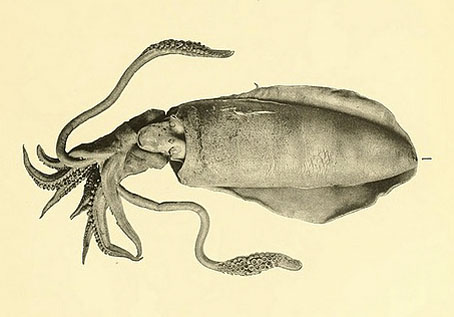
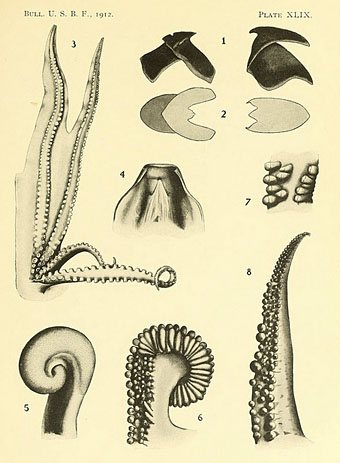
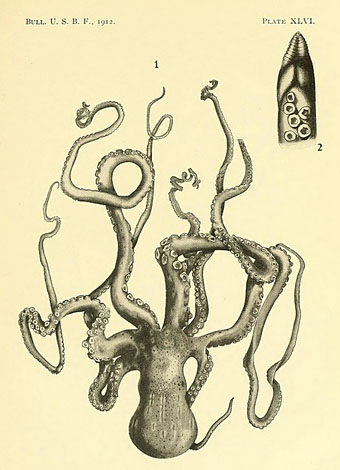
This book, Mazes and Labyrinths: A General Account of their History and Developments (1922) by William Henry Matthews, would have been very useful a couple of years ago when I was working on the cover design for Mike Shevdon’s The Road to Bedlam and required a labyrinth diagram. The one I used, a plan of Julian’s Bower in Alkborough, Lincolnshire, can be found below. I’ve had a lifelong interest in mazes and labyrinths so this book is fascinating beyond any temporary work requirements. Matthews’ study of the form features many diagrams going back to the legendary Cretan labyrinth and the constructions of the Ancient Egyptians. Closer to home there are depictions of the designs which flourished during the great era of landscape gardening in the 18th century, and photographs of some of Britain’s remaining turf mazes. The book may be browsed here or downloaded here.

maze02.jpg

maze03.jpg

maze04.jpg

maze05.jpg

Continue reading “Mazes and labyrinths”

Nigel Kneale’s Nineteen Eighty-Four

1984-1.jpg

If I’d been more diligent I would have posted this yesterday which happened to be the UK’s first George Orwell Day. The Quatermass Experiment and this adaptation of Nineteen Eighty-Four are the two outstanding dramas from the very early days of British television. Both were written by Nigel Kneale and directed by Rudolph Cartier, an expatriate Austrian who brought to the small screen skills honed at the UFA studios before the war. The Quatermass Experiment was the first major collaboration between the pair after which they adapted Wuthering Heights. Nineteen Eighty-Four followed, a production that was screened twice in November 1954, and which caused considerable controversy at the time on account of its oppressive atmosphere and the scenes of Winston Smith’s torture.

1984-3.jpg

Kneale’s drama, which was performed live in the studio on both occasions, looks primitive compared to everything that’s followed but in many ways I prefer this adaptation to Michael Radford’s glossier feature film. For a start it has a great cast: Peter Cushing plays Winston Smith, Yvonne Mitchell is Julia, Donald Pleasence is Syme, and André Morell (who later played Professor Quatermass in the BBC’s Quatermass and the Pit) is O’Brien. Also among the cast there’s Wilfrid Brambell in two minor roles, one of them a precursor of the crusty old man he’d spend the rest of his life portraying. Neither Cushing nor Pleasence were known as film actors at this time; both would no doubt have been surprised to be told that their subsequent careers would involve a great deal of horror and science fiction.

1984-2.jpg

Cartier and Kneale didn’t have the budget to compete with feature films but for once the claustrophobic nature of a studio production works in the favour of a drama where there’s little intimacy or privacy. With the exception of a few filmed inserts almost everything is close shots. As the story grows more desperate so the shadows close in, until the final scenes are all spotlit faces in darkened rooms. The power of Cushing’s performance still resonates today, and gives an idea of how shocking this must have been to a home audience expecting little more than light entertainment on a Sunday evening. The YouTube copy is the entire 107-minute film, and is worth a watch if only to see Donald Pleasence when he had an almost complete head of hair.

• From 2009: Robert McCrum on The masterpiece that killed George Orwell.

Previously on { feuilleton }
The Stone Tape

Kenneth Anger’s Hollywood Babylon

anger1.jpg

Nigel Finch was a key member of the team of producers and directors working on the BBC’s Arena arts documentaries throughout their golden run during the 1980s and 1990s. The films he directed himself—among them studies of Robert Mapplethorpe’s photography, and a history of the Chelsea Hotel in New York—gave him an opportunity to push some gay content into the TV schedules at a time when Britain’s gay population were seen as enough of a public threat to be legislated against. Some of that proselytising impulse can be found in Kenneth Anger’s Hollywood Babylon (1991), an hour-long documentary which alternates the life and work of the filmmaker with readings and enactments of the lurid episodes recounted in Anger’s scandal anthologies, Hollywood Babylon and Hollywood Babylon II. Finch at one point asks whether Fireworks, the first film in Anger’s Magick Lantern Cycle, should be regarded as a pioneering piece of gay cinema; Anger’s says he’s happy if people take it that way but says little else about its evident homoerotic atmosphere. He remains as resistant to identity politics as he’s always been. (See the unauthorised biography by Bill Landis for details.)

anger2.jpg

Between the readings and interview sections Finch shows Anger being chauffeured around Beverly Hills in a hearse which stops occasionally at some locus of bygone scandal. Most of the Anger anecdotes are familiar ones from subsequent interviews but there is a bonus for Angerphiles with the appearance at the end of Marianne Faithfull who talks a little about their relationship before singing Boulevard Of Broken Dreams. The picture quality of this YouTube copy could be better but it’s watchable enough.

Update: That YouTube link went private so I’ve updated the links to a better copy at the Internet Archive.

Previously on { feuilleton }
Lucifer Rising posters
Externsteine panoramas
Missoni by Kenneth Anger
Anger in London
Arabesque for Kenneth Anger by Marie Menken
Edmund Teske
Kenneth Anger on DVD again
Mouse Heaven by Kenneth Anger
The Man We Want to Hang by Kenneth Anger
Relighting the Magick Lantern
Kenneth Anger on DVD…finally

Weekend links 143

empire.jpg

Ai No Corrida poster design by Egil Haraldsen (2001).

• “Back then, publishing an interview with Félix Guattari alongside little chats with rough trade and street walkers was unheard of — it still is for the most part.” BUTT on Kraximo, a gay Greek magazine of the 1980s.

13 books for 2013: A selection of forthcoming titles at Strange Flowers which so closely aligns with my preoccupations that I worry he’s reading my mind.

• “The Macaulay Library is the world’s largest and oldest scientific archive of biodiversity audio and video recordings.”

• A free BitTorrent Robert Anton Wilson audio and video pack. See also the RAW files at the Internet Archive.

beijing.jpg

The Pangu Building, Beijing, January 12th, 2013. Blade Runner arrives six years early.

Wired celebrates 100 years of Edward Johnston’s typeface for the London Underground.

Borges’ translation of Ulysses. Or of the last page of Ulysses as a translation of Ulysses.

0181, a new album by Four Tet, can be heard in full at SoundCloud.

• The Edge question for 2013: “What should we be worried about?

JG Ballard documentaries at Ubuweb.

Unlocking Dockstader.

• RIP Nagisa Oshima.

Ai No Corrida (1980) by Quincy Jones | Empire Of The Senses (1982) by Bill Nelson | Forbidden Colours (1983) by David Sylvian & Riuichi Sakamoto

Decapitations

heads03.jpg

Judith with the Head of Holofernes (1520–1540) by Lucas Cranach the Elder.

It doesn’t take much effort to refute the jeremiads of those who complain that popular culture is exclusively violent, all that’s usually required is to direct attention to Titus Andronicus or The Revenger’s Tragedy. Compared to the stage, the art world seems at first to be more circumspect, especially in the 19th century when the battles scenes of history painters sprawled across acres of canvas, all of them devoid of the physical trauma of warfare.

salome6.jpg

The Beheading of Saint John the Baptist (1455–60) by Giovanni di Paolo.

There are exceptions, however, and the nearer you move to Shakespeare’s time the more examples you’ll find. Paintings produced in an age when violent street executions were still a common sight would have seemed less surprising to their intended audience than they do to our eyes. Several of the paintings here provide a useful contrast with the many sanitised depictions of John the Baptist’s severed head in the Salomé archive.

heads01.jpg

Medusa (c. 1590) by Caravaggio.

Of all the paintings of Medusa’s head the one by Caravaggio is the sole example with a gout of spurting blood. It’s also unusual for being painted on a convex panel intended to resemble the reflecting shield of the Gorgon’s killer, Perseus. Given the violent life of the artist the gore isn’t so surprising although the jet of red in his painting of Judith beheading Holofernes still seems shocking if you’ve never seen it before.

heads04.jpg

Judith Beheading Holofernes (1598–99) by Caravaggio.

The Biblical story of Judith and Holofernes may be the poor cousin to the more popular story of Salomé but depictions of the crucial event make an impression by being consistently gruesome. I suspect the reason is less to do with the story itself than with the success of Caravaggio’s paintings among cultured Europeans. The copying or imitation of celebrated works became a thriving industry in the days of the Grand Tour with the result that 17th- and 18th-century art is overburdened with variations on earlier paintings.

Continue reading “Decapitations”