Léon Carré’s In the Garden of Gems

carre01.jpg

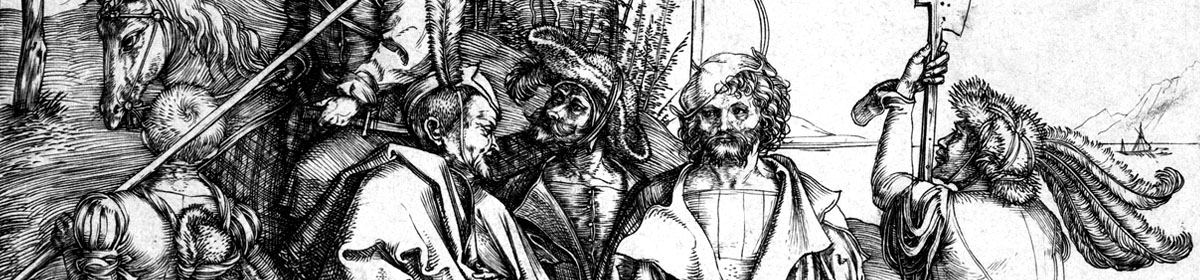
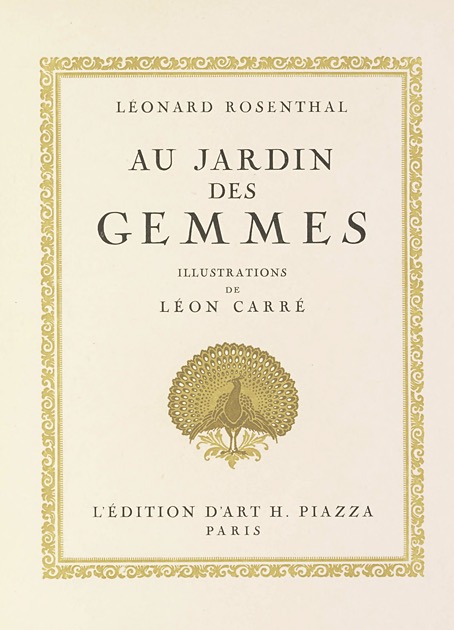
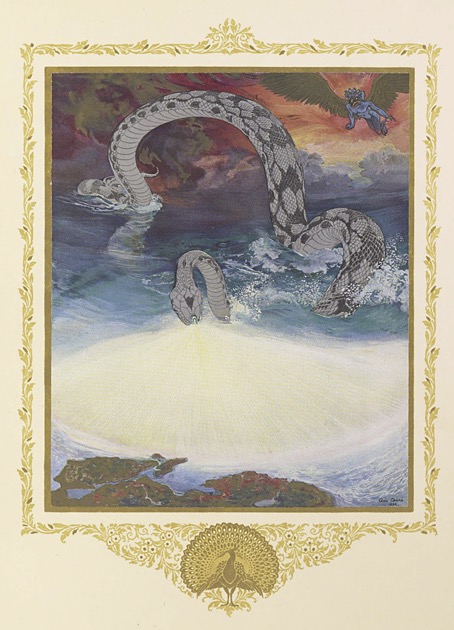
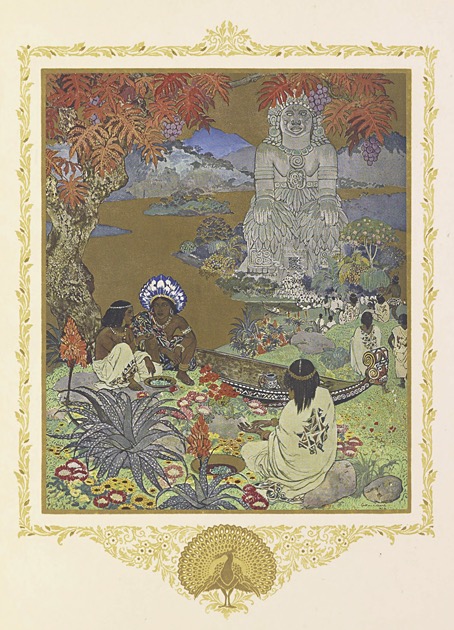
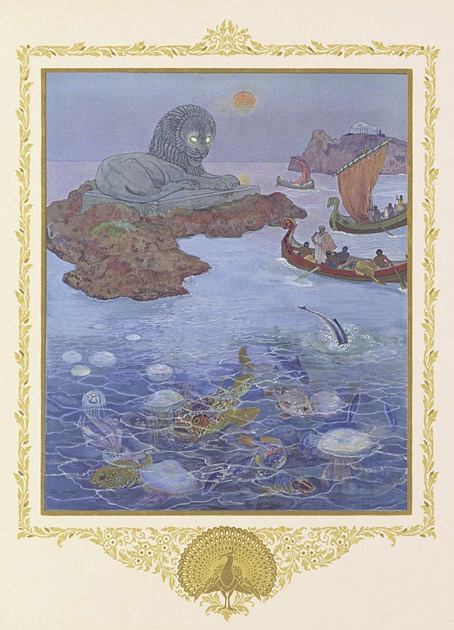
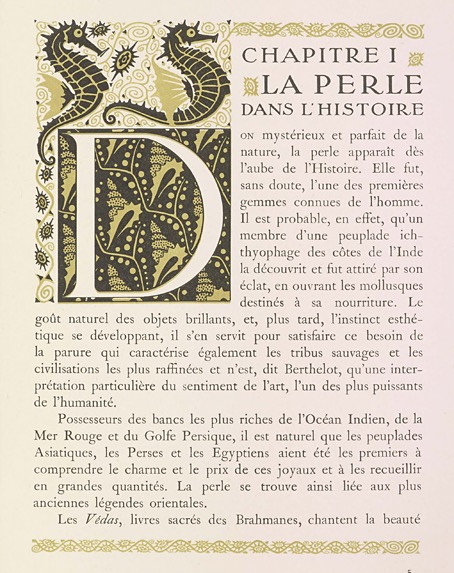
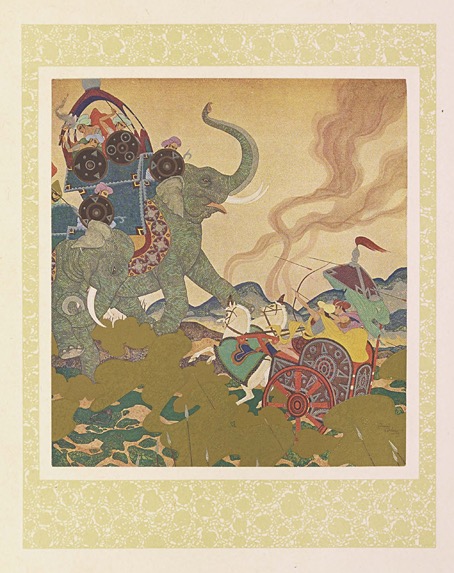
Léonard Rosenthal’s follow-up to In the Kingdom of the Pearl was this volume with illustrations by Léon Carré. In the Garden of Gems was published in 1924 in an edition that matches the earlier book for page layout, print quality and decoration. The illustrator, Léon Carré (1878–1942), was more of a painter than a book illustrator, being one of the many Orientalist artists that France produced in the 19th century. Given the quality of his illustrations it’s a shame he didn’t work on more books, although there was a French edition of the Thousand and One Nights that he illustrated a few years later.

carre02.jpg

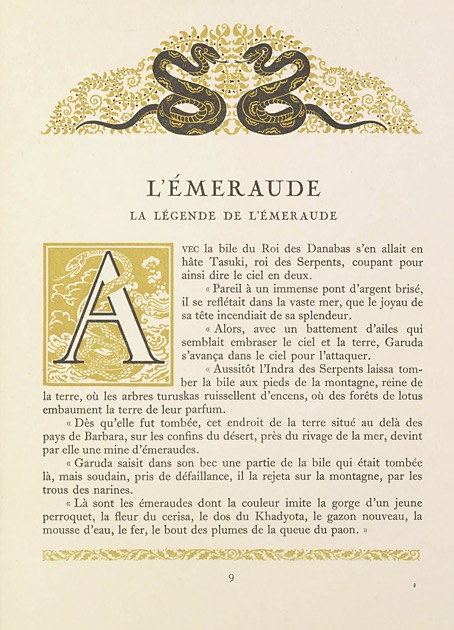
Rosenthal’s note to the reader describes his own book as “the study of the passionate, obstinate, cruel, and sometimes tragic struggle waged by humankind to conquer precious stones, the examination of beliefs, allegories, legends, and symbolisms…”. Individual chapters are devoted to the history of the emerald, ruby and sapphire. As with the earlier book, each chapter is embellished with a decorative header and drop cap whose details change according to the subject. This peacock obsessive approves of the profusion of pavonine motifs.

carre03.jpg

carre04.jpg

carre05.jpg

Continue reading “Léon Carré’s In the Garden of Gems”

Edmund Dulac’s In the Kingdom of the Pearl

dulac01.jpg

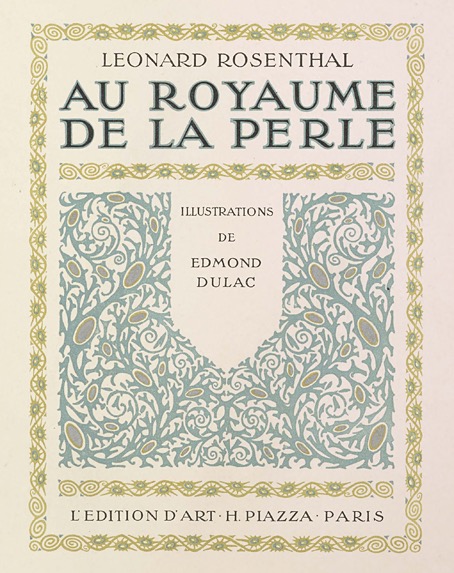
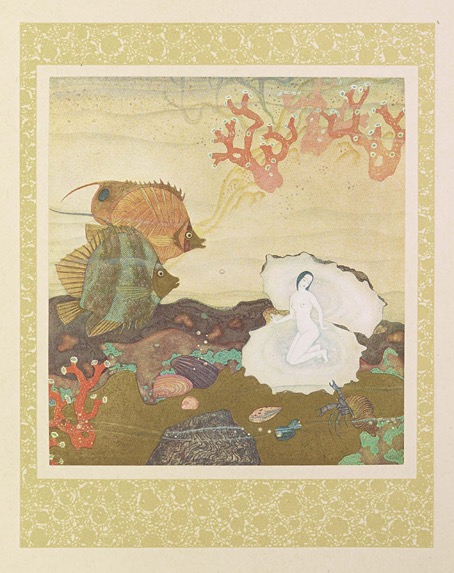
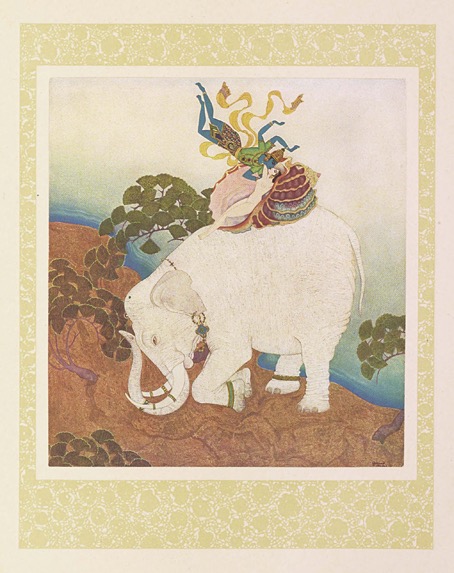
An unusual commission for Edmund Dulac, being a work of non-fiction published in France in 1920, with a British edition following in the same year. The author, Léonard Rosenthal, was a French diamond merchant who wrote a handful of books intended to celebrate and promote his line of business, of which this was the first. In the Kingdom of the Pearl is a history of the pearl-fishing trade and the use of pearls in jewellery, decoration and storytelling. I can’t vouch for the text but the book itself is a beautiful production, with fine colour printing, and a variety of aquarian embellishments throughout. It’s common in illustrated books for the decorative details to repeat themselves but Dulac has drawn a different fishy capital for the opening page of each chapter. His colour illustrations continue the flattened style he was using in Tanglewood Tales, only here the paintings look as though he may have been aiming at the appearance of Mughal miniatures. This is a period of Dulac’s work that’s often overlooked in favour of the Rackham-like illustrations he was producing earlier in his career.

dulac02.jpg

dulac03.jpg

dulac04.jpg

dulac05.jpg

Continue reading “Edmund Dulac’s In the Kingdom of the Pearl”

Weekend links 828

williams.jpg

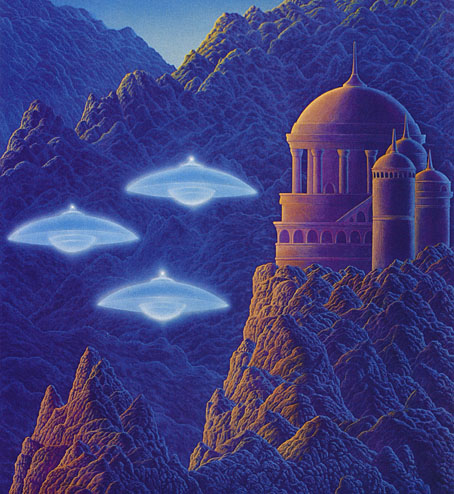
Visitation (1976) by Gilbert Williams.

• “It’s the perfect storm of a UFO case.” Daniel Lavelle explores the Rendlesham Forest mystery of 1980, Britain’s own answer to the Roswell Incident. The case has more substantial documentation than most close encounters but it also has its share of conflicting reports, claims and interpretations. The truth is out there but it’s not evenly distributed.

The Science of Spooky Sounds: Kristen French talks to researcher Rodney Schmaltz about his theory that infrasound may be responsible for the haunted feelings people experience in some buildings.

• New music: Six Organs of Admittance featuring The Six Organs Olive Choir by Six Organs of Admittance; Blue Loops by Kevin Richard Martin; Passage of Time: The Music of Michael F. Hunt by Michael F. Hunt.

• At The Daily Heller: Steven Heller on The Complete Zap Comix, an expensive reprint of the pioneering underground title coming soon from Fantagraphics.

• Coming soon from Strange Attractor: A Walking Flame: Selected Magical Writings of Ithell Colquhoun edited by Amy Hale.

• At Colossal: Linocuts by Eduardo Robledo celebrate Mexican heritage and community.

• Object of the week at the BFI is Vic Fair’s poster for The Man Who Fell to Earth.

• The Strange World of…Hildur Guðnadóttir.

Wide-band WebSDR in Enschede, NL

Lights At Rendlesham (2012) by Time Columns | Rendlesham Forest (1980) (2019) by Grey Frequency | Lights Over Woodbridge (2021) by A Farewell To Hexes

Doodlin’ – Impressions of Len Lye

doodlin1.jpg

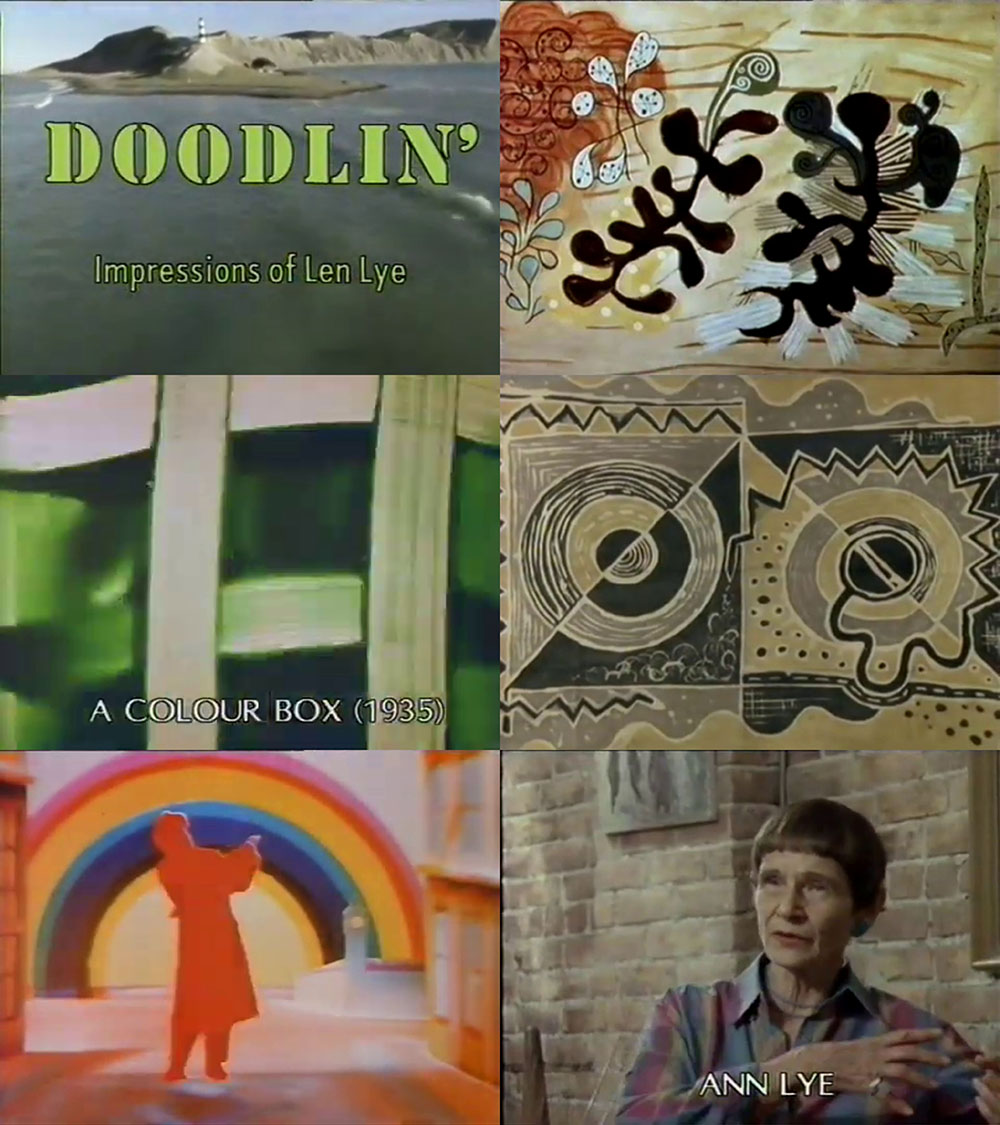
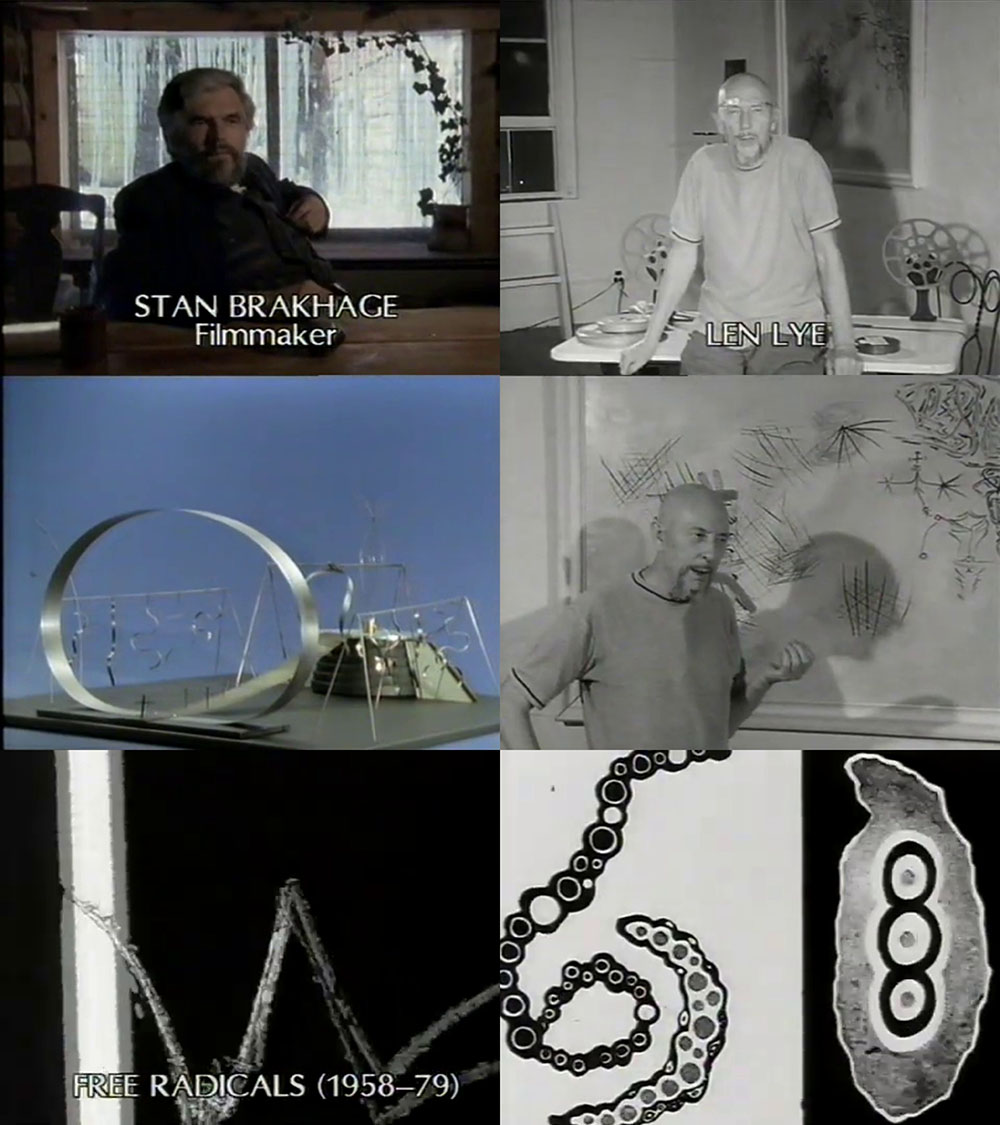
Finally, finally, Keith Griffiths’ documentary about Len Lye (1901–1980) turns up on YouTube. Doodlin’ – Impressions of Len Lye was made in 1987, and is one of several films that Griffiths made about avant-garde film-makers. There’s some slight crossover with his later history of abstract cinema—Stan Brakhage turns up in both films—but Lye was always much more than a film-maker despite his pioneering work of the 1930s. Doodlin’ charts Lye’s progress from his youth in New Zealand, where his earliest artistic impulses were oriented towards painting, to his travels through Samoa and Australia, and from there to London where almost by accident he ended up making short, semi-abstract films for the General Post Office’s promotional division. The single constant in Lye’s life was a restless creativity, something he later brought to kinetic sculpture after he moved to America in the 1940s. Lye is justly celebrated for his short films: Free Radicals (1958/79) is an extraordinary piece of abstract cinema, white lines and marks scratched onto the emulsion of a strip of unprocessed film that jump and flash in time to a recording of African drums. Griffiths’ documentary is a reminder that Lye was also an artist who was never constrained by a single medium.

doodlin2.jpg

Elsewhere on { feuilleton }
The abstract cinema archive

Art on film: Pandora and the Flying Dutchman

pandora1.jpg

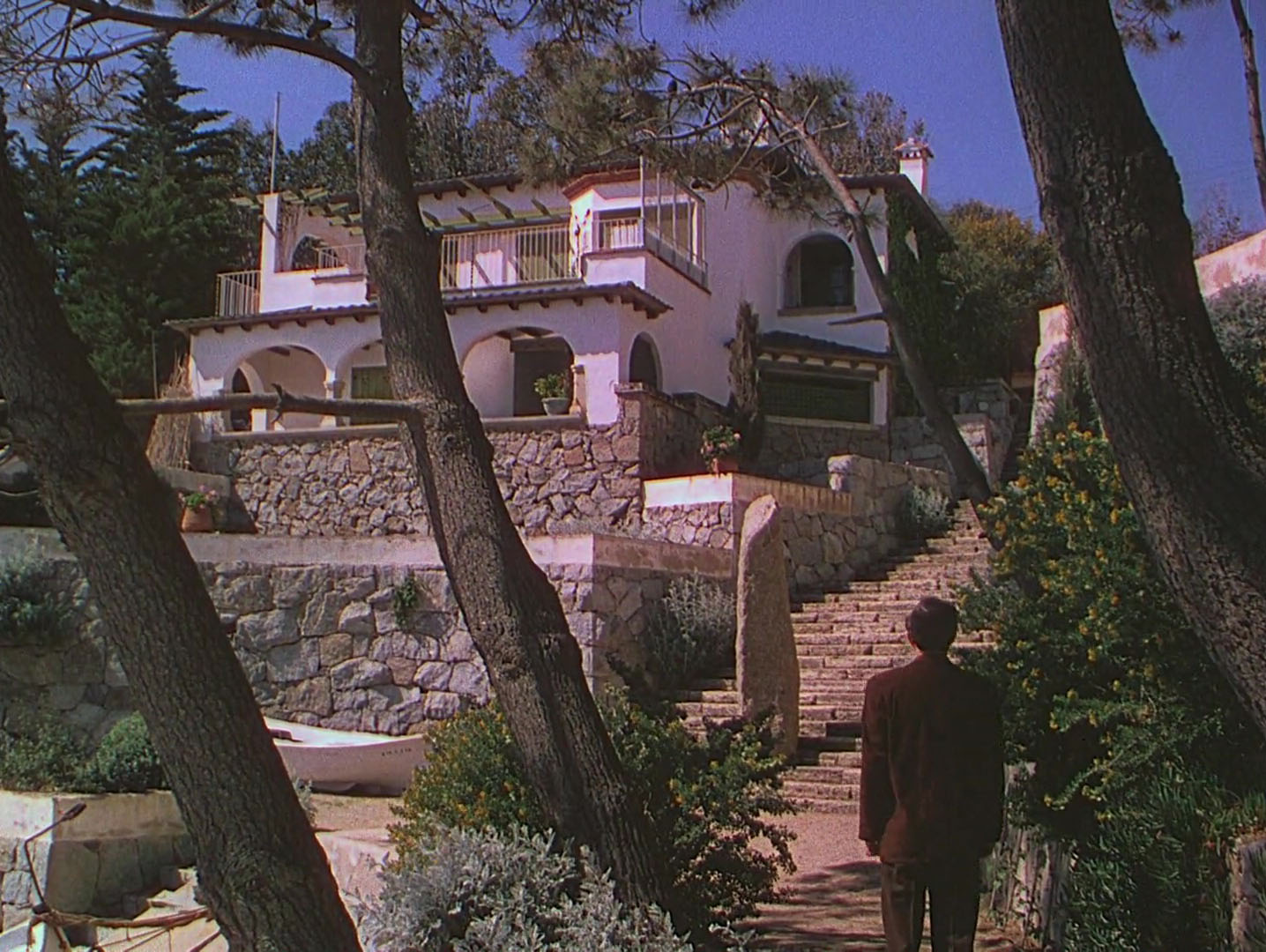
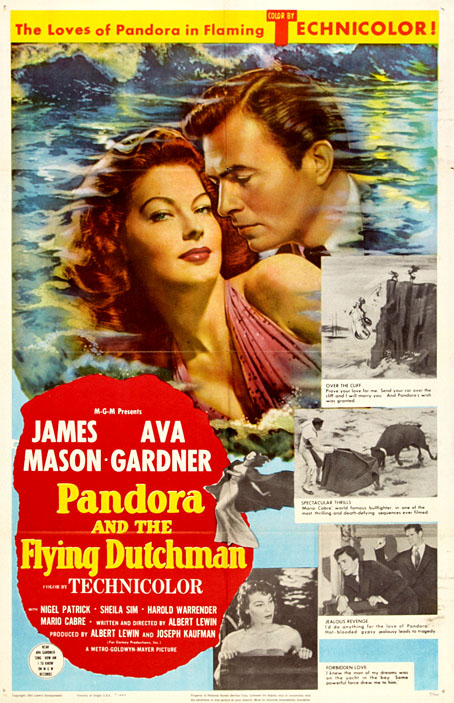
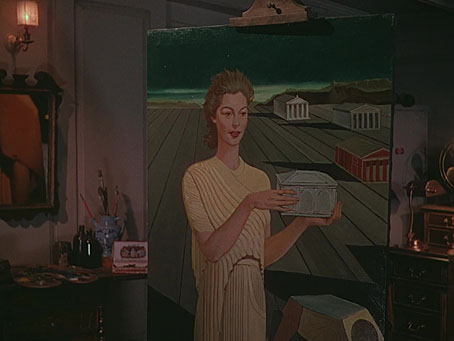
Continuing an occasional series about artworks in feature films. This is a minor entry but a worthwhile one if only to draw some attention to an unusual fantasy film by Albert Lewin, an equally unusual director. Pandora and the Flying Dutchman was made in 1951, a British film with an American star (Ava Gardner) and a Spanish setting. Gardner plays Pandora Reynolds, an American nightclub singer living in the coastal town of Esperanza where she’s the centre of attention for the small colony of stuffy middle-class Brits who also live there. Like her mythical namesake, Pandora is a source of endless trouble, only in this case the evils are the result of the romantic chaos she provokes. Her own romantic desires are upset when a mysterious yacht anchors off the coast, its sole occupant being Hendrik van der Zee (James Mason) who we soon learn is the Flying Dutchman of legend, doomed to sail the seas until he can find salvation in the love of a woman who will die for him.
pandora6.jpg

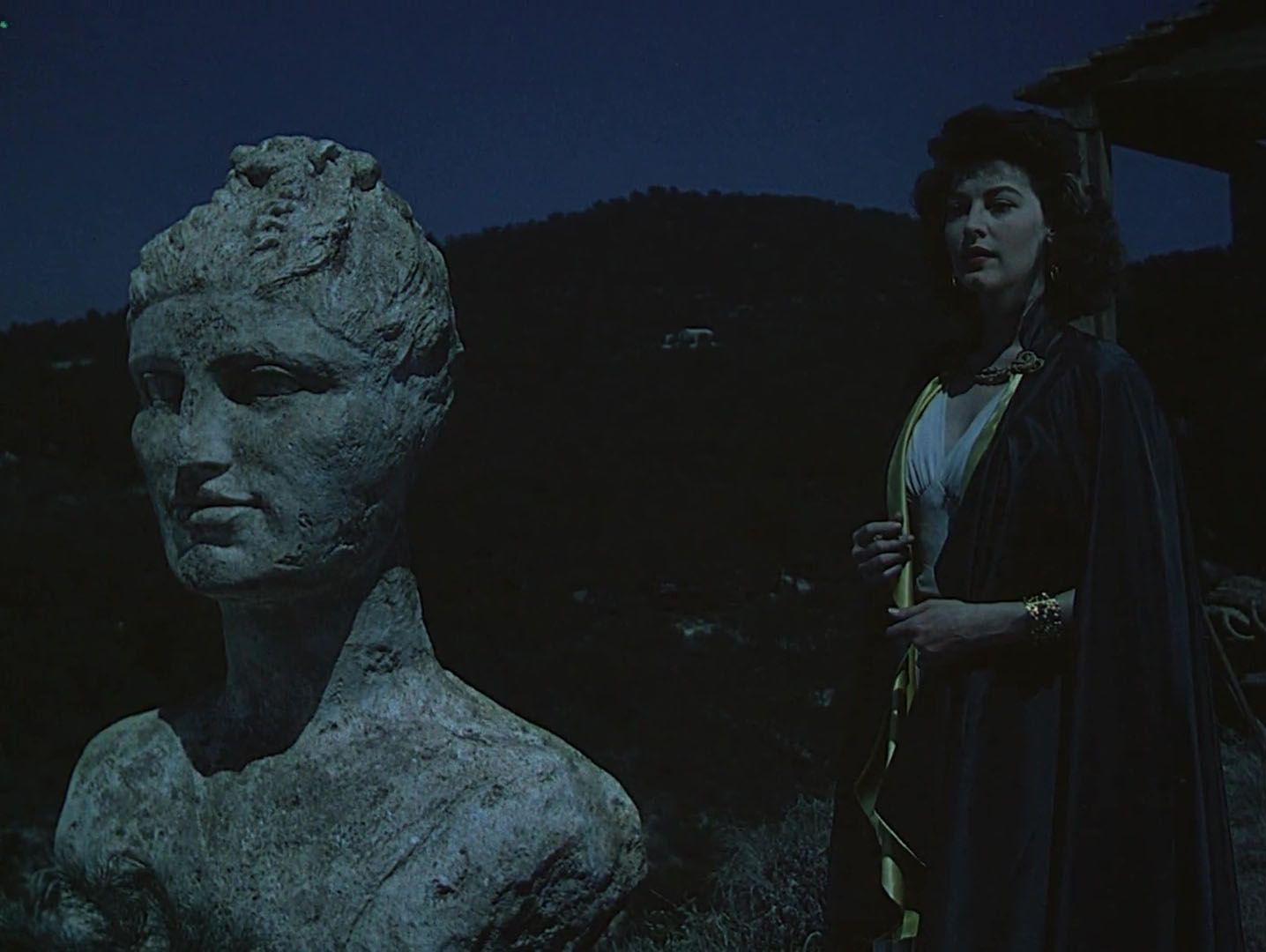
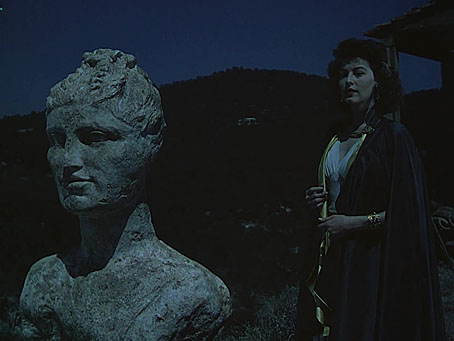
Pandora with one of the many statues that surround the home of Fielding the archaeologist.

Lewin’s film was restored recently after having been out of circulation for many years. I’d been intending to see it again after reading about the restoration which could only be an improvement on the terrible copy that used to turn up late at night on British TV. Further impetus was prompted by a book review for The Spectator in which Michael Moorcock notes similarities between the film and the stories by JG Ballard which were collected as Vermilion Sands. I’ve never seen Ballard mention the film but the Vermilion Sands stories have long been favourites of mine. The film moved to the top of the viewing list.
pandora7.jpg

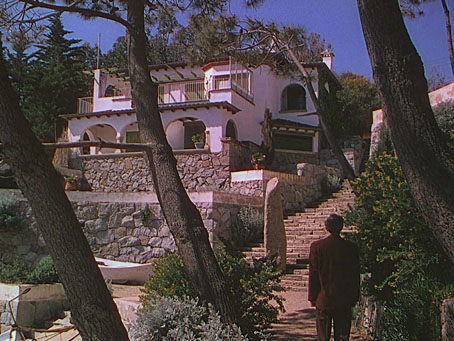
Esperanza or Vermilion Sands? Hendrik is lured by Pandora’s piano-playing.

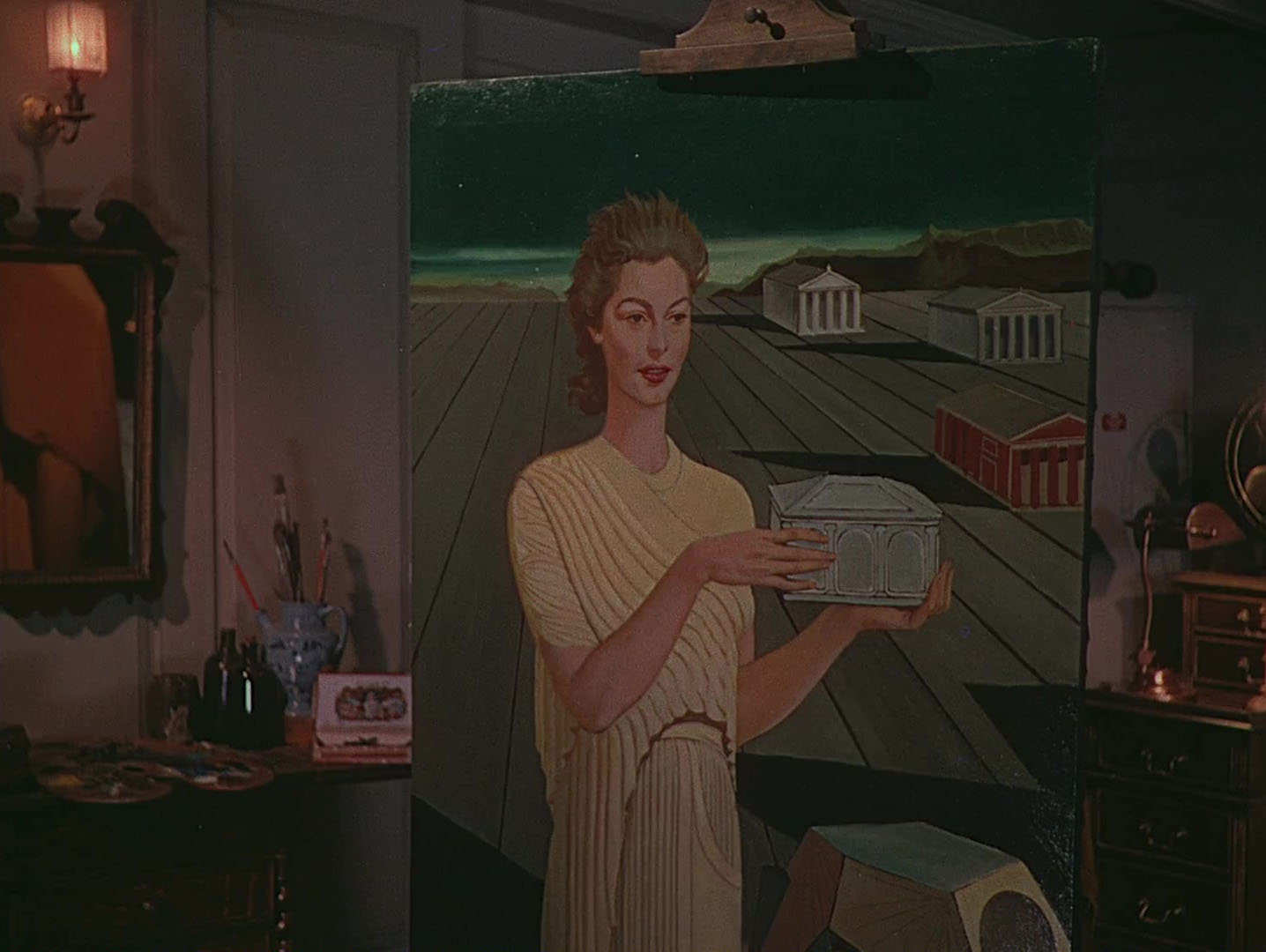
The key connection to Ballard is Surrealist (or-pre-Surrealist) painting, a detail of Pandora and the Flying Dutchman that I’d forgotten all about. Albert Lewin only directed six films; he also wrote each one, and was very determined in his attempts to bring a touch of artistic class to Anglophone cinema. Pandora and the Flying Dutchman was his fourth feature after The Moon and Sixpence and The Picture of Dorian Gray—each an adaptation of a novel where painting is an important element of the story—and The Private Affairs of Bel Ami, a film that was promoted with a Surrealist painting competition on the theme of the temptation of St Anthony. Max Ernst won the competition, and his picture appears at the end of the film, a colour insert in an otherwise black-and-white feature. Lewin did the same for The Picture of Dorian Gray, another black-and-white film where the portrait paintings (including Ivan Albright’s unforgettably corrupted canvas) are shown in colour inserts.
pandora2.jpg

Continue reading “Art on film: Pandora and the Flying Dutchman”