The art of Helmut Wenske

wenske19.jpg

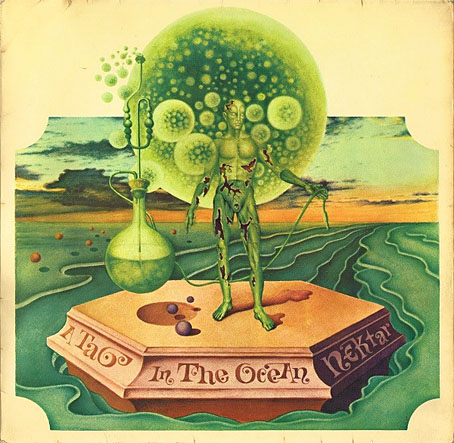
A Tab in the Ocean (1972) by Nektar.

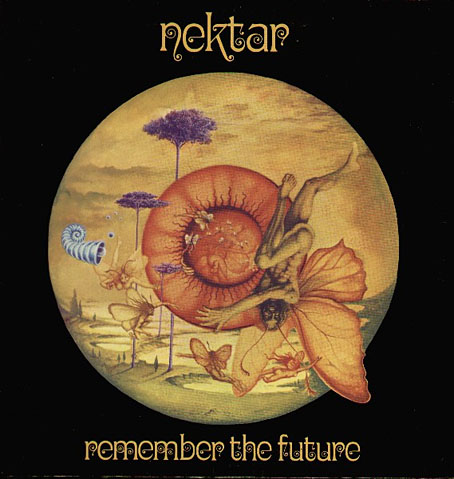
This is another post in which I refer to Franz Rottensteiner’s The Fantasy Book: The Ghostly, the Gothic, the Magical, the Unreal (Thames & Hudson, 1978) as a source of discovery. Rottensteiner is Austrian which no doubt explains why his study of fantasy and horror in art and fiction had a broader reach than you would have found in a similar study from a British or American editor. Some of the writers whose work he discusses—Stefan Grabiński, for example—hadn’t been translated into English at that time. Among the artists whose work appeared as illustration Helmut Wenske was one of several whose paintings were seldom seen in Anglophone publications, although a few album covers that featured Wenske art—those for Nektar in particular—were a common sight in British record shops in the 1970s.
wenske20.jpg

Remember The Future (1973) by Nektar.

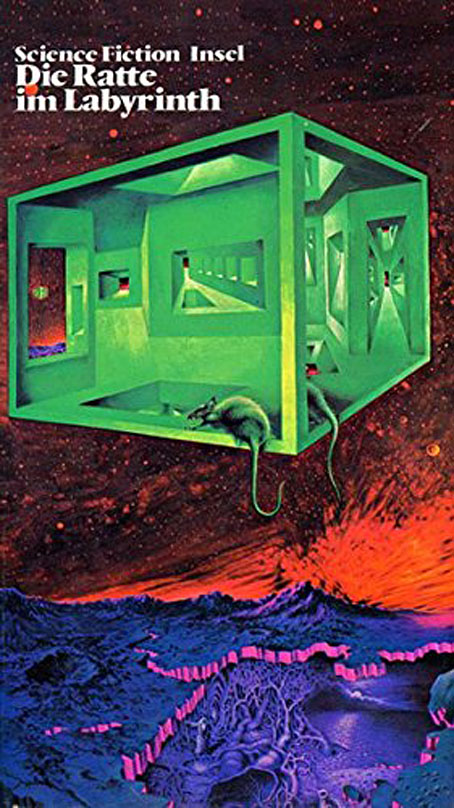
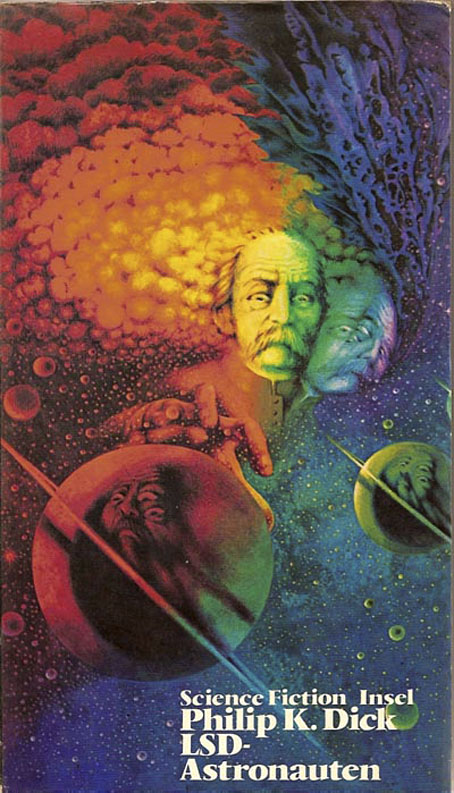
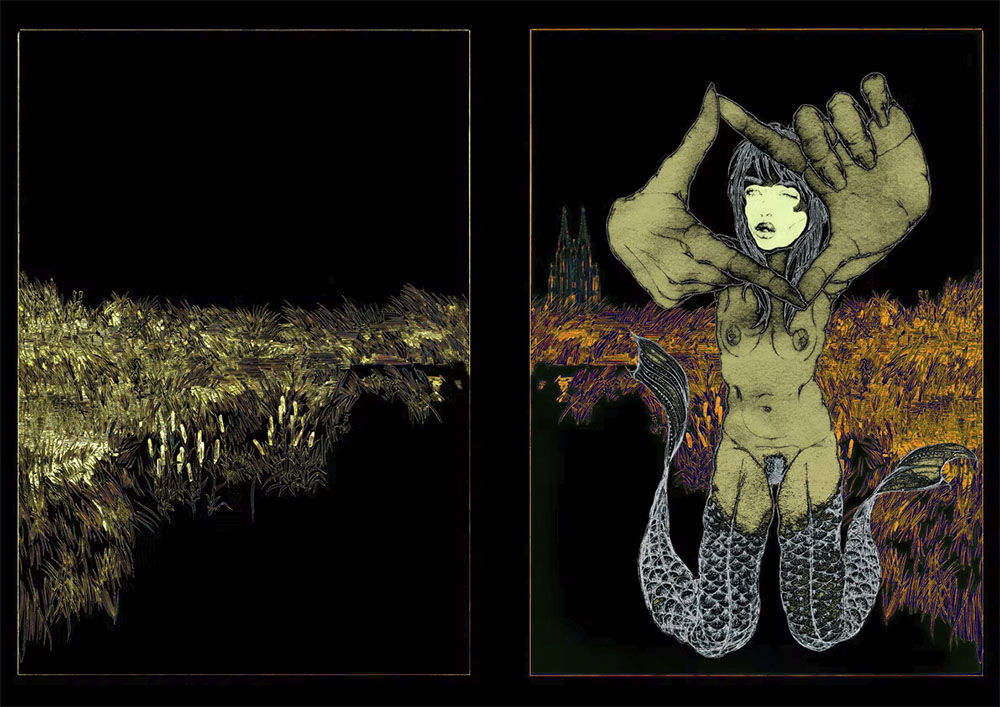
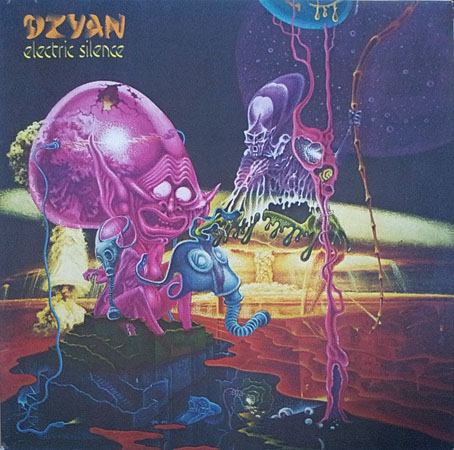
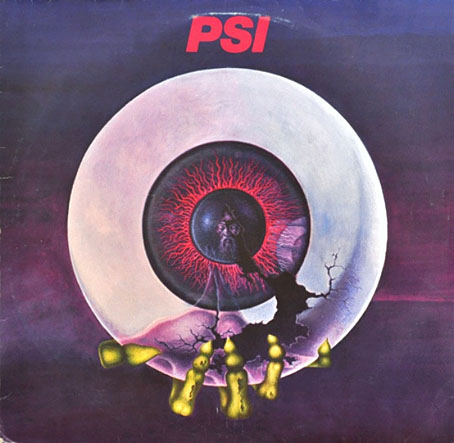
Wenske is a German artist with a penchant for Dalí-like Surrealism that might have been strained through a psychotropic filter. Most of his work in the 1970s was as an album cover designer for the Bellaphon label, and most of those covers are designs rather than paintings. There are a number of book covers, however, some of which are recycled from his album covers. From 1971 to 1975 Wenske painted the covers for a series from Insel Verlag, “Phantastische Wirklichkeit: Science Fiction der Welt”, a collection of reprints edited by Franz Rottensteiner. Wenske’s ISFDB credits list a few horror covers along with these, a small percentage of which are Lovecraft-related. In the past I’ve drawn attention to many different Lovecraft illustrators but Wenkse is one of a small number of these to have also written Lovecraftian fiction of his own (Die Krypta von Shaggay’h, 1974). He enjoys the work he’s being asked to illustrate, in other words, which isn’t something you can always expect from illustrators.
wenske22.jpg

Electric Silence (1974) by Dzyan.

The covers below aren’t the best quality but better copies have proved hard to find. For those who’d like to see more Wenske art there’s at least one German catalogue that collects his work from the early 70s on.

• Related reading: View From Another Shore: An Interview with Franz Rottensteiner.
wenske21.jpg

Horizonte (1977) by PSI.

wenske01.jpg

wenske02.jpg

Continue reading “The art of Helmut Wenske”

Weekend links 833

hyde.jpg

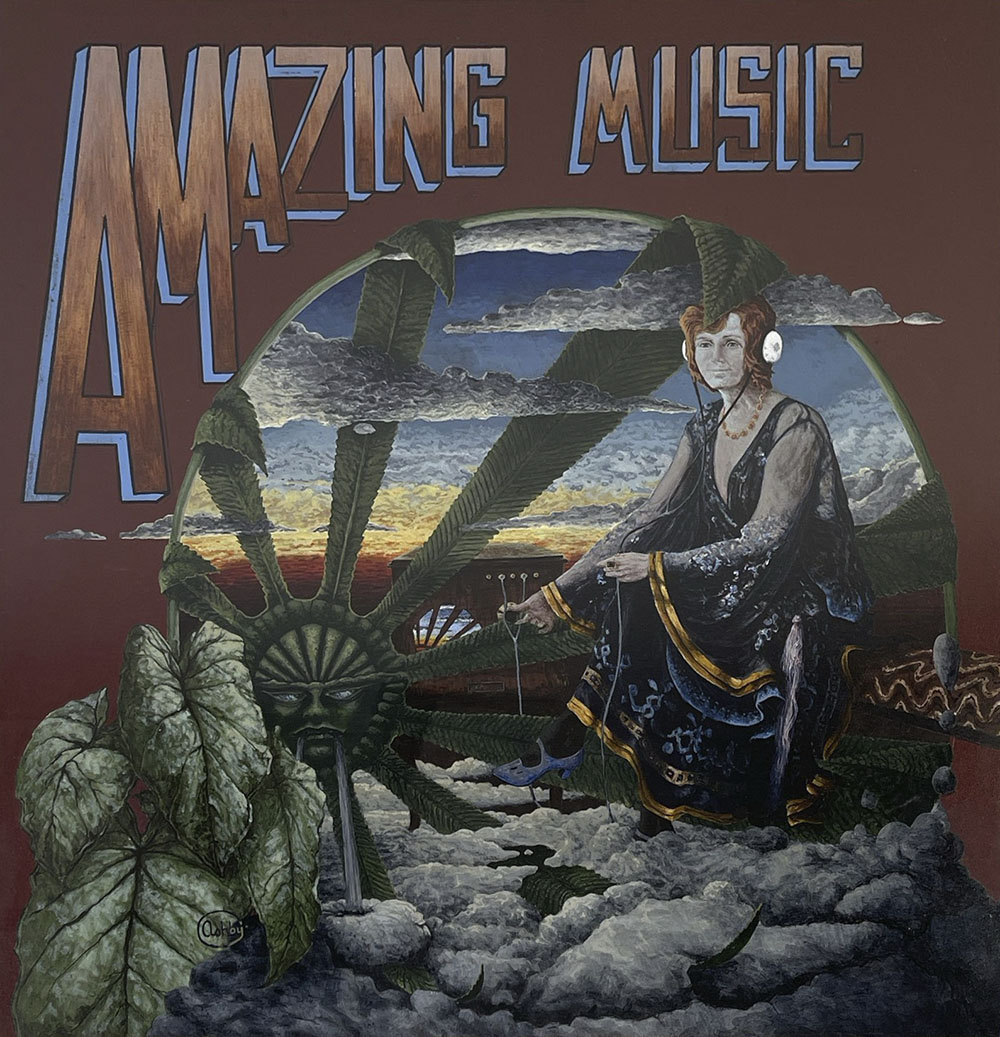
Tony Hyde’s original artwork for the front cover of Astounding Sounds, Amazing Music by Hawkwind. The painting is being auctioned later this month.

• At the Daily Heller: Steven Heller reprints his 2012 Atlantic review of The Graphic Canon, a three-volume collection of visual adaptations of works of literature. The collection was edited by the late Russ Kick, and includes my own condensation of The Picture of Dorian Gray.

• At Dennis Cooper’s: Bill Hsu presents…21st Century Nightmares: Dark Animations by Cristóbal León/Joaquín Cociña, Hugo Covarrubias, Christiane Cegavske, John Frame, Saori Shiroki, Joe Hsieh, Phil Tippett, Robert Morgan, Shengwei Zhou.

• At Colossal: In Los Angeles, 70 artists transform a vacant hospital into a sprawling art experience.

What we were doing was rooted in that specific moment, but looking back, it also seems to resonate strongly with the present—particularly in terms of how we understand media, perception, and reality itself. This is something I’ve been thinking about again recently, especially with the renewed activity around Cabaret Voltaire. It brings into focus the extent to which earlier work now reads almost as a form of prefiguration. At the time, though, much of it was intuitive. We didn’t necessarily have a fully formed theoretical framework for what we were doing—we were artists, and we were working instinctively. It’s really only in retrospect that some of those ideas begin to take on a clearer shape and meaning.

Stephen Mallinder talking to Nicolas Ballet about Cabaret Voltaire, the group’s history and working methods

• New music: The Endless Dance by Hannah Peel; Helt by Fjall; Air Signs by Anthéne.

Adam Rowe is writing a new book about science fiction art.

• Steven Heller’s font of the month is Brutal Types.

• Mix of the week: Isolatedmix 135 by Aspetuck.

Brute Reason (1983) by Bernard Szajner | Let’s Get Brutal (1986) by Nitro Deluxe | Brutal But Clean (1994) by Cabaret Voltaire

Rhino Head

rhino1.jpg

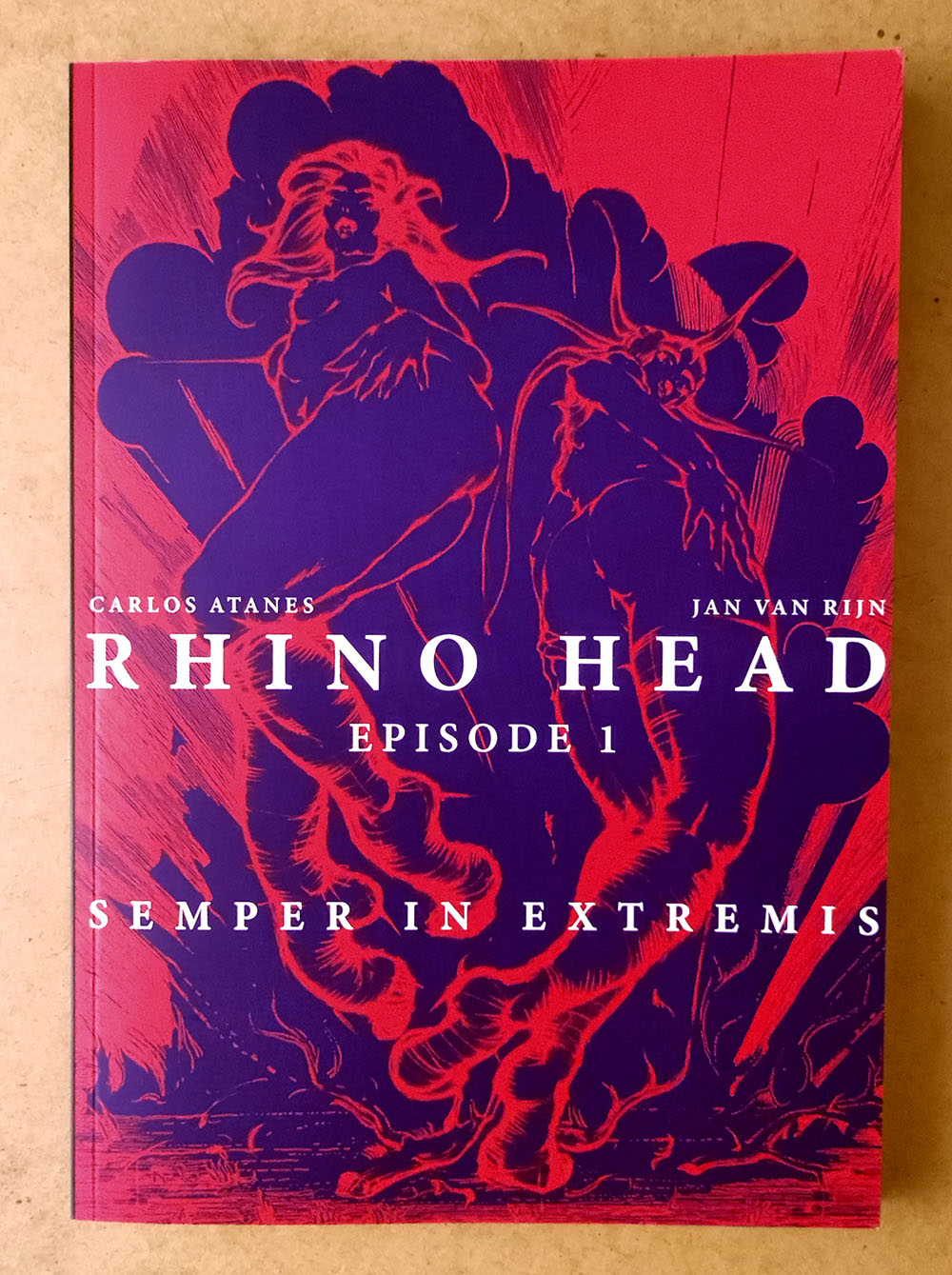
A new book arrived in the post this week. Rhino Head is a collection of words (in both German and English) by Carlos Atanes and drawings by Jan van Rijn which describes itself thus:

This illustrated fantastical narrative consists of 21 chapters and features short, self-contained stories told from shifting narrative and temporal perspectives. It is a collaboration between author/director Carlos Atanes and illustrator Jan van Rijn, and explores the realms of eroticism and magical realism.

What lies behind a simple fable about wolves and rabbits? An actress fleeing in terror from an underground film shoot on the slopes of Mount Fuji? A New Mexico scrap dealer serving coffee to two visitors from outer space? A fashion designer who believes she is being dreamed by a mythical figure? An antiques forger who discovers an old tale has come true? A female cult disrupting the cosmic order with terrifying rituals?

This interwoven web of stories includes a summons to a fictitious event, sunflowers acting as orgasmic energy batteries, rhino heads at the farthest reaches of the world, pornographic films projected inside the viewer’s mind, dolls transformed into women and women transformed into dolls – a constellation of strange intertwined incidents creating a hyperfable, moving beyond its individual characters because the meaning of the whole can only be revealed to each individual reader.

rhino2.jpg

Having known Jan for some time—I contributed to the Genet-themed collection he put together in 2021—I was happy to write a foreword for his new publication. In books like this you tend to find the pictures acting solely as illustration but here there’s more of a dialogue going on between the different media. The drawings show you things the texts don’t provide, and vice versa.

Rhino Head doesn’t appear to be on sale just yet but anyone wanting further information should contact Kraut and Rubies.

Huszti Horvath’s Three Dragons

horvath01.jpg

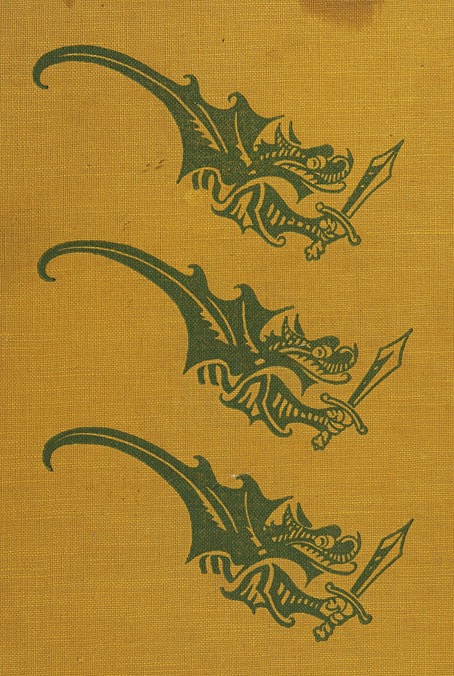
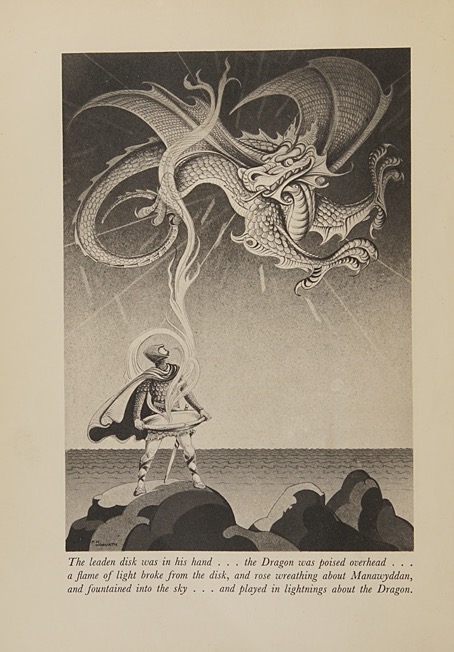
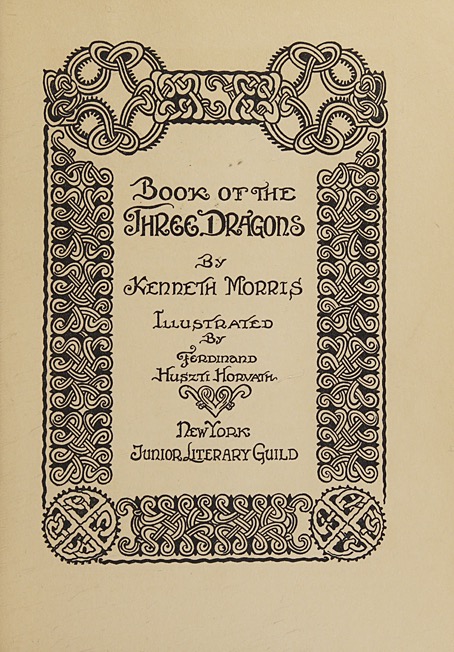
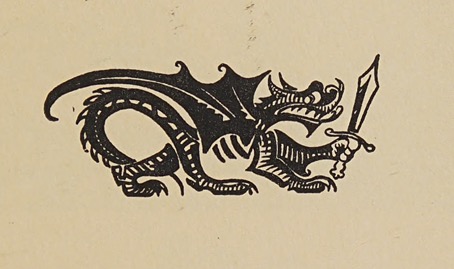
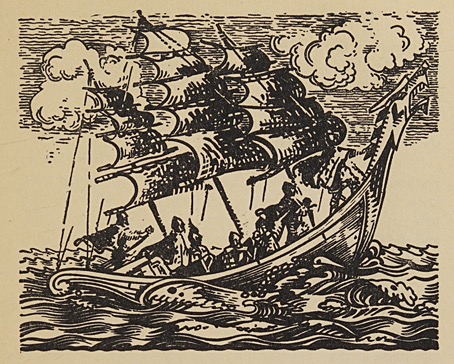
Book of the Three Dragons is an unusual illustrated volume, being an American edition of a retelling of Welsh myths by a Welsh writer, Kenneth Morris, with illustrations by a Hungarian artist, Ferdinand Huszti Horvath (1891–1973). Morris was, among other things, a Theosophist who was living in California when he wrote Book of the Three Dragons which no doubt explains the American publication. There doesn’t appear to be any Theosophy in this book at least. Dragons are an important symbol for the Welsh, with a red dragon being a prominent emblem on the flag of Wales. Morris’s book opens with a guide to the pronunciation of the Welsh names and words that appear in the text.

horvath02.jpg

Ferdinand Horvath, meanwhile, moved to the USA in the 1920s where he eventually found employment as an illustrator before working (without credit) for Disney. It’s at Disney-related websites that you’ll find most of the information about his life and work, where the discussion inevitably concerns his designs for animated films. A list of his other book productions would be welcome. There’s a very nice edition of The Raven that was published in the same year as Book of the Three Dragons but with art in much more of an Expressionist style.

I often wonder what Disney’s animations might have been like if the studio had given artists like Horvath and Kay Nielsen a freer rein. Disney only began to change its style in the late 1950s as a result of competition from other animation studios, and even then the results were compromised. Sleeping Beauty used the designs of Eyvind Earle to distinguish the film from the studio’s previous fairy tales but Earle was dissatisfied with the treatment his work received and he left the project before it was finished; the art direction for One Hundred and One Dalmatians was based on the cartoons of Ronald Searle but Walt Disney hated the results and refused to try anything similar again.

horvath03.jpg

horvath04.jpg

horvath05.jpg

Continue reading “Huszti Horvath’s Three Dragons”

Weekend links 832

corridor.jpg

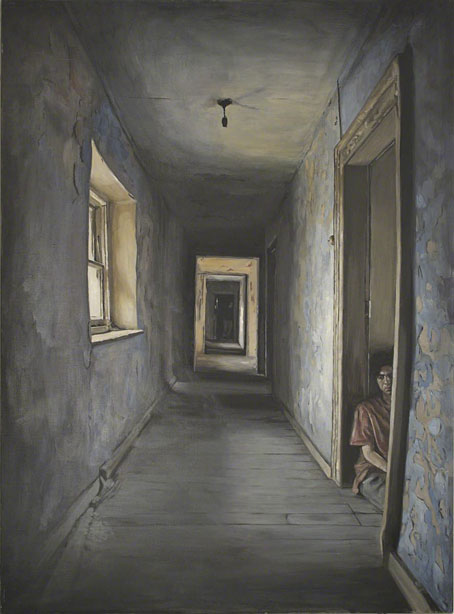
Dark Corridor (1990s) by Unknown Artist.

• “I greatly enjoyed this rich, allusive and strange text, which has affinities to the literary form and style of TS Eliot, David Jones and Iain Sinclair, uniting high modernism with demotic and pulp elements, as well as to the occult thrillers of Charles Williams, Mary Butts and others.” Mark Valentine reviews B-Movie: Serial of Seven Stars by Andrew Duncan.

• New music: Electronic Meditation For Inner Space Travel by Studio Kosmische; Fathom Tides by Werner Dafeldecker & Lawrence English; rust/wave by Tewksbury.

• At Public Domain Review: Animal, Vegetable, Lamb: Thom Sliwowski on the history of the mysterious Vegetable Lamb of Tartary.

• At Door of Perception: Wistman’s Wood, Dartmoor, as photographed by Neil Burnell.

Anne Billson selects 20 of the best corridors in film.

• More corridors: Scificorridorarchive.

Ukrainian animation.

• RIP Sonny Rollins.

Current Rothko

The Black Corridor (1973) by Hawkwind | Corridor (2018) by Steve Jansen | Spectral Corridor Part 4 (2021) by The House In The Woods