RS Sherriffs’ Rubáiyát

sherriffs01.jpg

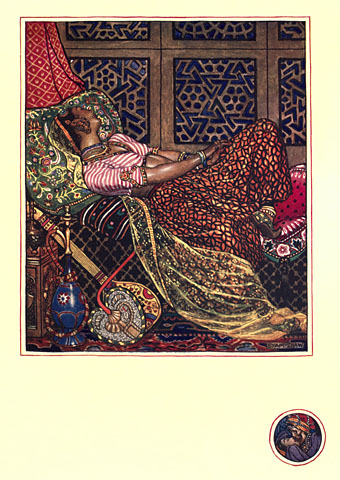
You can’t really say there are always more Rubáiyáts—the Fitzgerald translation isn’t as popular today as it was a century ago—but there are many illustrated editions even though the poem makes for a slim volume when not bulked out by variant translations. The popularity of the text when combined with the ease of imitating Edward Fitzgerald’s quatrains led to the publication of many novelty versions—The Rubáiyát of a Persian Kitten, The Rubáiyát of a Motor Car, The Rubáiyát of a Bachelor, and so on—all of which came with their own illustrations.
sherriffs02.jpg

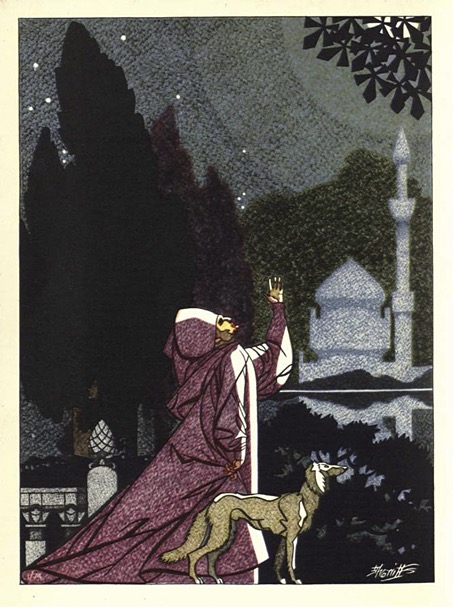
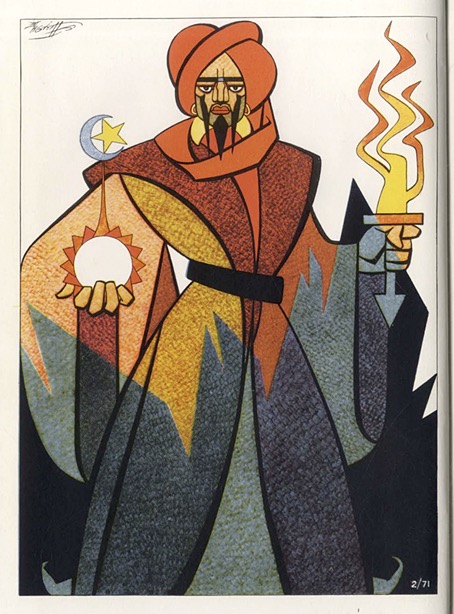
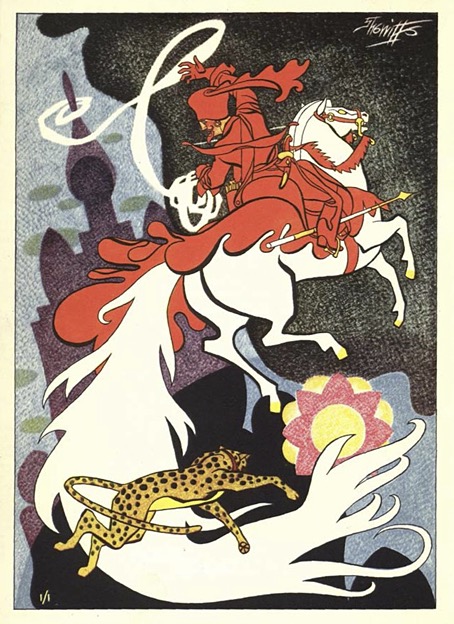
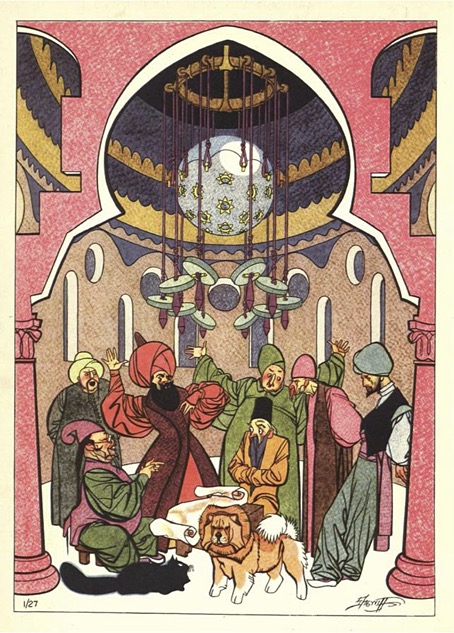
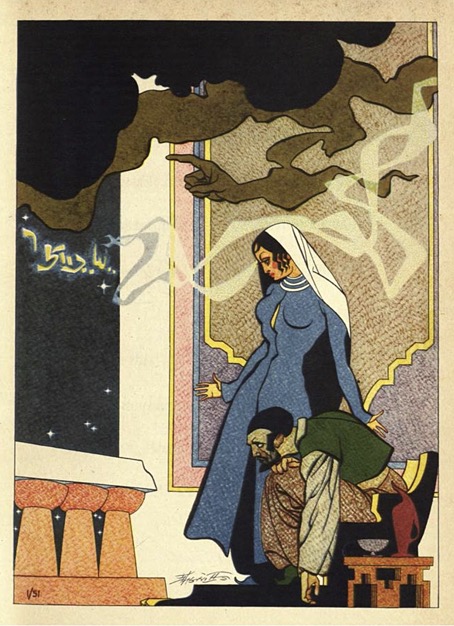
The 1947 edition illustrated by Scottish artist Robert Stewart Sherriffs is more serious than these, with an introduction by Laurence Housman, the texts of three different 19th-century translations, together with supplementary material about Edward Fitzgerald. Sherriffs worked for a number of years as a caricaturist for Punch magazine and other publications but prior to this he was also a book illustrator. Most of his drawings are black-and-white ink renderings; the Rubáiyát is a rare example of him working in colour throughout.
sherriffs03.jpg

sherriffs04.jpg

sherriffs05.jpg

Continue reading “RS Sherriffs’ Rubáiyát”

Elihu Vedder’s Rubáiyát

vedder01.jpg

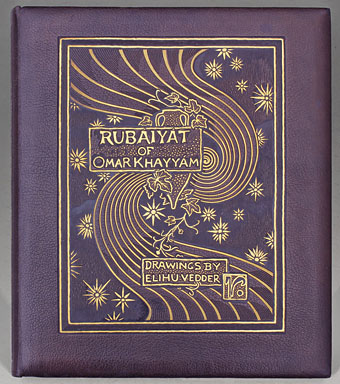
A slight return to Omar Khayyam. The Edmund J. Sullivan post prompted comments about other editions so I thought I’d see what else was at the Internet Archive. The problem there is that the Rubáiyát was a very popular book in the latter part of the 19th century which means there are not only multiple editions of the Edward Fitzgerald translation but many translations by other hands, as well as numerous parodies. Anne S mentioned the Edmund Dulac edition which I suppose I ought to at least acknowledge since Dulac’s passion for Persian and Arabian art made him an ideal illustrator. But I do enjoy finding illustrated books that are less familiar, hence Elihu Vedder’s edition of 1894.

vedder02.jpg

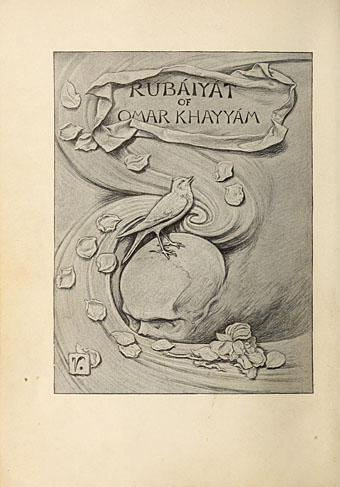
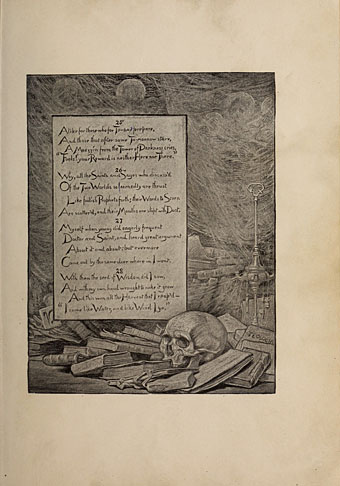
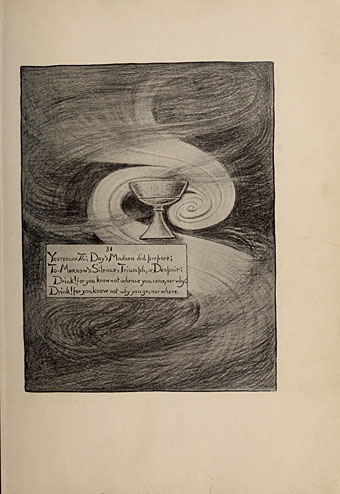
Elihu Vedder (1836–1923) was an American Symbolist painter, and also something of a poet himself, producing a few volumes of his own illustrated verse. Many illustrators favour an Orientalist interpretation of the Rubáiyát despite the popularity of the quatrains being more a result of their universality than their exotic qualities. Vedder produced over 50 drawings that concentrate on the mystical aspects of the poem, setting hand-lettered texts against illustrations that are either very similar to his paintings or direct copies of some of his canvases. It’s unfortunate that the reproductions in this edition—a reprinting of Vedder’s 1884 original—aren’t better. The book is still one of the more remarkable editions, however. Browse the rest of it here or download it here.

vedder03.jpg

vedder04.jpg

Continue reading “Elihu Vedder’s Rubáiyát”

Edmund J. Sullivan’s Rubáiyát

rubaiyat01.jpg

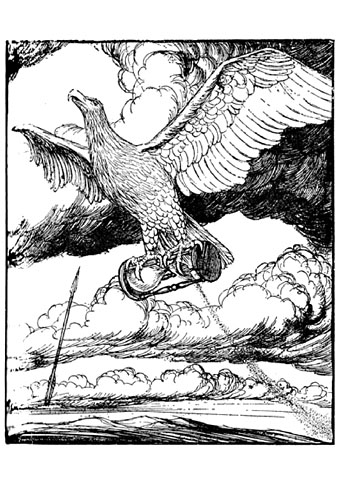
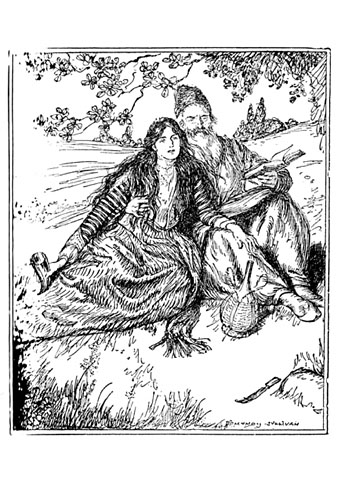
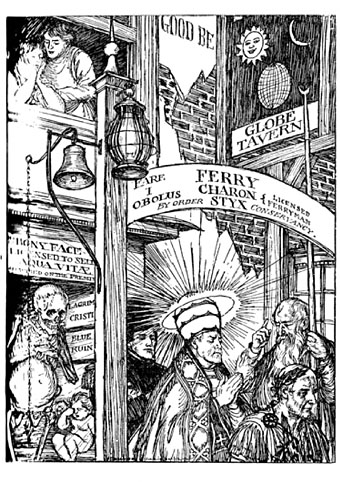
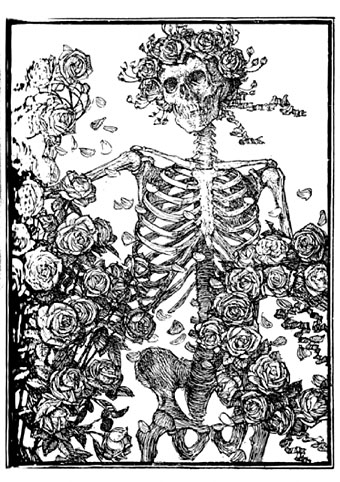
Mention yesterday of Edmund J. Sullivan’s illustrations for The Rubáiyát of Omar Khayyam made me realise that I’d never seen a complete set of Sullivan’s illustrations for this volume (75 in all) despite one particular drawing (the rose-crowned skeleton) being very familiar. Sullivan’s Rubáiyát was published in 1913, and the translation is the Edward Fitzgerald version. These copies aren’t the best quality but they’re good enough at a small size to give an idea of Sullivan’s renderings which feature more occult references than usual for this title. Browse the rest of the pages here or download the book here.

rubaiyat02.jpg

rubaiyat03.jpg

rubaiyat04.jpg

Continue reading “Edmund J. Sullivan’s Rubáiyát”

Byam Shaw’s Garden of Kama

shaw01.jpg

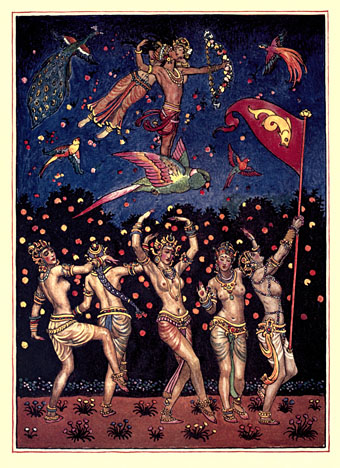
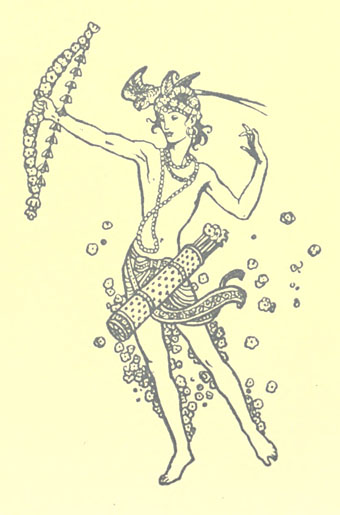
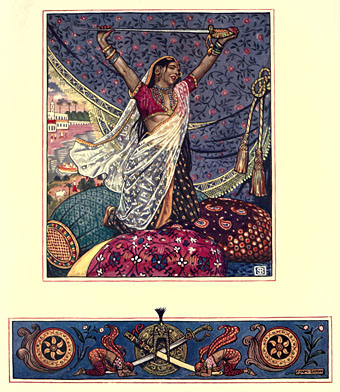
The post title sounds like a psychedelic album but the illustrations are from The Garden of Kama (1901), allegedly a collection of Indian love poems “translated by Laurence Hope”. The translator’s real name was Adela Florence Nicolson who no doubt wished to do for India what Edward Fitzgerald had done for Persia but rather than presenting new translations of unknown verse the poems were all her own work. The book survived this mild scandal to be republished several times, the illustrations here by Byam Shaw (1872–1919) being from a 1914 edition. I linked to a selection of these plates last year when they were posted at Golden Age Comic Book Stories but anyone wanting to see the complete book, poems and all, may do so at the Internet Archive.

The content may be Orientalist pastiche but Shaw paid great attention to the decorative details. This is also an adult work, with violence, death and some sexy females. So many illustrated books of this period are children’s stories it can be a surprise to find something where the characters don’t live happily ever after.

shaw02.jpg

shaw03.jpg

shaw04.jpg

Continue reading “Byam Shaw’s Garden of Kama”