Weekend links 828

williams.jpg

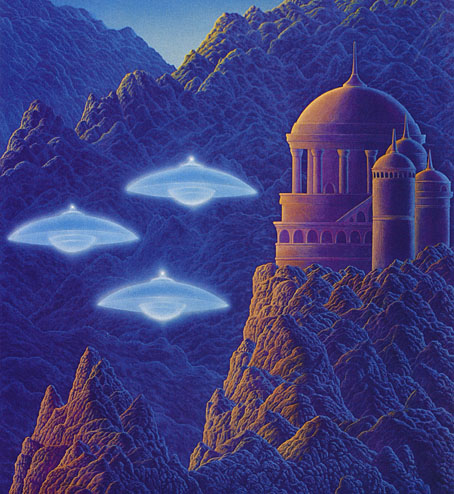
Visitation (1976) by Gilbert Williams.

• “It’s the perfect storm of a UFO case.” Daniel Lavelle explores the Rendlesham Forest mystery of 1980, Britain’s own answer to the Roswell Incident. The case has more substantial documentation than most close encounters but it also has its share of conflicting reports, claims and interpretations. The truth is out there but it’s not evenly distributed.

The Science of Spooky Sounds: Kristen French talks to researcher Rodney Schmaltz about his theory that infrasound may be responsible for the haunted feelings people experience in some buildings.

• New music: Six Organs of Admittance featuring The Six Organs Olive Choir by Six Organs of Admittance; Blue Loops by Kevin Richard Martin; Passage of Time: The Music of Michael F. Hunt by Michael F. Hunt.

• At The Daily Heller: Steven Heller on The Complete Zap Comix, an expensive reprint of the pioneering underground title coming soon from Fantagraphics.

• Coming soon from Strange Attractor: A Walking Flame: Selected Magical Writings of Ithell Colquhoun edited by Amy Hale.

• At Colossal: Linocuts by Eduardo Robledo celebrate Mexican heritage and community.

• Object of the week at the BFI is Vic Fair’s poster for The Man Who Fell to Earth.

• The Strange World of…Hildur Guðnadóttir.

Wide-band WebSDR in Enschede, NL

Lights At Rendlesham (2012) by Time Columns | Rendlesham Forest (1980) (2019) by Grey Frequency | Lights Over Woodbridge (2021) by A Farewell To Hexes
The Kingdom of the Gods

quail01.jpg

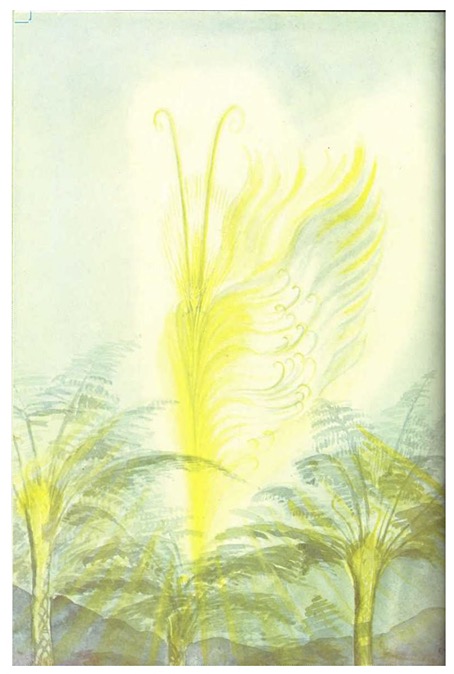
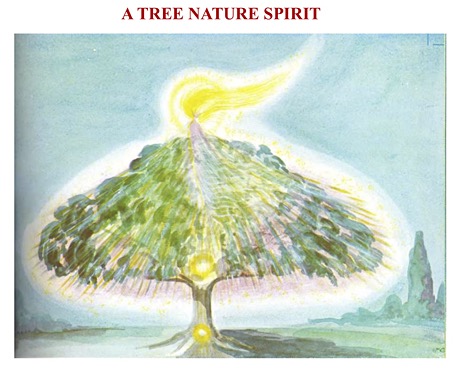
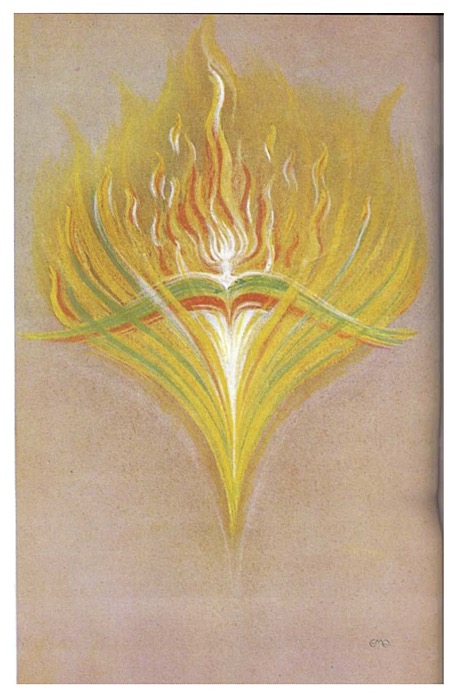
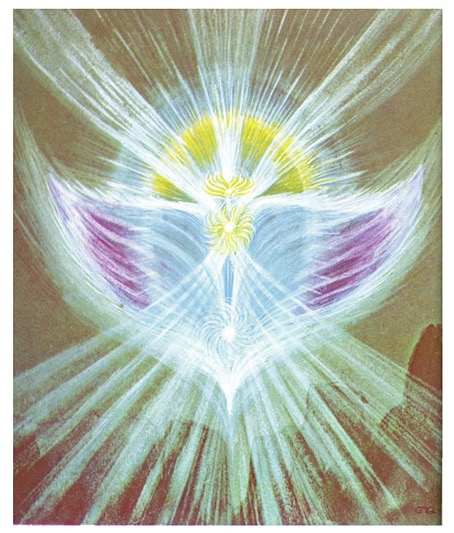
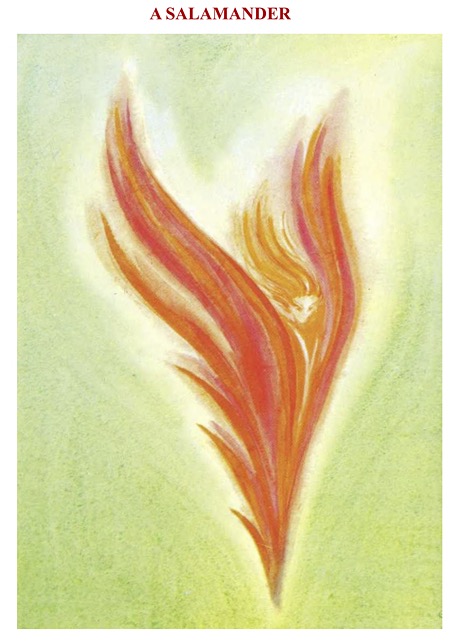
Looking for more Theosophist art turned up The Kingdom of the Gods (1952), a book by Geoffrey Hodson with illustrations by Ethelwynne M. Quail. Hodson was a Theosophist scholar with a predilection for the clairvoyant visualising of transcendent beings. Several of his books are descriptions of encounters made on his travels, commencing at a modest level in 1925 with Fairies at Work and Play. Fairies are a somewhat trivial subject for Theosophical students, which may explain why Hodson’s later books move on to accounts of angels in their various forms, before arriving at descriptions of fully-fledged gods, a type of divine life which in Hodson’s telling is more populous than we realise. A note at the beginning of The Kingdom of the Gods states that Ethelwynne Quail’s paintings were made originally for slide projections which Hodson used in his lectures.

quail02.jpg

Most of Hodson’s gods are lower-order beings of a kind that the Romans termed genius loci, the spirit of a place, while their depictions are nebulous, bird-like renderings like some of the “thought-forms” depicted in the 1905 book of that name by Charles Webster Leadbeater and Annie Besant. The determination of the Theosophists to make the invisible manifest on paper or canvas may explain the attraction of the religion for so many artists. One of the illustrations in Thought-Forms shows Gounod’s music forming over a cathedral tower like a polychrome mushroom cloud; a decade later, the Theosophy-inspired Luigi Russolo was doing something similar with his Futurist painting, La Musica. Geoffrey Hodson would have been delighted by the mystical artists of the 1970s, especially Gilbert Williams and Robert Venosa. Some of Ethelwynne Quail’s spirits might be sketches for Venosa paintings, his early works in particular, which have the same sweeping lines but rendered in a meticulous, crystalline manner.

quail03.jpg

quail04.jpg

quail05.jpg

Continue reading “The Kingdom of the Gods”