Weekend links 395

godwin.jpg

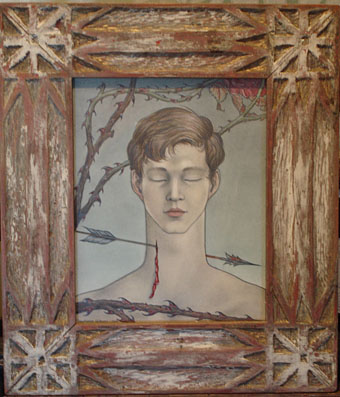
Love is a Martyrdom (1965) by Stephanie Godwin. See Joscelyn Godwin’s Flickr pages for more.

David Shire’s synthesizer score for Apocalypse Now was the first music recorded for the film but was abandoned when Shire was fired due to other commitments. 39 years later, his score has been released by La-La Land Records.

Moon Safari by “French band” Air was released in the UK on January 16th, 1998. Jeremy Allen looks back at an album that was more successful here than elsewhere.

• On the occasion of the US publication of Iain Sinclair’s The Last London, Geoff Nicholson presents an A to Z of the author and his works.

This is the story of how two artists fell in love with each other, with Kelmscott Manor, and with William Morris, the poet, craftsman, and socialist who had made it his home. As Kelmscott’s first tenants afer the Morris family, Edward and Stephani Scott-Snell rented the historic Oxfordshire house throughout the Second World War. There they created an aesthetic and erotic paradise based on a fantasy land called ‘Thessyros’, and produced a body of figurative painting unique for its time. Much of this was done under the influence of a legally-obtained drug they called ‘Starlight’, making many of their paintings  early examples of psychedelic art.

The Starlight Years is a book by Joscelyn Godwin about his artist-parents and their strange relationship

• Mixes of the week: FACT mix 634 by Minor Science, Secret Thirteen Mix 243 by Moa Pillar, and XLR8R Podcast 524 by Burnt Friedman.

• At The Smart Set: Marian Calabro pays a visit to the Brussels apartment where René and Georgette Magritte lived from 1930 to 1954.

Hormone Lemonade, a new album by Cavern Of Anti-Matter, will be released in March. The Quietus has a preview.

• At the Internet Archive: QZAP, the Queer Zine Archive Project; 551 downloadable publications from 1974 to 2015.

• At Dennis Cooper’s: Briefly recounting Tim Buckley‘s short, inconvenient stylistic trajectory.

• Musician and bookseller Richard Bishop recommends a handful of rare occult volumes.

• At Kickstarter: Arsgang, a short psychological horror film by Harry Edmundson-Cornell.

• “A Sloppy Machine, Like Me”: Michael Grasso on the history of video synthesizers.

• At Flashbak: 27 Snapshots of Manchester in the 1960s.

• At Strange Flowers: 18 books for 2018.

Love Is Strange (1956) by Mickey & Sylvia | Love Is Peace (1970) by Amon Düül | Love Is The Drug (1980) by Grace Jones
Lynch dogs

angriestdog.jpg

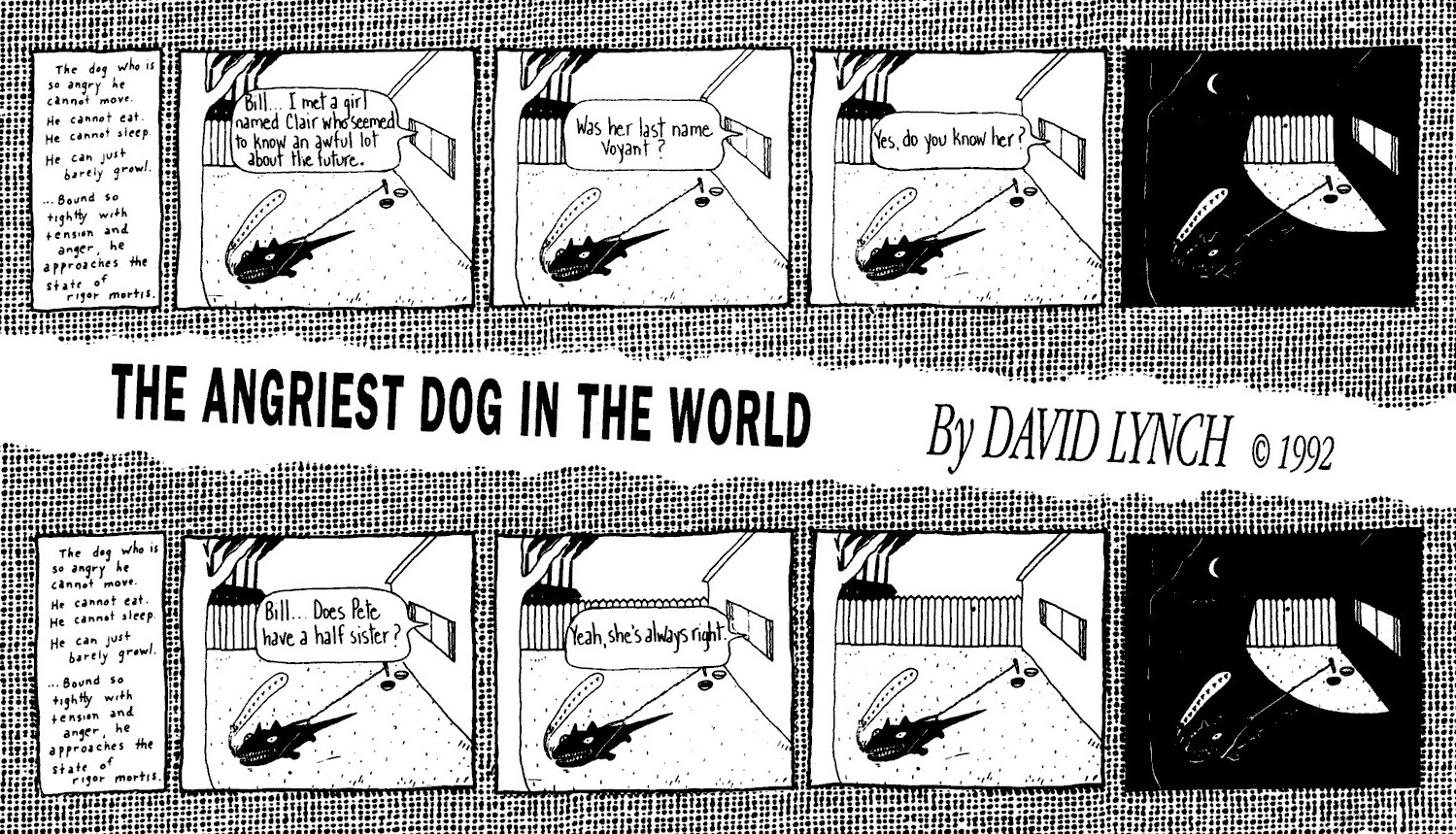
Last year I decided that rather than watch the new series of Twin Peaks via whatever dubious downloads were available, I’d wait until the whole thing was released on disc. Last weekend I finally pressed “play” on the first episode, but prior to this I’d spent the past couple of months working through David Lynch’s filmography, from his earliest shorts to Inland Empire. I also watched a couple of episodes from the first two seasons of Twin Peaks (the pilot and the final episode of season two).

Watching a director’s collected works used to be a difficult thing without an obliging repertory cinema or TV channel. In the days when the BBC and Channel 4 (UK) still treated cinema as an art form we were given seasons of films by Orson Welles, François Truffaut, Ingmar Bergman, Robert Altman and many others. When was the last time a (non-Swedish) television channel showed all of Bergman’s films, I wonder? It was memories of watching an Altman season that led me to spend the summer of 2016 watching all of the director’s films from That Cold Day in the Park (1969) through to A Prairie Home Companion (2006), 33 films in all. I followed this with a viewing of nearly all the Hitchcock films that are currently available on blu-ray. Watching a director’s oeuvre in this manner makes you notice things that seem less obvious when the same films are viewed in isolation: the recurrent use of actors becomes more notable, while themes, obsessions and directorial tics make themselves more apparent.

David Lynch shares with Altman and Hitchcock a compulsion for using the same actors from one film to the next, but I’d not noticed before how often dogs appear in his films. So that’s what this post examines, some of the canine moments from his feature films. Since I didn’t watch the whole of the first two seasons of Twin Peaks they’re omitted from this listing (unless you know of a dog in any of the episodes) while some of  Lynch’s minor works such as the short-lived On the Air series, and one-offs such as The Cowboy and the Frenchman (1988), I either haven’t seen for years or haven’t seen at all.

The Grandmother (1970)

grandmother.jpg

The Grandmother not only introduces the elderly woman/suited boy pairing that recurs later in the Twin Peaks mythos, but it also establishes the canine theme when the boy’s parents are shown mewling and barking like dogs. Whatever other qualities dogs may possess, Lynch is drawn to the disturbing and often threatening nature of the sounds they make.

Eraserhead (1977)

eraserhead.jpg

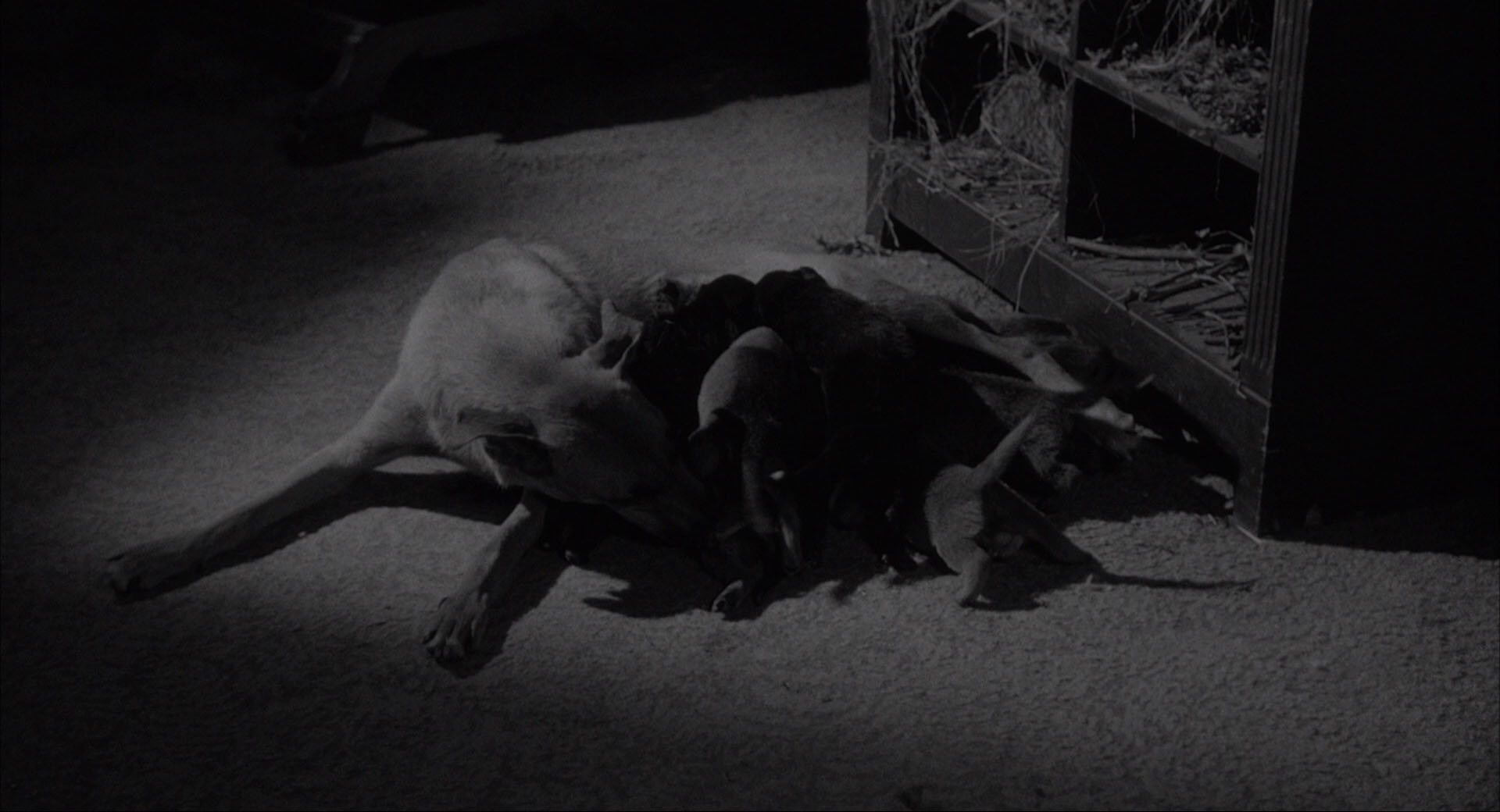
The potential for threat is reinforced in Eraserhead when Henry is startled by barking dogs on his way to visit Mary. The only dogs that appear before the camera are the puppies and their mother on the floor of Mary’s home.

Continue reading “Lynch dogs”

Weekend links 394

coin.jpg

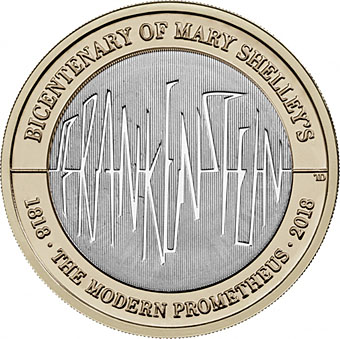
Britain’s Royal Mint acknowledges this year’s bicentenary of the publication of Frankenstein with a commemorative £2 coin.

• A trailer for The Green Fog, a film by Guy Maddin, Evan Johnson and Galen Johnson, which uses clips from over 200 films set in and around San Francisco to create a collage companion to (and critique of) Alfred Hitchcock’s Vertigo. John DeFore reviewed the film for The Hollywood Reporter.

• Downloadable sound files and utilities for the Fairlight Computer Musical Instrument. Should you require it, the file containing the orchestra stab that was a feature of so much pop music in the 1980s is ORCH5. (Click on the “Library/Disk” listing then click “Extract” to download the samples.)

• Radio at the Internet Archive: the BBC adaptations of Mervyn Peake’s Titus Groan and Gormenghast (both adapted by Brian Sibley in 1984); and 554 Sherlock Holmes radio shows.

• Mixes of the week: XLR8R Podcast 523 by Scanner, RA Podcast 605 by Chris SSG, and Secret Thirteen Mix 241 by Jaroska.

• At Discogs: a list of “Experiments, gimmick and concept albums, bands and labels“.

Patrick Cowley The Ultimate Master Megamix

• At Dennis Cooper’s: Karen Black Day.

Events In Dense Fog (1978) by Brian Eno | Fog Animal (2005) by Deaf Center | In The Fog I (2011) by Tim Hecker

1918

dardel.jpg

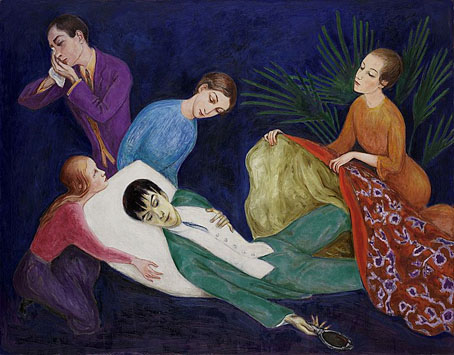
The Dying Dandy by Nils Dardel.

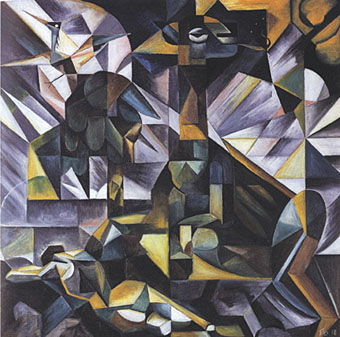
Wishing you all a happy new year with a small selection of art from a century ago.

baumann.jpg

Schicksal by Fritz Baumann.

blumenfeld.jpg

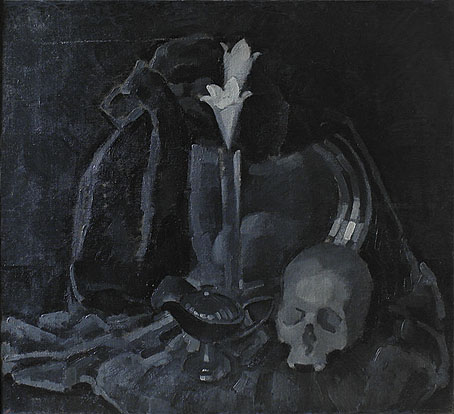
Black Still Life by Genrich Matveevich Blumenfeld.

dechirico.jpg

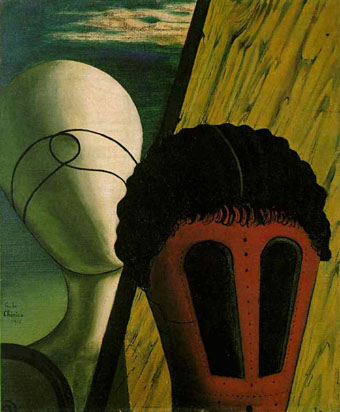
Two Heads by Giorgio de Chirico.

Continue reading “1918”

Weekend links 393

beautifyjunkyards.jpg

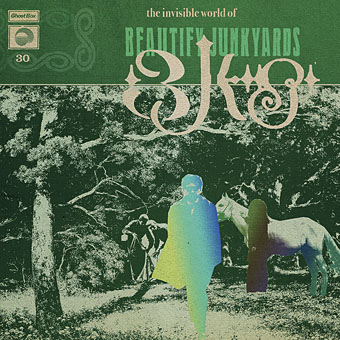
The Invisible World of Beautify Junkyards will be the next release on the Ghost Box label in March 2018. Design by Julian House.

• Tantalising discovery of the week was Alphons Sinniger’s Eno (1974), a 24-minute film about post-Roxy Music Brian Eno which shows (among other things) the recording of Here Come The Warm Jets. The film is a scarce item that appeared briefly on YouTube before being yanked. Copies have been reposted (see here) although they may not stay around for long.

Nosferatu the Shapeshifter: An inventory of intertitles, prints and premiéres. A page that includes some detail about Die zwölfte Stunde. Eine Nacht des Grauens (The Twelfth Hour: A Night of Horror), a seldom-seen reworking of Murnau’s film from 1930 which added sound, additional scenes (none of them by Murnau) and a happy ending.

• At Dennis Cooper‘s: Entry Level: Luchino Visconti’s “German Trilogy”: The Damned, Death in Venice, Ludwig (1969–1973).

• “3,500 occult manuscripts will be digitized and made freely available online, thanks to Da Vinci Code author Dan Brown.”

• From 2015: Watch Alejandro Jodorowsky give a tarot reading (for Nicolas Winding Refn).

Portals of London: “Towards a catalogue of London’s inter-dimensional gateways”.

• At Spoon & Tamago: Gigantic sculptures by Kenji Yanobe of cats wearing helmets.

• At the BFI: Adam Scovell on 10 great “urban wyrd” films.

• At Swan River Press: Our Haunted Year: 2017.

Portals (2001) by Bill Laswell | Portals And Parallels (2010) by Belbury Poly & Moon Wiring Club | Abysmal Cathedrals Arise!—Beyond The Quivering Portal—Minds On Fire (2012) by The Wyrding Module