The weekend artists, 2017

images.jpg

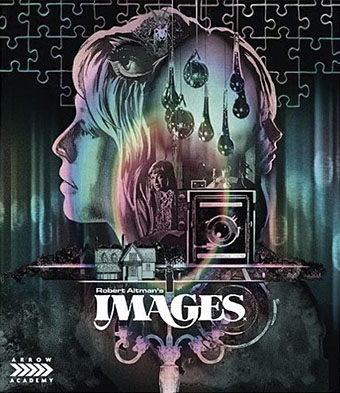
Art by Twins of Evil for the forthcoming blu-ray from Arrow Academy.

The laziest post of the year is invariably a review of the artists/designers/photographers featured on the weekend posts, so here’s another end-of-year list for you. Scroll down to see what caught my attention over the past twelve months.

mueck.jpg

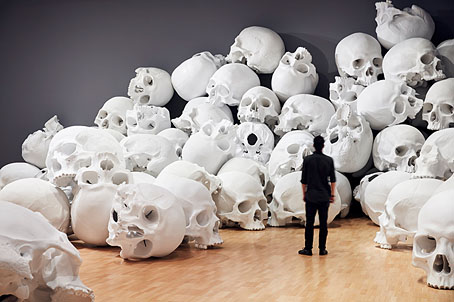
Mass by Ron Mueck at the National Gallery of Victoria Triennial. Photo by Tom Ross.

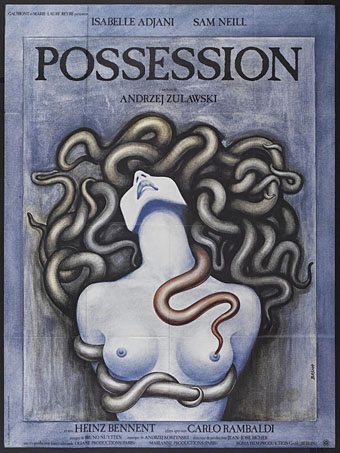
possession.jpg

French poster by Basha (Barbara Baranowska) for Andrzej Żuławski’s extraordinary Possession (1981).

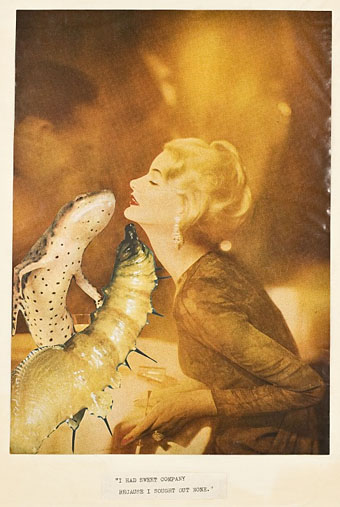
adam.jpg

I Had Sweet Company Because I Sought Out None. Collage by Helen Adam.

nakayama.jpg

Still of an Alive Painting by Akiko Nakayama.

Continue reading “The weekend artists, 2017”

Weekend links 392

images.jpg

Art by Twins of Evil for the forthcoming blu-ray from Arrow Academy.

Images (1972), the film that Robert Altman made between McCabe and Mrs Miller and The Long Goodbye, is the closest the director came to outright horror. A disturbing portrait of mental breakdown, with Susannah York in the lead role, and photography by Vilmos Zsigmond, the film has for years been so difficult to see as to be almost invisible. Arrow Academy will remedy this situation in March next year with a new blu-ray restoration. Related: Geoff Andrew on where to begin with Robert Altman.

• “[Johnson] is a paltry, utterly conventional, upwardly mobile, morally squalid parvenu who yearns to be taken for what he isn’t.” Jonathan Meades‘ vitriol is in a class of its own, here being deployed in a review of Nincompoopolis: The Follies of Boris Johnson by Douglas Murphy.

• “These films, all preserved in the BFI National Archive, are known as Orphan Works. When the rights-holder for a film cannot be found, that film is classified as an Orphan Work.” 170 orphaned films have been added to the BFI’s YouTube channel.

Don’t romanticize science fiction. One of the questions I have been asked so many times I’ve forgotten what my stock answer to it is, ‘Since science fiction is a marginal form of writing, do you think it makes it easier to deal with marginal people?’ Which—no! Why should it be any easier? Dealing with the marginal is always a matter of dealing with the marginal. If anything, science fiction as a marginal genre is more rigid, far more rigid than literature. There are more examples of gay writing in literature than there are in science fiction.

Samuel Delany in a lengthy two-part interview with Adam Fitzgerald

• One of the books I was illustrating this year was The Demons of King Solomon, a horror anthology edited by Aaron French. The collection is out now; I’ll post the illustrations here in the next month or so.

• Mixes of the week: Routledge Dexter Satellite Systems by Moon Wiring Club, No Way Through The Woods: A Conjurer’s Hexmas by SeraphicManta, and FACT mix 632 by Priests.

• Also at the BFI: Adam Scovell on a film adaptation of MR James that predates Jonathan Miller’s Whistle and I’ll Come To You (1968) by 12 years.

• At Weird Fiction Review: Jon Padgett on absurd degenerations and totalitarian decrepitude in The Town Manager by Thomas Ligotti.

• At Larkfall: Electricity & Imagination: Karl von Eckartshausen and Romantic Synaesthesia.

• It’s the end of December so the London Review of Books has Alan Bennett’s diary for the past year.

Aquarium Drunkard‘s review of the year’s best music.

• At Dennis Cooper’s: Lotte Reiniger Day.

Robin Rimbaud is In Wild Air.

• Dream Sequence (Images II) (1976) by George Crumb | Images (1977) by Sun Ra | Mirror Images (1978) by Van Der Graaf
Albert Robida’s Contes Drolatiques

robida01.jpg

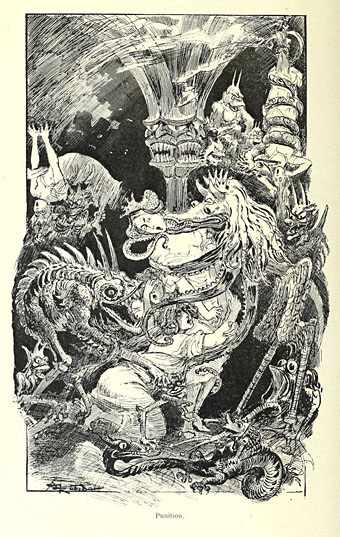
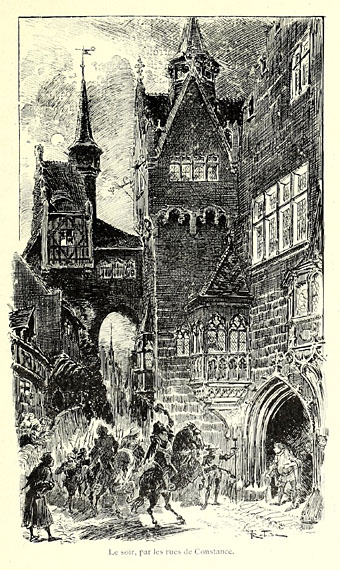
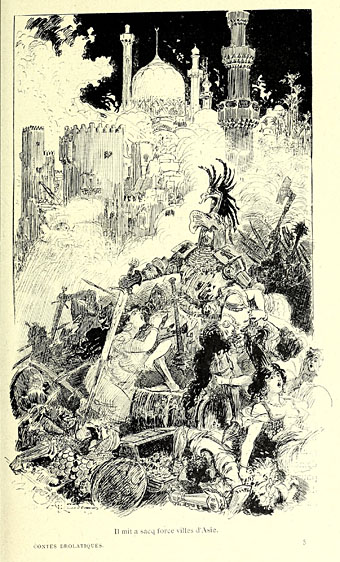
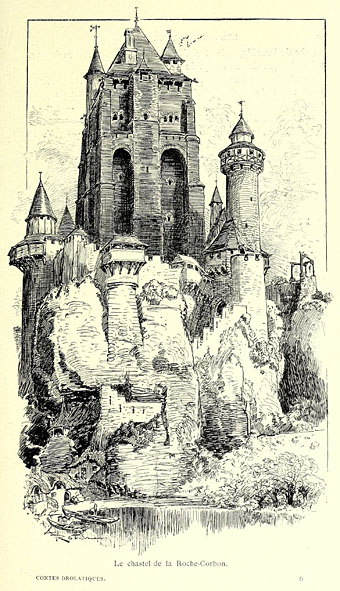
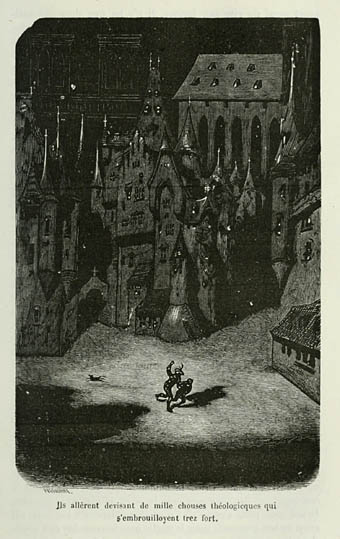
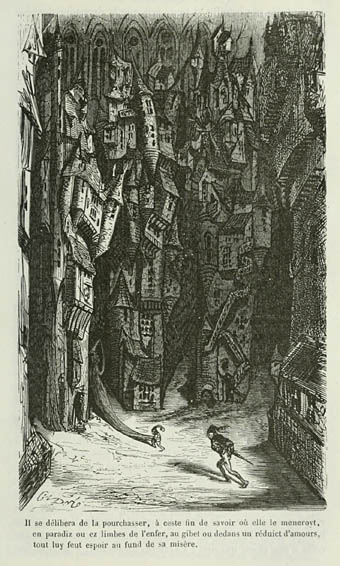
From Doré (see last week’s post) to Robida, and a set of drawings I hadn’t seen before. Albert Robida is best known today for the illustrations from his books which present a humorous look at life in the future. But he was also a working artist, and enough of an expert on medieval French architecture to oversee the recreation of Old Paris that filled a bank of the Seine for the Exposition Universelle of 1900.

robida02.jpg

Robida’s architectural interest is to the fore in many of his illustrations for Balzac’s droll tales; where Doré often renders buildings as blurred silhouettes, Robida offers authentic detail. He’s also a match for Doré when it comes to comic grotesquery, as these stories demand, while adding anthropomorphic touches of his own.

As before, this is a small selection from a large quantity of illustrations. This time the book is in two volumes which may be browsed here and here.

robida03.jpg

robida04.jpg

Continue reading “Albert Robida’s Contes Drolatiques”

Weekend links 391

mueck.jpg

Mass by Ron Mueck at the National Gallery of Victoria Triennial. Photo by Tom Ross.

• Thanks of the week: to In Wild Air for asking me to fill their list of six favourite things; to Hodderscape for including my cover for Jeannette Ng’s Under the Pendulum Sun among their choice of best book covers of the year; and to Dennis Cooper for listing this blog among his own end-of-year favourites. Ta, all!

• New/old music: The Quietus reissues, etc, of the year, new Pye Corner Audio, Soul Jazz presents Deutsche Elektronische Musik 3, and The Cleansing is a new album by Annabel (lee).

• Mixes of the week: Seeing The Forest For The Trees by Gregg Hermetech, FACT mix 631 by Zola Jesus, and Secret Thirteen Mix 240 by Restive Plaggona.

Were a normally sexed person to enter such an establishment, he might be puzzled to see so many finely dressed men sitting there with soldiers, though he would find nothing particularly offensive. The friendships between homosexuals and soldiers forged here over sausage, salad and beer frequently endure for the full term of service, and often longer. The soldier returns home, living as a married farmer far from his beloved Berlin garrison, but many a uranian still receives freshly killed quarry as a token of friendship. Sometimes these relationships are even passed on to younger brothers; I know one case where a homosexual had relations with three brothers one after the other, all of whom were with the Cuirassiers.

An extract from Berlin’s Third Sex by Magnus Hirschfeld, one of the new titles from Rixdorf Editions. Ostensibly straight soldiers supplementing their income by having sex with “uranians” was still a common thing decades later, as detailed in John Lehmann’s In The Purely Pagan Sense.

The Cremator (1968) a film by Juraj Herz, was reviewed on these pages a while ago. It’s now out on region-free blu-ray. Highly recommended.

• At Wormwoodiana: Mark Valentine on a map of old Dunwich, and Egypt in England.

Clive Hicks Jenkins on Mapping the Tale: image making and the narrative tradition.

Wyrd Daze returns with a free pdf, and a mix by The Ephemeral Man to download.

• At the BFI: Chris Gallant on where to begin with giallo cinema.

The Parisian Cabinet of Curiosities Loved by Wes Anderson.

Mass Production (1977) by Iggy Pop | Mass (1981) by Yellow Magic Orchestra | Mass Transit Railway (1997) by Monolake

Gustave Doré’s Contes Drolatiques

dore01.jpg

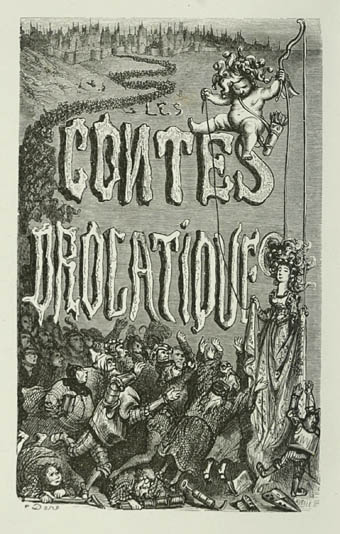
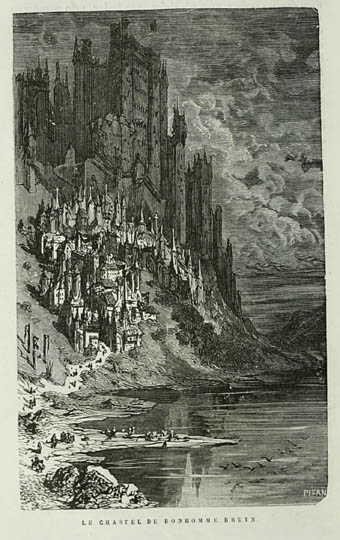
I mentioned Gustave Doré in the Émile Bayard post last week so here’s something from the man himself. I’ve known a couple of the pictures in this 614-page volume for a long time but it’s taken me until this week to look through them all. Doré began his career as a creator of humorous illustrations, and his early illustrated books were at the lighter end of the scale. His flair for the comic and the grotesque are combined in this 1855 edition of Balzac’s stories with a total of 425 drawings, some of which feature the artist’s taste for violent death. As always with Doré, his drawings were filled and embellished by a team of engravers but this is still a remarkable amount of work. What you see here is a necessarily small selection of the full-page pictures; the entire book may be browsed at the Internet Archive.

dore02.jpg

dore03.jpg

dore04.jpg

Continue reading “Gustave Doré’s Contes Drolatiques”