The Pendulum, the Pit and Hope

pendulum1.jpg

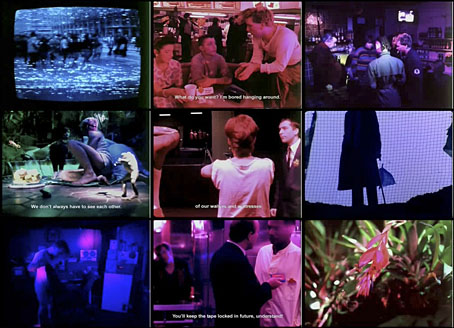
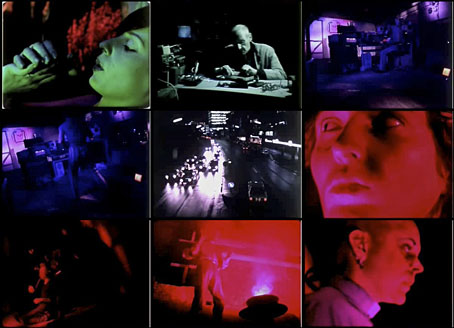
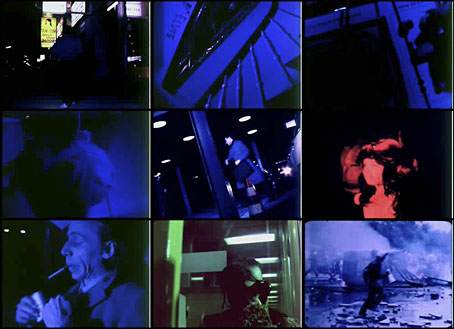
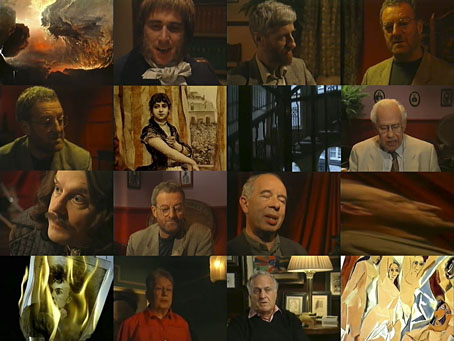
The Pendulum, the Pit and Hope (1983) is the third and best of three Gothic shorts made by Jan Švankmajer, the two earlier works being Castle of Otranto (1973–79) and The Fall of the House of Usher (1980). Švankmajer combines Poe’s famous tale of Inquistion torment with A Torture by Hope by Auguste Villiers de L’Isle-Adam, and  unlike Corman and co. reduces the story to a stark and wordless first-person ordeal in the face of clanking, fire-breathing engines of destruction. Poe’s story lets the narrator off the hook with a deus ex machina intervention, something Švankmajer evidently felt unable to swallow, hence the Villiers coda.

All the above works, and much more besides, can be found on the BFI’s collection of Švankmajer’s short films. Another short adaptation of the Poe story, The Pit (1962) by Edward Abraham, will appear next month as an extra on the eagerly-awaited DVD/BR debut of Schalcken the Painter.

pendulum2.jpg

Previously on { feuilleton }
Two sides of Liška
The Torchbearer by Václav Švankmajer

Robin Redbreast by John Bowen

rr1.jpg

This TV play from 1970 was one of the films I watched last year at Halloween, a very poor bootleg copy from the BBC archives with a timecode running away in one corner. So it’s been a surprise to find the BFI releasing it so soon after on DVD. I never saw Robin Redbreast originally, and hadn’t even heard about it until a friend with a similar taste for the outré and neglected told me to look out for it. The main reason for the BFI picking out a rather obscure Play for Today for reissue has been its rising cult status in the sub-genre of British rural or folk horror. Blood on Satan’s Claw (1971), and The Wicker Man (1973) are the more notable examples, although in tone and presentation Robin Redbreast is closer to Nigel Kneale’s Murrain (1975), another TV play that’s currently available as a bonus on the Beasts DVD collection.

The usual plot of this kind of drama concerns the arrival of an outsider in a rural community whose presence arouses suspicion and conflict. Robin Redbreast reverses this by having its metropolitan outsider, Norah, move to the country only to find her neighbours are welcoming to the point of being interfering. In time the interference starts to become oppressive, and unfortunately this is one of those dramas where to reveal much more would be to spoil the unwinding of the story. There’s nothing supernatural here, like The Wicker Man a mystery grades in its final moments to horror. With little in the way of cinematic atmosphere it’s left to a detailed script and the performances to do the work. All the leads are excellent, especially Anna Cropper as the beleaguered Norah, and Bernard Hepton as the quietly sinister Fisher.

rr2.jpg

Bernard Hepton.

Robin Redbreast was originally filmed and broadcast in colour but the BBC had a habit of wiping many of their tapes after broadcast so what we’re left with is a telerecording on 16mm black-and-white film. This isn’t ideal but it does have the effect of giving all the scenes more consistency. Like most dramas of the period, interior shots were done in the electronic studio while exteriors were shot on film, a technique which was taken for granted at the time but which looks uneven today. The DVD is still superior to the bootleg copy that was doing the rounds. In one of the extras writer John Bowen discusses the origin of the play, explaining how a BBC editor was horrified by a plot detail concerning female contraception. This led to the script being dropped by the suspense series for which it was written, and subsequently taken up by director James MacTaggart for the new Play for Today strand. Play for Today ran for 14 years, producing many impressive dramas but mostly offering a solid diet of social realism. Robin Redbreast is one of a handful of stranger works that crept onto the screen, along with the peerless Penda’s Fen (1974), and Alan Garner’s adaptation of his novel, Red Shift (1978). Now that the BFI has exhausted the BBC’s more obvious ghost and horror fare I’m hoping that some of the less generic films may find a new audience on DVD.

Previously on { feuilleton }
Red Shift by Alan Garner
Children of the Stones
Penda’s Fen by David Rudkin

Weekend links 183

doisneau.jpg

La table qui tourne (1943) by Robert Doisneau.

In [Gödel, Escher, Bach], Hofstadter was calling for an approach to AI concerned less with solving human problems intelligently than with understanding human intelligence—at precisely the moment that such an approach, having borne so little fruit, was being abandoned. His star faded quickly. He would increasingly find himself out of a mainstream that had embraced a new imperative: to make machines perform in any way possible, with little regard for psychological plausibility.

The Man Who Would Teach Machines to Think by James Somers.

Whenever the latest pronouncements about the imminent arrival of artificial intelligence are being trotted out I wonder what Douglas Hofstadter would have to say on the matter. You don’t hear much about Hofstadter despite his having been involved for decades in artificial intelligence research. One reason is that he’s always been concerned with the deep and difficult problems posed by intelligence and consciousness, subjects which don’t make for sensational, Kurzweilian headlines. Hofstadter’s essays on AI (and many other topics) in Metamagical Themas: Questing for the Essence of Mind and Pattern (1985) are essential reading. James Somers’ lengthy profile for The Atlantic is a welcome reappraisal.

• The end of October brings the spooky links: When Edward Gorey illustrated Dracula | Paula Marantz Cohen on Edgar Allan Poe | Yasmeen Khan revisits Werner Herzog’s Nosferatu | Roger Luckhurst on horror from the Gothics to the present day, and Michael Newton on Gothic cinema.

•  Magic Words: The Extraordinary Life of Alan Moore is a biography of the Northampton magus by Lance Parkin. The author talks about his book here, and also here where if you look carefully you can see my Lovecraft book on his shelf.

• A crop of Halloween mixes: Boo, Forever by Jescie | Samhain Seance 2: Hex with a Daemon by The Ephemeral Man | Wizards Tell Lies & The Temple of Doom by The Curiosity Pipe | Radio Belbury’s Programme 11.

The Book of the Lost is an album by Emily Jones & The Rowan Amber Mill presenting music from imaginary British horror films. Release is set for Halloween. More details here.

Laura Allsop on Derek Jarman’s sketchbooks. Jarman’s Black Paintings are currently showing at the Wilkinson Gallery, London.

Magick is Freedom! Existence Is Unhappiness: Barney Bubbles vs. Graham Wood.

• Soho Dives, Soho Divas: Rian Hughes on sketching London’s burlesque artists.

Jenny Diski on the perennial problem of owning too many books.

Equus through the years by Clive Hicks-Jenkins.

Virgin Records: 40 Years of Disruptions

• At BibliOdyssey: Chromatic Wood Type

Witches at Pinterest

The Witch (1964) by The Sonics | My Girlfriend Is A Witch (1968) by October Country | You Must Be A Witch (1968) by The Lollipop Shoppe

Weekend links 182

iwami.jpg

Mirror of Water (1981) by Reika Iwami.

• The week in comics: Paul Gravett interviews Enki Bilal. | Paul Kirchner’s wordless and inventively surreal strip, The Bus, was republished in France last year but it’s been out-of-print for years everywhere else. Read it online here. | Bill Watterson has made the entire run of Calvin and Hobbes available for free.

• “…seek and learn to recognize who and what, in the midst of the inferno, are not inferno, then make them endure, give them space.” Leland de la Durantaye reviews Italo Calvino: Letters 1941–1985.

• Artist Charles Ross says “My interest in science is related to how mysterious it is.” Ross Andersen visited Ross’s Star Axis, “a masterpiece forty years in the making”.

There is a satirical intent at work here, as well as mordant humour, a potent mix that reminds one more of the absurdist fictions of the French jazz musician Boris Vian than of anything in the SF canon. Science fiction is not central in Harrison’s work – not even as a target of his sharp wit – and it is a mistake to regard him as being chiefly interested in demolishing a genre that is only one of several he has mastered.

John Gray on M. John Harrison’s Kefahuchi Tract trilogy. This week Harrison posted a new piece of fiction on his blog.

• Mixes of the week: Secret Thirteen Mix 091 by Sugai Ken, and Bride of the Abominable Marshman, an early Halloween mix by Hackneymarshman.

• Clive Hicks-Jenkins on Schandmasken (masks of shame), and the clay visage of Paul Wegener’s Golem.

• A version of Kraftwerk’s Trans Europe Express by Chicago band Disappears.

Postcards to the Curious: MR James-themed artwork by Alisdair Wood.

Clive Barker: Why I Once Gave Up Horror Movies Entirely.

• Artist Melinda Gebbie at Phantasmaphile.

Fragment, a new video from Emptyset.

38 photos of airships through the ages.

• This Much I Know: Kenneth Anger.

• Trans Europe Express (2000) by Señor Coconut Y Su Conjunto | Trans Europe Express (2007) by Receptors | Trans Europe Express (2012) by Daniel Mantey

Wicker mania

wicker1.jpg

US reissue poster (1979).

The restored version of The Wicker Man (1973) has been showing in UK cinemas recently, and the Blu-ray edition of the film is released this week. My copy arrived from Moviemail, and while I’m not in a great hurry to watch it again—this is one film that’s so familiar I could lip-synch along with it—it’s been a pleasure to compare the restored scenes to the long-version DVD which appeared in 2002. The earlier version had its missing scenes taken from a 1-inch videotape which was considerably poorer quality than the rest of the film. The restored scenes still look grainy and slightly washed out but now they at least look like pieces of film, not interpolations from video. The screengrabs below show the difference between scenes from the 2002 DVD compared to their equivalents on the Blu-ray. The rest of the film looks pristine, of course.

wicker5.jpg

wicker6.jpg

wicker7.jpg

wicker8.jpg

The new version isn’t as long as the longest version, however, a preliminary sequence in and around the mainland police station having been excised. In a lengthy feature in the October edition of Sight & Sound director Robin Hardy explains that he disliked what he calls “the Z-Cars section” (referring to an old UK TV series), and it’s true that it doesn’t help the story at all. Whether they like it or not, viewers of the film have to accept constable Howie as their proxy within the story, and he’s an insufferable prig throughout. That’s bearable in the context of his presence on Summerisle but the mainland sequence throws his character into relief against his less priggish colleagues.

wicker4.jpg

Another slight omission is the title card which used to precede the film thanking Lord Summerisle and the islanders for allowing the filmmakers to observe their rituals. In its place we have a zoom into the face of Nuada the Sun God, a painted rendering of a carved figure seen in the film. I’ve always liked this face which has become an emblem of the film even though it’s not present in all versions. (For more detail about the tangled history of the various prints, see this site.)

wicker2.jpg

Cover photo by Oliver Hunter.

A rather bad drawing of the Nuada face appears at the beginning of each chapter of the novelisation which Hamlyn published in 1979 (and on the cover of the US edition from the year before). This was the year when the film’s reputation began to take off, and also the year it was reissued in the US. Although Hardy and screenwriter Anthony Shaffer are both credited for the novel I suspect the writing is mostly Shaffer’s work. It’s pretty good, and goes into considerable detail, fleshing out the story and Howie’s character, and also showing how much research the pair put into the pagan side of things. You also get the lyrics of some of the songs. Until the complete soundtrack appeared in 2002 the novel was the only place you could find the salacious missing verse from Willow’s Song which describes a maid milking a bull.

wicker3.jpg

And speaking of the soundtrack, the three-disc Blu-ray edition includes the complete soundtrack on one of its discs, a considerable bonus if you don’t have it already. I should note that my good friend Gav insists I mention that the film’s final brass fanfare—labelled as Sunset on the soundtrack album—is a Bulgarian folk tune entitled Rodopska Devoika Zamrakanala Mona Jana, something neither of us has ever seen credited.

Previously on { feuilleton }
Children of the Stones