Weekend links 831

blackhole.jpg

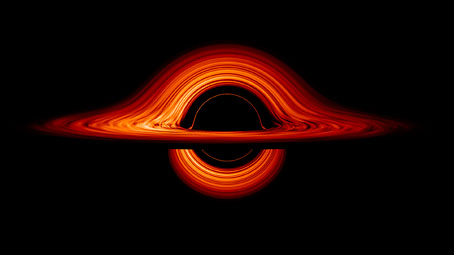
Black Hole Accretion Disk Visualization by NASA’s Goddard Space Flight Center/Jeremy Schnittman.

• The summer catalogue of lots for the After Dark: Gay Art and Culture online auction. Homoerotic art, photos, historic porn, etc.

• New music: The Sanctity Of Rust by Hollan Holmes; Heavy Water by Magic Tuber Stringband; Sorry I Didn’t Realize by iNFO.

• In another of those foolhardy numbered lists, Alexis Petridis attempts to rank Laurie Anderson’s greatest songs.

“The best of mathematics is a way of thinking,” [Klainerman] said. Progress in the field is made through discoveries rather than inventions, by following its own version of the scientific method. In 1911, for example, Roald Amundsen and four fellow explorers were the first people to reach the South Pole. “The South Pole was there to be discovered,” Klainerman noted, “but the path you take to get there, and the equipment you bring, depends on human inventiveness.” When he and Christodoulou spent six and a half years proving that Minkowski space is stable, they too had to invent the tools to get there. But the stability itself was not their creation. It was a fact to be divined.

A long read by Steve Nadis on Sergiu Klainerman and his conviction that mathematics has an existence that precedes human thought

• At the BFI: Tony Rayns on Lino Brocka’s Macho Dancer (1988), a trip into Manila’s gay underworld.

• Read an extract from In Another World: The Four Seasons Of Talk Talk by Graeme Thomson.

• At The Daily Heller: The Serene Surrealism of Guy Billout.

• At Dennis Cooper’s it’s a Malcolm Le Grice Weekend.

Mathematics And Electronics (1995) by Gas | True Mathematics (2002) by Ladytron | Music Is Math (2002) by Boards Of Canada

Gilgamesh, a film by Pavel Aujezdský

gilgamesh1.jpg

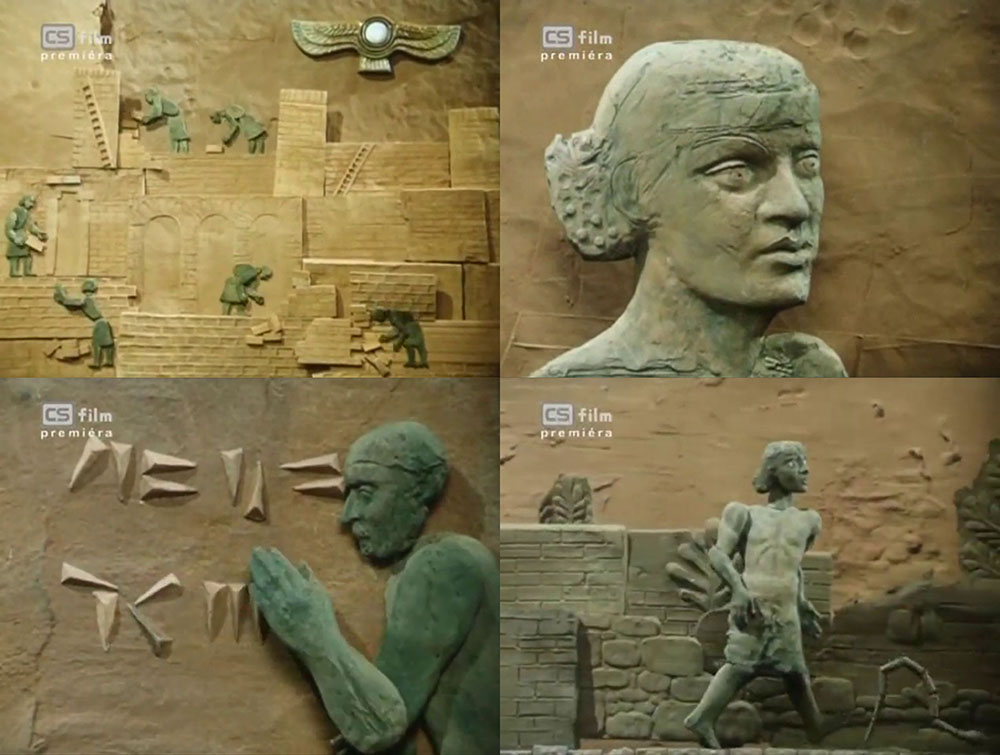
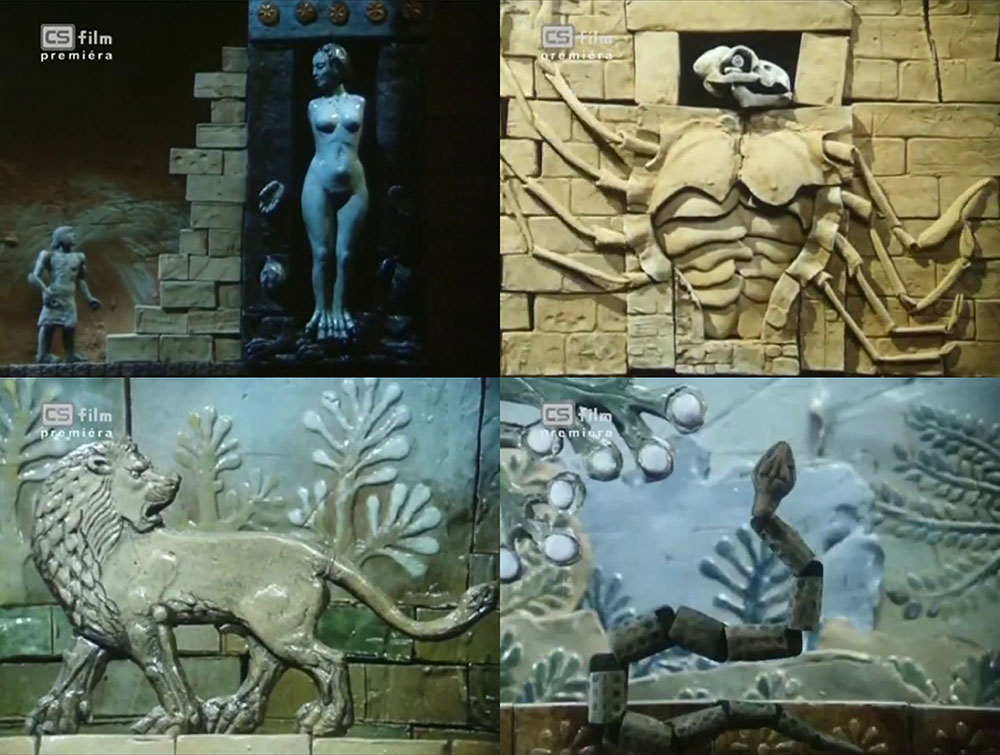
The Epic of Gilgamesh isn’t a natural choice for the subject of a short animated film, but that’s what we have here, the first directorial effort by Czech film-maker and TV director Pavel Aujezdský. I’ve never read the Sumerian saga so I’m in no position to judge the success of Aujezdský’s adaptation, but given the strange and confusing nature of the opening scenes I’d guess it helps to be acquainted with the story. The scenes that follow are more straightforward, depicting a journey by the hero in which various powerful beings have to be confronted and either evaded or defeated.

gilgamesh2.jpg

This is one of those animated tales where the form emulates the content to some extent, in this case presenting the deeds of Gilgamesh in the manner of the tableaux found on Sumerian stone carvings. It wasn’t the first animated short based on The Epic of Gilgamesh. The Quay Brothers made This Unnameable Little Broom in 1985, two years before Aujezdský’s film, although in the Quays’ case they only dramatised a single incident from the saga. You’ll find that one on their DVD/blu-ray collections.

Icarus Descending

tmwfte02.jpg

UK, 2009.

Newton leaned forward, putting his elbows carefully on the table. “Nathan. Nathan. I was afraid of you then. I am afraid now. I have been afraid of all manner of things every moment I have spent on this planet, on this monstrous, beautiful, terrifying planet with all its strange creatures and its abundant water, and all of its human people. I am afraid now. I will be afraid to die here.”

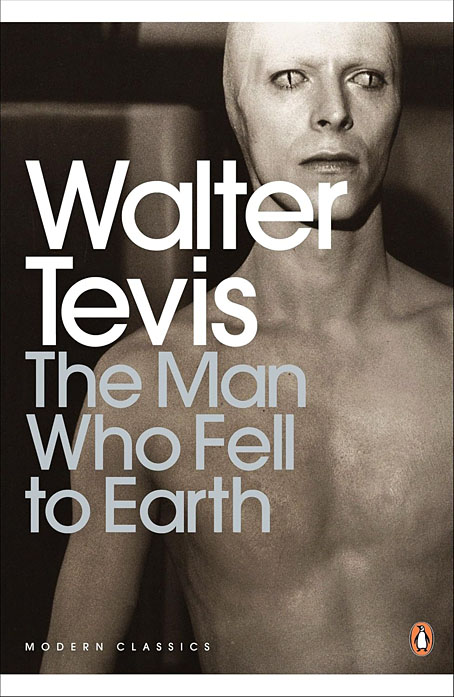
Before my recent rewatch of The Man Who Fell to Earth I decided to read the novel in order to spice up yet another viewing by comparing the film with its source. And as is often the case when reading books of a certain vintage, curiosity had me wondering how the book has been cover-designed over the years.

The Man Who Fell to Earth was published in 1963. Prior to this Walter Tevis had only published one other book, The Hustler, his first novel about pool-player “Fast Eddie” Felson. Such a debut wouldn’t have marked Tevis as a putative writer of science fiction although he had written a handful of stories for SF magazines before attempting anything at novel length. The Man Who Fell to Earth is artistically satisfying science fiction, and a good novel in a literary sense, something you can’t always expect from those writers of Tevis’s generation who seemed to read nothing but technical reports and fiction by other SF writers.

The story opens in 1985, presenting a future which isn’t too different to the 1985 that many of us lived through. Speculation is minor and mostly relegated to the background, with occasional mentions of monorails, food shortages and warring African nations who threaten each other with nuclear weapons. Into this world there arrives the alien who calls himself Thomas Jerome Newton (we never learn his original name), a clandestine emissary from the dying planet his people know as Anthea. Newton has been sent to Earth with plans to build a financial empire using his advanced technical knowledge. This will, he hopes, enable him to build a craft in order to ferry the remaining Antheans to a world where they can survive. Once they’re secure, the Antheans also plan to rescue the inhabitants of Earth from imminent nuclear destruction.
tmwfte22.jpg

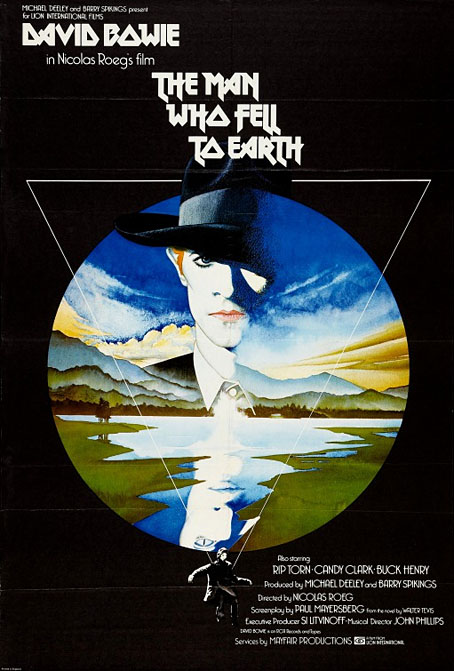
The US one-sheet of Vic Fair’s poster. After decades of illustrators and designers working with both the book and the film, Fair’s poster is still the most successful condensation of the story into a single, memorable image.

If you’ve seen the film then the broad strokes are all very familiar. Nicolas Roeg’s direction and Paul Mayersberg’s script treat the material elliptically but the film stays closer to the novel than you might expect, with Mayersberg even reusing some of Tevis’s dialogue. Both novel and film are very much concerned with portraying the Earth itself as an alien planet. For the first half of the novel, “1985: Icarus Descending”, we see our world through Newton’s eyes while he makes his way among the clever but dangerous primates. The second half, “1988: Rumpelstiltskin”, concentrates equally on Newton’s attempts to retain his sanity in a world that must never discover his real intentions or his true nature; and on the curiosity of Nathan Bryce, the chemist helping to construct Newton’s spacecraft, whose suspicions about his employer are eventually confirmed. Bryce believes that Anthea must be the planet Mars, but when asked about this directly Newton simply replies “Does it matter?”

Roeg and Mayersberg’s film received mixed reviews in 1976 but its cult status has grown thanks to its connection with David Bowie’s person and career. Bowie’s Newton has become a dominant motif for book covers even though Tevis’s Newton is a negative inversion of the screen alien, being six-and-a-half feet tall, with tanned skin and pure white hair. For art directors and illustrators the challenge since 1976 has been to present the novel in a manner which does more than merely repeat the imagery of the film. Not everyone succeeds in doing so.
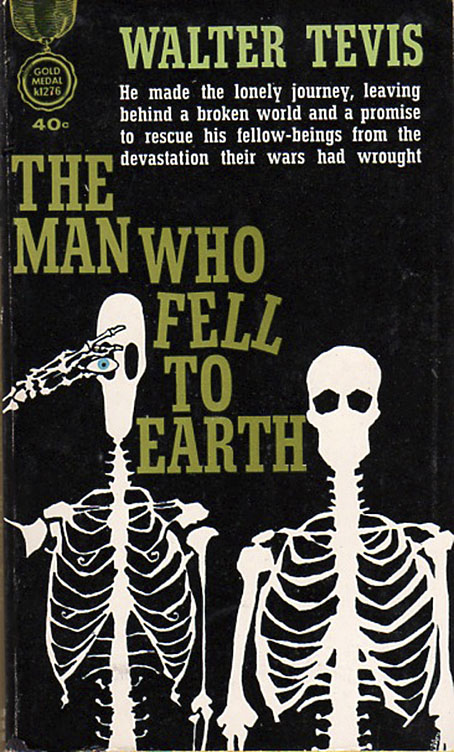
tmwfte12.jpg

USA, 1963. Cover art by Leo and Diane Dillon.

The first printing was as a paperback original with untypical cover art by Leo & Diane Dillon. Without reading the novel it’s hard to tell what this is about at first glance, but the figure on the left is supposed to represent Newton’s unusual lightweight skeleton whose height and shape are contrasted with its human counterpart. The eye presumably refers to the contact lenses that Newton wears to disguise his cat-like pupils.

tmwfte07.jpg

Italy, 1964. Cover art by Karel Thole.

The few covers that pre-date the film are what you might call the innocent ones, free of David Bowie’s face or Bowie-like figures. Here the prolific Karel Thole also favours Newton’s diguises over any other imagery.
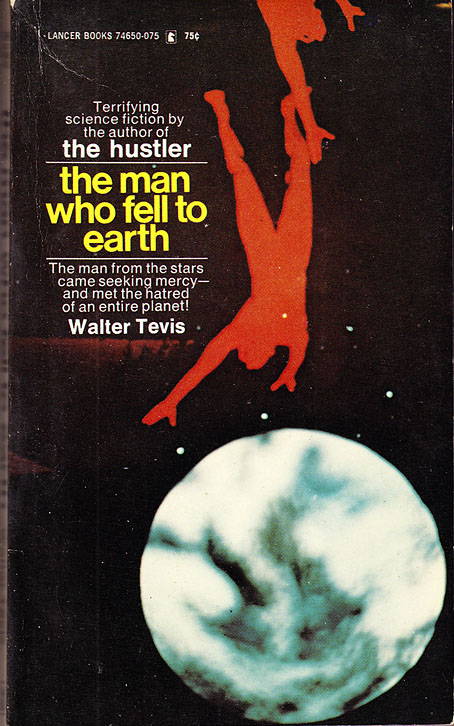
tmwfte03.jpg

USA, 1970. Cover art by Howard Winters.

Continue reading “Icarus Descending”
Weekend links 830

hilscher.jpg

Plakat Secesyjny (1971), a poster by Hubert Hilscher for an exhibition of Art Nouveau graphics.

• At Public Domain Review: Longitude by Way of Wounded Hounds: Kenelm Digby’s Sympathetick Powder (1669 edition). Two subjects familiar to readers of Thomas Pynchon’s Mason & Dixon.

Miles Davis and group (Dave Liebman, Pete Cosey, Reggie Lucas, Michael Henderson, Al Foster, James Mtume) live in Stockholm in 1973. TV footage, 56 minutes.

• At the BFI: Rory Doherty selects ten great films about forgers and fakes, while Kazuo Ishiguro compiles a list of his top ten train films.

• At Colossal: “Markus Brunetti’s monumental photos venerate European ecclesiastical landmarks”.

• Font Faces: Nick Shinn answers questions about being a type designer.

• Mix of the week: DreamScenes – May 2026 at Ambientblog.

Milky Way photographer of the year 2026.

• New music: Chambers by Ruben.

Train To Ranchipur (1959) by The Markko Polo Adventurers | One Train Load Of Dub (1974) by Tommy McCook & The Observers | Sunstroke / Mind Train (1992) by Sun Dial

The Sound of Claudia Schiffer

socs1.jpg

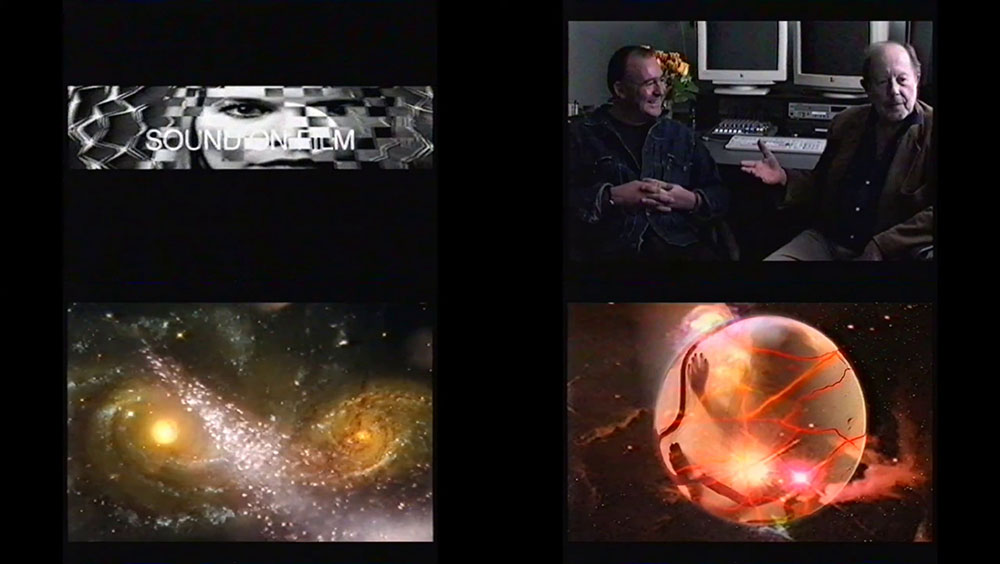
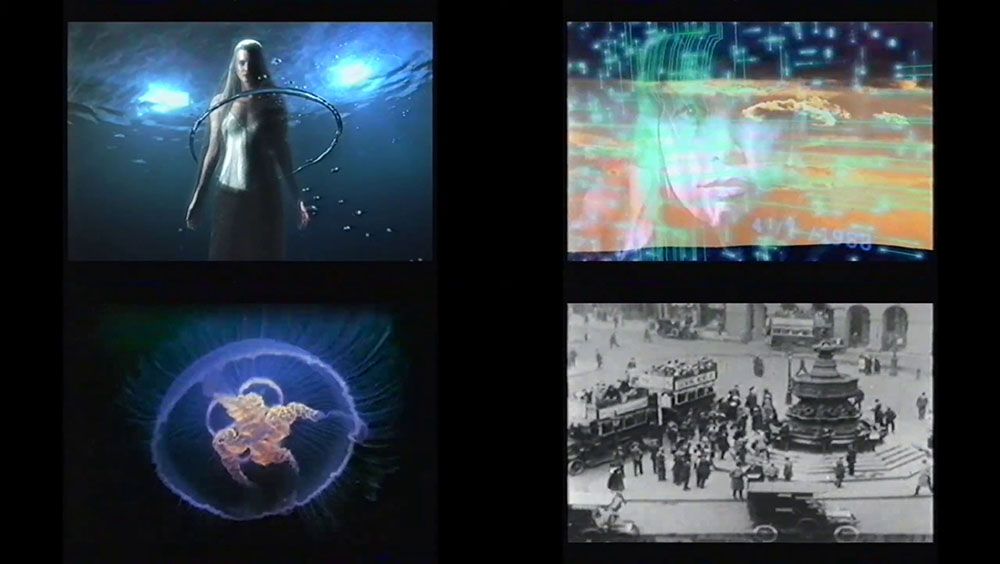
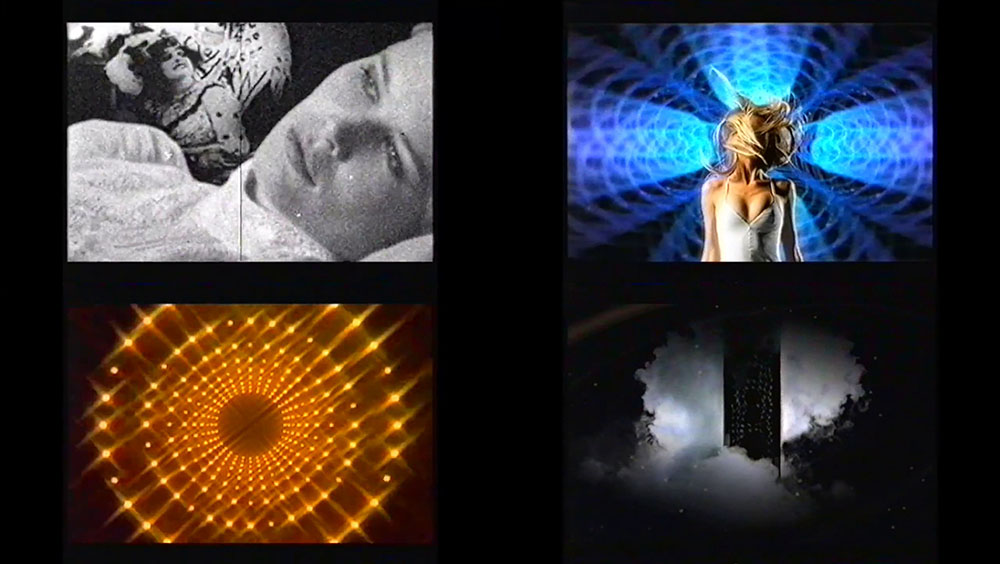
A minor entry in the Nicolas Roeg filmography that few people will have seen. In March 2001 the BBC broadcast four 15-minute films that the corporation had commissioned for an occasional arts strand, Sound on Film. Each episode featured a new piece of music by a living composer, with visual accompaniment by four very different directors. Pilgrimage was directed by Werner Herzog with music by John Taverner; The New Math was directed by Hal Hartley with music by Louis Andriessen; In Absentia was directed by the Quay Brothers with music by Karlheinz Stockhausen.

socs2.jpg

The second film in the series, The Sound of Claudia Schiffer had music by Adrian Utley, the guitarist/synth player in Portishead, with visuals by Nicolas Roeg. I can imagine many people bristling at Utley being described as a composer in a list that includes Stockhausen and Taverner—he may well dispute the term himself—but being the owner of many Portishead records I was happy enough with the pairing. I wasn’t so happy with the film, however, which seemed like an incoherent reprise of the more cosmic moments from Roeg’s earlier films combined with found footage and computer effects that were clunky at the time and look distinctly antiquated 25 years later. The BBC’s listing described The Sound of Claudia Schiffer as a film that “contemplates the nature of celebrity and memory, and how vision can be affected by sound”. In the short introduction Roeg admits to being unsure what any of it meant at all.

socs3.jpg

Watching the piece again I still don’t think it’s very good but it does reinforce my view of Roeg as the most cosmically aware of British directors, especially among the resolutely parochial crowd (Ken Russell excepted) who were his contemporaries. “Cosmic” in this sense is a quality that can easily devolve into vague mysticism or New Age kitsch but at his best Roeg was always looking beyond the immediate confines of space and time, whatever his films might be concerned with at the story level. You see this in his persistent cross-cutting, where visual and thematic rhymes turn everyday life into a web of intricate connections which his characters fail to notice. And his films are often cosmic in a stellar sense; watching Eureka again I was struck this time by the way the film opens with a shot of a pool of gold-infused water whose surface resembles a cloudscape over the sea as observed by an orbiting satellite. The shot which follows—only the second image in the film—is a view of the Earth from space, something which the film’s characters (in 1925 and 1945) could never see for themselves. The Sound of Claudia Schiffer goes overboard with this expansive tendency, turning the model’s narrated biography into something more suited to a description of a visitor from another planet.

Of the other films in this series, the Hartley/Andriessen doesn’t seem to be on YouTube but the Herzog/Taverner may be seen here. In Absentia has been available for many years now on the Quay Brothers’ DVD and blu-ray collections.

Previously on { feuilleton }
Roeg abroad
Landscape with the Fall of Icarus
The Nicolas Roeg Guardian Lecture, 1983
Beyond the Fragile Geometry of Space
Canal view