Weekend links 549

fuseli.jpg

The Shepherd’s Dream, from Paradise Lost (1793) by Henry Fuseli.

• “16 April. A card from Tom King with news of the tattoo of me that he had put on his arm: ‘The tattoo remains popular, though bizarrely one person thought it was of Henry Kissinger. It also makes for an amusing conversation during intercourse.’ This suggests the intercourse might be less than fervent, my name in itself something of a detumescent.” Alan Bennett‘s diary for the year is always a highlight of December.

• “I know that if I don’t write, say on holiday, I begin to feel unsettled and uneasy, as I gather people do who are not allowed to dream.” The Paris Review removed its paywall on their Art of Fiction interview with JG Ballard.

• “A biologist and composer have turned the aurora borealis into sound to create a magic melding of art and nature.”

If we let it, dreaming gradually erodes wake centrism—that waking consciousness to which Westerners in particular are inordinately attached. You might think of wake centrism as a pre-Copernican-like worldview that presumes waking to be the centre of the universe of consciousness, while relegating sleeping and dreaming to secondary, subservient positions. It is a matrix, a cultural simulation evolved to support adaptation, yet it inadvertently limits our awareness. Wake centrism is a subtle, consensual, sticky and addictive over-reliance on ordinary ways of perceiving that interfere with our direct personal experience of dreaming. To paraphrase the 16th-century British clergyman Robert Bolton, it is not merely an idea the mind possesses, but an idea that possesses the mind. Wake centrism is a flat-world consciousness. It warns us to stay away from the edges, to refrain from dialoguing with dreams and the unconscious.

Rubin Naiman on sleep and dreams

96th of October: an online fiction magazine dedicated to “tales of the extraordinary”.

• “Punk artist Barney Bubbles joins Manet among works given to UK public in 2020.”

• The results of the Nature Photographer of the Year contest for 2020.

• A list with a difference: Twenty Four Psychic Pop Relics by Woebot.

• Merve Emre on how Leonora Carrington feminized Surrealism.

• Mix of the week: XLR8R Podcast 675 by Teebs.

I Had Too Much To Dream (Last Night) (1966) by The Electric Prunes | The Room Of Ancillary Dreams (2000) by Harold Budd | Blue Dream (2001) by Sussan Deyhim & Richard Horowitz
Jean Giraud record covers

moebius17.jpg

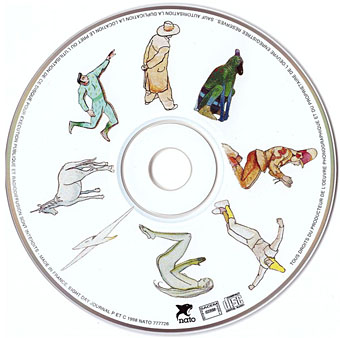
Disc design for Eight Day Journal (1998) by Sam Rivers / Tony Hymas.

Continuing an occasional series about artists or designers whose work has appeared on record sleeves. I’ve used the artist’s full name (or his Earth name, if you prefer) in the title of this one to distinguish Moebius the comic artist and illustrator from Dieter Moebius of Cluster, Harmonia, et al. As with Harry Clarke, it’s taken a long time for Discogs to compile a substantial collection of these covers, and the catalogue there is still incomplete thanks to a lack of credits on some of the sleeves. Unlike other artists whose cover work tends to be a repurposing of existing art many of the Giraud/Moebius covers were created for the albums on which they appear.

moebius01.jpg

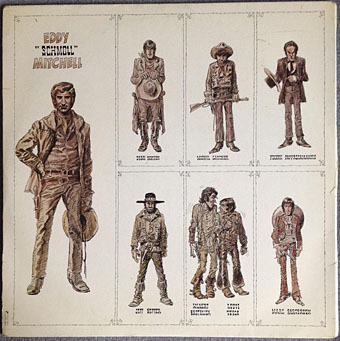
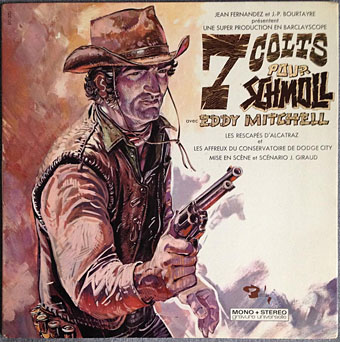
7 Colts Pour Schmoll (1968) by Eddy Mitchell.

moebius02.jpg

An album by a prolific French rock’n’roller. Giraud (as he was credited here) was no doubt hired on the strength of his Blueberry strips.

moebius03.jpg

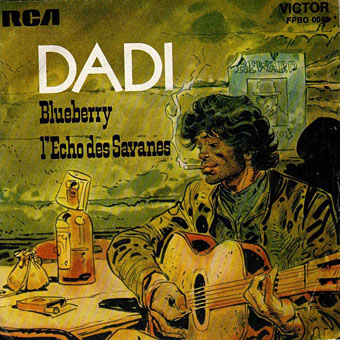
Blueberry (1973) by Dadi.

And speaking of Blueberry… Jean Giraud drew the adventures of Jean-Michel Charlier’s Western anti-hero for 15 years under the name “Gir”. The character was very popular in France, hence this spin-off single by Marcel Dadi.

moebius04.jpg

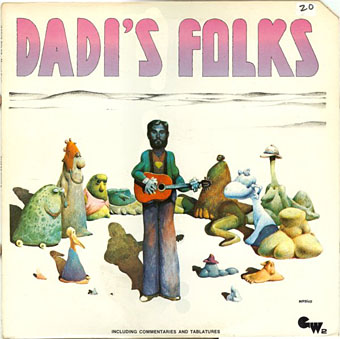
Dadi’s Folks (1973) by Marcel Dadi.

moebius05.jpg

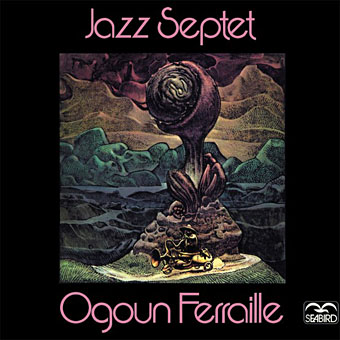
Jazz Septet (1973) by Ogoun Ferraille.

moebius06.jpg

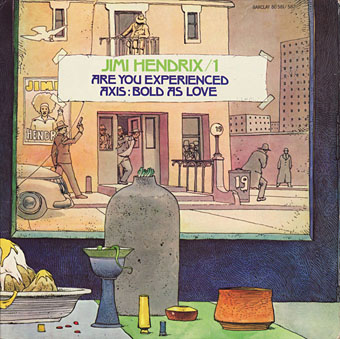
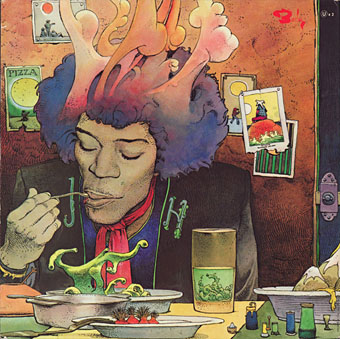
Are You Experienced / Axis: Bold As Love (1975) by Jimi Hendrix.

moebius07.jpg

A gatefold sleeve for a series of four reissues of the Hendrix catalogue on the Barclay label. The other covers were by Philippe Druillet, Jean Solé and an artist unidentified on the link above but it looks to me like the work of Philippe Caza. I’ve got most of the music but I’d buy these for the covers alone.

Continue reading “Jean Giraud record covers”

Seasonal spectres

ghosts.jpg

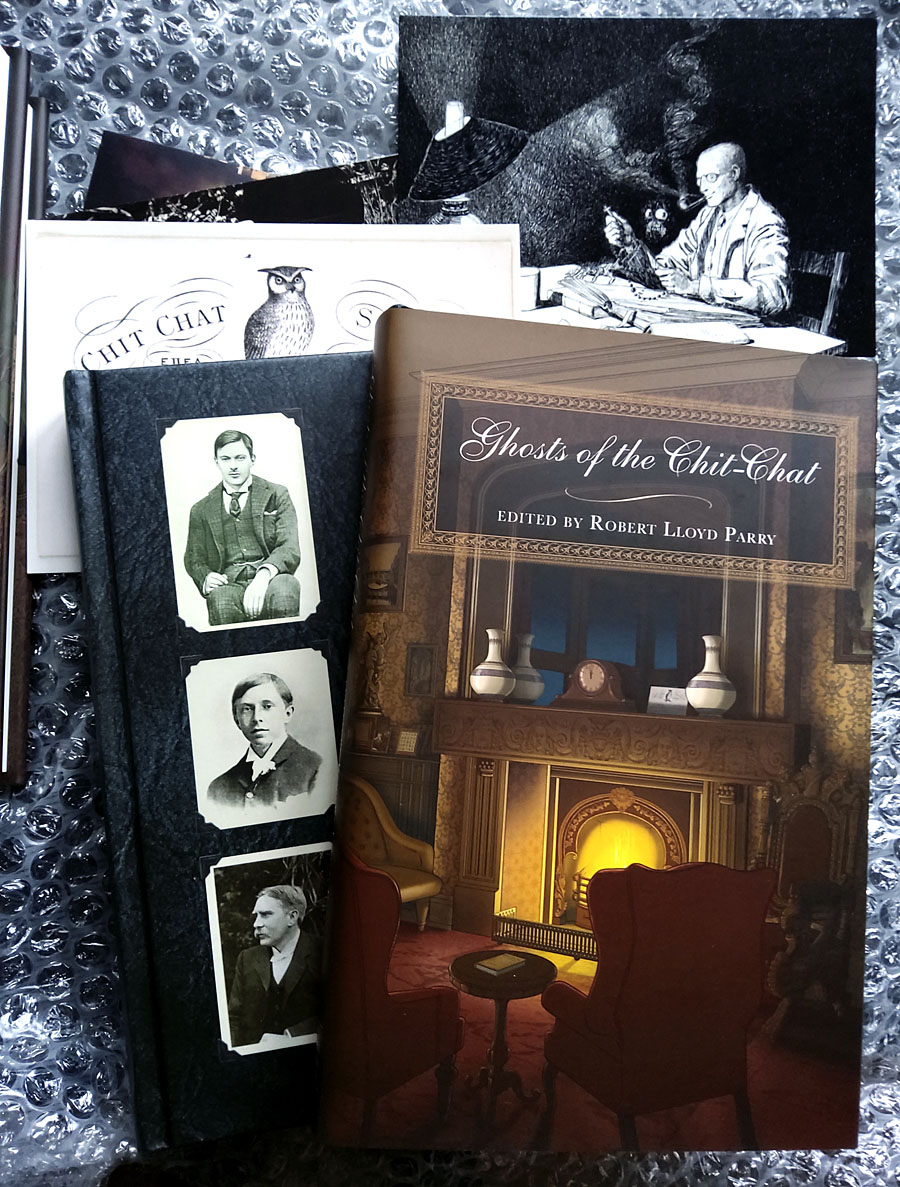
In today’s post, my latest cover for Swan River Press (previously). One tradition I’m always happy to endorse is the Christmas ghost story, when festive banalities are quelled by the words “Quis est iste, qui venit?” and “No diggin’ ‘ere!” Ghosts of the Chit-Chat delivers the chills with an outstanding tale—Basil Netherby by AC Benson—that I’d not read before and which is worth the price of entry alone. (That’s a photo of AC at the foot of the printed board, together with brothers EF and RH, both of whom are also represented inside.) But this is a solid collection with two early versions of familiar stories by MR James, together with a host of rarities. And the usual Swan River complement of related postcards, of course. Order it here.

Previously on { feuilleton }
Ghosts of the Chit-Chat
The Far Tower: Stories for WB Yeats
The Scarlet Soul: Stories for Dorian Gray
“Who is this who is coming?”

Arzak Rhapsody

arzak1.jpg

The first appearance of Arzach in Métal Hurlant, 1975.

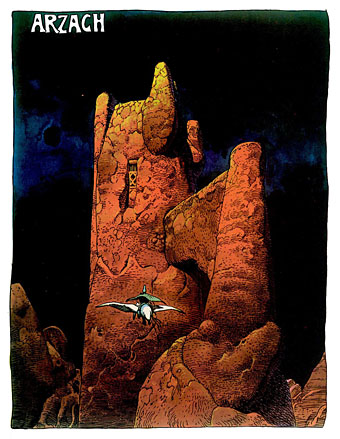
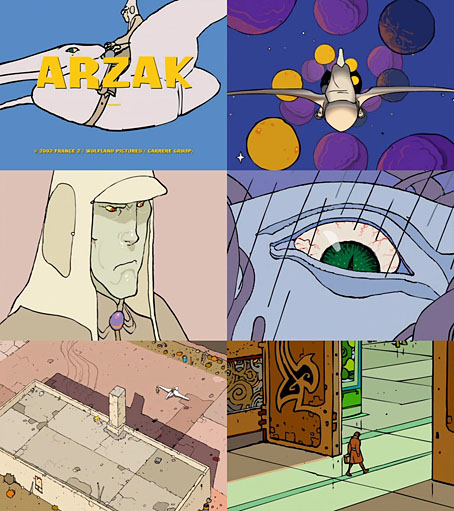
Arzak (or Arzach, or Harzak, or Harzakc, etc) is one of the oldest of the comic characters created by Moebius, and an enduringly popular one even though the amount of pages devoted to the character is small. Moebius returned to Arzak sporadically after the first strips appeared in Métal Hurlant in 1975, where the first panel of the first story establishes the principal ingredients: the stern and resourceful explorer navigating an alien world on the back of a large white bird. Arzak’s flying companion is often described as a pterodactyl but it’s really a Moebius bird whose ancestors or cousins may be seen elsewhere in the Moebius-verse, notably the character of Deepo from The Incal.

arzak2.jpg

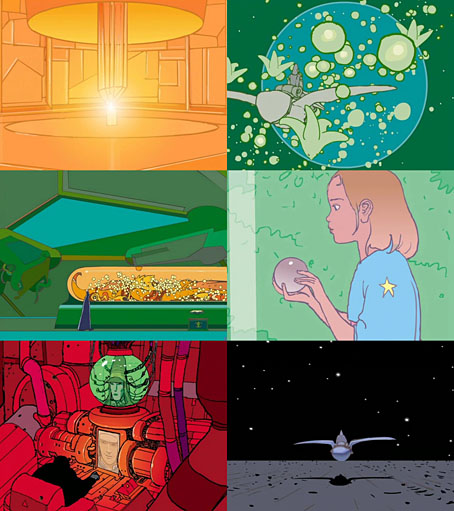
Arzak Rhapsody is a late entry in the Arzak mythos, a series of 4-minute animated films made for French TV in 2002, all of which were written by Moebius. The animation is crude when compared to René Laloux’s Moebius-designed Time Masters (1982), but the Moebius aesthetic is present throughout, from the desert landscapes of his early strips to the glowing crystals of his later work. The stories recycle moments from the comics, most of which concern Arzak evading one of the many lethal hazards presented by the flora and fauna of the place named in the animations as “Desert B”. All 14 episodes may be viewed here with the superfluous narration translated into English. Now when do we get to see Time Masters on blu-ray?

arzak3.jpg

Previously on { feuilleton }
The Captive, a film by René Laloux
The horror
Chute Libre science fiction
Heavy Metal, October 1979: The Lovecraft Special

Weekend links 548

aurora.jpg

The Aurora Borealis by Charles H. Whymper.

• “In 1829, when the celebrated Japanese artist Katsushika Hokusai was almost 70 years old, he created more than 100 drawings of a dazzling array of subjects: playful cats, serene landscapes, even severed heads. Hokusai’s fame continued to grow after his death in 1849, and the suite of small, elaborate drawings was last purchased a century later, at a Paris auction in 1948. Then it disappeared from the public eye.” The British Museum now has the drawings which may be seen here.

• The week in cover design: Emily Temple compares US and UK covers for the same books, while Vyki Hendy collects recent titles with objects as the main feature of the cover designs. One of my recent covers (which will appear here soon) is less minimal than these but also features an arrangement of objects.

• The compilation experts at Light In The Attic Records have put together another collection of obscure Japanese music. Somewhere Between: Mutant Pop, Electronic Minimalism & Shadow Sounds Of Japan 1980–1988 will be released in January.

“A Jamesian world is one of cursed artefacts, endlessly subsuming landscapes, forgotten manuscripts and tactile beings that punish the curious and intellectually arrogant.” Adam Scovell visits the grave of MR James.

• Dragons and Unicorns: John Boardley on the lost art of the Hieroglyphic Bible.

• I almost missed John Waters’ favourite films of the year.

• At Dennis Cooper’s: Sade’s Castle, Cardin’s House.

Northern lights photographer of the year.

Aurora Hominis (1970) by Beaver & Krause | Aurora (1971) by Tonto’s Expanding Head Band | Soft Aurora (1979) by Tod Dockstader