Leonor Fini

fini1.jpg

I’ve been hoping for years that a proper documentary about the enigmatic Argentinian artist might surface, and here one is at last. Leonor Fini (1987) was directed by Chris Vermorcken, and as a portrait of an artist it’s almost as good as the films the BBC used to produce for the Arena arts strand. I say “almost” because the Arena template tended to blend a biographical sketch with the life of the artist or writer at the present moment. Vermorcken encourages Fini to tell us about her early years in Trieste up to her meeting with the Surrealists in Paris, after which the discussion meanders to her vast company of Persian cats and the various forms of her painting and drawing.

fini2.jpg

Unlike most other films about Fini, this one is subtitled throughout so we can enjoy her reading from some of the stories that accompany her drawings, and also find out which films she liked. (Fellini’s Casanova was a favourite.) There’s also an appearance by Konstanty Jelenski, one of the points of the bisexual ménage à trois formed by Jelenski, Fini and Count Stanislas Lepri, all of whom lived together in the cat-infested house. Essential viewing here.

Previously on { feuilleton }
Leonor Fini: comment vivre sans chat
Angels of Anarchy: Women Artists and Surrealism
The art of Leonor Fini, 1907–1996
Surrealist women

Weekend links 432

urbanowicz.jpg

Tokyo at night, one of a series of watercolours depicting the back streets of the city by Mateusz Urbanowicz.

• “The experience of reading the book is something like watching Dr. Strangelove on one screen, Apocalypse Now on a second screen, and having both feeds interrupted by explicit gay erotica.” Bad Books For Bad People examines William Burroughs’ celebrated YA novel, The Wild Boys. The subject is a perennial one here, explored at length in this post.

• Lindsay Anderson’s The White Bus (1967), a surreal precursor to If…. and O Lucky Man!, will receive the high-quality BFI reissue treatment as part of the Woodfall Films portmanteau feature, Red, White and Zero.

• The Radiophonic Workshop have composed the score for Possum, a horror film by Matthew Holness. The main title theme is here. The film is released later next month.

Might I have written a sober affair, had I not been under the influence? Perhaps not—I have never needed tramadol to be attended by angels, or to feel demons pricking my feet. But I think of Vincent van Gogh, who looked at the world through the yellowish haze conveyed by digitalis, and grew enraptured by sunflowers and straw chairs, and I think of a glass prism through which a beam of white light passes and is split into a rainbow. What had been a single lucid idea had passed through the drugs I took and been dispersed into a spectrum of colours I had only half foreseen.

Sarah Perry on trying to write while besieged by bodily pain and prescription drugs

• Jacques Tourneur’s masterful MR James adaptation, Night of the Demon (1957), is released on region-free Blu-ray next month by Powerhouse Films.

• Mixes of the week: FACT mix 673 is The Bug presents PRESSURE, and XLR8R Podcast 561 by Zendid.

• The Space Shifters exhibition at the Hayward Gallery, London, messes with Adrian Searle‘s mind.

Gregory Wells on queers, faeries and revolutionaries in the psychedelic movement.

Wide Boys (1977) by Ultravox! | On Demon Wings (2000) by Bohren & Der Club Of Gore | Spoonful (2013) by Robert Plant and the Sensational Space Shifters

Weekend links 431

eckman-lawn.jpg

Postcard collage by Alex Eckman-Lawn.

• “He deserves to be a major figure not only in the history of Japanese music, but in popular music writ large.” Geeta Dayal on Haruomi Hosono, a musician whose solo albums from the 1970s are reissued this month by Light In The Attic.

Erica X Eisen reviews Black Light: Secret Traditions in Art since the 1950s, an exhibition of occult art at the Barcelona Contemporary Culture Centre. Related: Gary Lachman‘s talk from the same exhibition.

• Mixes of the week: Jesús Bacalão’s Light Entertainment Programme 2, Secret Thirteen Mix 265 by Alexander Tucker, and FACT Mix 672 by Rian Treanor.

Whenever horror is criticised, it is criticised for staging a dark carnival of physicality. Perhaps the only sort of media we moralise more than we do horror is that other mainliner of bodily response, pornography.

Horror’s historical ghettoisation has meant that weightier, smarter horror reliably gets labelled as something else. The finest films of our current golden age have been dubbed “elevated horror” and “post-horror”. In literary circles, works of horror seen as sufficiently cerebral get relabelled “Gothic”. It’s certainly true that great horror is always about more than gore. But we should be careful not to gentrify the genre by cleansing it of everything but the philosophy.

MM Owen on the perennial attractions of a perennially despised genre

• “Netflix is a woeful service,” says Jeremy Allen who prefers DVD/Blu-ray to streaming video (as do I). Related: The problem with film aspect ratio on Netflix.

• The Thought Gang album, a Twin Peaks-related collaboration between David Lynch & Angelo Badalamenti from 1993, will be released next month.

Tangerine Dream: Sound From Another World: a TV documentary from 2016. In German but with auto-translated subtitles.

The Thing’s Incredible! The Secret Origins of Weird Tales by John Locke.

Haute Macabre Staff Favorites: Tarot Decks

First Light (1980) by Harold Budd & Brian Eno | Blue Light (1993) by Mazzy Star | Black Light (1994) by Material

Weekend links 429

holter.jpg

• Julia Holter’s next album, Aviary, will arrive next month with a cover design bearing astrological symbols (a cryptic message?) and what looks like a grimoire page in the background, although I may be reading too much into this. Whatever the esoterics signify, the album is a double, and going by the sound of new song I Shall Love 2 it’s going to be a good one. Aviary will be released on 26th October just in time for the witch season.

Donna Ferguson talks to Oscar Wilde’s grandson, Merlin Holland, about the manuscript for The Picture of Dorian Gray which includes more openly homoerotic sentences than were included in the printed versions. A facsimile of the manuscript is now available in a limited, numbered edition from SP Books.

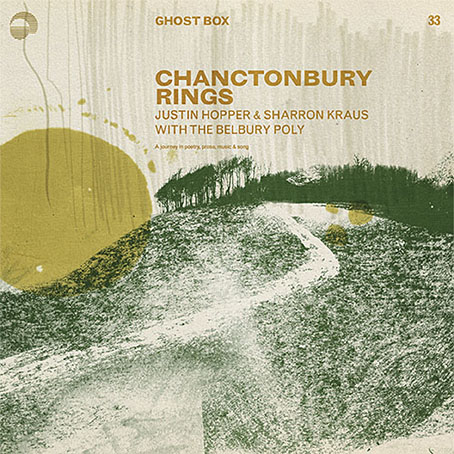
• The final single in the excellent Other Voices series from the Ghost Box label is released later this month. Something Out Of Nothing is by Sharron Kraus and Belbury Poly.

…we’re still trying to operate this new, paranoid society on what amounts to a psychedelic substrate—with little or no awareness of how our sets and settings are determining our results. The set and setting of the advertiser yield addictive behavioral design and persuasive technologies. The set and setting of the investor lead to algorithmic trading and winner-takes-all, extractive businesses. The set and setting of the military lead to drone warfare. The set and setting of the politician lead to targeted propaganda and digital fascism.

America is unconsciously living in a psychedelic landscape and having a bad trip. We don’t realize that we are living in a media environment that offers us an unprecedented capacity over reality. The world may have always been a consensual hallucination to some extent, but never before have we built our world so completely.

The internet is acid, and America is having a bad trip, says Douglas Rushkoff

Photographia Erotica Historica is a tiny leatherbound collection of antique pornography from Goliath Books.

Why is the Federal Government threatening an indie book publisher with $100,000 in fines?

• Undead, undead: my illustrations for Dracula are featured at Dangerous Minds. Thanks!

• The Vinyl Factory meets Japanese composer and musician Midori Takada.

• Exploring HP Lovecraft’s Gothic roots by Dr Xavier Aldana Reyes.

• From 2013: Dario Argento discussing his films with Alan Jones.

• Aurora Mitchell on Electro pioneer Doris Norton.

• Mix of the week: XLR8R Podcast 558 by DJ T.

Aviator (1970) by Michael Chapman | Aviation (2000) by Fluxion | Aviation (2001) by Monolake

Weekend links 428

willink.jpg

Straat met standbeeld (1934) by Carel Willink.

• “[Edward] Gorey, who died in 2000 at 75, was the unequaled master of—of what? Gothic whimsy? The high-camp macabre? Existential black comedy in the Firbankian mode? Essentially unclassifiable, he was, at the end of the day (and it’s always twilight, in Gorey’s stories), simply, inimitably Edwardian.” Mark Dery’s Born to be Posthumous: The Eccentric Life and Mysterious Genius of Edward Gorey, the first full-length biography, will be published in November.

• “In an East Prussian manor house, a Bohemian library, a Bulgarian railway station; in a Venetian citadel, a Breton harbour, a city in the Caucasus, characters encounter not only the vicissitudes of history but also the subtle influences of the uncanny.” Inner Europe by John Howard and Mark Valentine.

• “To the good men I offer the hand of friendship, to the foes of our sex I offer resistance and annihilation!” The next title from Rixdorf Editions (due in November) will be We Women Have no Fatherland (1899), a novel by Ilse Frappan.

• At Dangerous Minds: “The career of Penny Slinger, intrepid surrealist artist of the 1970s, is ripe for rediscovery,” says Martin Schneider.

• Mixes of the week:  FACT mix 668 by Smerz, and XLR8R Podcast 557 by re:ni.

• Dreaming of Walter Benjamin on Walter Benjamin Platz by Roger Gathman.

Alison Kinney on Ludwig II’s obsession with the operas of Richard Wagner.

• A trailer for The Other Side of the Wind, the final film by Orson Welles.

• A happy tenth anniversary to The Quietus.

Wizards (1982) by JD Emmanuel.

The Wizard (1964) by Albert Ayler Trio | The Wizard (1970) by Black Sabbath | Dancin’ Wizard (1973) by Sopwith Camel