Hawkwind: Days of the Underground

hawkwind.jpg

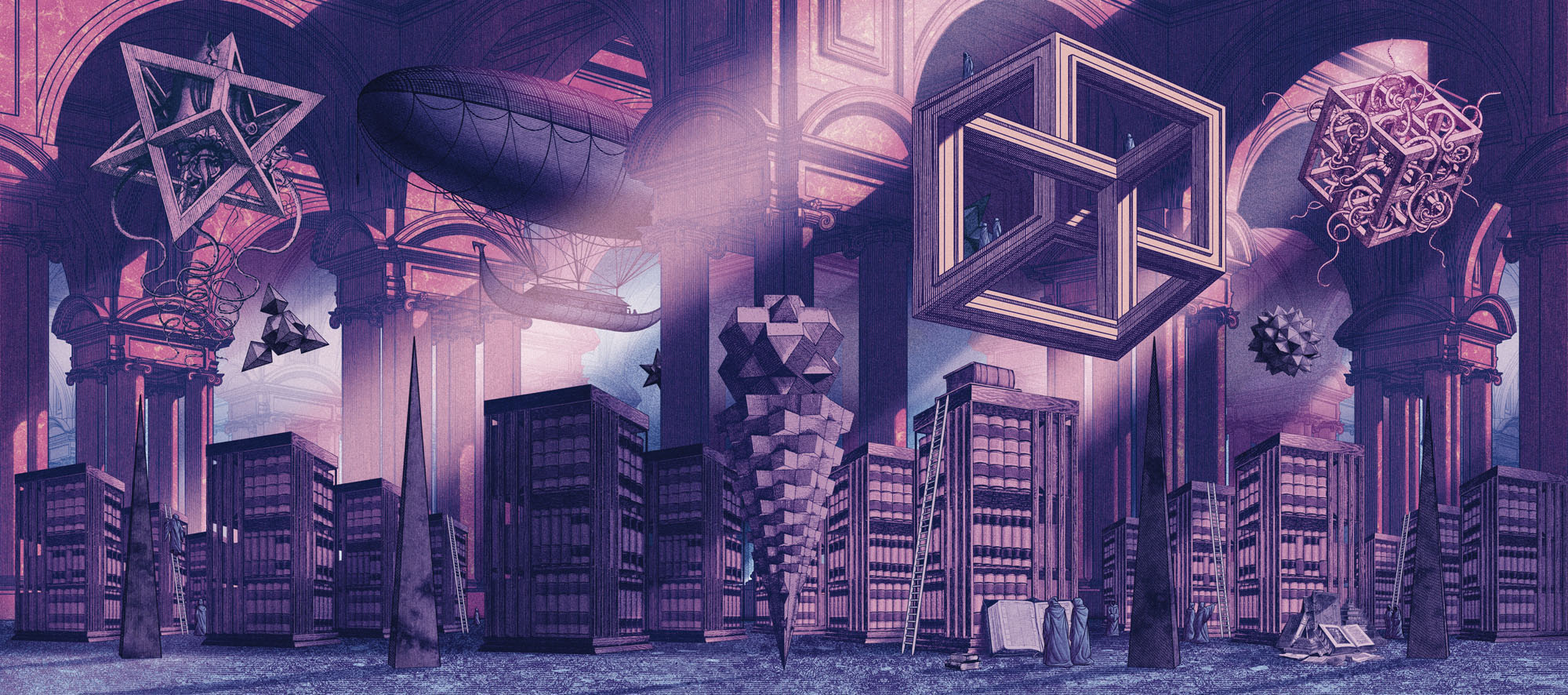
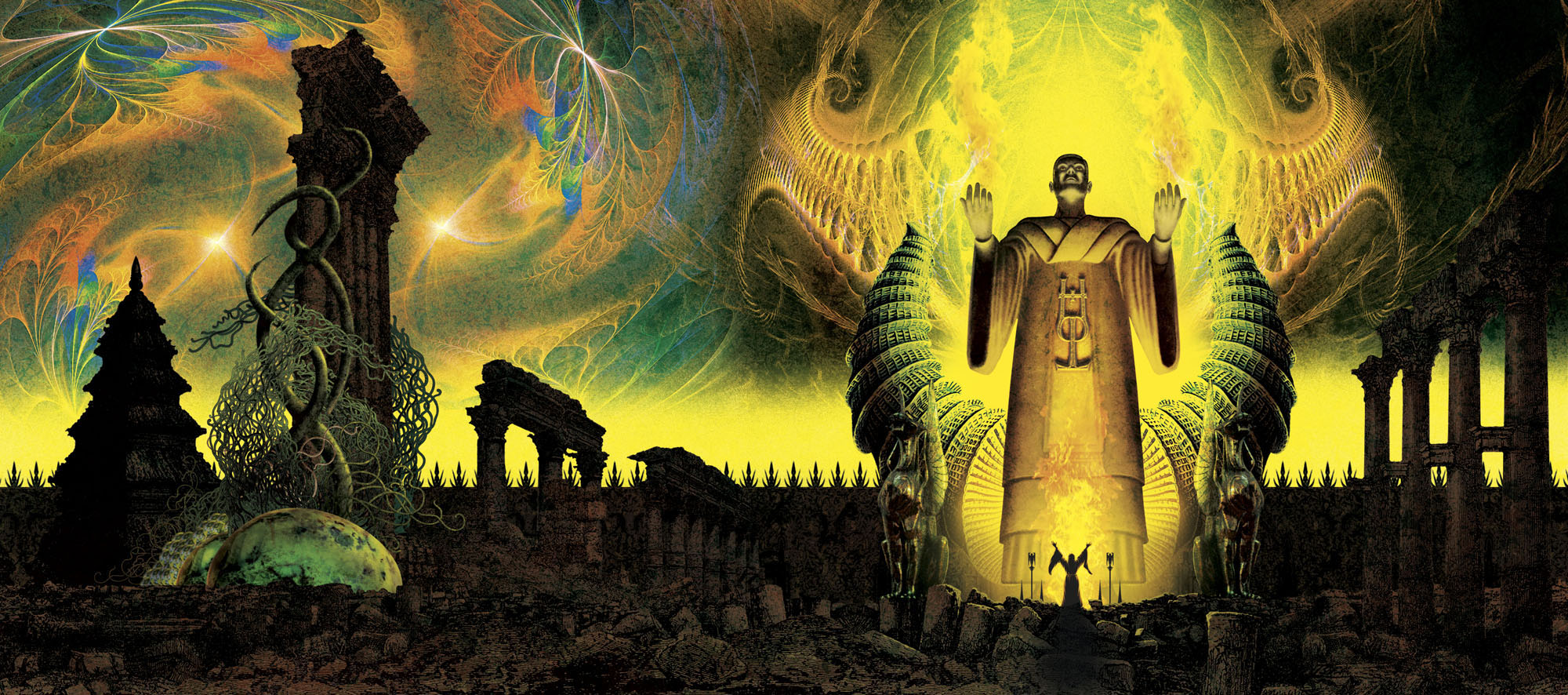
As mentioned at the weekend, Joe Banks’ account of the first ten years of Hawkwind will be published by Strange Attractor Press later this year with a wraparound cover of my design. I never expected to be doing anything else for Hawkwind after moving on to other things in 1985, but it was the group’s first decade of music that fuelled the drawings which brought me to their attention, so this cover design brings everything full circle. The earliest of my Hawkwind drawings dates to 1979 which means this cover is also an anniversary piece.

The design combines Barney Bubbles’ Space Ritual template with elements of the art he created before and afterwards, notably the inner and outer sleeve of Doremi Fasol Latido, and the futuristic Art Deco of his tour poster for The “1999” Party. All the Bubbles Hawk-art up to and including Space Ritual is a blend of the ancient (Egypt, tribal motifs, characters that resemble pirates or barbarians), the previous century (Art Nouveau in particular), and the far future as depicted in comics and pulp magazines. I wanted to reflect this blend without being too imitative of the details, so the cover works a variation on Space Ritual, with a similar hieratic woman as the focus, and a margin of stylised flames separating the foreground from Laurie Lewis’s photos of the band (the latter are unused shots from the same session used for Space Ritual).

haberfield.jpg

Art by Bob Haberfield, 1970.

All the background elements run across the wrap but this hasn’t been revealed yet so you’ll have to wait a while to see the full design. The flames are based on Tibetan designs in a nod to the ancient side of the equation, as well as Bob Haberfield’s covers for the Moorcock novels published by Mayflower in the early 70s, many of which featured art derived from Tibetan Buddhism. (And one of the Mayflower Moorcocks, The Black Corridor, is the origin of the monologue of the same name on Space Ritual.) The full wrap shows a futuristic city whose Frank R. Paul-derived architecture is either on fire or menaced by a wall of encroaching flames. Many of Hawkwind’s songs of the period concern flight from cities or from the Earth itself—Born To Go, Time We Left (This World Today)—so the back cover also has a number of vehicles fleeing the scene: the radical escapism of the book’s subtitle in literal form. “Sign my release from this planet’s erosion,” as Nik Turner sings in Brainstorm.

Continue reading “Hawkwind: Days of the Underground”

Weekend links 480

yokoo.jpg

Tadanori Yokoo (1974) by Tadanori Yokoo and Will van Sambeek. A poster from the Colourful Japan exhibition at the Stedelijk Museum, Amsterdam.

• The first decade of space-rock pioneers Hawkwind is explored by Joe Banks in Hawkwind: Days of the Underground — Radical Escapism in the Age Of Paranoia, coming soon from Strange Attractor Press. I created the wraparound cover for this one, and will be talking about it here in a later post. Those interested in the book should note that the special edition hardback will include an extra book, plus a print and postcards. Limited to 500 copies so don’t wait around.

• “What we look for in our formative years can be very different from the demands we make later as analytical adults, and it was certainly more important to me that representations of gayness were complex or colourful than that they were positive, whatever that meant.” Ryan Gilbey on 50 years of Midnight Cowboy.

• Mixes of the week: Through A Landscape Of Mirrors Vol. II – France I by David Colohan, and As Imperceptibly As Grief The Summer Lapsed Away by Haunted Air.

If we imagine the material world about us having a concealed component of the fictional and the fantastic, visions buried in its stones and mortar waiting for their revelation, then we may suppose that 18th-century Lambeth was a teeming hub of such imaginal biodiversity. Bedlam alone could account for this ethereal population boom, but then nearby was the Hercules Buildings residence of William Blake, which can have only added to the sublime infestation.

Alan Moore on the visionary art of William Blake

• At the Internet Archive: Ten issues of Ed Pinsent’s The Sound Projector Music Magazine (1996–2002), with bonus Krautrock Kompendium.

• “Like many dictators Franco considered himself an artist.” Jonathan Meades on how fascism disfigured the face of Spain.

Occulting Disk is a new album from the master of unnerving doomscapes, Deathprod, which will be released in October.

• Making MAD: Chris Mautner on the beginning and end of MAD magazine.

John Margolies’ photographs of roadside America.

Fair Sapphire by Meadowsilver.

Jarboe‘s favourite music.

Theme from Midnight Cowboy (1969) by John Barry | Astral Cowboy (1969) by Curt Boettcher | Dayvan Cowboy (2005) by Boards Of Canada

The Righteous One

righteous.jpg

Another week, another new book cover. Author Neil Perry Gordon was in touch earlier this year asking if I could create something for his latest novel set in New York City. Gordon’s previous novels have been historical narratives about the city’s Jewish community; The Righteous One (subtitled “A Cobbler’s Journey into the Dreamworld and Beyond”) follows suit but is slightly different in having more of a fantasy theme:

The Righteous One is the story of Moshe the cobbler, a gentle, sixty-year-old tzaddik—a righteous and saintly Jew—who is called upon to rekindle his divine connection to the Almighty in order to destroy the notorious New York gangster and rasha Solomon Blass, a man who uses his power of foreseeing events via his vivid dreams to advance his own financial interests.

For a guide to the visual content I was given this illustration from Camille Flammarion’s L’Atmosphère: Météorologie Populaire (1888), a picture whose antiquated appearance has often led it to be taken as a much older engraving. It’s also one of those occult or mystical illustrations you see reproduced in many books about magic or the supernatural without any reference to its origin.

flammarion.jpg

Neil’s request was for his book cover to show a similar barrier between the worlds with his cobbler character being caught between the wake world and the dream world. An engraved style wouldn’t have suited a story set in New York City (even the NYC of the recent past) but I also didn’t want the cover to look like a piece of typical fantasy art filled with Photoshop mists and translucent layers. The final design is modelled on the bolder art styles of Tarot cards, hence the flattened perspective, simplified colouring and distinct outlines. I spent some time researching old New York for this one as I wanted the buildings and street lamps to look accurate. Did you know those old “bishop’s crook” lamps come in a variety of different shapes? I didn’t until working on this.

The Righteous One will be published next month as a Kindle paperback.

Previously on { feuilleton }
Les Terres du Ciel

The Fallen King’s Penitent Soldier

penitent.jpg

Despite having been busy throughout this year I’ve not updated my website for a while so this is the first of several posts intended to remedy the situation. It’s also a dismaying entry since it not only sees the end of this series of gay romance titles by Megan Derr but also the end of the publisher, Less Than Three, who closed their doors a couple of months ago. The sombre appearance of The Fallen King’s Penitent Soldier (which I completed late last year) seems in retrospect like an omen. Gloom aside, I was pleased with the way this series evolved, with each cover posing a challenge in how to maintain the format while working a new variation on the theme.

There are more new book covers still to come, and—when I can find the time—some news of a personal project of my own. As with previous posts about Megan’s series, I’ve included the rest of the covers below.

mercenaries.jpg

loststar.jpg

derr2.jpg

derr1.jpg

Previously on { feuilleton }
The Mercenaries of the Stolen Moon
The Heart of the Lost Star
Tales of the High Court

Folk Horror Revival: Urban Wyrd

urbanwyrd1.jpg

Cover art by Grey Malkin.

The folk horror revival wasn’t really a revival as such, it was more an identifying of trends which hadn’t been noticed or named before, the grouping together and labelling of which created a sub-genre ripe for further exploration. Over the past few years I’ve done my share to promote this loose affiliation, but I confess to feeling a lack of interest of late. Or rather, I’m less interested in its current manifestations. Genres in any medium have a tendency to follow a growth pattern which eventually arrives at mannerism and stereotype; something that was fresh because it was new (or rediscovered) is pushed through repetition into formula.

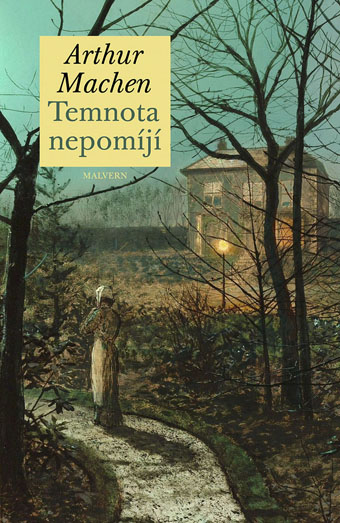
One of the exciting features of the first flourishings of Hauntological music in 2005/06 was the absence of a discernible formula. The areas of interest, and their hybridisation, were unpredictable, especially the first few releases on the Ghost Box label. Folk horror was incorporated into the Ghost Box project from the outset but it was never the sole concern. The debut album from Belbury Poly, The Willows, contains a range of references to rural horror, with a title lifted from Algernon Blackwood, and two tracks referencing Arthur Machen. But another of the tracks refers to Pauwels & Bergiers’ unique and influential occult study, The Morning of the Magicians, while the cover design is styled like an educational paperback from Pelican books, or an Open University prospectus. Belbury may be an old village with strange customs but it’s also home to a modern polytechnic. Elsewhere on the label, Pye Corner Audio operated at a remove from the folkiness, unsurprisingly when Martin Jenkins’ music is wholly electronic. The first Pye Corner Audio album on Ghost Box, Sleep Games, featured a typical mid-century housing estate on the cover; many of the track titles–Experimental Road Surface, for example—are closer to Kraftwerk than Blood On Satan’s Claw. The late Mark Fisher was credited inside with “cover concepts and research” which may explain the quotes from JG Ballard, French anthropologist Marc Augé, and theory fictioneer Reza Negarestani. The final track on Sleep Games, Nature Reclaims The Town, suggests the triumph of the wild but urban concerns dominate the album.

urbanwyrd2.jpg

Cover art by Jackie Taylor.

Metropolitan horror and urban strangeness is the theme of Urban Wyrd, a two-volume anthology of new writings edited by Andy Paciorek which provides a welcome counterbalance to the over-ploughed furrows. This is a companion volume and sequel to Field Studies, a collection which featured my essay about the plays for theatre and television by David Rudkin. My contribution to the new collection, Phantoms and Thresholds of the Unreal City, is a discursive meander through the streets of Paris, New York and San Francisco, threading together the lives and works of a disparate group of writers, artists and photographers: HP Lovecraft, Eugène Atget, Robert W. Chambers, Max Ernst, Berenice Abbott, Roger Caillois, Fritz Leiber and others. My original intention was to write solely about Atget’s celebrated views of Paris but, as is often the case, one thing led to another and I ended up with something that’s more about the metamorphosis of cities and architecture by writers and photographers, and what their transformations may suggest to us.

The huge contents list for both books follows below. Both volumes are available from Lulu here and here, and at a reasonable price considering the page count. Books like this are always good for indicating further avenues of exploration. I’m looking forward to going for a wander.

Folk Horror Revival: Urban Wyrd – 1. Spirits of Time

• Foreword
• Urban Wyrd: An Introduction by Dr Adam Scovell
• Spectral Echoes: Hauntology’s Recurring Themes & Unsettled Landscapes by Stephen Prince
• Quatermass and the Pit: Unearthing Archetypes at Hobb’s End by Grey Malkin
• The Haunted Generation: An Interview with Bob Fischer
• On a Thousand Walls: The Urban Wyrd in Candyman by Howard David Ingham
• Protect and Survive: Dystopian Drama – A Jolly British Apocalypse by Andy Paciorek
• The Bad Wires: Reflections on The Changes by Grey Malkin
• The Hands of Doom: A Short Perspective on Divine Intervention by Leah Crowley
• Sir Arthur Conan Doyle: The Adventure of the Spiritualist Missionary by Jim Peters
• A Tandem Effect: Ghostwatch by Jim Moon
• Interview with Stephen Volk
• The Cookstown Ghost: Poltergeist Phenomenon in Urban Ulster in the Nineteenth-Century by Jodie Shevlin
• The Last Key That Unlocks Everything: Ghost Stories by Andy Paciorek
• A Very Urban Haunting …The Echo of Noisy Spirits by Jim Peters
• These Houses Are Haunted: Supernatural Dwellings in Film by Andy Paciorek
• The Photography of Carmit Kordov
• Wyrd Technology by Andy Paciorek
• Voices of the Ether: Stone Tapes, Electronic Voices and Other Ghosts by James Riley
• Urban Witchcraft by Darren Charles
• Video Nasty: Moving Image in The Ring and Sinister by Andy Paciorek
• An Interview with Richard Littler – Mayor of Scarfolk
• The World Falling Apart: Jubilee by Stuart Silver
• Doll Parts: Marwencol by Andy Paciorek
• Chocky: The Haunting of Matthew Gore by Grey Malkin
• The Sun on my Face: Demon Seed by Andy Paciorek
• The Photography of Sara Hannant
• A Hive Mind: Phase IV by Andy Paciorek
• Wired For Sound: The Auditory in Horror by Andy Paciorek
• “We Want You to Believe In Us, But Not Too Much”: UFOs and Folklore by S. J. Lyall
• A Space Flower: Invasion of the Body Snatchers by Andy Paciorek
• Under The Skin of the Man Who Fell To Earth by Andy Paciorek
• Silent Invasions by SJ Lyall
• I Am Not A Number: The Prisoner by Stuart Silver
• All For the Hunting Ground: Wolfen by S.J. Lyall
• Urban Wolves by Richard Hing
• Reclaiming the “f” word. A conversation between The Black Meadow’s Chris Lambert and Pilgrim’s Sebastian Baczkiewicz
• Sounds from a Haunted Ballroom: The Caretaker by Andy Paciorek
• Uncanny Valley: Spielberg’s A.I. by Damian Leslie
• Sounds and Visions: MKUltra, Number Stations, Hallucinogens and Psychological Experiments in Film by Andy Paciorek
• Concrete, Flesh, Metal, Blood: The Worlds of Ballard & Cronenberg by Andy Paciorek
• The Eternal Snicket by Professor Phillip Hull (From an interview with Chris Lambert)
• The Voice of Electronic Wonder: The Music of Urban Wyrd by Jim Peters
• Age of the Train: Rail and the Urban Wyrd by Andy Paciorek
• Mind The Doors: Death Line by S.J. Lyall
• Step Away From The Meat: The Midnight Meat Train by Andy Paciorek
• Evil Dream: Q The Winged Serpent by Scott Lyall
• These Cities are Ours: Notable Kaiju in Cinema by Richard Hing
• Wild Rides: Taxis in Cinema by William Redwood
• The Photography of Jackie Taylor

* * *

Folk Horror Revival: Urban Wyrd – 2. Spirits of Place

• Foreword
• Urban Psychogeography by Stuart Silver
• Spirit of Place by Andy Paciorek
• Through Purged Eyes: Folk Horror and the Affective Landscape of the Urban Wyrd by Karl Bell
• Glasgow’s Occult Ancient Geometery: The Obsessions of Ludovic McLellan Mann and Harry Bell by Kenneth Brophy
• Post-Industrialism and Industrial Music by Simon Dell
• Towering Infernal: The Inner City in Contemporary Horror Films by Andy Paciorek
• God Will Forgive Them: Dead Man’s Shoes by Andy Paciorek
• Phantoms and Thresholds of the Unreal City by John Coulthart
• Holy Terrors – Whitby: An Interview with Mark Goodall
• The Burryman of South Queensbury: The Past Within the Present by Grey Malkin
• Saturnine: An Urban Meander by Andy Paciorek
• Devil’s Bridge: The Satanic Rites of Aclam by Bob Fischer
• Urbex, Haiyko and the Lure of the Abandoned by Andy Paciorek
• Wyrd On-screen: Urban Fears and Rural Folk by Diane A. Rodgers
• Spontaneous Shrines (Flowers Taped to Lamposts) by Howard David Ingham
• Between Two or More Worlds: The Urban Mindscape of David Lynch by Andy Paciorek
• Suburbia by Richard Hing
• Welcome to The League of Gentlemen … You’ll Never Leave by Jim Peters
• A Search for Aberdeen’s Lost Treasures by Peter Lyon
• Scovell & Budden: Greenteeth by Andy Paciorek
• The Photography of Neddal Ayad
• City in Aspic: Don’t Look Now by Andy Paciorek
• Bricks and Stones in The Pool of Life by Cat Vincent
• The Trumptonshire Trilogy by Andy Paciorek
• The Derive of Doom by Chris Lambert
• Iain Sinclair: Spirit Guide to the Urban Wyrd – Interviewed by John Pilgrim
• Review: Concretism – For Concrete and Country by Chris Lambert
• Shadow of the Cities: The Weird and the Noir by Andy Paciorek
• Black and White Dreams: An Interview with K.A. Laity
• Occult Detectives: An Interview with John Linwood Grant
• The Art of Andy Cropper
• Resurrect Dead: The Mystery of the Toynbee Tiles by Andy Paciorek
• The Photography of Peter Lagan
• Involute of Space / Time: An Interview with Will Self
• High Weirdness: A Daytrip to Hookland by Andy Paciorek
• Cyclopean Ruins and Albino Penguins: The Weird Urban Archeology of H.P. Lovecraft’s At The Mountains of Madness by Kenneth Lymer
• Sordid Smoke Ghosts: The Worlds of China Miéville by Colin Hetherington
• The Magic Kingdom: A Conversation with Walter Bosley by John Chadwick
• The City That Was Not There: ‘Absent’ Cityscapes in Classic British Ghost Stories by Anastasia Lipinskaya
• York: Albion’s Capital of the North by Oz Hardwick and John Pilgrim
• Urban Folklore: An Interview with Diane A. Rodgers
• Gripped: The Nine Lives of Thomas Katz by Howard David Ingham
• Place of Light and Darkness: Durham by Andy Paciorek
• Athens of the north: Edinburgh by SJ Lyall
• Service Station to Station by Andy Paciorek
• Miles Away: Hush (2008) by Andy Paciorek
• Sorcerers’ Apprentices and Industrial Witches: The Uban Wyrd as Magick in Leeds. West Yorkshire by Layla Legard
• Black as Sin: Possum and Spider by Andy Paciorek
• The Apartment Trilogy by Andy Sharp

Previously on { feuilleton }
A Year In The Country: the book
Folk Horror Revival: Field Studies