Wildeana 9

dine.jpg

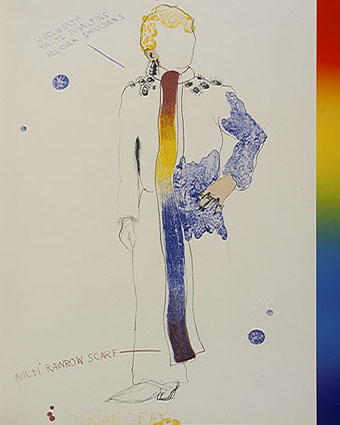
Dorian Gray (1968) by Jim Dine; one of a series of prints for an illustrated edition. Rainbows didn’t become a gay symbol until Gilbert Baker’s flag design ten years later.

Continuing an occasional series.

• “…the Public is a very curious thing; it is sometimes perverse, and even obstinate, and it has evidently made up its mind to like the plays of Mr. Oscar Wilde.” Callum at Front Free Endpaper found a sceptical review of The Importance of Being Earnest in The Sketch for 20th February, 1895.

• “Wilde’s vision of Socialism, which at that date was probably shared by many people less articulate than himself, is Utopian and anarchistic.” George Orwell, writing in 1948, looks back at Wilde’s The Soul of Man Under Socialism.

• Oscar Wilde between Paris and Brighton: Research at the excellent Charles Ricketts & Charles Shannon blog following Wilde’s travels in the early months of 1891.

• Wilde Ride by Anthony Paletta: “Oscar Wilde spent a year in the US and met the likes of Walt Whitman and Henry James.”

• There’s plenty of Wildeana at Pinterest.

Elsewhere on { feuilleton }
• The Oscar Wilde archive

Decapitations

heads03.jpg

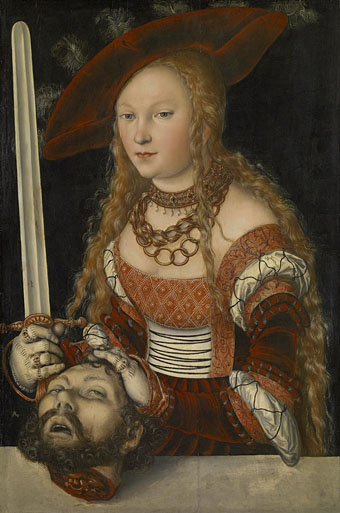
Judith with the Head of Holofernes (1520–1540) by Lucas Cranach the Elder.

It doesn’t take much effort to refute the jeremiads of those who complain that popular culture is exclusively violent, all that’s usually required is to direct attention to Titus Andronicus or The Revenger’s Tragedy. Compared to the stage, the art world seems at first to be more circumspect, especially in the 19th century when the battles scenes of history painters sprawled across acres of canvas, all of them devoid of the physical trauma of warfare.

salome6.jpg

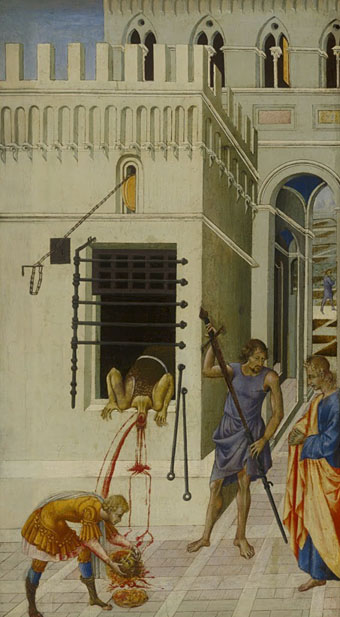
The Beheading of Saint John the Baptist (1455–60) by Giovanni di Paolo.

There are exceptions, however, and the nearer you move to Shakespeare’s time the more examples you’ll find. Paintings produced in an age when violent street executions were still a common sight would have seemed less surprising to their intended audience than they do to our eyes. Several of the paintings here provide a useful contrast with the many sanitised depictions of John the Baptist’s severed head in the Salomé archive.

heads01.jpg

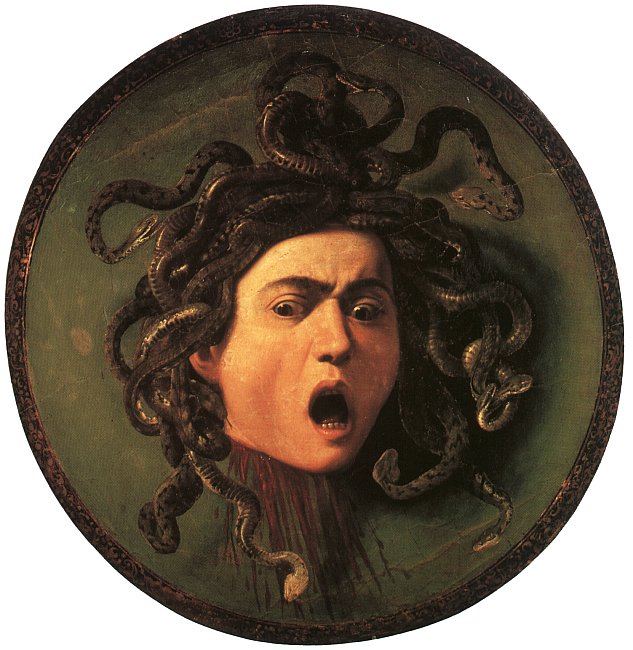
Medusa (c. 1590) by Caravaggio.

Of all the paintings of Medusa’s head the one by Caravaggio is the sole example with a gout of spurting blood. It’s also unusual for being painted on a convex panel intended to resemble the reflecting shield of the Gorgon’s killer, Perseus. Given the violent life of the artist the gore isn’t so surprising although the jet of red in his painting of Judith beheading Holofernes still seems shocking if you’ve never seen it before.

heads04.jpg

Judith Beheading Holofernes (1598–99) by Caravaggio.

The Biblical story of Judith and Holofernes may be the poor cousin to the more popular story of Salomé but depictions of the crucial event make an impression by being consistently gruesome. I suspect the reason is less to do with the story itself than with the success of Caravaggio’s paintings among cultured Europeans. The copying or imitation of celebrated works became a thriving industry in the days of the Grand Tour with the result that 17th- and 18th-century art is overburdened with variations on earlier paintings.

Continue reading “Decapitations”

Jon Finch, 1941–2012

finch1.jpg

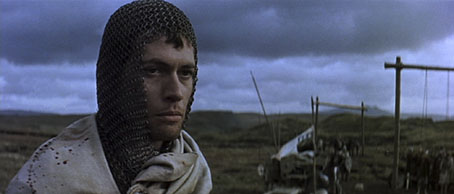
Macbeth (1971).

There are few actors I’ve ever felt sufficiently cultish about who could make me watch films or TV dramas I wouldn’t otherwise be interested in. Orson Welles would be one (up to a point, he was in a lot of crap in later years), Patrick McGoohan another and Jon Finch most definitely a third. Having watched Finch just over a week ago in Roman Polanski’s superb adaptation of Macbeth it’s been a shock to discover that he’d died shortly after Christmas, the news of his funeral only being announced this week.
finch4.jpg

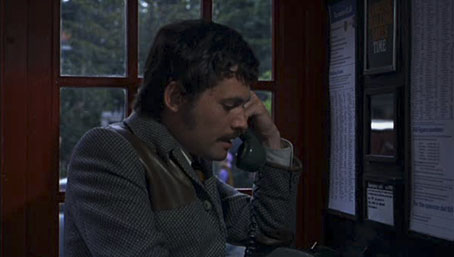
Frenzy (1972).

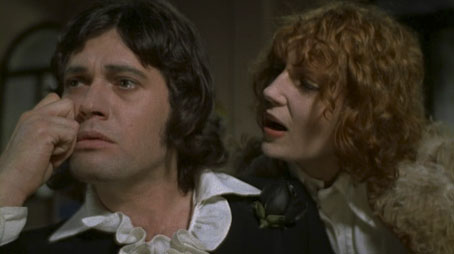
The cult status stems from the remarkable run of lead roles he was offered in the early 1970s: playing Macbeth for Polanski, the “wrong man” role in Hitchcock’s last great film, Frenzy, and a perfect Jerry Cornelius in Robert Fuest’s adaptation of Michael Moorcock’s The Final Programme. There were plenty of other roles, of course, but those three are standouts which also show something of his range: suitably brooding, weak and malevolent in Macbeth, in Frenzy a hounded man who seems disreputable enough for his friends to suspect he may be a murderer, in The Final Programme as smart and insouciant as Moorcock’s Cornelius ought to be.
finch2.jpg

The Final Programme (1973): Finch with Jenny Runacre (Miss Brunner).

I’m happier that Finch played Cornelius instead of James Bond, a role he was offered after Sean Connery quit. Jerry Cornelius, “the English Assassin”, in the first novel in Moorcock’s Cornelius quartet is a kind of anti-Bond, and there were few actors around in 1973 who would have possessed the necessary charisma and intelligence for the part. Mike Moorcock was friends with Finch around the time the film was being made so when I was visiting the Moorcocks in Paris a few years ago I asked him why Finch hadn’t done more with his career after such an impressive start. Mike says he was one of those actors who often preferred to be doing something else with his time.
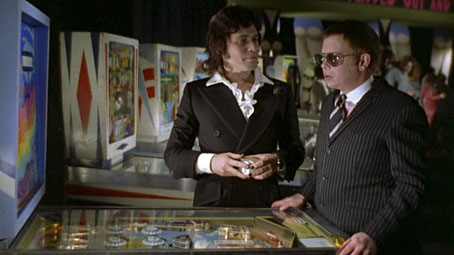
finch3.jpg

Finch and Ronald Lacey (Shades) in The Final Programme.
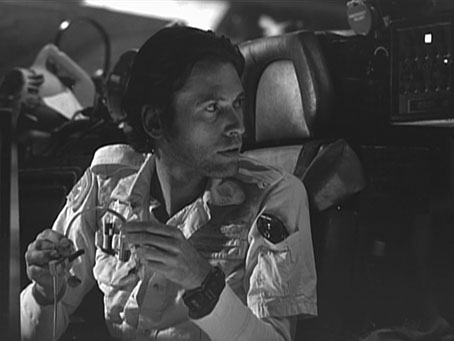
finch5.jpg

On the set of Alien (1978).

Obituaries will no doubt regard Finch’s rejection of the Bond role as a missed opportunity but I wish we could have seen him as intended in Ridley Scott’s Alien where he’d been cast as Kane but had to drop out after contracting a severe case of bronchitis once shooting was underway. The photo and screen grab below are seldom-seen images from the Alien DVD extras. I’ve nothing against John Hurt in the role but with Finch playing the part it would have made a cult film a little more special. He did get to act for Ridley Scott eventually with a small role in Kingdom of Heaven in 2005.
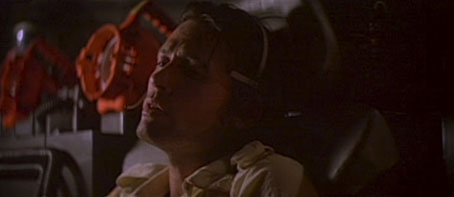
finch6.jpg

An outtake from Alien.

finch7.jpg

As Count Sylvius in The Memoirs of Sherlock Holmes (1994).
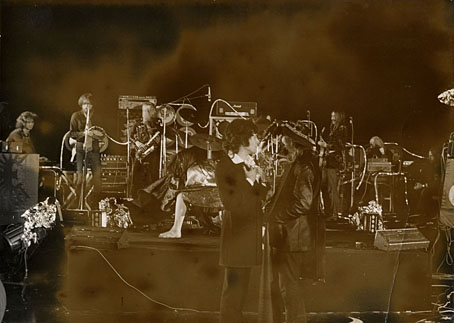
finch8.jpg

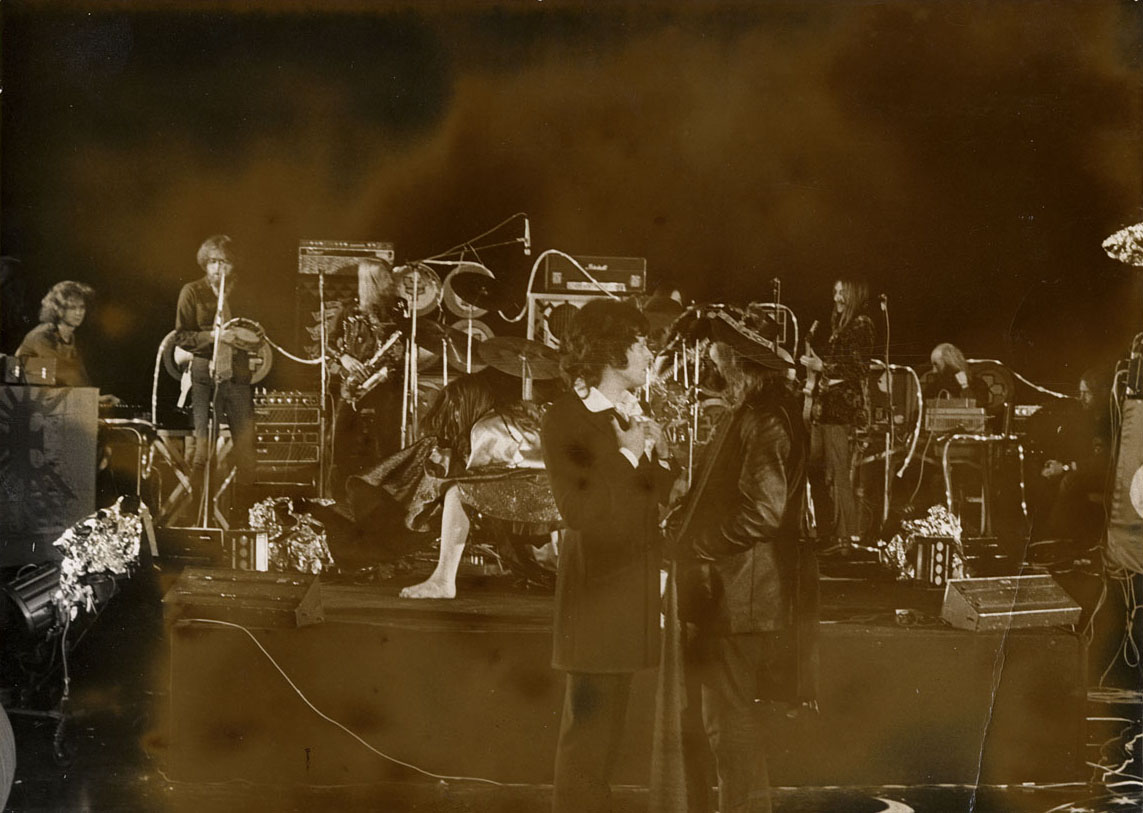
Update: Found on an archive disc, this rare photo from the set of The Final Programme showing Finch as Jerry Cornelius facing off with his creator, Michael Moorcock. (Click for a larger copy.) That’s the Space Ritual line-up of Hawkwind in the background. Band and author appear for a fraction of a second in a shot during the film’s arcade scene. Considering how common it was to have rock bands in feature films during this time it still surprises me that Fuest and co. went to all this trouble then left them on the cutting-room floor. The photo was Moorcock’s own, as I recall, something we ran in one of the Savoy books.

• Guardian obituary
• Independent obituary
• Telegraph obituary
• Macbeth trailer
• Frenzy trailer
• The Final Programme trailer

Previously on { feuilleton }
• Dan O’Bannon, 1946–2009
• Patrick McGoohan and The Prisoner

Rhinoceros by Jan Lenica

lenica1.jpg

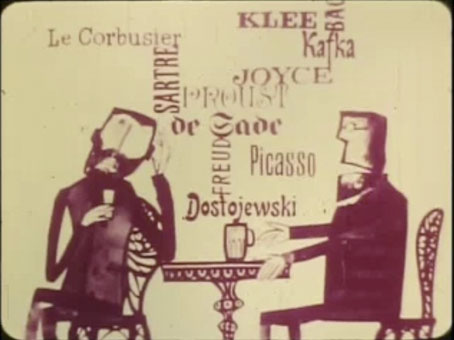
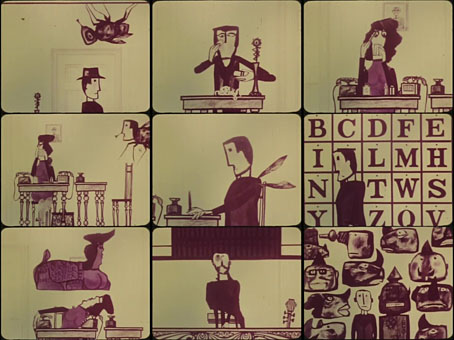
As noted here last year, Polish artist Jan Lenica (1928–2001) was also an animator as well as a celebrated poster designer. Die Nashörner (1964) is an 11-minute condensation of Eugène Ionesco’s Rhinoceros that no doubt works best if you’re familiar with the play but which nevertheless contains some funny moments, especially when “Rhinocerosism” starts to spread. The film is free to download at the Internet Archive.

lenica2.jpg

Previously on { feuilleton }
• Repulsion posters
• Dom by Walerian Borowczyk and Jan Lenica
• Labirynt by Jan Lenica

Weekend links 141

nguyen.jpg

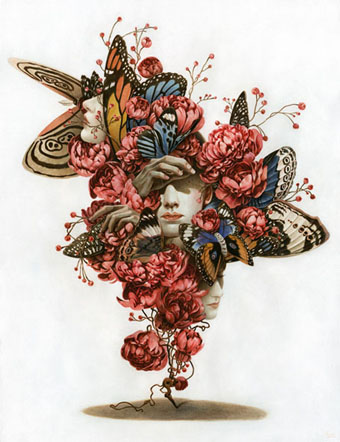
From the Beautiful Faces series (2012) by Tran Nguyen.

• “What possessed a generation of young European artists, and a few Americans, to suddenly suppress recognizable imagery in pictures and sculptures? Unthinkable at one moment, the strategy became practically compulsory in the next.” Peter Schjeldahl on the birth of abstraction.

• “A profanely mystical work of hyperpurple theory-porn, ObliviOnanisM is an auto-erotic intellectual fiction envisioning the phantastical unending odyssey of a young woman, Gemma, whom you will never know.”

• Psychedelia—An Ancient Culture, A Modern Way of Life, a 520-page history of psychedelic culture by Patrick Lundborg. Related: Ken Kesey talks about the meaning of the Acid Tests.

[Hodges] made a convincing case that Turing’s teenage crush on a fellow schoolboy, Christopher Morcom, was an important catalyst for his lifelong preoccupation with the relationship between brain and mind. Morcom’s unexpected death at the age of eighteen was a shattering blow to Turing, who began to reflect on whether his friend’s consciousness might survive after death or whether it was simply a result of complex material processes and expired when life did. Hodges also linked the famous “Turing Test”, in which a computer attempts to pass as an intelligent human being, to Turing’s own dilemma as a gay man in a homophobic world. (Turing called his test the “imitation game”, and Hodges observed, “like any homosexual man, he was living an imitation game, not in the sense of conscious play acting, but by being accepted as a person that he was not”.)

Michael Saler reviews three books about computing pioneer Alan Turing

• Paul Gallagher at Dangerous Minds looks at Flowers, Lindsay Kemp’s theatrical staging of Genet’s Our Lady of the Flowers.

• David Pearson designed a new edition of George Orwell’s Nineteen Eighty-Four for Penguin.

• Quadtone – Lumisonic Rotera: Mariska de Groot plays a light-to-sound instrument.

• “Cash Mobs” Go Global—Battle Spreads Against Chain Store Dominance.

• Cities and the Soul: a feast of Italo Calvino links at MetaFilter.

• 25 dessins d’un dormeur, Jean Cocteau, 1929.

• Haunted Decor: a Flickr group.

• Computer In Love (1966) by Perrey & Kingsley | Computer Love (1981) by Kraftwerk | Computer Love (1992) by The Balanescu Quartet