Yuri Yakovenko bookplates

jakovenko3.jpg

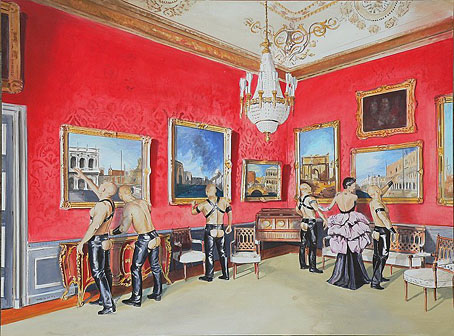
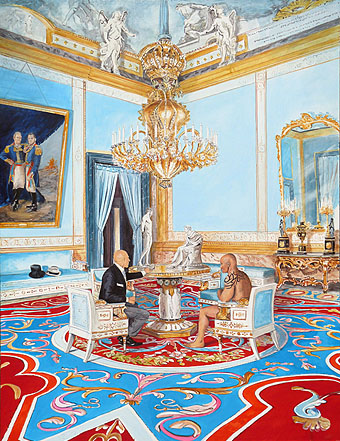
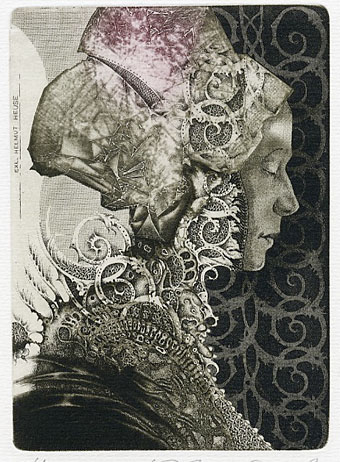
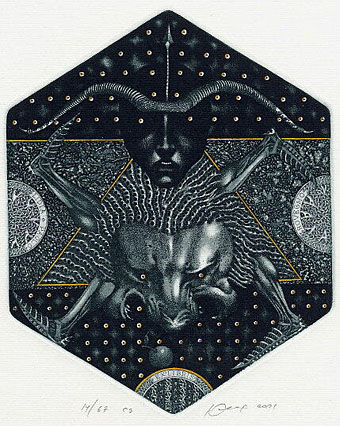
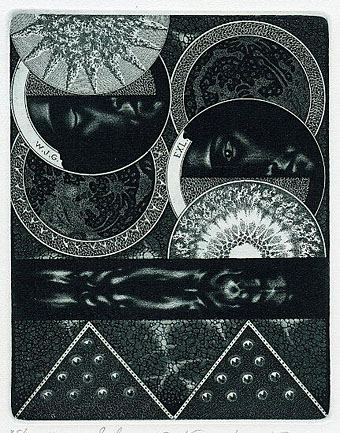
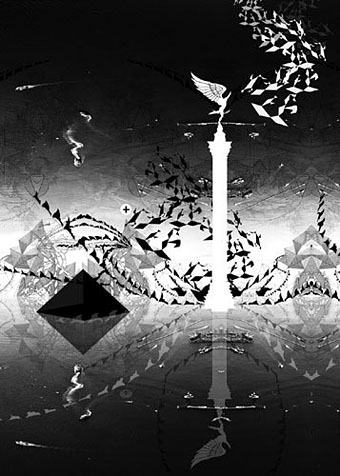
Yet more bookplates, discovered whilst browsing the wealth of material at this Japanese site recommended by Andy Paciorek. Belarus artist Yuri Yakovenko’s name is given a number of spellings on various sites so I’ve gone with the one from a Belarus art page since they can be presumed to know best how to label their fellow artists. Yakovenko’s hyper-detailed, occult-inflected brand of Surrealist imagery is so striking you have to wonder why his work hasn’t gained more visibility. Is it because the contemporary Ex Libris print world appears to be a self-contained zone within the wider art market? Whatever the answer, this is a region worthy of further investigation.

jakovenko1.jpg

jakovenko2.jpg

Elsewhere on { feuilleton }
The etching and engraving archive

Previously on { feuilleton }
Tranquillo Marangoni bookplates
Book-plates of To-day
Louis Rhead bookplates
Pratt Libraries Ex Libris Collection
The Evil Orchid Bookplate Contest
The art of Oleg Denysenko
David Becket’s bookplates

Weekend links 28

/shah1.jpg

The Expansion of the First Great Ornamental Age: 3 Distances (2009) by Seher Shah.

Great Female Artists? Think Karachi. “One reason for the unusually high ratio of female artists in Pakistan has to do with the fact that the art industry has not traditionally been viewed as a lucrative business by men, says South Asian art historian Savita Apte, who administers the internationally renowned Abraaj Capital Art Prize. Until very recently, creatively inclined males tended to focus on fields such as advertising or illustration, leaving the art field wide open for some very talented women.” Related: artist Seher Shah (and also here).

• Hardformat looks at the luxury/collectors/whatever edition of the forthcoming Brian Eno album. “What’s the music like?” Colin asks. Indeed.

Strange Flowers is “a celebration of the most extraordinary, eccentric and unfairly forgotten figures of the past 200 years”.

Warsaw Warble: Illustration and design in Poland, 1917 to 1938. More marvels from A Journey Round My Skull.

• Strange Attractor hosts talks at London’s Little Shoppe of Horrors throughout the autumn.

• Barney Bubbles in Mojo and more details of the new edition of Paul Gorman’s BB book.

• A blog devoted to all things having to do with Howard Pyle (1853–1911).

Erik Davis on Dreaming, Writing, Philip K Dick and Lovecraft.

10 Reading Revolutions Before E-Books.

Secular Exorcisms by Evan J Peterson.

• RIP Jean Benoît.

Street haikus.

I Put A Spell On You (1965) by Screamin’ Jay Hawkins; I Put A Spell On You (1965) by Nina Simone; I Put A Spell On You (2001) by Natacha Atlas.

Naked Bodies, Naked Souls and Mind Pixels

bodies.jpg

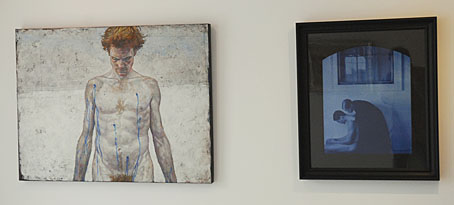
Pictures by Daniel Barkley (left) and John Dugdale (right).

Two exhibitions worthy of note for those in the New York area. Jan Kapera of JKK Fine Arts notified me about a new show he’s curated, Naked Bodies, Naked Souls, currently running at the Loft Gallery in the Delaware Arts Center,
Narrowsburg, NY.
bodies2.jpg

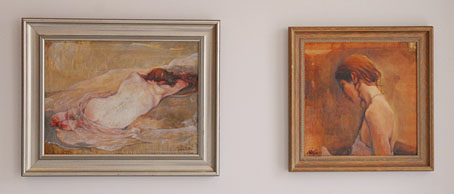
The realm of ‘Naked Bodies, Naked Souls’ is a very private, personal world; a world of artists’ secrets, dreams, feelings, and deepest emotions,” says curator Kapera. “They have expressed the unexpressed—they have found the way to show spiritual and mystical states of soul in dream-like, symbolic images.

This exhibit features the work of 16 international artists: Daniel Barkley (Canadian), Luigi Casalino (Italian), Joanna Chrobak (Polish), John Dugdale (American, NYC), Barbara Falender (Polish), Michel Henricot (French), Michael Kuch (American, MA), Tom Misztal (American, OR), Aleksandra Nowak (American, NJ), Darek Nowakowski (American, NYC), Egidijus Rudinskas (Lithuanian), Krzysztof Skorczewski (Polish), Lubomir Tomaszewski (American, CT), David Vance (American, FL), Damian Wojtowicz (Polish), and Piotr Woroniec (Polish). (More.)

Naked Bodies, Naked Souls runs to September 4, 2010. Thanks to Jan for the photos!
krumins.jpg

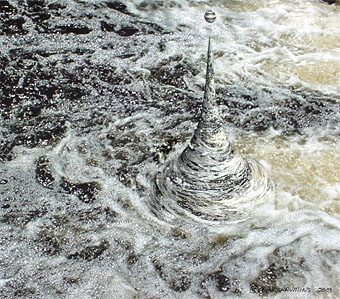
Water Spike (2003) by Daina Krumins.

And by chance this weekend I happened to see news of a forthcoming exhibition of work by artist and filmmaker Daina Krumins, Mind Pixels, at the Barron Arts Center, Woodbridge, NJ.

The Barron Arts Center is located at 582 Rahway Avenue in Woodbridge. Admission is free and everyone is welcome to attend. The “Mind Pixels” exhibition features photomontages, sculpture and films by surrealistic artist Daina Krumins. The exhibit opens on Aug. 21 and runs until Sept. 15. Gallery hours are Monday through Friday, 11 a.m.-4 p.m.; Saturday and Sunday 2-4 p.m. The public is also invited to attend the opening reception on Sunday, Aug. 22 from 2-4 p.m. Light refreshments will be served and reservations are suggested. (More.)

As part of the exhibition three of Krumins’ very strange animated films will be given a rare screening this Thursday, August 26. One of the three is Babobilicons, her epic filming of the activity of slime moulds and stinkhorn mushrooms. I’ve been intrigued by the sound of this for several years (see an earlier post about the film) but have yet to see it so anyone in Woodbridge is in a fortunate position this week.

Previously on { feuilleton }
Babobilicons by Daina Krumins
Saint Sebastian in NYC

The Art Nouveau dance goes on forever

nouveau1.jpg

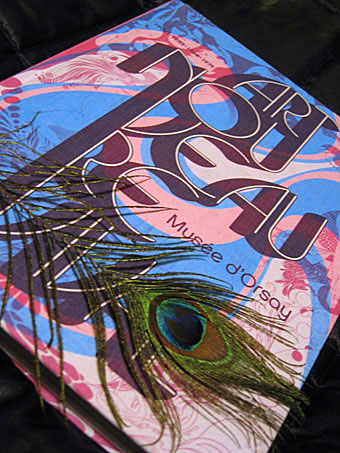
Catalogue for Art Nouveau Revival 1900 . 1933 . 1966 . 1974. Peacock feather not included.

Regular readers may recall my mention of the Musée d’Orsay exhibition Art Nouveau Revival which was launched late last year. I didn’t get to see the exhibition, unfortunately, but this week I finally ordered a copy of the catalogue, an expensive cloth-bound volume with essays (in French) by Philippe Thiébaut, Stephen Calloway, Irene de Guttry, Thierry Taittinger and Philippe Thieryre. Despite the ruinous postal charges incurred by the book’s weight this was worth every euro, it being the kind of polymorphous production which in solipsistic moments one can choose to believe was created solely for your own benefit.

nouveau3.jpg

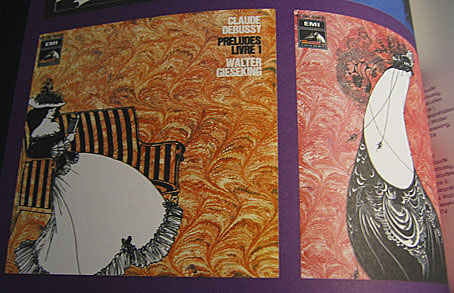
Aubrey again, album covers from 1974.

Much of the subject matter has been explored here in various small ways, with the curators following the influence of Art Nouveau through Surrealism (mainly Dalí) to the psychedelic art of the 1960s and on into the Pop Nouveau (for want of a better term) which flourished in the first half of the 1970s. Among the familiar Aubrey Beardsley graphics and psychedelic posters there are also some pleasantly surprising inclusions, including illustrations by Philippe Jullian (yes, I’m still intending on writing about him at some point), yet more Beardsley album covers, film posters, and even some of the sillier films of the late-60s such as Casino Royale. Being a French exhibition there’s a section devoted to comic strips which includes work by Moebius, Philippe Druillet and Guido Crepax.

nouveau2.jpg

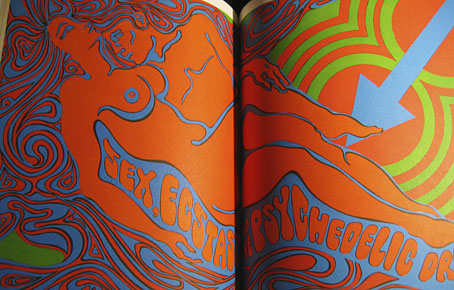
Sex and LSD, a spread from Playboy, 1967.

It’s common to see parallels drawn between the 1890s and the 1960s but the strange blooms of vulgarised fin de siècle style which burgeoned in the wake of psychedelia are seldom given much attention. One of the great things about this catalogue is the amount of ephemera the curators chose to include such as magazine ads and trend-chasing album sleeves. It was precisely this blend of 1890s + 1960s + 1970s I sought to capture in my recent cover for Dodgem Logic. As I said, it’s an expensive book but for anyone drawn to this aesthetic hothouse it’s also an essential purchase. Art Nouveau Revival can be ordered direct from the museum shop. Further samples follow.

Continue reading “The Art Nouveau dance goes on forever”

Dalí’s Elephant

burman.jpg

Madhav Reading Stories of Devi (2007) by Sakti Burman.

Dalí’s Elephant is a group exhibition at London’s Aicon Gallery that “traces the echoes of Surrealism in modern and contemporary art from the Indian Subcontinent.” The exhibition title refers to the gift ashtray which Salvador Dalí designed for Air India in 1967:

In 1967 Air India commissioned Salvador Dali to produce a limited edition ashtray which was to be given to a select group of lucky first-class passengers. Dali produced a small unglazed porcelain ashtray composed of a shell-shaped centre with a serpent around its perimeter. This was supported by three stands, two of which point in the same direction and resemble an elephant’s head. The third stand was inverted so that it resembled swan’s head. Dali was initially paid no more than a few hundred dollars for his design but when they received the design the airline bosses were so delighted that they made Dali the surprise gift of an elephant. Dali lived with the elephant for a few days at his Portligat home before donating the beast to the local zoo. (More.)

The Surrealist element is very much a trace in some of the works which seems surprising given the distinctive heritage of India’s religious imagery, as was demonstrated recently at A Journey Round My Skull. But I like the Sakti Burman paintings, especially the example shown here. Dalí’s Elephant runs to September 4th, 2010.

Previously on { feuilleton }
Marsi Paribatra: the Royal Surrealist
Dalí in Wonderland
Bollywood posters
Impressions de la Haute Mongolie revisited
Dalí and Film
The persistence of DNA
Salvador Dalí’s apocalyptic happening
Dalí Atomicus
Impressions de la Haute Mongolie