The art of Fabrizio Clerici, 1913–1993

clerici1.jpg

Un istante dopo (1978).

An Italian painter of the fantastic who’s managed to stay off my radar for one reason or another despite doing many of the things I like to see: weightless structures, imaginary architecture, and (towards the end of his career) a series of variations on Arnold Böcklin’s endlessly adaptable The Isle of the Dead. The latter paintings are some of the best Böcklin variants I’ve seen. These alone would have made him worthy of attention but the rest of his oeuvre is an equally accomplished development of late Surrealism (or, if you need another category, Fantastic Realism). The official website is a very good one so there’s plenty more to see. (Thanks to Michelangelo for the tip!)

clerici2.jpg

La tromba d’aria (1965).

clerici3.jpg

Latitudine Böcklin (1974).

Elsewhere on { feuilleton }
The fantastic art archive

Previously on { feuilleton }
A Picture to Dream Over: The Isle of the Dead
The Isle of the Dead in detail
Arnold Böcklin and The Isle of the Dead

Angkor in Paris, 1931

angkor1.jpg

Searching for old photos of the Boi de Vincennes turned up some startling images from another exposition that I’d not come across before. The Paris Colonial Exposition filled a corner of the city’s largest park with a variety of exhibits and pavilions intended by the government of the day to show the colonial enterprise in a positive light. Among the replicas of buildings from overseas there was this spectacular reconstruction in plaster of the temple at Angkor Wat, built to represent the French presence in Indochina. No one would dream of creating such an exposition today, of course, and the idea was controversial at the time. To their credit, the authorities did allow the Communist Party to stage their own exhibit showing the damaging and exploitative nature of colonialism.

angkor2.jpg

Politics aside, I’m fascinated by the idea of a full-scale Cambodian temple materialising in the heart of Paris. The Exposition Universelle of 1900 had its share of replicas: the Swiss exhibit was a miniature mountainside populated with a chalet, cows and milkmaids, while one bank of the Seine was taken over by Albert Robida’s reconstruction of medieval Paris. Neither of those seem as surprising as this resurrection of Angkor, especially in the spotlit night shots. I’ve been wondering what the Surrealists would have made of this and the juxtapositions presented by the other reconstructions. André Breton was a member of the Communist Party at the time (they expelled him in 1933) so I’d expect from his point of view at least the exposition would have been dismissed as bourgeois propaganda.

angkor3.jpg

Among the many web pages with photos of the exposition this Flickr set of Dutch tourist pictures is particularly good. Traces of the pavilions still remain, including some of the Nagas from the avenue leading to the temple.

angkor4.jpg

Continue reading “Angkor in Paris, 1931”

René Magritte album covers

beck.jpg

Beck-Ola (1969) by The Jeff Beck Group. Painting: The Listening Room (second version, 1958).

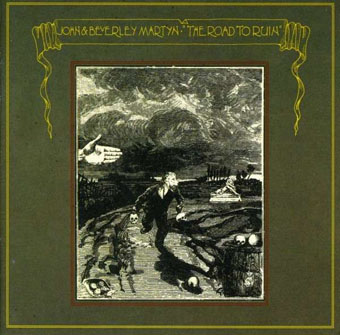
An inevitable post considering the shape of the week, and also a continuation of an occasional series about paintings used as album cover art. Given Magritte’s continuing popularity I’m sure these can’t be the only examples, especially when his work had such an effect on the cover designs of the 1970s. In addition to the Magritte-like covers created by Hipgnosis for Pink Floyd and others you can find the artist’s influence in the cover by Alton Kelley and Stanley Mouse for The Grand Illusion (1977) by Styx, a hugely successful album whose painting is derived from Magritte’s The Blank Cheque (1965). There are many more examples.

Magritte died in 1967 so he missed out on this explosion of interest which also spread into the advertising world. When it comes to influence, Magritte has probably had more of an effect on the general culture than any of the other Surrealists, Dalí included.

rascals.jpg

See (1969) by The Rascals. Painting: The Big Family (1963).

hull.jpg

Pipedream (1973) by Alan Hull. Painting: Philosopher’s Lamp (1936).

balavoine.jpg

Vienne La Pluie (1975) by Daniel Balavoine. Painting: Hegel’s Holiday (1958).

Continue reading “René Magritte album covers”

Monsieur René Magritte, a film by Adrian Maben

magritte1.jpg

Until the end of his life, [Magritte] preferred to take the tram.

Now there’s an attitude I approve of. George Melly in his BBC film about Surrealism mentions visiting Magritte at his home in Brussels, and we see Magritte’s house at the beginning of Adrian Maben’s 50-minute film about the artist’s life and work. Maben’s film was made in 1978 as an Franco-German TV production but the narration, by Maben himself, is in English. Surrealism seemed to be back in vogue in 1978: as mentioned yesterday, the Hayward Gallery in London staged an exhibition of Surrealist art that year, the BBC commissioned George Melly’s film as a result of this, while over on rival network ITV there was the marvellous documentary about Surrealist patron Edward James who modelled for one of Magritte’s most famous paintings, La reproduction interdite (1937).

magritte2.jpg

Adrian Maben’s name will be familiar to Pink Floyd obsessives as the director of Pink Floyd: Live at Pompeii (1972), and if you’re familiar with that film you can recognise the same shooting style in his Magritte film which deploys similar slow zooms, tracking shots and images sliding in and out of the frame. The music is credited to a surprising combination of Béla Bartók (mostly piano) and Roger Waters, although some of the pieces from the latter are actually by Pink Floyd, there’s even some of the opening of Obscured By Clouds. In style and content the film is as good as anything the BBC were producing at the time, with extracts from a TV interview with the artist, and also some of Magritte’s high-spirited home movies made with his wife and friends.

Magritte and Pink Floyd are a fitting match, some of the Floyd’s album covers could be Magritte paintings rendered photographically: two men shaking hands, one of whom is on fire; a giant pig adrift over a power station. Storm Thorgerson always acknowledged the debt that Hipgnosis owed Magritte’s example, it’s there in the title of the first Hipgnosis book, Walk Away René, and in this short Tate interview from 2011 where he mentions the Wish You Were Here album as being a very conscious Magritte homage.

Previously on { feuilleton }
George Melly’s Memoirs of a Self-Confessed Surrealist
The Secret Life of Edward James
René Magritte by David Wheatley

George Melly’s Memoirs of a Self-Confessed Surrealist

melly1.jpg

It’s a short step from Dada to Surrealism, and George Melly provides a brief skate through the philosophies of both in this 25-minute BBC film from 1978. Melly, like JG Ballard, was struck by Surrealism at an impressionable age, and the love affair was a lasting one. Both Melly and Ballard championed Surrealism during periods when it was deeply unfashionable, an oppositional stance that Ballard seemed to relish.

melly2.jpg

Melly’s enthusiasm was so well-known that he was often called upon as a token advocate of Surrealism whenever one was required by the TV channels, hence this film whose title implies an admission of something disreputable. A major exhibition of Surrealist art was taking place in 1978 at the Hayward Gallery in London, and it’s to this exhibition that Melly journeys, explaining (and demonstrating) what it means to be a Surrealist along the way. I saw this when it was first broadcast, and the absurd phone calls to strangers inspired myself and a few school-friends to similar activities; teenage pranks seemed less frivolous with an artistic justification. There’s a slight connection to yesterday’s post in Melly’s recounting of an anecdote from the 1950s when he was spared a night-time beating by his reciting of Kurt Schwitters’ Ursonate to a group of belligerent youths. Elsewhere you get to see punk band The Stranglers scowling at the camera—Melly suggests that the punks might be inheritors of the Dadaist attitude—and director Alan Yentob standing at a urinal.

Previously on { feuilleton }
The Secret Life of Edward James
René Magritte by David Wheatley