Weekend links 313

oneill.jpg

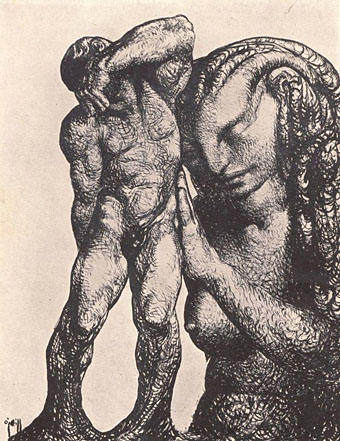
The Sullen Son (1921) by Rose O’Neill from her Sweet Monsters series (also here).

• 10 hours of Popcorn (1972) by Hot Butter. Related (and linked here before) 79 different versions of Gershon Kingsley’s original. If that’s not enough, there’s at least 100 more out there.

• Mixes of the week: Touristica Mystica Sigillistica by Gregg Hermetech, FACT Mix 554 by The Body, and Secret Thirteen Mix 187 by Dalhous.

• Another electronic cover version: Trans Europe Express by Cobby & Mallinder.

In the 1950s people like Pierre Schaeffer and John Cage were saying: “But there are all these sounds in the world, and if you listen to them carefully enough you will hear the music that they speak.” This immediately opened up a new world; it’s enriching once you’ve educated your ear to that, because when you’re annoyed by the sound of the street you can make music out of it. You can make music out of almost everything!

Eliane Radigue discussing her career with Paul Schütze

• Patricia Highsmith’s Snail Obsession and Two Weird Tales of Monstrous Mollusks.

• Youth and Alex Patterson remember the making of Little Fluffy Clouds by The Orb.

• Strange Flowers pursues Sheila Legge and other Phantoms of Surrealism.

• Revealed: Cambodia’s vast medieval cities hidden beneath the jungle.

• Alan Moore describes the cover of epic novel Jerusalem.

• Ashgabat: the city of the living and the city of the dead.

• In praise of the tram by Christian Wolmar.

• Taxidermists at DC’s

• Brian The Snail (1982) by Pigbag | Slow Loris Versus Poison Snail (1996) by David Toop & Jon Hassell | Popcorn (2000) by Gershon Kingsley
Weekend links 312

nelson.jpg

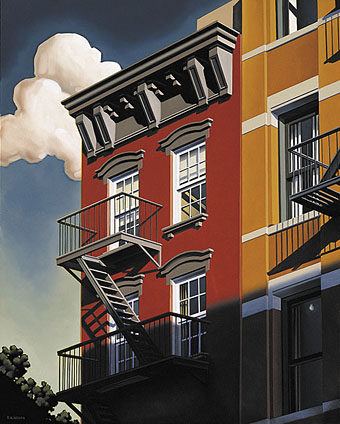
The Shadow by Kenton Nelson.

• The week in Coil: An interview by Derek de Koff, plus an extract from the new edition of England’s Hidden Reverse by David Keenan. Opening later this month at Ludwig, Berlin, is Chaostrophy, a Coil-related exhibition/celebration.

• Strange Flowers remembers the incomparable Marchesa Casati, a woman who happens to feature in the book I’ve been designing and illustrating for the past few weeks. (More about that later.)

• “It wasn’t about how we could meet the demands of the book, but rather how the book meets us.” Ben Wheatley (again) talking to Jamie Sherry about bringing High-Rise to the screen.

• The latest release from Hawthonn is Sea-Spiral Spirit. The album has two accompanying videos: Pan Laws and Last Chimes From A Dormant Moon.

• Alan Moore celebrates Chris Petit’s The Psalm Killer—a nerve-shredding Irish noir.

• Not a mix but a reading guide: The Brit Horror Mixtape collated by Mark West.

• More Penda’s Fen: Graham Fuller on the Romantic tradition in British film.

• Previews of Tooth by Raime, “a steadfast concoction of brooding dystopia”.

• “How big an issue is the nausea problem for Virtual Reality products?”

• FACT chooses 16 of the best songs powered by Sly and Robbie.

• Geeta Dayal on the pioneering computer music of Bell Labs.

• Mix of the week: Finders Keepers’ Space Rock Special.

• Paul Schütze: The True Art of Fine Fragrance

• The Surrealist Legacy of Claude Lalanne

• Les illustrateurs de Baudelaire

• RIP publisher Peter Owen

• Perfumed Garden Of Gulliver Smith (1967) by John’s Children | Perfumed Metal (1981) by Chrome | Fragrance (Ode To Perfume) (1981) by Holger Czukay

Essex House book covers

essex01.jpg

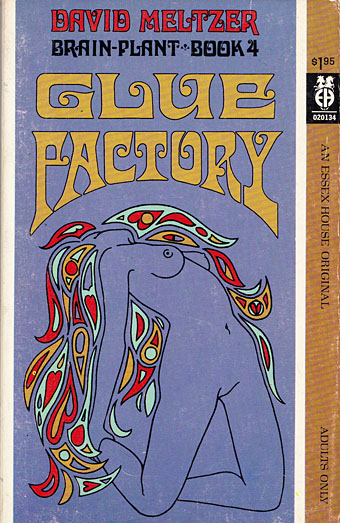
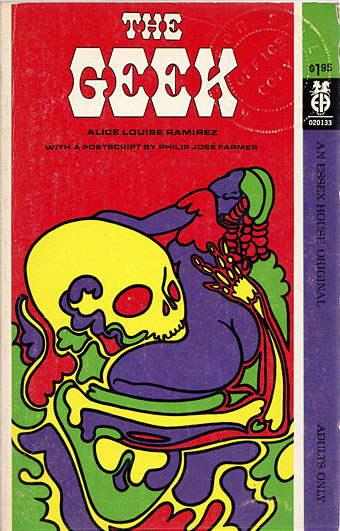
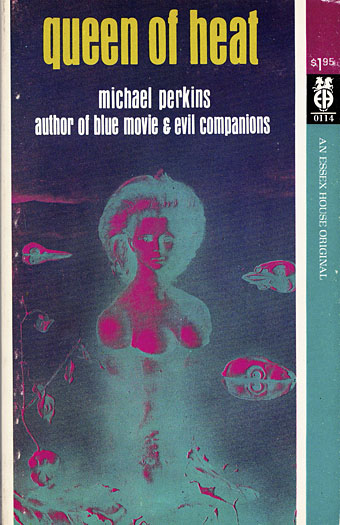
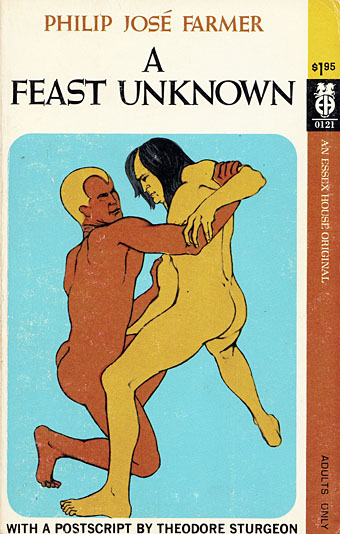
I’ve known the name of American publisher Essex House for many years but the books they published, all of which appeared in a frenzy of activity from 1968 to 1969, have never been easy to find in the UK. The company is chiefly of note today for having three original Philip José Farmer novels on their list, all works of fantasy with the erotic side more dominant than in Farmer’s previous work. Erotic fiction with a generic slant was the Essex House speciality, and while the Farmer covers have appeared here before, I’d not seen any other Essex House covers until the discovery of this page which collects 38 of the 42 published titles.

essex13.jpg

It’s immediately evident looking down the list that the (uncredited) designer managed to forge a distinctive identity for the books at a time when any cover would suffice if the written material was sufficiently pornographic. Many of the covers borrow (or mutate) pre-existing artworks, while others emulate the watered-down psychedelic style that by the late 60s was visible everywhere in the US and much of Europe. These aren’t all great pieces of design but the graphics on erotic titles in the 60s either played safe by favouring text-only covers or sported technically crude emulations of paperback illustration. (For an example of just how technically crude, see this post about some of the many gay pulps on sale in the US.)

essex33.jpg

Essex House may not have been around for long but they seemed to be attempting something different, at least where the covers were concerned. I’ve only read the Farmer books so I can’t vouch for the other titles but the Encyclopedia of Science Fiction writes that

…about half the 42 titles published by Essex House were sf/fantasy; they included novels by Philip José Farmer, Richard E Geis, David Meltzer (perhaps the most distinguished), Michael Perkins and Hank Stine…of which a number were ambitious, some literary, and most somewhat joyless—even emetic—and redolent of 1960s radicalism.

Pornography as a tool of radical politics had a brief vogue in the late 60s and early 70s, something that’s particularly evident in the underground magazines of the period. The results may be “joyless” to some but then I find a lot of the alleged classics of science fiction joyless so it’s all a matter of taste. There was no equivalent of Essex House in the UK but in the 1970s France had the Chute Libre imprint which not only published all of the Essex House Farmer titles but did so with a collection of equally striking (or “joyless”) cover designs.

essex23.jpg

Artwork is a solarised version of Le Bout du monde (1949) by Leonor Fini.

Continue reading “Essex House book covers”

Jan Švankmajer, Director

svankmajer.jpg

As I have always said, my aim is to make Surrealist documentaries. I want to show that our world is imaginative by nature, that you can look at it imaginatively. It has something that escapes the quotidian gaze. And it is possible to reveal it through the technique of animation. Animation thus becomes a sort of new alchemy.

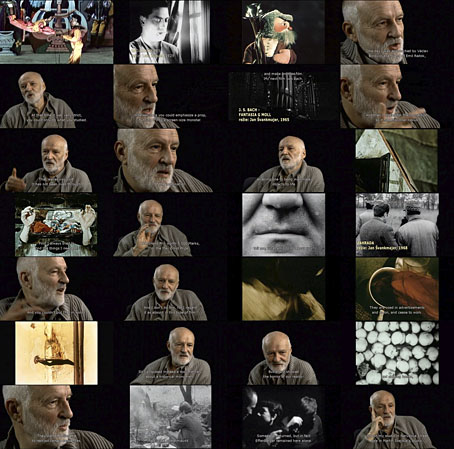
Thus Jan Švankmajer whose production company, Athanor, is named after the furnace used by medieval alchemists. Jan Švankmajer, Director (2009) is an hour-long documentary by Martin Sulík, one of several films from Golden Sixties, a Czech television series about film directors. Švankmajer has been the subject of several documentaries following his rise to international prominence, one of which, Les Chimeres des Švankmajer (2001), may be found on the BFI’s DVD set of the complete short films. Martin Sulík’s documentary doesn’t cover as much ground as the French film—the focus is on the 1960s—but has an advantage by allowing Švankmajer to talk at length about his work. Topics include his discovery of the usefulness of animation, his approach to filmmaking (and art in general), and peripheral subjects such as the soundtrack music of Zdeněk Liška, and the activities of the Prague Surrealist group. (Via MetaFilter.)

• Jan Švankmajer, Director: Part one | Part two | Part three | Part four

Previously on { feuilleton }
• Don Juan, a film by Jan Švankmajer
• The Pendulum, the Pit and Hope
• Two sides of Liška
• The Torchbearer by Václav Švankmajer

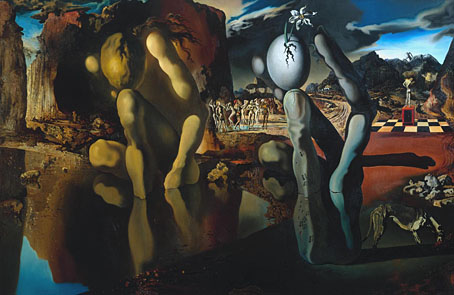
Cosmic eggs

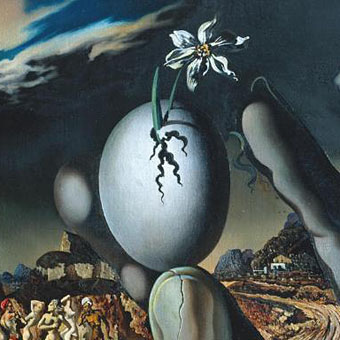
1: The Metamorphosis of Narcissus (1937) by Salvador Dalí.

dali1.jpg

dali2.jpg


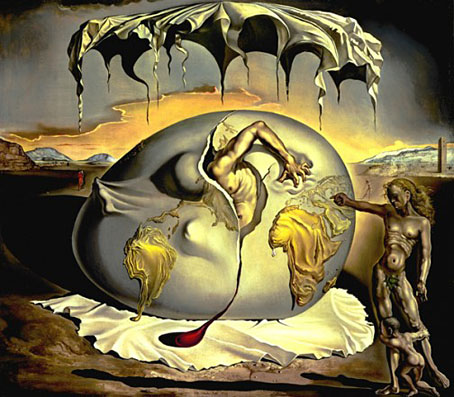
2: Geopoliticus Child Watching the Birth of the New Man (1943) by Salvador Dalí.

dali3.jpg


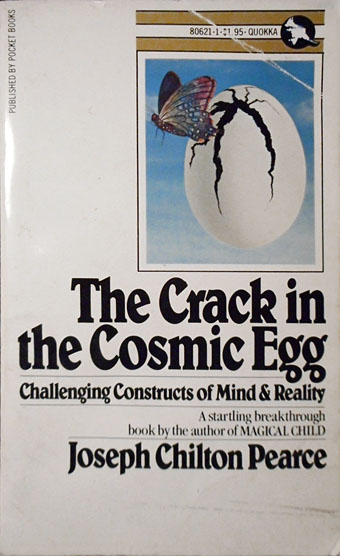
3: The Crack in the Cosmic Egg: Challenging Constructs of Mind and Reality (1971) by Joseph Chilton Pearce.

pearce.jpg


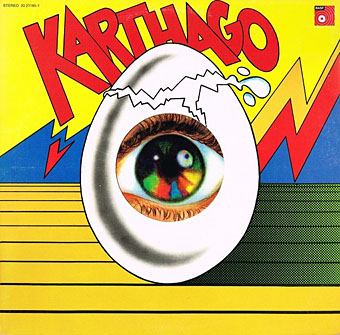
4: Karthago (1971) by Karthago.

karthago.jpg

Cover design by JH Löffler.


5: Edge Of Time (1972) by Norma Winstone.

winstone.jpg

Cover art by Terry Eden.


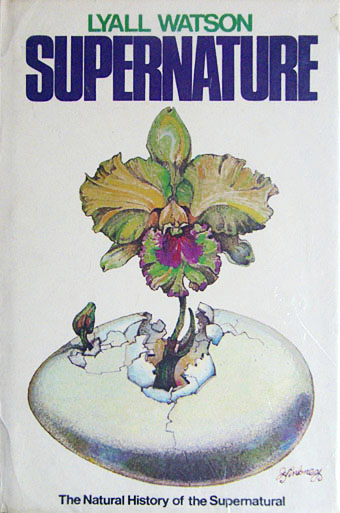
6: Supernature (1973) by Lyall Watson.

watson.jpg

Cover art by Jerry Pinkney.


7: A Cosmic Book (1988) by Itzhak Bentov.

bentov.jpg


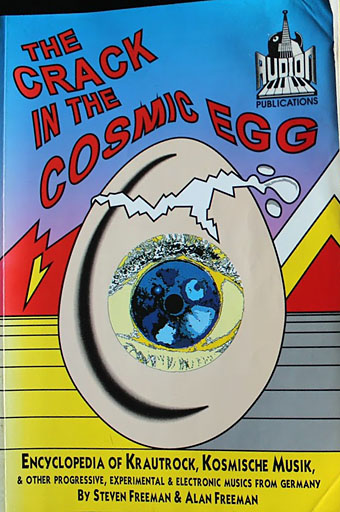
8: The Crack in the Cosmic Egg (1996) by Steven Freeman & Alan Freeman.

freeman.jpg


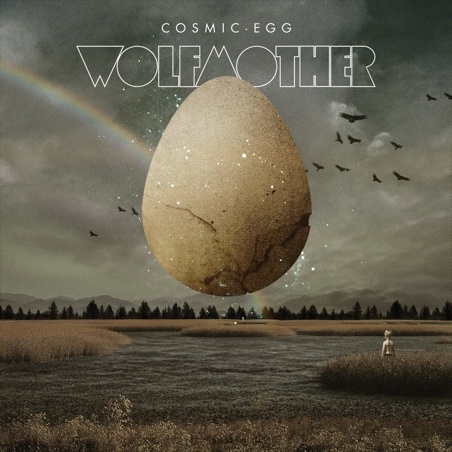
9: Cosmic Egg (2009) by Wolfmother.

wolfmother.jpg

Cover by Invisible Creature.


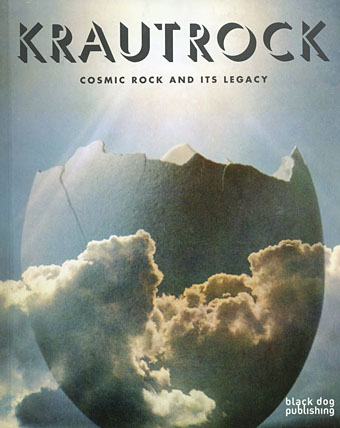
10: Krautrock: Cosmic Rock and Its Legacy (2012) edited by Nikos Kotsopoulos.

krautrock.jpg