Brion Gysin’s walk, 1966

gysin.jpg

The Cut-Ups (1966).

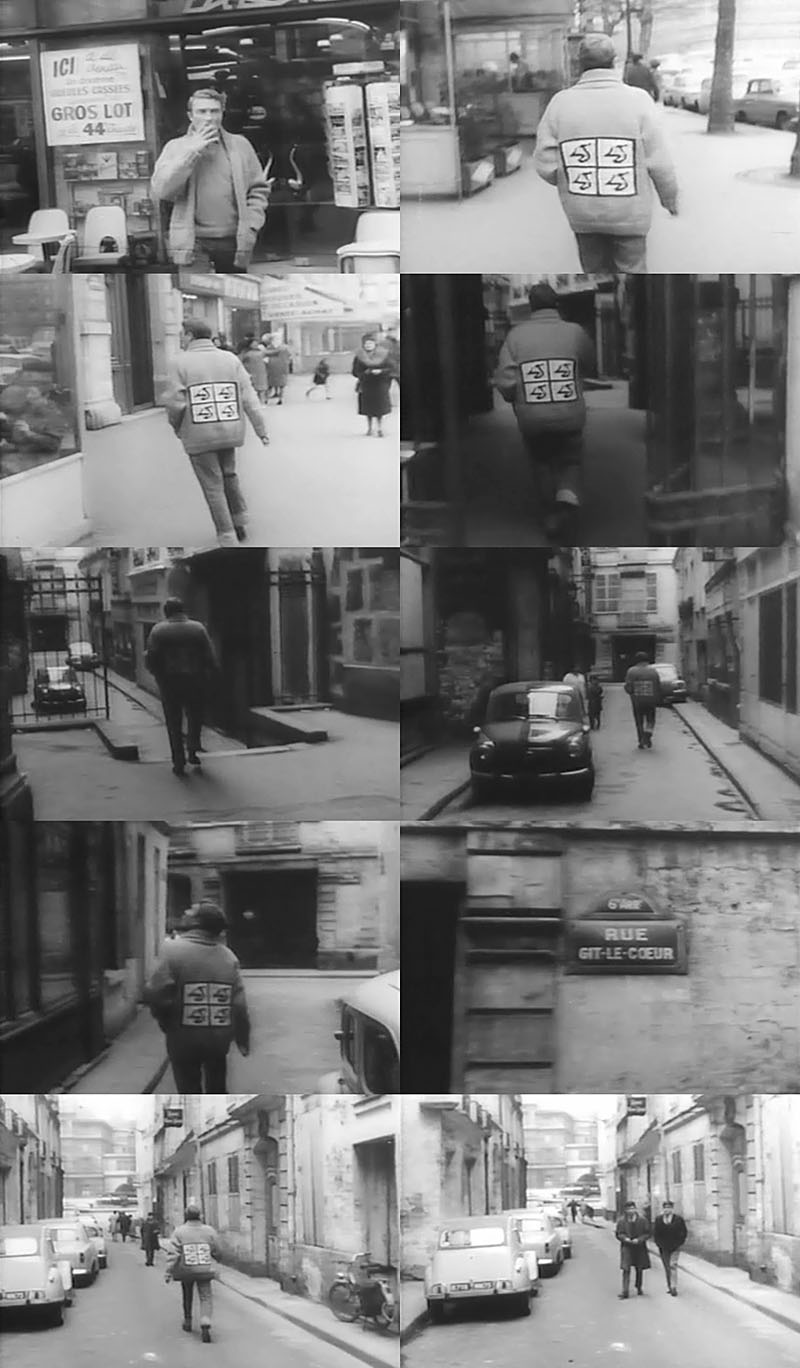
More of the present preoccupation. Choosing Brion Gysin as a subject seems like a detour but the shots above are from Antony Balch’s 1966 film The Cut-Ups which also features William Burroughs, Ian Sommerville and someone-or-other’s cute boyfriend of the time who’s only ever credited as “Baby Zen”, a person about whom I know nothing at all.

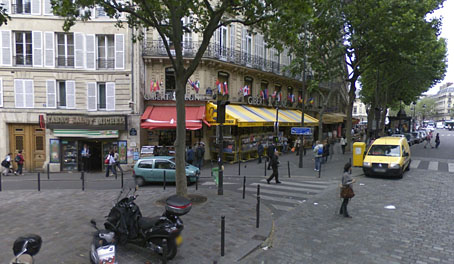
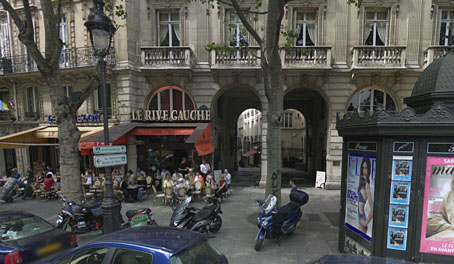
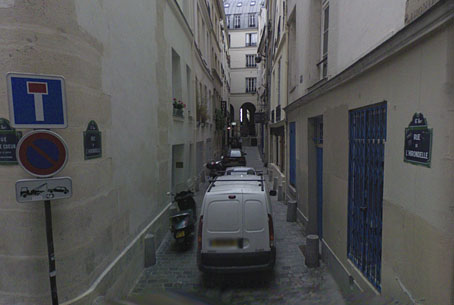
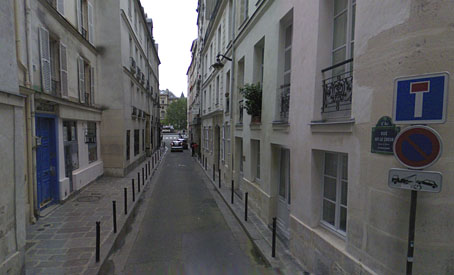
I first saw The Cut-Ups in video form projected on the screens of the Haçienda nightclub in Manchester during their Final Academy evening in 1982, an event at which Burroughs and John Giorno both gave readings. The film on that occasion was mixed with some of the other Antony Balch shorts including Towers Open Fire, and together they made a strong (and bewildering) impression. The Cut-Ups, as noted a few days ago, may have inspired some of the flash edits in Performance, although Nicolas Roeg had been cinematographer on Petulia for Richard Lester the year before, a film which uses similar Resnais-like flashbacks and flash-forwards. In Balch’s film several sequences each a foot in length are cut together at random, a process which was a lot more radical in 1966 than it looks today. The opening sequence shows Brion Gysin walking out of a shop, along a street, down an alley and into the Rue Git le Coeur where the Beat Hotel was located at no. 9, and into whose door he disappears. I visited the street the last time I was in Paris, and took a few snaps whilst there, but it wasn’t until I rewatched The Cut-Ups a couple of years later that I realised I’d made the same walk as Gysin, having inadvertently discovered the narrow passage (the Rue de L’Hirondelle) which connects Git le Coeur with the Boulevard Saint-Michel.
saintmichel1.jpg

The corner of the Boulevard Saint-Michel where Gysin’s walk begins.

The route can be traced (after a fashion) using Google’s Street View where the photos have the usual drawbacks of being positioned high in the air and with a field-of-view which makes narrow spaces look a lot more cramped than they seem when you’re there. For those who can’t visit Paris, however, you at least get a sense of the Latin Quarter, even though the area is a lot more gentrified today than it was in 1966. The Beat Hotel, as I’ve noted before, is now the expensive Hotel du Vieux Paris whose website makes no mention of their establishment having once been cheap lodgings for depraved writers, artists and junkies. As for the Gysin film, I still wonder where he began his walk: was it at the Tabac Saint-Michel or elsewhere? You can judge for yourself at Ubuweb which has a copy of The Cut-Ups in its Burroughs film collection.
saintmichel2.jpg

Rue de L’Hirondelle from the Boulevard Saint-Michel.
saintmichel3.jpg

Rue de L’Hirondelle from Rue Git le Coeur.
saintmichel4.jpg

Rue Git le Coeur looking towards the Seine. The former Beat Hotel is down the street on the right.

Elsewhere on { feuilleton }
• The William Burroughs archive
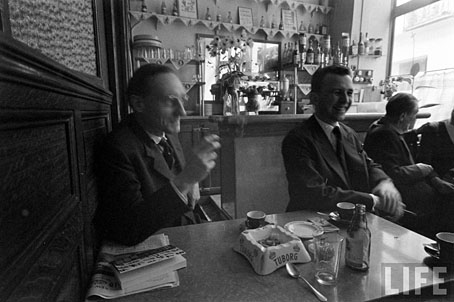
Burroughs in Paris

wsb-paris1.jpg

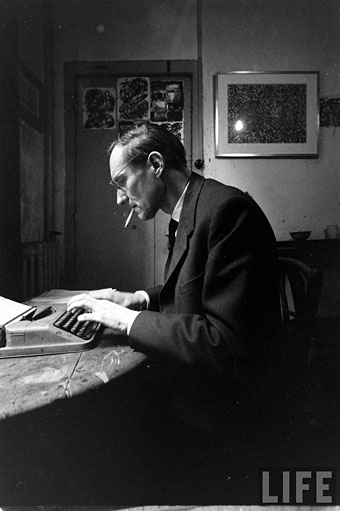
William Burroughs and Maurice Gerodias.

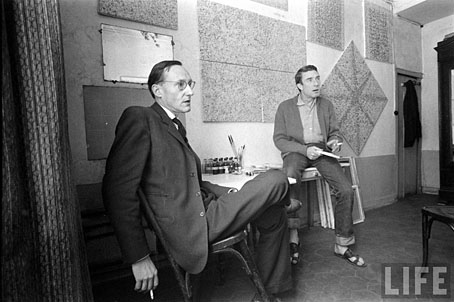
More specifically, William Burroughs photographed in 1959 for Life magazine by Loomis Dean. This was no doubt a story based around the publication of The Naked Lunch by Olympia Press: in the full set there’s shots of Burroughs with Olympia boss Maurice Gerodias, some pictures of the author signing copies of his novel (which can also be seen resting on the newspaper above), and many shots of the shabby interior of the Beat Hotel where the walls of Burroughs’ and Brion Gysin’s rooms are decorated with Gysin’s calligraphic paintings.

wsb-paris2.jpg

Burroughs and Gysin.

Over at the Time archives there’s an amusingly snotty review from 1962 of the first US publication of The Naked Lunch. The reviewer isn’t credited but they trot out details of Burroughs’ history with the implication that nasty people can’t possibly be good or worthwhile writers. In 1962 the Pulitzer Prize for Fiction was won by something called The Edge of Sadness by Edwin O’Connor. What? Who? Exactly.

wsb-paris3.jpg

Elsewhere on { feuilleton }
• The William Burroughs archive
The recurrent pose 44

flandrin.jpg

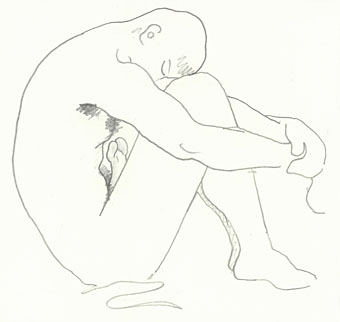
An item found in a collection of erotic drawings of dubious provenance, this piece is credited to Jean Cocteau. While I can’t be 100% certain it is Cocteau’s work it does closely resemble his other erotic drawings, and the rendering of the ear and hands is typical. Cocteau (or whoever) here does the obvious jokey thing with the Flandrin pose, something I’m surprised I haven’t seen already.

Elsewhere, Nathalie spotted a feature about the photography of Yannis Bournias which features another close variation as well as being gorgeous pictures in their own right.

Elsewhere on { feuilleton }
• The recurrent pose archive

Previously on { feuilleton }
• The writhing on the wall
• Le livre blanc by Jean Cocteau
• Cocteau’s sword
• Cristalophonics: searching for the Cocteau sound
• Cocteau at the Louvre des Antiquaires
• La Villa Santo Sospir by Jean Cocteau

Labyrinths

labyrinth.jpg

The Breamore Miz-Maze, Hampshire. Photo by Jim Champion.

As part of the work-related research this week I was looking for designs of old turf labyrinths. It turns out I have two pages of the things in a book I’d earlier considered dropping into Oxfam so that particular volume may have gained a reprieve. Before I went to the bookshelves I’d been browsing the rather wonderful Labyrinthos site which is just the kind of detailed resource you hope to find in these circumstances. There we find an explanation for the difference between a maze and a labyrinth (the general rule being that a maze has more than one choice of route), and a wealth of examples from ancient history to the present day. I’ve long been fascinated by the labyrinths found in churches and cathedrals, of which the most famous example is the one in Chartres Cathedral. They’re a rare incidence of a symbolic device in Christian architecture which is near-universal, and which has clear antecedents in the labyrinths and mazes found in ancient temples. Labyrinthos has a guide to some of the surviving examples to be found in England. As to England’s turf labyrinths, there’s a page devoted to those here with a number of photos.

Previously on { feuilleton }
• Jeppe Hein’s mirror labyrinth

Weekend links 75

darde.jpg

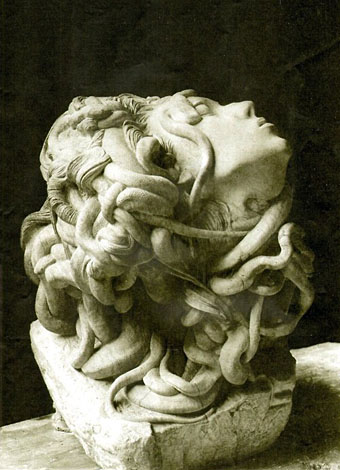
Eternal Pain (1913) by Paul Dardé. (And also here)

Rain Taxi caused a stir this week with its savaging of Hamlet’s Father by science fiction writer Orson Scott Card. The book is another of Card’s blatherings about the hell of being homosexual dressed in garments stolen from the unfortunate William Shakespeare. Rain Taxi made the obvious point about many of Shakespeare’s sonnets being homoerotic. For my part I was more appalled by the quoted extract which reduced one of the greatest plays in the language to that lifeless, cardboard-character-speak which is endemic in bad genre writing. News of the travesty quickly spread to gay news blogs, The Outer Alliance and elsewhere, ensuring that what’s left of Card’s reputation continues to spiral down a Mel Gibson-shaped black hole.

• “Sounds only like itself, like no one before or after.” Julian Cope on Tago Mago by Can which will be reissued in a new edition in November. Nice to see the return of the original sleeve design, something I saw once in a record shop then didn’t see again for years. For a long time I thought I’d imagined it. Related: two German art exhibitions inspired by the group.

• The Responsive Eye (1965), a catalogue for the MoMA exhibition that launched Op Art. Also at Ubuweb: La femme 100 têtes, a film by Eric Duvivier based on the collage work by Max Ernst.

• More apocalyptic art: William Feaver on John Martin whose exhibition will be opening at Tate Britain later this month. There’s a trailer here.

• Borges and I, an essay by Nandini Ramachandran. Related: Buenos Aires: Las Calles de Borges, a short film by Ian Ruschel.

• “Who was JG Ballard? Don’t ask his first biographer,” says Robert McCrum.

• Biologically-inspired fabric and material design by Neri Oxman.

• Cross-pollinating subgenres: “Steampunk ambient” at Disquiet.

• In the Shadow of Saturn, a photo by the Cassini spacecraft.

• The art and fashion designs of Alia Penner.

• Fleet of hybrid airships to conquer Arctic.

• RIP Jordan Belson, filmmaker.

• Ten years of Ladytron whose new album is released on the 12th of September: Playgirl (2001), Seventeen (2002), Destroy Everything You Touch (2005), Sugar (2005), Ghosts (2008), Ace Of Hz (2011).