Weekend links 505

brown.jpg

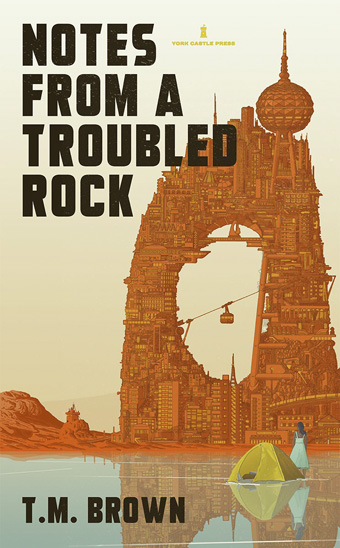
An imaginary book cover by Toby Melville-Brown.

• At the Internet Archive (for a change): Directory 1979, a collection of John Cooper Clarke’s poetry designed by Barney Bubbles; 25 issues of Wrapped in Plastic, the magazine devoted to all things David Lynch; and Cinefantastique, 1970–2002, the magazine about special effects in cinema whose making-of articles were often the first such analyses published anywhere. No contents list for the latter, unfortunately, but the covers shown here give an idea of the main features.

• “Physicist Andreas Schinner recounted a rumor that the Voynich manuscript can be ‘pure poison’ for a scholarly career, because when studying the manuscript there’s ‘always an easy option to make a ridiculous mistake.'” Jillian Foley on the strange quest to decipher the Voynich manuscript.

• At the BFI: Stephen Puddicombe examines six mysterious paintings on film, and Anna Bogutskaya selects ten examples of Lovecraftian cinema. Regarding the latter, I deplore the omission of Huan Vu’s Die Farbe (2011).

• In The Driver’s Seat: Neil Fox on the demented fun of Nicolas Winding Refn’s streaming site for cinematic obscurities, ByNWR.

• “Feed your head”: Akim Reinhardt on the progress of a White Rabbit from Charles Lutwidge Dodgson’s novel to Grace Slick’s song.

• Mixes of the week: Marshland: The Andrew Weatherall Mix, and Music’s Not For Everyone, hours of Weatherall mixes at NTS.

Borderland, an album of music by Fordell Research Unit based on The House on the Borderland by William Hope Hodgson.

• At Dangerous Minds: Thirteen-year-old Mariangela and her adventurous pop album, produced by Vangelis, 1975.

• Heavy Metal, Year One: Kory Grow on the inside story of Black Sabbath’s groundbreaking debut.

• “Theire Soe Admirable Herbe”: How the English Found Cannabis by Benjamin Breen.

Derek Jarman and friends in Dungeness: unseen pictures.

Closing periods at Flickr.

Heavy Rock (1976) by Sound Dimension | Heavy Denim (1994) by Stereolab | Heavy Soul (2002) by The Black Keys
Weekend links 504

maclean.jpg

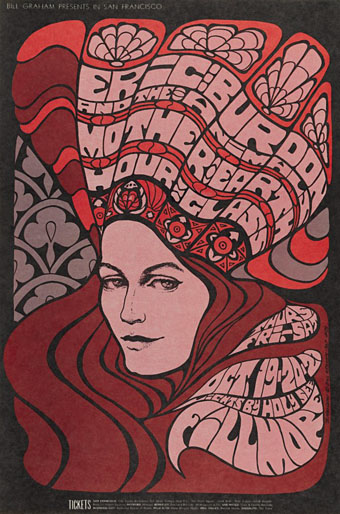
Eric Burdon and the Animals, Mother Earth, Hour Glass; Fillmore Auditorium, October 19-21, 1967 by Bonnie MacLean.

• RIP Bonnie MacLean, another of the original San Francisco poster artists, and the only woman of note in the US psychedelic poster scene. (Not the only woman, however; in Europe we had Marijke Koger.) Related: Bonnie MacLean’s posters at Wolfgang’s. And RIP to illustrator Tom Adams, an artist whose exceptional covers for novels by Agatha Christie are only one part of a long and varied career.

The Litanies Of Satan (1982), the short but uncompromising debut album by Diamanda Galás, is reissued on Galás’s own label later this month. Further albums from her remarkable back catalogue will follow. Related: video of Galás performing The Litanies Of Satan in 1985.

• “Scorsese is amazed that United Artists didn’t touch one frame of Raging Bull, since it’s the first time in his life as a feature director that this has apparently occurred.” In 1981 Derek Malcolm talked to Martin Scorsese about his reasons for making a boxing picture.

“…in a post-AIDS world, its scenes of mass male-on-male decadence evoke a sense of the spiritual: Not to put so blunt a phrase on it, but the majority of the men we see in Cruising‘s bars would likely die within the next decade, victims of a very heterosexual genocide of neglect. These are blurred, melancholic memories locked forever within Cruising‘s celluloid; a phantasmagoria of men whose liberation was not legislatively delivered, but recovered in the privacy of leather bars and cruising joints. The film’s overt sexuality makes it hard to escape a sense of catastrophic loss.”

Jack King on William Friedkin’s Cruising

• The Pet Shop Boys’ eccentric feature film, It Couldn’t Happen Here (1988), is released on blu-ray and DVD in June. The video for You Were Always On My Mind gives an idea of the contents.

• “Orion being one of the brightest constellations makes it a lot of people’s favourites, and he was my favourite as a kid.” Ben Chasny on his history of stargazing.

• “You think the Holy Grail is lost? No. I have it on my piano.” John Boorman talks to Xan Brooks.

• Laura Cumming on the dark and haunting paintings of Belgian Symbolist Léon Spilliaert.

• Mix of the week: XLR8R Podcast 631 by Ondness.

Alistair Ryder chooses 10 great killer plant films.

Howl by John Foxx And The Maths.

• At Dennis Cooper’s: Gleam.

The Litanies Of Satan (1969) by Ruth White | Grail (1971) by Grail | Plants’ Music (1981) by Ippu-Do

A Czech Machen

machen.jpg

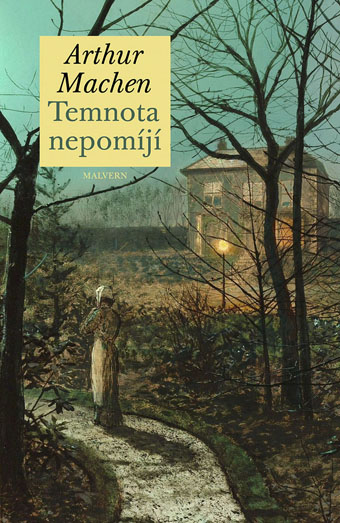
Cover art is a detail from A Woman on a Path by a Cottage (1882) by John Atkinson Grimshaw.

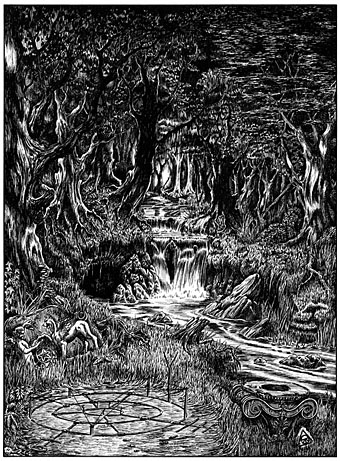
The fiction of Arthur Machen doesn’t inspire a great deal of illustration, probably because his best writing is more concerned with the description of particular places and the feelings those places evoke, rather than the depiction of illustratable scenes or events. I did make the attempt myself, however, when I started a series of illustrations in 1990 that were intended for a Savoy Books edition of The White People. This never materialised for a variety of reasons, and I never finished the series of drawings although the work did yield one picture (below), that I’ve always been pleased with.

whitepeople.jpg

Some of these drawings may now be seen in Temnota nepomíjí, an edition of Machen’s stories from Czech publisher, Malvern, almost all of which are appearing for the first time in translation. I’m told by the translator, Patrik Linhart, that the title in English would be “Darkness is undying”. As for the cover art, I approve the choice of John Atkinson Grimshaw, a painter whose sombre, autumnal views could cover an entire series of Machen books. His work is often seen today in connection with MR James but being a predominantly urban artist his work seems a better match for the Apostle of Wonder.

Previously on { feuilleton }
Ibrahim Ineke’s The White People
The White People
The Bowmen by Arthur Machen
Rex Ingram’s The Magician
The Great God Pan

Weekend links 500

provensal.jpg

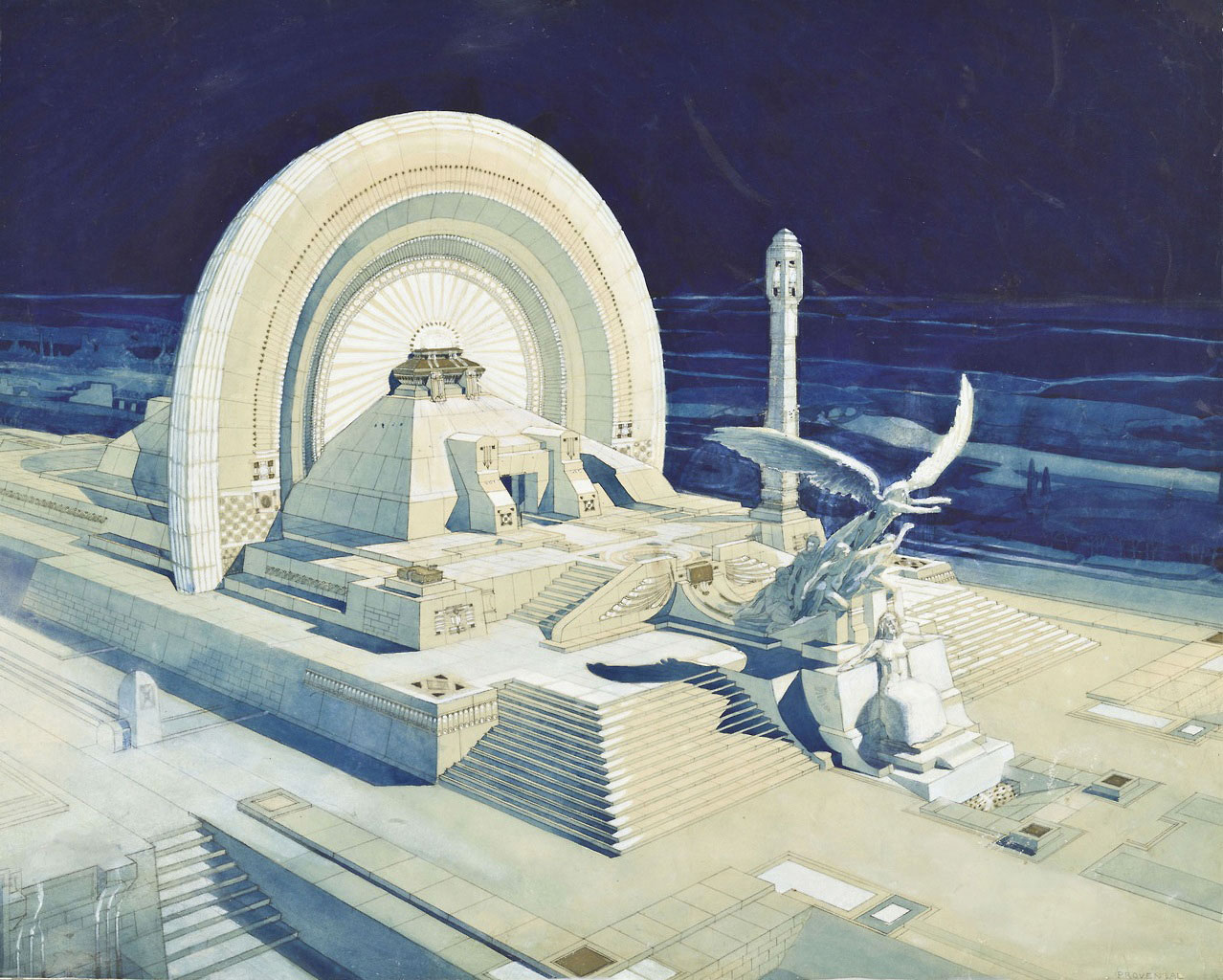
Projet onirique (tombeau pour un poète) (1901) by Henry Provensal.

• “20 years later, Sexy Beast remains something of an oddity…It offers a deconstruction of the genre, which is then reconstructed to marry the unhinged, convulsive beauty of surrealism with sturdy, universal storytelling.” Thomas H. Sheriff looks back at Jonathan Glazer’s debut feature.

Blau Gers, a new piece by The Alvaret Ensemble: Greg Haines (piano), Jan Kleefstra (voice, poems), Romke Kleefstra (guitar, bass and effects) and Sytze Pruiksma (percussion).

Wendy Carlos: A Biography by Amanda Sewell, the first study of the life and work of the electronic composer, is out in March.

The prejudice against writing sex in Anglo-American literature is something that utterly baffles me. What a bizarre thing it is to claim that this central, profound territory of human life is off-limits to literary or artistic representation. Sex seems to me one of the densest and most intense human phenomena, one of the things I find it hardest to think about—and so something I want to think about in art. The biggest surprise to me about the reception of my first book—other than the fact of there being any reception at all—was how much discussion there was about the sex in it. There isn’t very much sex in it! It said something about the culture of mainstream publishing in America in 2016 that a novel with maybe three or four pages of explicit sex between men could seem surprising.

Garth Greenwell talking to Ilya Kaminsky about literature and life

• Some (but not all) of the museums of Paris have made thousands of artworks available for free online.

• The Work of Fate: AS Hamrah introduces a screening of Jean Cocteau’s Orphée.

La Labyrinthèque: Histoire de l’art jouissive & enchantements littéraires.

Clive Hicks-Jenkins on the art of the (book) cover.

Tom Huddleston on 10 great stressful films.

• At Dennis Cooper’s: Malcolm Le Grice Day.

François de Nomé’s Imaginary Ruins.

Sexy Sadie (1968) by The Beatles | Sexy Photograph (1995) by Ui | Sexy Boy (1998) by Air

Weekend links 496

kemeny.jpg

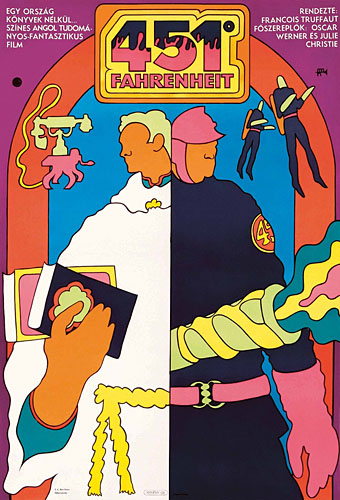
Fahrenheit 451 (1966) poster by György Kemény.

• “The novel is constantly assailed by people wanting to conscript it to their own ends. (Other art forms are not similarly burdened; someone yelling ‘What about global warming?’ between numbers at a Keith Jarrett concert would be recognized to have made a category error.)” Jonathan Clarke on the demands that literature should nurture empathy.

• The first three features by Alejandro Jodorowsky—Fando y Lis (1968), El Topo (1970) and The Holy Mountain (1973)—return to Britain’s cinema screens in January (well…two of them return; I’m not sure that Fando y Lis has ever been shown in cinemas over here). All three films will be given overdue blu-ray releases by Arrow in March.

• “What distinguishes Oulipo from other language games, is that its methods have to be capable of producing valid literary results.” Tony White reviews The Penguin Book of Oulipo: Queneau, Perec, Calvino and the Adventure of Form, edited by Philip Terry.

But from a present-day perspective, it is also remarkable the extent to which cafés, busy conduits for knowledge and sentiment, resembled later digitally connected systems. The larger establishments offered not just a huge selection of newspapers, domestic and foreign, but also reference material—maps, dictionaries, encyclopaedias, language lexicons, address books—for writers struggling with their research, or merely trying to settle an argument. The combination of hard facts and caffeinated opinion firing through the steamy analogue ether constituted a local area network of extraordinary reach. In the pre-digital era, the Viennese café offered the greatest possible concentration of current knowledge—for the price of a mélange.

From the Strange Flowers guide to Vienna, part 2

• “People like Edmund Wilson and Isaiah Berlin, they have to love Zhivago to prove that good writing can come out of Soviet Russia. They ignore that it is really a bad book.” Jennifer Wilson on Vladimir Nabokov’s fighting spirit.

• Master animator Richard Williams died in August so here again is the exceptional adaptation of A Christmas Carol made by his studio in 1971.

• Hearing a person: Annea Lockwood remembers her partner, composer Ruth Anderson, whose death was announced last week.

• The London Review of Books has relaunched its website. The paywall is currently down until mid-January so dig in.

Live In Paris by Pharoah Sanders, a previously unreleased ORTF concert recording from 1975.

• Unrising sun: Amos Chapple’s photographs of the polar nights of Murmansk.

Mary McNamara on the rescuing of 200 historic Hollywood backdrops.

• Mix of the week: XLR8R Podcast 623 by Aida.

• At Dennis Cooper’s: Sandy Dennis Day.

The Desert Is A Circle (1970) by Shades Of Joy | The Desert Is A Circle (1971) by Paul Horn | Holy Mountain (1994) by Axiom Ambient