Weekend links 215

calibair.jpg

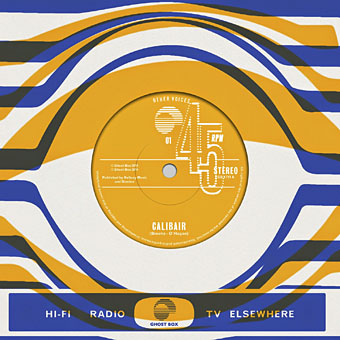
Julian House artwork for Other Voices, a new singles series on the Ghost Box label. Other Voices 01 is a collaboration between Sean O’Hagan of the High Llamas and Jon Brooks of The Advisory Circle.

Last week I linked to a copy Zadie Smith’s new introduction for Crash by JG Ballard. That piece could only be read in full by NYRB subscribers but this week the Guardian has the full text:

I was in college when the Daily Mail went to war with [David Cronenberg’s] movie, and found myself unpleasantly aligned with the censors, my own faux-feminism existing in a Venn diagram with their righteous indignation. We were both wrong: Crash is not about humiliating the disabled or debasing women, and in fact the Mail‘s campaign is a chilling lesson in how a superficial manipulation of liberal identity politics can be used to silence a genuinely protesting voice, one that is trying to speak for us all.

Related: Thomas Jones in 2008 reviewing Miracles of Life:

Despite all the bodily fluids spurted and smeared onto wrecked dashboards, the problem isn’t that it’s too pornographic but that it isn’t pornographic enough: the novel is too conscious of the deeper meaning of the sex and violence for the sex and violence to work as elements in themselves.

The fetishisation of Ballard’s novel (and Ballard’s fetishes) show no signs of abating: B-Movie (Ballardian Video Neuronica), is a short film by John Foxx, Karborn and Jonathan Barnbrook.

• Last Thursday I was watching a live performance by Pye Corner Audio and Not Waving, so it’s good to find this mix by the pair surfacing in the same week. Kudos to the latter for choosing something by Chrome. More mixes: FACT mix 468 by Throwing Snow, and Secret Thirteen mix 120 by Drøp.

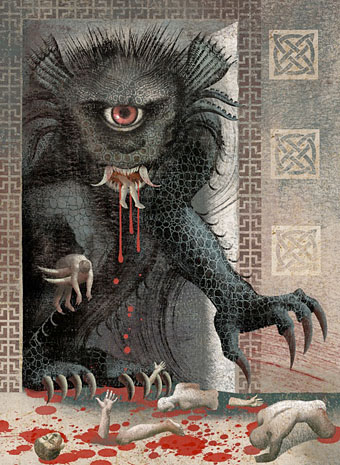
• Ellen Datlow’s horror anthology, Lovecraft’s Monsters, continues to gather plaudits. Among recent reviews there’s Matt Barone at Complex who included the book in his Year’s Best Genre Fiction Books (So Far) list, and also praised my illustrations.

In recent years, many of the people on book covers have been women without faces. So prevalent is this visual cliché that the publishing industry has cycled through at least two well-documented iterations. The first, the Headless Woman, features some poor thing cut off above the neck, like the swimsuit-clad beachgoer on Alice Munro’s story collection “The View from Castle Rock.” The website Goodreads’s Headless Women page has 416 entries. Last year, the Headless Woman was supplanted by the Sexy Back, in which a woman is shown from behind, often gazing out over a vista.

Eugenia Williamson on the packaging of books for a female readership.

• The latest Taschen volume from Dian Hanson, editor of (among other titles) The Big Penis Book, is My Buddy. World War II Laid Bare, featuring photos from the archives of Michael Stokes. World of Wonder has pages from the interior.

I Have Walked This Body by Jenny Hval and Susanna is a track from a forthcoming album inspired by Maya Deren and Alexander Hammid’s Meshes of the Afternoon. It sounds fantastic so I’m looking forward to hearing more.

• If you have a spare half-million dollars, and don’t mind the possibility of possession by murderous supernatural entities, the Palmer house from Twin Peaks is for sale.

• Read an extract from Season of the Witch: How the Occult Saved Rock and Roll by Peter Bebergal.

The Stars and Their Courses: over six hours of the Nevada night sky in 4k definition.

Lee Siegel on the fraught friendship of TS Eliot and Groucho Marx.

Harmony Korine talked to Kenneth Anger for Interview Magazine.

New Scientist: How magic mushrooms induce a dream-like state.

• 3D-print your own Marcel Duchamp chess set.

Scott O)))

Crash (1980) by Tuxedomoon | Burning Car (1980) by John Foxx | A Crash At Every Speed (1994) by Disco Inferno | Burning Car (Dubterror Remix, 2008) by John Foxx
Weekend links 213

munro.jpg

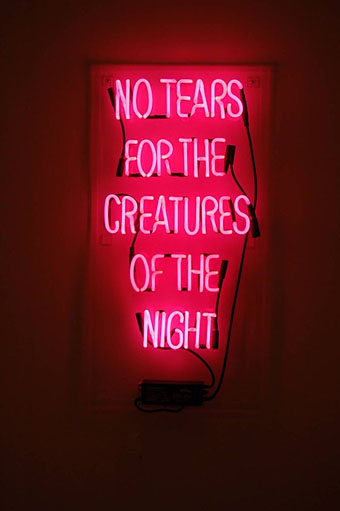
No Tears for the Creatures of the Night (2005) by Will Munro.

• Steve Barker’s On The Wire show on BBC Radio Lancashire is one of the longest-running music shows on British radio but it’s not broadcast in London so you seldom hear it mentioned at all. (It’s also the only radio show I’ve appeared on, oddly enough.) Some of Barker’s shows, which predominantly feature dub and reggae artists, can now be heard at Mixcloud.

• “As protagonist after protagonist is undone by temptation and lust, one can’t help but divine a sinister double entendre in the book’s title – something nocturnal and obscene.” James Lovegrove on the reissue of Robert Aickman’s 1964 collection of “strange stories”, Dark Entries.

Coil vs. Kenny Loggins sounds like no contest, and so it proved in 1988 at the Mike Tyson/Michael Spinks fight. There’s another surprising connection between Tyson and Industrial culture with the poster that Neville Brody designed for the boxer’s Tokyo bout.

Ventriloquism: Unheimlich manoeuvres: Sarah Angliss (who performs as Spacedog) on the history of ventriloquist dummies. With a bonus appearance from the great Ray Alan and Lord Charles. Related: the Vent Haven Museum.

• I’ve been wanting to read Proust’s À la recherche du temps perdu for years but always hesitate over which translation to choose. As Leland de la Durantaye shows, the arguments about translating Proust into English are still unresolved.

Music For A Good Home 3: a collection of 31 rare or unique tracks by a variety of artists including Belbury Poly, Pye Corner Audio, and Grumbling Fur. All proceeds go to Shelter.

David Cronenberg – The Exhibition is running throughout the summer at the EYE Film Institute in Amsterdam showing props and other materials from the director’s films.

• “’I’m in pictures,’ John Wayne explained when Nabokov cordially inquired about his line of work.” Blake Bailey on Vladimir Nabokov’s unpublished Lolita screenplay notes.

• Original artwork for the Linweave Tarot (1967) at Sweet Jane’s Pop Boutique. As noted before, the full set of cards is probably the grooviest ever created.

• Mixes of the week: Secret Thirteen Mix 118 by Ensemble Economique, and a Wyrd Daze Solstice mix from The Ephemeral Man.

• At One With Chaos & Abandonment: The Irrepressibles’ Jamie McDermott talks to Joseph Burnett about his music.

From the Zodiacal Light, a new track from Earth with vocals by Rabia Shaheen Qazi.

• The Ultimate Chinatown Filming Location Map of Los Angeles.

Tuxedomoon at Pinterest.

Dark Companion (1980) by Tuxedomoon | Dark River (1990) by Coil | Dark Turn Of Mind (2011) by Gillian Welch

Weekend links 212

non-format.jpg

Poster for the recent Ballard-themed Only Connect Festival of Sound in Oslo. Design by Non-Format.

Bulldozer by Laird Barron was my favourite piece in Lovecraft’s Monsters, the recent Tachyon anthology edited by Ellen Datlow that I designed and illustrated. So it’s good to hear that Nic Pizzolato, writer of the justly-acclaimed HBO series True Detective, is among Barron’s readers. True Detective, of course, created a stir for referencing Robert Chambers’ weird fiction in a police procedural. The series is out now on DVD and Blu-ray, and I can’t recommend it too highly.

• Citation-obsessed Wikipedians don’t believe Hauntology is a genuine musical genre, a sentiment which will probably surprise some of its practitioners. Whatever the merits of the argument, I rather like the idea of a musical form that resists strict definition.

• “This year, in order to do things differently, I will make a conscious effort to separate the man from his writing.” Giovanna Calvino, daughter of Italo Calvino, remembers her father.

With ideology masquerading as pragmatism, profit is now the sole yardstick against which all our institutions must be measured, a policy that comes not from experience but from assumptions – false assumptions – about human nature, with greed and self-interest taken to be its only reliable attributes. In pursuit of profit, the state and all that goes with it is sold from under us who are its rightful owners and with a frenzy and dedication that call up memories of an earlier iconoclasm.

Alan Bennett delivers a sermon.

Zarina Rimbaud-Kadirbaks, aka Dutch Girl In London, reviews the Chris Marker exhibition that’s currently running at the Whitechapel Gallery, London.

• Exteriorizing the Inner Realms: Christopher Laursen talks to Phantasmaphile and Abraxas magazine‘s Pam Grossman about occult art, past and present.

• The Beast is back: Erik Davis talks to Gary Lachman about his new book, Aleister Crowley: Magick, Rock and Roll, and the Wickedest Man in the World.

• The body as factory: anatomy of a New Scientist cover image. Rick Poynor on the recurrent use of a familiar visual metaphor.

• Mix of the week without a doubt is FACT Mix 445 by Stephen O’Malley, a three-hour behemoth.

• Jennifer in paradise: Photoshop developer John Knoll on the story of the first Photoshopped image.

• The trailer for Grandfather of Gay Porn, a documentary about Peter de Rome by Ethan Reid.

Giorgio’s Theme is a new piece of electronic music by Giorgio Moroder.

Agender, a series of androgynous photo-portraits by Chloe Aftel.

• RIP Little Jimmy Scott

Evil Spirits

Chase (1978) by Giorgio Moroder | Call Me (1980) by Blondie | The Apartment (1980) by Giorgio Moroder

Weekend links 211

shau.jpg

Secret Bloom (2014) by Natalie Shau.

Bloomsday approachs. “Reading Ulysses changed everything I thought about language, and everything I understood about what a book could do,” says Eimear McBride whose debut novel, A Girl Is a Half-formed Thing, recently won the first Bailey’s women’s prize for fiction. McBride was interviewed by Susanna Rustin last month, shortly before the award was announced, and her novel has now become one of those minor causes célèbres for being rejected so often it was eventually published by a new imprint set up by a bookseller. “If the publishing industry doesn’t take a risk then who will?” asks Henry Layte, the bookseller in question.

Speaking of risk, David Hebblethwaite coincidentally wrote a post earlier this week asking where the formal challenge has gone in science-fiction writing. (He mentions McBride in passing.) Nina Allen followed up with a post of her own. I suspect the books are still being written but they’re no longer being accepted by editors and publishers who want even more adventure stories, “sympathetic” characters, and easy reads. Novels that only aspire to be written equivalents of action films or computer games are doomed to be less exciting than their more kinetic competitors. The struggle between the values of art and the values of entertainment is an old one but it shouldn’t be an either/or proposition. “Difficulty is subjective,” says Eimear McBride, “the demands a writer makes on a reader can be perceived as a compliment.”

Related: the following from Geoffrey Hill on “difficulty”:

We are difficult. Human beings are difficult. We’re difficult to ourselves, we’re difficult to each other. And we are mysteries to ourselves, we are mysteries to each other. One encounters in any ordinary day far more real difficulty than one confronts in the most “intellectual” piece of work.

• The Quietus pulled out all the stops this week, interviewing Annette Peacock, Iain Sinclair (again), Alan Moore (again), and asking Peter Strickland, the director of Berberian Sound Studio, for a list of his favourite albums. Given the above, it’s worth noting that all those people have produced challenging work of their own in different media.

• “The Satyrs Motorcycle Club was founded in 1954 with seven members, but little did anyone know it would become the oldest running LGBT organization (and oldest gay motorcycle club) in the world.”

Trunk TV posted another great selection of television title sequences. The previous selection has been taken down for the usual tiresome copyright reasons so watch this one while you can.

• “Detroit techno and black metal have so much in common,” say Wolves In The Throne Room whose new album, Celestite, is predominantly a product of synthesizer technology.

• “Houghton Library’s copy of Arsène Houssaye’s Des destinées de l’ame (FC8.H8177.879dc) is without a doubt bound in human skin.”

• The secret of Nabokov’s sexual style: David Lodge reviews Nabokov’s Eros and the Poetics of Desire by Maurice Couturier.

• How long can you hold your breath? 2 models, 7 divers in an underwater shipwreck by photographer Von Wong.

• At Dangerous Minds: Paul Gallagher on The fantastic world of Sharmanka Kinetic Theatre.

• Wizards of the Coast: Benjamin Breen on John Dee and the occult in California.

• More photography: Peter Guenzel captures strange lights in forests.

• Mix of the week: Bleep podcast 121 presented by Margot Didsbury.

I’m The One (1972) by Annette Peacock | Eros Arriving (1982) by Bill Nelson | The Dire And Ever Circling Wolves (2005) by Earth

The art of Fay Pomerance, 1912–2001

pomerance1.jpg

The Sixth Palace of Hell (1945).

Fay Pomerance’s painting of Lilith makes a startling appearance in a book I have about the history of magic symbols, and it’s that appearance which prompts this post since I’ve never seen her work given any attention elsewhere. This seems surprising when women artists, and artists whose concerns encompass mysticism or the occult, are receiving greater attention than ever before.

pomerance2.jpg

The Union of Isis and Osiris (1959).

Pomerance was British, and had the misfortune to be working during a lengthy period when expressions of the imagination or unorthodox spirituality in visual art were regarded as suspect or even disreputable. Her work also stands apart from any of the prevailing movements which provide such convenient labels for those art critics and writers who dislike anything that won’t fit into one of their boxes. The Lilith picture shows an obvious debt to another British artist who stands apart from the crowd: William Blake. The BBC’s Your Paintings site has a few of Pomerance’s larger works from the collection at Durham University, including the Sphere of Redemption below which is painted on a fibreglass globe, but for the moment there isn’t a dedicated site representing her art.

pomerance3.jpg

The Temptation (date unknown).

pomerance4.jpg

The Sphere of Redemption (date unknown).