Weekend links 419

ellison.jpg

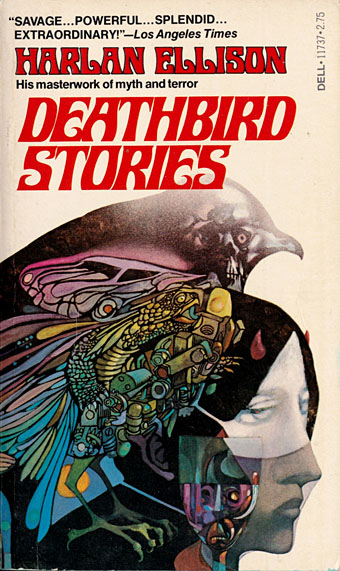
Cover art by Leo & Diane Dillon, 1975.

Art is not supposed to be easier! There are a lot of things in life that are supposed to be easier. Ridding the world of heart attacks, making the roads smoother, making old people more comfortable in the winter, but not Art. Art should always be tough. Art should demand something of you. Art should involve foot-pounds of energy being expended. It’s not supposed to be easier, and those who want it easier should not be artists. They should be out selling public relations copy.

Typical of the late Harlan Ellison to describe his vocation in terms of difficulty and struggle even when his prolific output made writing seem effortless. When my colleagues at Savoy Books published a Savoy issue of New Worlds magazine in 1979 one of the features they ran was an introduction by Michael Moorcock to an Ellison story collection. (They also published two books of Ellison’s around this time.) A copy of the magazine was duly sent to the subject of the essay since Ellison always liked to keep track of his print appearances. The back page of that particular issue is blank but for a few words in bold type from singer PJ Proby: “I am an artist; and should be exempt from shit.” Ellison cut this slogan from the magazine then glued it to his typewriter, no doubt transferring it to later models since it was still visible in the 2008 Ellison documentary, Dreams With Sharp Teeth.

My first encounter with Ellison’s work was also my first encounter with what became labelled the new wave of science fiction, via a reprint of I Have No Mouth, and I Must Scream in a book in the school library. I was only about 12 or 13 at the time, and found Ellison’s story so shocking and disturbing that it overpowered everything else in the collection. The only other story that made an equivalent impression at the time was The Colour Out of Space by HP Lovecraft, so it’s perhaps fitting that Ellison gave my work a favourable mention in his introduction to the huge Centipede Press collection of Lovecraft artwork, A Lovecraft Retrospective: Artists Inspired by HP Lovecraft. I still haven’t got over that one. After the initial encounter, the Ellison-edited Dangerous Visions and Again, Dangerous Visions were just as important for me as the paperback reprints of stories from the Moorcock-edited New Worlds: a handful of books that showed science fiction to be a literary form of limitless possibilities, as opposed to the stereotype of space adventure and future technology. The Ellison and Moorcock anthologies led me to William Burroughs, James Joyce and all points beyond; they also soured for me the preoccupation with space adventure and future technology which persists today.

My final connection with Ellison replayed his compliment in a small way, when editor Jill Roberts and I took extra care with the typesetting of Jeffty is Five for The Very Best of Fantasy & Science Fiction, Volume 2. Ellison was the only author I’ve encountered in the digital age whose corrections were still handwritten comments on printed sheets; these had to be faxed to San Francisco then scanned and emailed to me (to this day I still don’t know why the oft-reprinted story required so many adjustments). It was awkward but amusingly so, a benign taste of a legendary bloody-mindedness and insistence on precision.

• “Laughing about an acid trip with members of Can and opening up about some of the ‘scars’ left from his association with Brian Eno and David Byrne’s My Life In the Bush of Ghosts, [Jon] Hassell is candid in a way that comes naturally to those who’ve lived life on their own terms.”

• Drone Metal Mysticism: Erik Davis talks with music scholar and ethnographer Owen Coggins about amplifier worship, sonic pilgrimage, “as if” listening, metal humour, and his new book Mysticism, Ritual and Religion in Drone Metal.

Psychedelic Prophets: The Letters of Aldous Huxley and Humphry Osmond; “Letters between the men who coined the term ‘psychedelic’ and opened doors to a different way of thinking about human consciousness.”

Artaud 1937 Apocalypse: Letters from Ireland by Antonin Artaud; translated and edited by Stephen Barber.

• “I thought female sexuality was an OK thing?” says writer and porn performer, Stoya.

• “How did a major label manage to lose a John Coltrane record?” asks Ted Gioia.

• Welcome to the dollhouse: Alex Denney on a century of cinematic cutaways.

• The trailer for Mandy, a new (and much-awaited) film by Panos Cosmatos.

• Rest in Anger, Harlan Ellison (1934–2018) by Nick Mamatas.

• Mix of the week: FACT Mix 659 by BD1982.

Emily Gosling on library music design.

Record Label Logos

The Deathbird Song (1997) by The Forbidden Dimension | Eidolons (2017) by Deathbird Stories | Deathbird (2017) by Tempos De Morte
Weekend links 418

vertigo.jpg

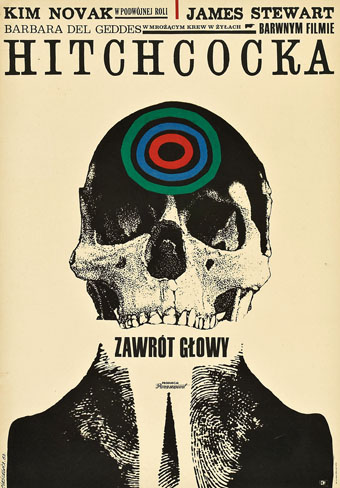
Poster by Roman Cieślewicz for the 1963 Polish release of Vertigo. Via The Hitchcock Zone.

• Alfred Hitchcock’s Vertigo is sixty years old this year. It’s a film I’ve always found to be preposterous and very over-rated, despite the considerable strengths of its cast, production, etc; consequently, any claims to its being an unalloyed masterpiece (such as being voted the best film of all time in the 2012 Sight & Sound poll) have been difficult to accept. For the latest anniversary, David Thomson examined the film in the light of changing social attitudes.

• Currently seeking funding at Unbound: Stars, Fools and Lovers: An illustrated guide to the art and history of the Tarot by Joanna Ebenstein, Laetitia Barbier and Mark Pilkington. Another Tarot-related book, Pamela Colman Smith: The Untold Story by Stuart R. Kaplan with Mary K. Greer, Elizabeth Foley O’Connor and Melinda Boyd Parsons, will be published next month.

• Everybody wants to talk to Jon Hassell at the moment, which is no bad thing: recent interviews have appeared at The Vinyl Factory, Red Bull Radio and Vice.

• Coming soon from Lazarus Corporation: England’s Dark Dreaming by Paul Watson.

• Sean Kitching on The Strange World of Charles Hayward (This Heat et al).

• At Dennis Copper’s: The title sequences of 56 mostly horror movies.

• Stone circles: Adam Scovell chooses 10 notable cinematic examples.

• “You gotta be selfish. It’s a terrible thing,” says David Lynch.

Wolf’s Kompaktkiste shows off a serious record collection.

Boy with Cat (1966), a short film by Donald Richie.

• Mix of the week: Secret Thirteen Mix 256 by Nina.

Tank (2018), a short film by Stu Maschwitz.

Phantom Islands—A Sonic Atlas

Letraset, design and music

• Vertigo (1988) by Flash Cero | Psyko (Themes from Psycho and Vertigo) (1993) by Laika & The Cosmonauts | Vértigo Magnético (2014) by Liquidarlo Celuloide

Weekend links 412

maroto.jpg

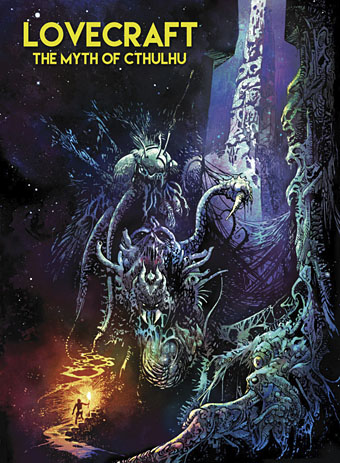
Lovecraft: The Myth of Cthulhu, an English-language edition of three comic-strip adaptations by Esteban Maroto, is now available from IDW.

The Coffin House, a short story by Robert Aickman that’s a taster for the new Aickman collection, Compulsory Games. Anwen Crawford wrote an introduction to Aickman’s world of “strange stories” for The New Yorker. Related: Victoria Nelson, editor of the new collection, chooses ten favourite horror stories.

• German music this week at The Quietus: Sean Kitching talks to Irmin Schmidt about his years with Can; and there’s an extract from Force Majeure, an autobiography by the late Edgar Froese, writing about the early days of Tangerine Dream.

• More German music at Carhartt WIP: a lengthy and revealing interview with guitarist Michael Rother about his time as one half of Neu!. There’s also a bonus Neu!-themed mix (and one of the mixes of the week) by Daniel Miller.

• From October last year, a Stereoklang interview with master synthesist Hideki Matsutake (Logic System, Yellow Magic Orchestra, et al).

• “When did you first get interested in esoteric studies?” Gary Lachman interviewed at The Astral Institute.

• At Sweet Jane: early illustrations by Wojtek Siudmak for Plexus magazine, 1969.

• 87 prints and drawings by MC Escher in zoomable high-resolution.

• Meet the Small Press: James Conway of Rixdorf Editions.

• Mix of the week: Goodbyes & Beginnings by Zach Cowie.

Derek Jarman on the trouble with shopping for clothes.

Person To Person (1981) by Logic System | Plan (1981) by Logic System | Prophet (1981) by Logic System

Weekend links 410

hog.jpg

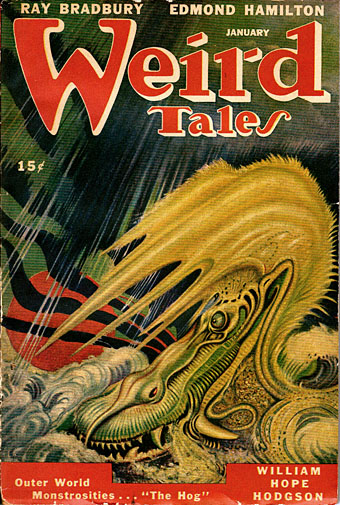
William Hope Hodgson’s final Carnacki mystery, The Hog, received its first magazine publication in January 1947. The cover art by AR Tilburne may not have been originally created for Hodgson’s tale but it complements the story’s atmosphere of febrile dread.

• It’s still April so that means it’s still the month that saw the 100th anniversary of the death of William Hope Hodgson, bodybuilder, manacler of Harry Houdini, and the author of several novels of weird fiction that continue to entrance new generations of readers. The edition of Hodgson’s The House on the Borderland that I illustrated for Swan River Press would have been on sale this month but print problems have caused delays with the run as a whole; anyone interested is advised to contact the publisher for news. • Meanwhile, Jon Mueller (composer of the book’s accompanying soundtrack CD) and myself talked to Swan River Press about the attractions of Hodgson’s novel. • More Hodgsoniana: Greydogtales acknowledged the Hodgson centenary via a discussion with Hodgson scholar Sam Gafford, while Michael Dirda reviewed the new edition of The House on the Borderland and another SRP title, The Scarlet Soul (whose cover I also designed), for The Washington Post.

• “From the ashes of countless decayed Modernities comes Neo-Decadence, a profaned cathedral whose broken stained glass windows still glitter irregularly in the harsh light of a Symbolist sun. Behind this marvellously vandalised edifice, a motley band of revellers picnic in the graveyard of the Real, leaving behind all manner of rotting delicacies and toxic baubles in their wake.” Drowning in Beauty: The Neo-Decadent Anthology edited by Daniel Corrick & Justin Isis is published this month by Snuggly Books, an imprint whose catalogue of new books and first-time translations will be of interest to anyone who comes here for Decadence, Symbolism or anything related. Related to the above: A Neo-Decadence Day at Dennis Cooper’s.

• “Witches are change-makers. They’re transgressive beings who dwell on the fringes of society, and so they’re the perfect icon for rebels, outsiders, and rabble-rousers, especially those of the female persuasion.” Pam Grossman talks to Grimoire about witchcraft and related arts.

• Mixes of the week: Resident Advisor Podcast 621 by Grouper, and Bacchus Beltane 5: The Owl Service by The Ephemeral Man.

• Back in black: Publisher/translator James Conway and designer Cara Schwartz on the cover designs of Rixdorf Editions.

• I was talking again this week at The Writer’s Corner where JKA Short asked me about working as an illustrator.

All Gates Open: The Story of Can by Rob Young is published next week. The Wire has an extract.

• Delusional Albion: Brad Stevens on how foreign directors saw Britain in the Swinging Sixties.

• “There’s no book I love more than Derek Jarman’s Modern Nature,” says Olivia Laing.

Eden Tizard on Soliloquy For Lilith, the drone album by Nurse With Wound.

Owls (1969) by Ruth White | Decadent & Symmetrical (1995) by ELpH vs Coil | The Owls (2013) by Félicia Atkinson

Weekend links 408

sasada.jpg

Kujaku (2018) by Yasuto Sasada.

• “The Ernst picture [Of This Men Shall Know Nothing] has also been interpreted as depicting sexual alchemy, which also ties in with much of Peter Grey’s writing on Babalon and the goddess’ connection to sexual magic and the three ‘Fs’: f(e)asting, flagellation and fucking!” Hawthonn’s Phil & Layla Legard talk to Folk Horror Revival about their superb new album, Red Goddess (of this men shall know nothing).

• South London “Psychic Circuit”: A walk with London writer Iain Sinclair inspired by cult writer Steve Moore—from Shooter’s Hill and the Shrewsbury burial mound to Charlton House then Maryon Park and the locations used in Antonioni’s Blow Up.

• Czech filmmaker Juraj Herz, director of The Cremator (1969) and Morgiana (1972), died last week. One of his later films, The Ninth Heart (1978), featured an animated title sequence by Jan Švankmajer and Eva Švankmajerova.

• The week in psychedelic visuals: Ben Marks on Bill Ham’s San Francisco light shows (a piece from 2016), and Dangerous Minds on Astralvision’s Electric Light Voyage (1979), a light show on Betamax tape.

• “From glaciers to nuclear bunkers, photographer Chloe Dewe Mathews descends into the dark heart of the Swiss mountains that inspired Mary Shelley.”

• Mix of the week: Secret Thirteen Mix 250 by Sote, and XLR8R Podcast 537 by SNTS.

When The Horses Were Shorn Of Their Hooves, new music by Dylan Carlson.

Emily Temple on Edward Gorey’s illustrated covers for literary classics.

Hidden Hydrology: Coil’s Lost Rivers studio sessions.

Tube: Minimalist YouTube search

Sukhdev Sandhu is In Wild Air

• Lost Roads (1988) by Bill Laswell | Lost Sanctum (1994) by Lull | Lost Ways (2016) by Pye Corner Audio