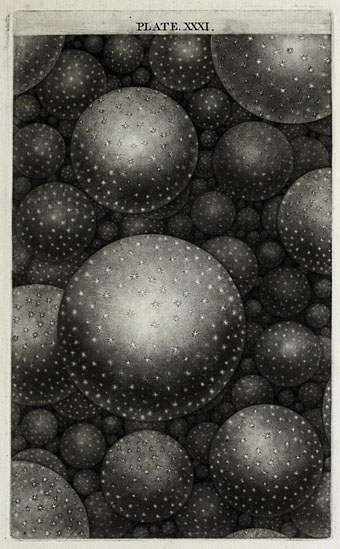
Weekend links 550

moebius

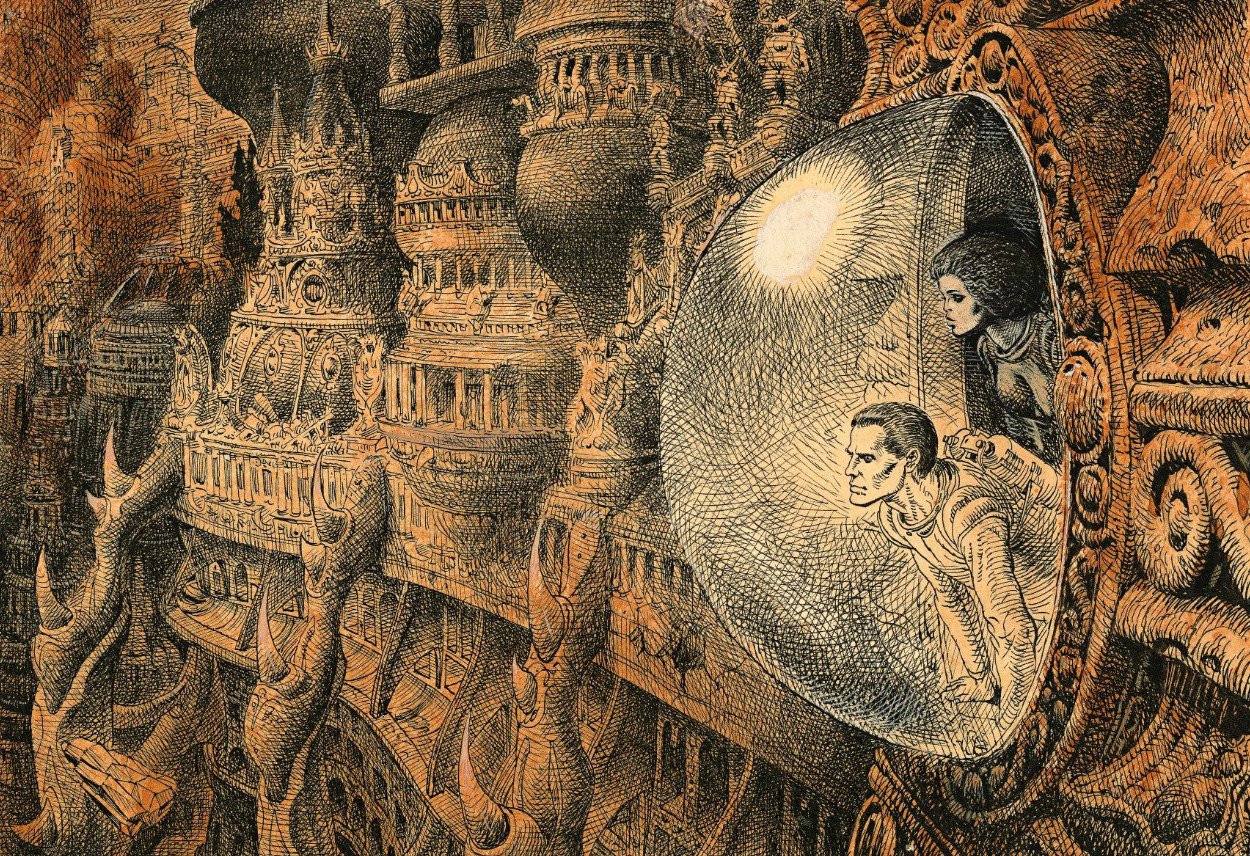
Illustration by Moebius for Les Robinsons du Cosmos (1970) by Francis Carsac.

Notre Dame des Fleurs is a collection of art based on or inspired by the Jean Genet novel. The book, which includes some new work of mine, will be published in February. Editor Jan van Rijn has a trailer for it here. It’s limited to 150 copies so anyone interested is advised to pre-order.

• Books that made me: William Gibson‘s influential reading. Good to see him mention Suttree by Cormac McCarthy, an outstanding novel that might be better known if it wasn’t for the gravitational pull of McCarthy’s other works.

• Zagava have announced a paperback reprint of The Art of Ilna Ewers-Wunderwald, a collection of neglected Art Nouveau drawings and designs compiled by Sven Brömsel.

• At Dennis Cooper’s: Black_Acrylic presents…He Stood In The Bath And He Stamped On The Floor: A Joe Meek Day.

• More yearly roundups: Our Haunted Year 2020 by Swan River Press, and The Year That Never Was by blissblog.

• New music: Spaceman Mystery Of The Terror Triangle by The Night Monitor.

Ralph Steadman’s guided tour through six decades of irrepressible art.

• At Greydogtales: Valentine Dyall: Mystery and Mesmerism.

• At Wormwoodiana: The Esoteric in Britain, 1921.

• At Strange Flowers: Marie Menken’s Lights.

I Want To See The Bright Lights Tonight (1974) by Richard and Linda Thompson | Neon Lights (1978) by Kraftwerk | Lights (1980) by Metabolist
Mr Sandman

sandman1.jpg

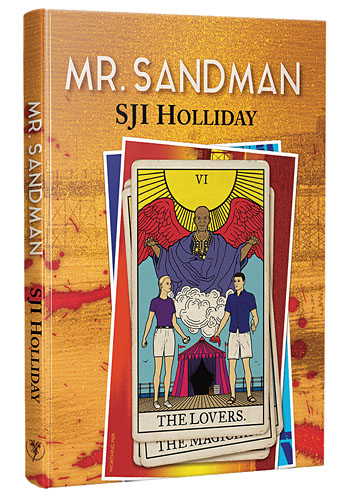
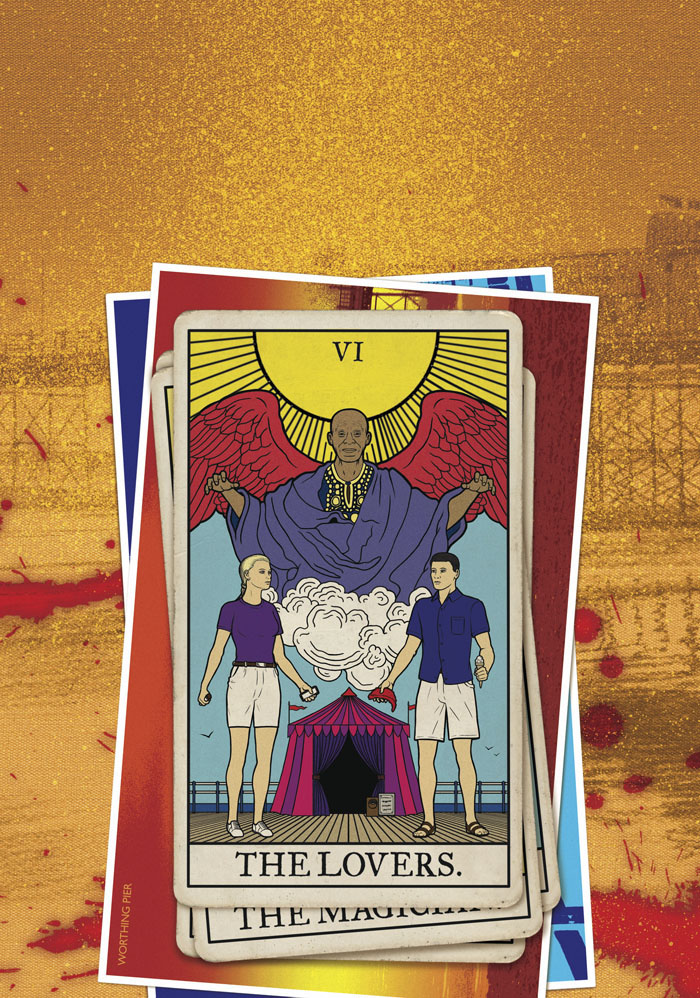
The last cover reveal of the year isn’t my last cover of the year, two more will follow this one but they won’t be made public until next year. As before, I’ve only done the illustration this time, PS Publishing having an in-house designer who does the rest. Mr Sandman by SJI Holliday is another hardback novella, a horror tale with a sense of humour and a Monkey’s Paw-like warning about careless wishes:

Sophie is bored with her perfectly nice but deathly dull boyfriend Matthew. Sensing he’s about to lose her, Matthew takes her on a last-ditch attempt trip to the seaside, hoping to rekindle their dying flames. But things take a dark turn when Sophie visits Mr Sandman, a Haitian priest, who claims that he can change Matthew into the boyfriend that she wants. But does Sophie really know what she wants? Never has the phrase “be careful what you wish for” been more apt. Because Matthew does change…just not in the way that anyone could’ve predicted.

sandman2.jpg

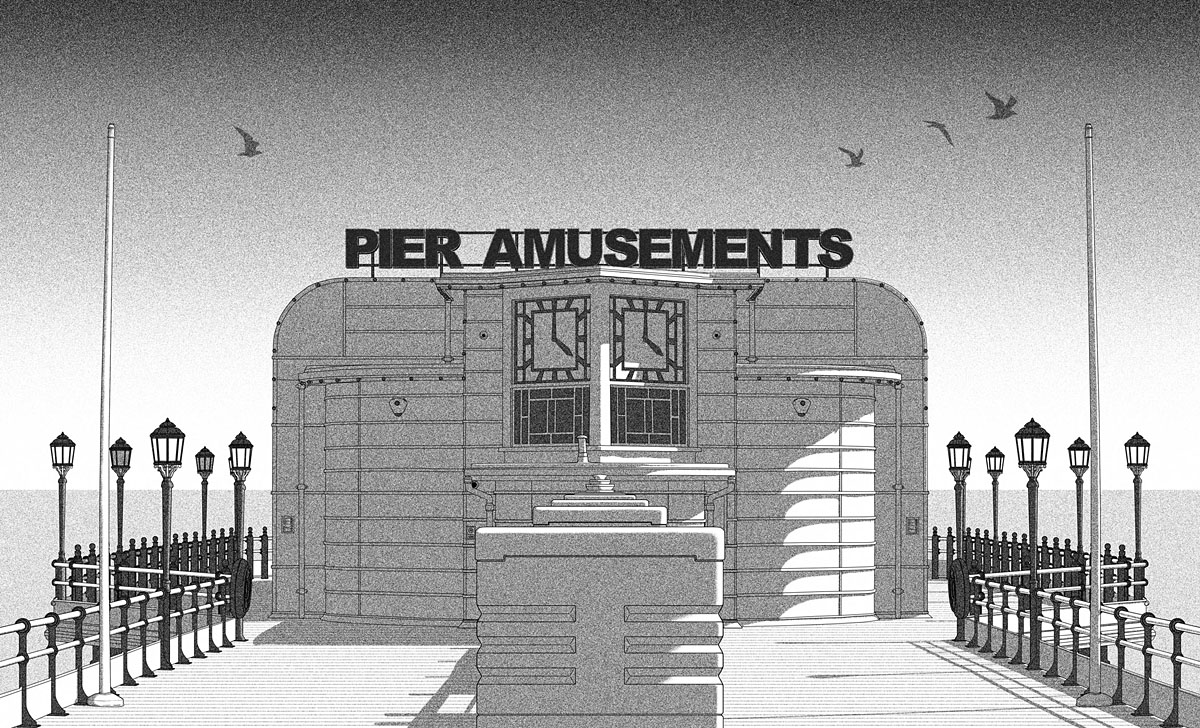
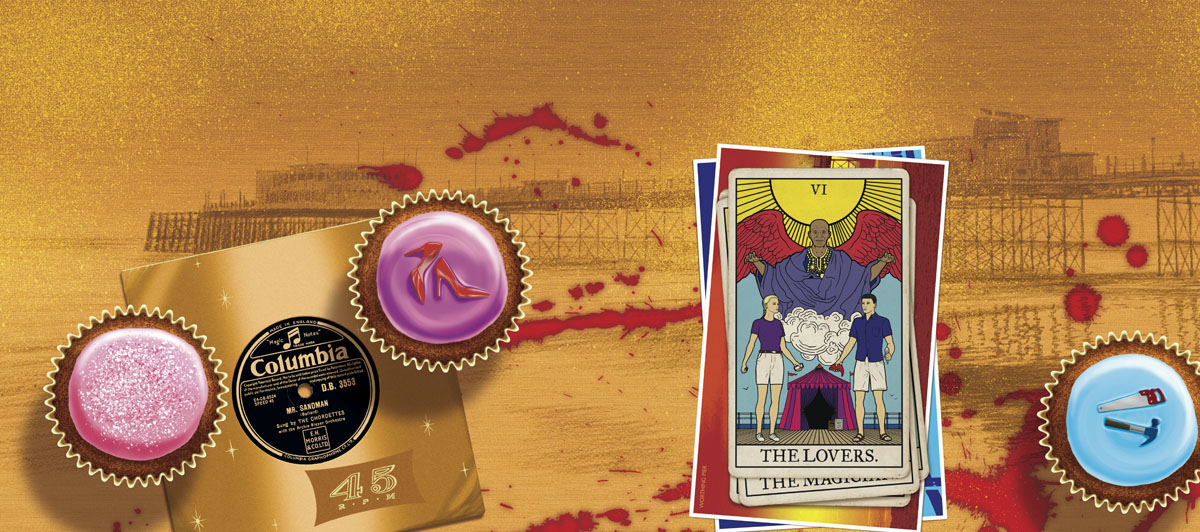
Worthing is a seaside town on the south coast of England that’s generally regarded as a poor relation of nearby Brighton. Despite this status the town does possess an award-winning pier which is the main focus of SJI Holliday’s story, so this seemed an inevitable focus for the cover as well. My idea was for something in the manner of Tom Adams, an artist who specialised in arrangements of carefully-painted objects on vague or sketchy backgrounds, with the backgrounds often depicting the location of the story. Having grown up in another seaside town blessed with three piers I’m well aware that all these structures aren’t the same so the pier details have been properly researched. The Tarot cards are an example of artistic licence, however, since the novella doesn’t mention Tarot divination. But with a narrative that concerns a visit to a fortune-teller’s booth this didn’t seem like too much of a stretch, as well as being a convenient way of depicting the main characters. Pamela Colman Smith’s cards were the model for these; the two main characters look a little stiff but that’s the way the figures are represented on her Lovers card, and the awkwardness of the relationship is a dominant theme. As for the cupcakes, these are all very relevant to the story but you’ll have to read the book to find out why.

sandman3.jpg

Endpaper illustration.

sandman4.jpg

Previously on { feuilleton }
Tom Adams Uncovered
Out of season

Electronic Tonalities For The Subjugation Of Parasitic Psychical Entities

tonalities.jpg

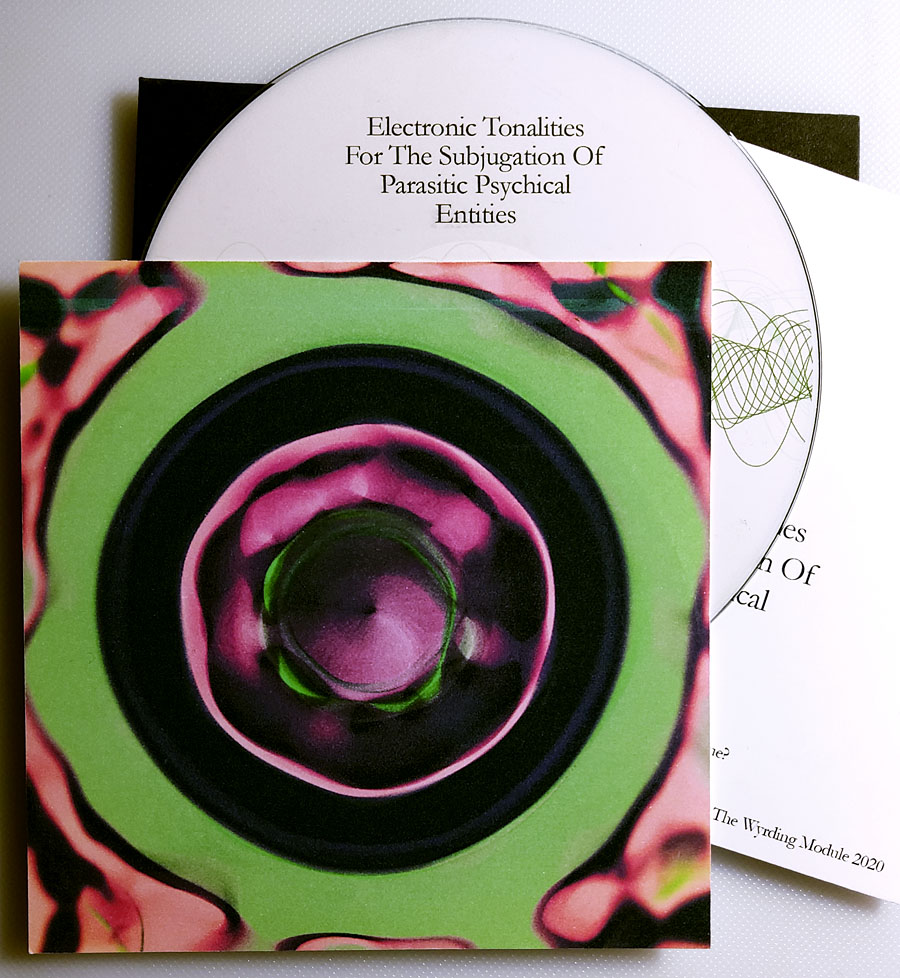
In today’s post, the latest release from The Wyrding Module. The electronic tonalities emanating from darkest Salford continue to be satisfyingly spectral, and with sufficient character to avoid being taken for the work of another artist. Wyrding Module music inhabits a haunted zone where occult rites, parapsychology, cosmic horror and kosmische music intersect; there’s a William Burroughs reference in the title of a piece from an earlier release—Infused With The Venom Of Giant Aquatic Centipedes—and even a hint of psychedelia, mostly evident in the persistently vivid cover art. Pastiche is kept to a minimum; last year’s Typhonic Neural Tantra featured the kind of groovy organ-led number you might hear playing in a horror-film nightclub but this was an uncommon departure. Previous releases (of which there may now be 13…details remain vague) are generally forward-looking, as you’d expect from an artist whose name is borrowed from a science-fiction device—a sonic weapon—invented by David Lynch.

The new album delivers familiar Wyrding Module trademarks: grinding synthetic timbres, glitch-ravaged voices that might be the product of a ritual working, and that organ tone which maintains a generic mood without ever becoming too literal. The print inside each disc is a unique work of generative art. Being someone who likes to keep the seasonal parasites at bay by sustaining the spirit of Halloween until January, this is all very welcome. Subjugate your own psychical entities here.

Previously on { feuilleton }
The Outer Church

Weekend links 545

harris.jpg

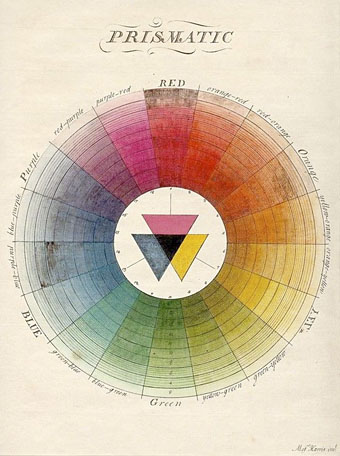
Colour wheel from The Natural System of Colours (1766) by Moses Harris.

• The Vatican’s favourite homosexual, Michelangelo di Lodovico Buonarroti Simoni, receives the ludicrously expensive art-book treatment in a huge $22,000 study of the Sistine Chapel frescos. Thanks, but I’ll stick with Taschen’s XXL Tom of Finland collection which cost considerably less and contains larger penises. Related: How Taschen became the world’s most famous erotic publishers.

• “In a metaphorical sense, a book cover is also a frame around the text and a bridge between text and world.” Peter Mendelsund and David J. Alworth on what a book cover can do.

The Night Porter: Nazi porn or daring arthouse eroticism? Ryan Gilbey talks to director Liliana Cavani about a film that’s still more read about (and condemned) than seen.

What is important about reading [Walter] Benjamin’s texts written under the influence of drugs is how you can then read back into all his work much of this same “drug” mind-set; in his university student days, wrangling with Kant’s philosophy at great length, he famously stated, according to Scholem, that “a philosophy that does not include the possibility of soothsaying from coffee grounds and cannot explicate it cannot be a true philosophy.” That was in 1913, and Scholem adds that such an approach must be “recognized as possible from the connection of things.” Scholem recalled seeing on Benjamin’s desk a few years later a copy of Baudelaire’s Les paradis artificiels, and that long before Benjamin took any drugs, he spoke of “the expansion of human experience in hallucinations,” by no means to be confused with “illusions.” Kant, Benjamin said, “motivated an inferior experience.”

Michael Taussig on getting high with Benjamin and Burroughs

• “Utah monolith: Internet sleuths got there, but its origins are still a mystery.” The solution to the mystery—if there is one—will be inferior to the mystery itself.

After Beardsley (1981), a short animated film about Aubrey Beardsley by Chris James, is now available on YouTube in its complete form.

• Mix of the week: The Ivy-Strangled Path Vol. XXIII – An Ivy-Strangled Midwinter by David Colohan.

Charlie Huenemann on the Monas Hieroglyphica, Feynman diagrams, and the Voynich Manuscript.

Katy Kelleher on verdigris: the colour of oxidation, statues, and impermanence.

• A trailer for Athanor: The Alchemical Furnace, a documentary about Jan Švankmajer.

All doom and boom: what’s the heaviest music ever made?

• At Strange Flowers: Ludwig the Second first and last.

• At Dennis Cooper’s: Krzysztof Kieślowski Day.

Ralph Steadman’s cultural highlights.

• RIP Daria Nicolodi.

Michael Angelo (1967) by The 23rd Turnoff | Nightporter (1980) by Japan | Verdigris (2020) by Roger Eno and Brian Eno

Weekend links 544

wright.jpg

“You may if you please, call a partial View of Immensity, or without much Impropriety perhaps, a finite View of Infinity.” An illustration from Thomas Wright’s An Original Theory or New Hypothesis of the Universe (1750).

• If you read about electronic music for any length of time today you’ll eventually come across the term “pad”, referring to a feature of the music itself not the instrumentation. I’ve noticed increasing instances of this with no accompanying explanation of what the term actually refers to. Rob Wreglesworth has the answer.

• At Dangerous Minds: Richard H. Kirk talks to Oliver Hall about Cabaret Voltaire and Shadow Of Fear. No comment from Kirk as to why the new album warrants the CV name when the music is indistinguishable from his many solo works.

• Eyeball Fodder: The Art of the Occult Edition. S. Elizabeth presents artwork featured in her new book, together with links to artist interviews, including one to the interview we did for Coilhouse magazine a few years ago.

• More electronica: Music From Patch Cord Productions is a new compilation of music by Mort Garson that features some previously unreleased pieces. Great cover art by Robert Beatty as well.

• A trailer for Fireball: Visitors from Darker Worlds, a documentary film about meteorites by Werner Herzog and Clive Oppenheimer.

• From 2019: John Waters and Lynn Tillman in conversation. “The pair discussed Waters’s recent exhibitions and art career.”

Harlan Ellison’s The Last Dangerous Visions may finally be published, after a five-decade wait.

Turn your feline into a god with this cardboard Shinto shrine for cats.

• Mix of the week: XLR8R Podcast 670 by Dadub.

• At Dennis Cooper’s: Harry Dean Stanton Day.

John Cooper Clarke‘s favourite songs.

Meteor Storm (1994) by FFWD | The Third Chamber: Part 5 – 7pm Tokyo Shrine (1994) by Loop Guru | Fireball (1994) by Sun Dial