Weekend links 630

mishima.jpg

Photo by Roger Phillips, 1977.

• “…these films seem decidedly more modern than the films that followed close behind them.” Pamela Hutchinson on pre-code Hollywood.

• Space travel is time travel: NASA shows us galaxies as they were billions of years ago.

• Reverb Machine explains how Brian Eno created Ambient 1: Music For Airports.

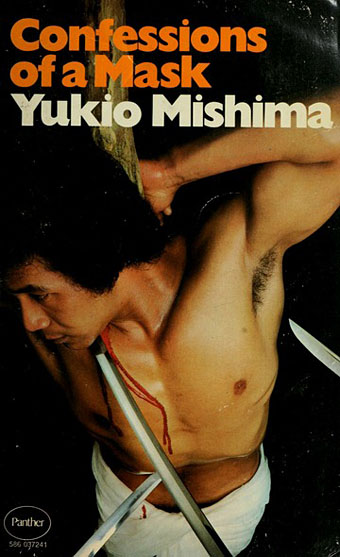
• At Dennis Cooper’s: Spotlight on…Yukio Mishima Confessions of a Mask (1949).

• Mix of the week: The Chill Out Tent Kosmische Mix by Tarotplane.

• Old music: The Glastonbury Experience (Live 1979) by Steve Hillage.

• Deep Space 13: Stephen Mallinder’s favourite soundtracks.

• Sex and pathology: David Robb on 80 years of Cat People.

• New music: Expo Botanica by Cosmic Analog Ensemble.

• Behind The Mask (1979) by Yellow Magic Orchestra | Red Mask (1981) by Cabaret Voltaire | A Ritual Mask (1983) by Peter Hammill
Weekend links 629

vallee.jpg

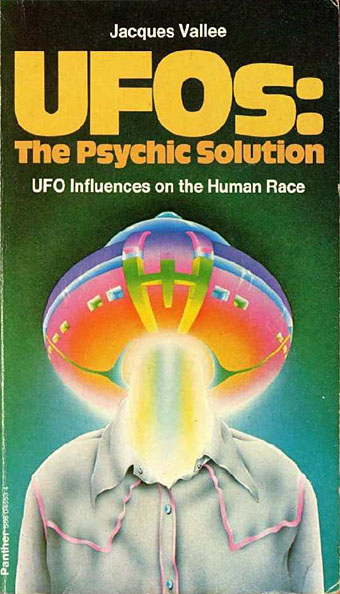
UFOs: The Psychic Solution (1977) by Jacques Vallée. A retitled reprint of The Invisible College (1975) with cover art by Peter Tybus.

• “In the summer of 1992…a curious experimental interstellar ambient-house album, made it to number one in the UK charts, promoted by a top ten single that was almost forty minutes long.” Darran Anderson navigates the noösphere with my favourite Orb album, U.F.Orb.

• Among the recent arrivals at Standard Ebooks, the home of free, high-quality, public-domain texts: Hope Mirrlees’ strange fantasy novel, Lud-in-the-Mist (1926).

• James Balmont’s guide to the intricate cinema of Hong Kong’s crime auteur, Johnnie To.

• Shortlisted photos from the Astronomy Photographer of the Year Contest.

• At Dennis Cooper’s: Spotlight on…Jean Genet Miracle of the Rose.

• Steven Heller’s font of the month is Ambicase.

• New music: Two Sisters by Sarah Davachi.

• RIP Peter Brook and James Caan.

• Unidentified Flying Object (1970) by UFO | Psychic And UFO Revelations In The Last Days (1994) by Bill Laswell & Pete Namlook | UFOnic (1995) by Sabalon Glitz

Weekend links 628

eckman-lawn.jpg

Collage art by Alex Eckman-Lawn at Unquiet Things.

• “…I love those niches and fringes in the creative world. I believe they deserve our support. But in most instances, this support must be driven by our generosity, philanthropy, and commitment to our core values—and not merely by profit seeking. Because as soon as profit maximization enters the picture, these outliers on the distribution curve don’t make the cut.” Ted Gioia explores the myth of “the Long Tail”.

• “Here we were, an Italian, an Englishman and an American in Munich, three foreigners in a foreign land—it was an accident we got together in the first place.” Pete Bellotte talking to Jude Rogers about the recording of I Feel Love by Donna Summer, a cult item in these quarters. Most of the history is very familiar but I didn’t know that Bellotte is a Mervyn Peake obsessive.

• The radical, revolutionary homoerotic art of Sadao Hasegawa. Writing about the artist in 2007 I said that “a decent collection of his work for a western audience is long overdue”; we finally have such a thing courtesy of Baron Books.

• At Wormwoodiana: Undefined Boundary: The Journal of Psychick Albion, a magazine by the creators of the Coil zine, Man is the Animal, that “aims to celebrate the visionary, psychedelic and numinous in Britain”.

• Dennis Cooper’s favourite fiction, poetry, non-fiction, film, art, and internet of 2022 so far. Thanks again for the link here!

• New music: Devotional by The Lord + Petra Haden, Dreamtides by Field Lines Cartographer.

• Fall Into Sleep by K Of Arc.

• Psychic Fire (1975) by Master Wilburn Burchette | The Psychic (1995) by David Toop | Psychic Wounds (2020) by Trees Speak

Art on film: Space is the Place

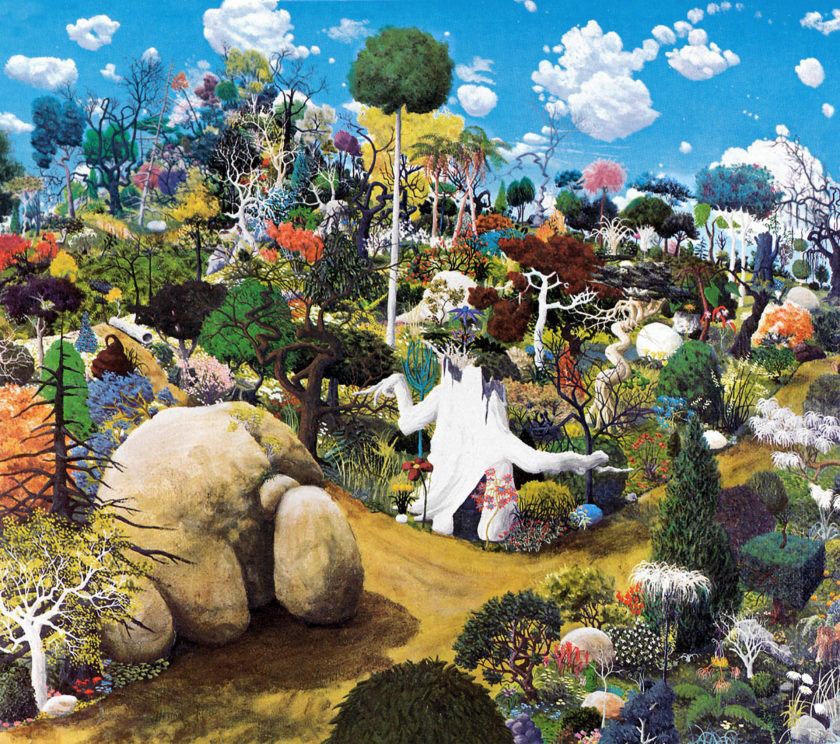
taylor1.jpg

Mescaline Woods (1969) by Gage Taylor.

Continuing an occasional series about artworks in feature films. This is more of a trivial example than the epic study of Providence but it seems worth mentioning when the art and the film in question aren’t so familiar.

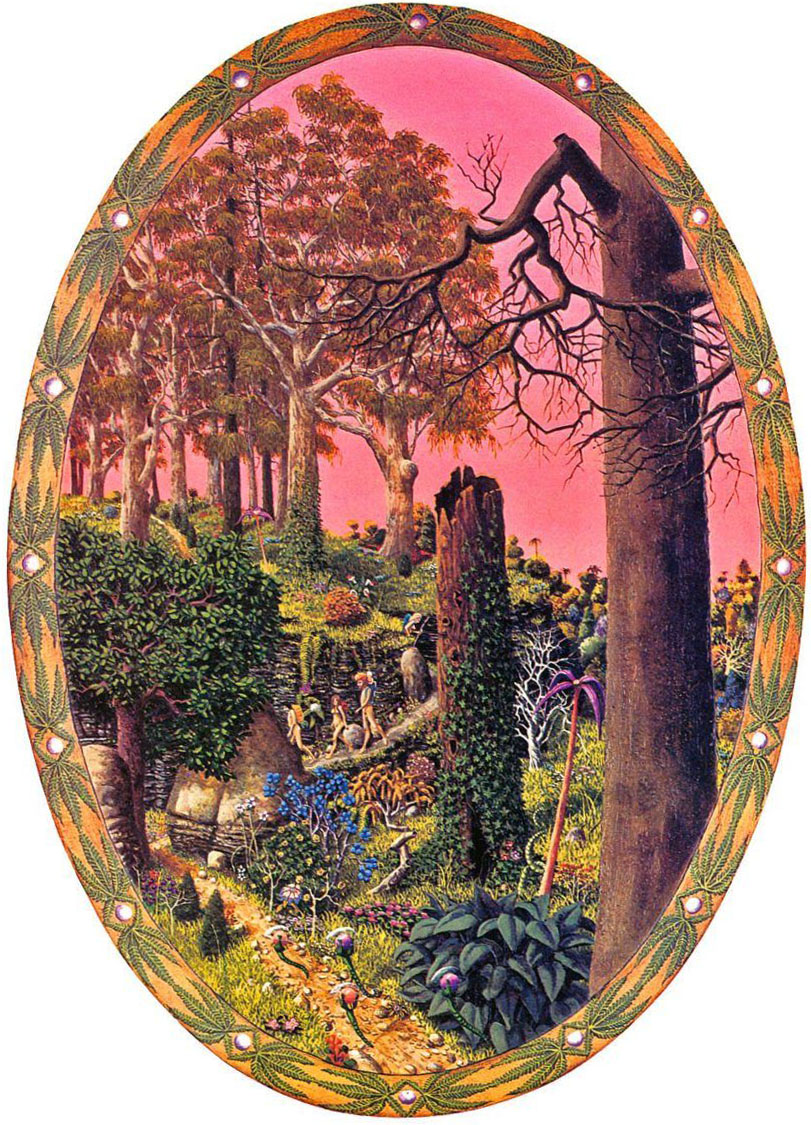
taylor2.jpg

Encounter (1971) by Gage Taylor.

Last week my friend Jay Babcock was asking on his Substack newsletter for other examples of the utopian hippy landscape art that flourished in the 1970s. I recommended the paintings of Gage Taylor (1942–2000), an artist who was part of the loose movement known as the Californian Visionaries during that decade; paintings by the group were showcased in the Visions book published by Pomegranate in 1977, and shortly thereafter could be found in the early issues of OMNI magazine. Taylor was a prime exponent of slightly fantastic, idealised landscapes with titles like Mescaline Woods, painted in a style which, for the most part, he managed to prevent from becoming too saccharine. Encounter is a typical example: a quartet of naked hippies wandering through an Arcadian scene bordered by decorative cannabis leaves. The painting is definitely utopian in asking us to accept a clothes-free hike along a trail with no concern for sharp stones or injurious plants and animals.

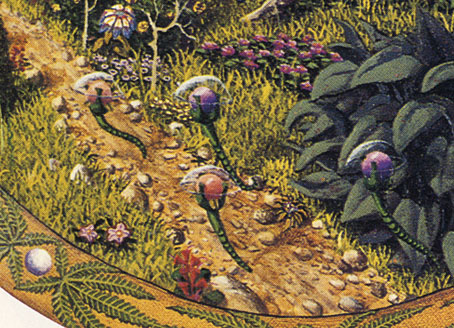
aliens.jpg

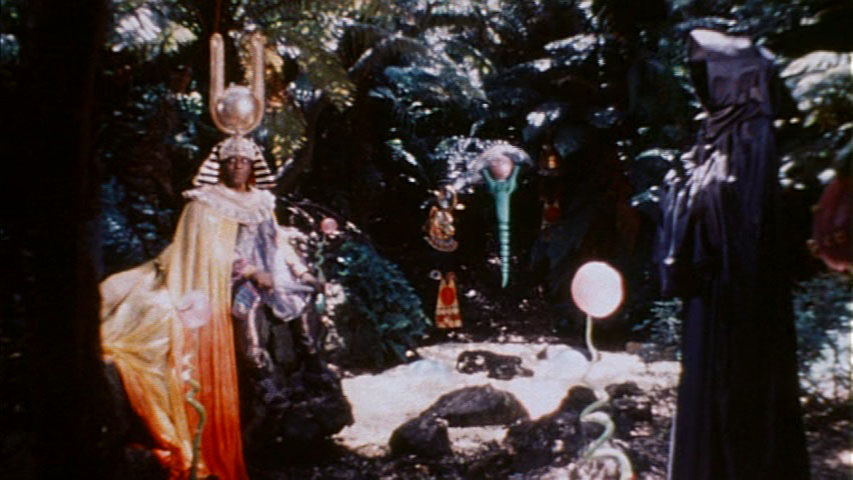
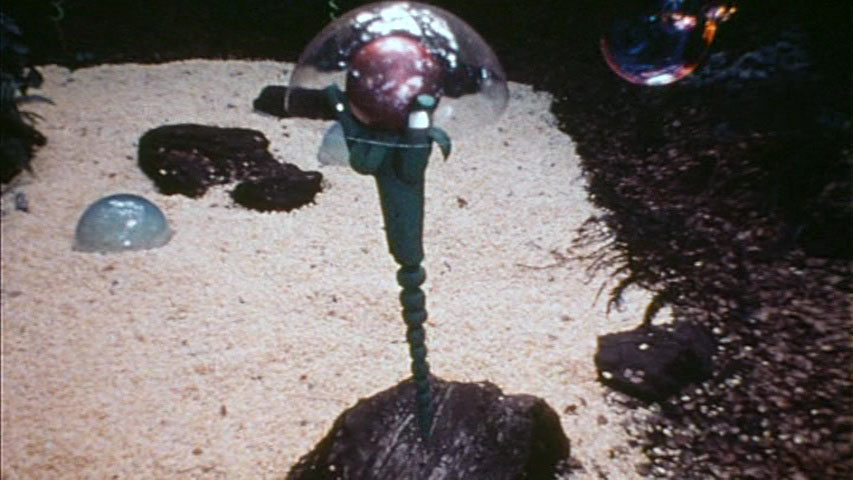
Looking through Visions again, and at this painting in particular, I was struck by the foreground group of floating alien creatures which I belatedly realised are the origin of the aliens from the opening scenes of Space is the Place (1974), the Sun Ra feature film directed by John Coney. And after watching those scenes again, details from Taylor’s paintings (including Mescaline Woods) turn up as brief establishing shots of the planet where Sun Ra has landed his spacecraft, something I’d missed entirely. Taylor is credited as one of the set decorators so I’d guess he made the alien creatures himself. I’d have been happy with more of the cosmic weirdness and less of the Blaxploitation clichés that pad out the later scenes but with films as unlikely as this we have to be thankful they exist at all. At its best Space is the Place approaches the delirium of The Holy Mountain, albeit on a much lower budget; Sun Ra and the villainous Overseer even play a game to decide the fate of the Earth using a unique pack of Tarot cards.

space1.jpg

space2.jpg

space3.jpg

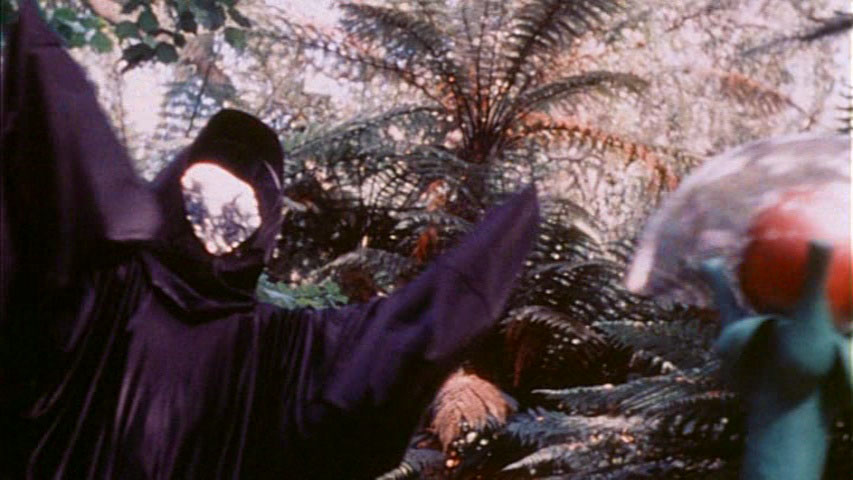
Another more obvious external reference in the opening scenes is the cowled and mirror-faced individual that Sun Ra talks to, a figure taken from Maya Deren’s Meshes of the Afternoon. Deren’s film in 1974 wasn’t the cult item that it is today so this is an opportunistic swipe on the part of the film-makers, but the borrowing allows us to regard Mirror-face as the same character in both films. Watch them together.

Previously on { feuilleton }
• Art on film: Providence
• Art on film: The Beast
• Meshes of the Afternoon by Maya Deren

Weekend links 627

aldridge.jpg

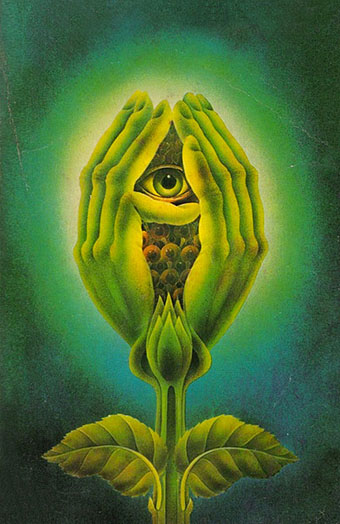
Cover art by Alan Aldridge for The Secret Life of Plants, 1975. Via.

• At Aquarium Drunkard: Alice Coltrane and band in a furious live performance at the Berkeley Community Theatre, 1972. The audio is on YouTube, and was also released on (unofficial) vinyl a couple of years ago, but you can download the whole set at Dimeadozen. (Free membership required.)

• “Black Square is tragic; it’s absurd; it can be bewildering or funny; it’s certainly metaphysical; and now it serves as a precursor for works and projects yet to be imagined.” Andrew Spira on the precursors of Black Square by Kazimir Malevich.

• “The possibility of plant consciousness cuts two ways, depending on whether you see plants as friend or foe, benevolent or threatening.” Elvia Wilk on the secret lives of plants.

• New/old music: Robot Riot by Stereolab. A previously unreleased recording from the mid-90s which will appear on the fifth instalment in the Switched-On compilation series.

• “Dare’s good, but Love And Dancing broke the mould and kicked off the whole modern dance scene.” Ian Wade on 40 years of remix albums.

• Coming soon from Strange Attractor: Arik Roper: Vision of The Hawk.

• At Unquiet Things: Deborah Turbeville’s unseen Versailles.

• “Thinking like a scientist will make you happier”.

• At Dennis Cooper’s: Karel Zeman Day.

• Plantasia (1976) by Mort Garson | Musik Of The Trees (1978) by Steve Hillage | The Secret Life Of Plants (1979) by Stevie Wonder