Weekend links 738

rossetti.jpg

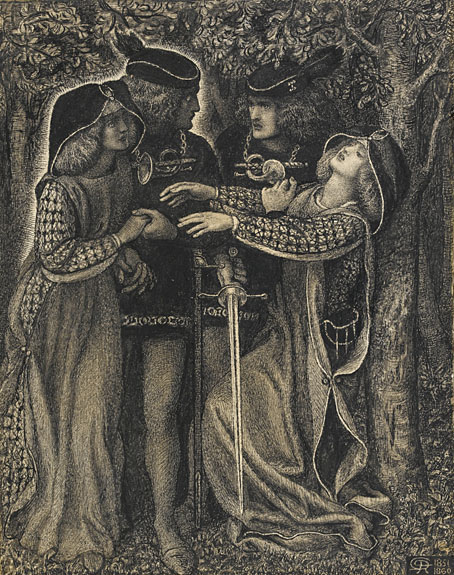
How They Met Themselves (1860) by Dante Gabriel Rossetti.

• At Igloo magazine: Justin Patrick Moore interviews inventor and electronic music composer Don Slepian about his life and work.

• At The Washington Post (archived link): Michael Dirda in praise of weird fiction, horror tales and stories that unsettle us.

• At The Daily Heller: Tina Touli’s explosively twirling typography. Steven Heller’s font of the month is Doublethink.

• At Colossal: Dreams and memories form and dissipate in Tomohiro Inaba’s delicate iron sculptures.

• At Unquiet Things: Jerome Podwil’s captivating cover art.

• New music: Strangeness Oscillation by 137.

• At Dennis Cooper’s: Craig Baldwin’s Day.

• Brìghde Chaimbeul’s favourite albums.

• Penguin Series Design

• Double Image (1971) by Joe Zawinul | Double Flash (1999) by Leftfield | Double Rocker (2001) by Stereolab

Weekend links 737

pinkfloyd.jpg

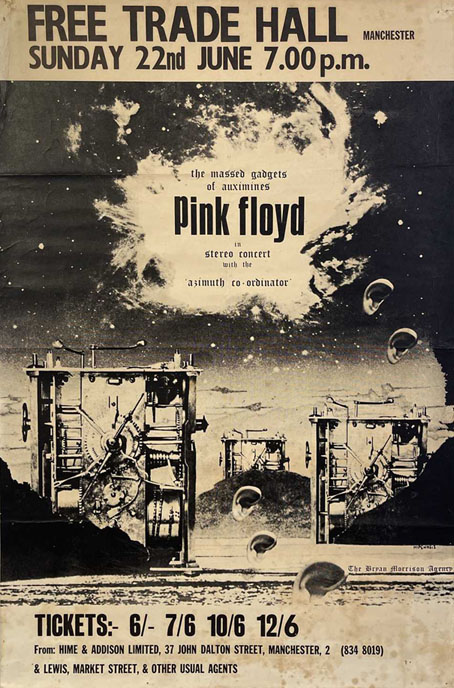
The Massed Gadgets of Auximines – Pink Floyd – in stereo concert with the “Azimuth Co-ordinator”. Design by Hipgnosis, 1969.

• At Rond1900: Sander Bink explores the life of another obscure Dutch Symbolist, Léonard Sarluis (1874–1949): artist, friend of Oscar Wilde and lover of Alfred Jarry.

• At Spoon & Tamago: Manga artist Hirohiko Araki pays tribute to Osaka station’s history and culture with new public art sculpture.

• At Public Domain Review: Scenes of reading on the early portrait postcard by Melina Moe and Victoria Nebolsin.

• At Dennis Cooper’s: 33 films that either faked ingesting LSD or did.

• At Bandcamp: Blissful Noise, Bad Vibes: A Doomgaze Primer.

• Mix of the week: Azimuth Coordinator by Tarotplane.

• New music: Global Transport by Monolake.

• The Strange World of…Gay Disco.

• Speak & Glitch

• Postcard From Jamaica (1967) by Sopwith Camel | Postcards Of Scarborough (1970) by Michael Chapman | An Unsigned Postcard (1991) by Tuxedomoon

Occult rock: The Devil Rides In

devil.jpg

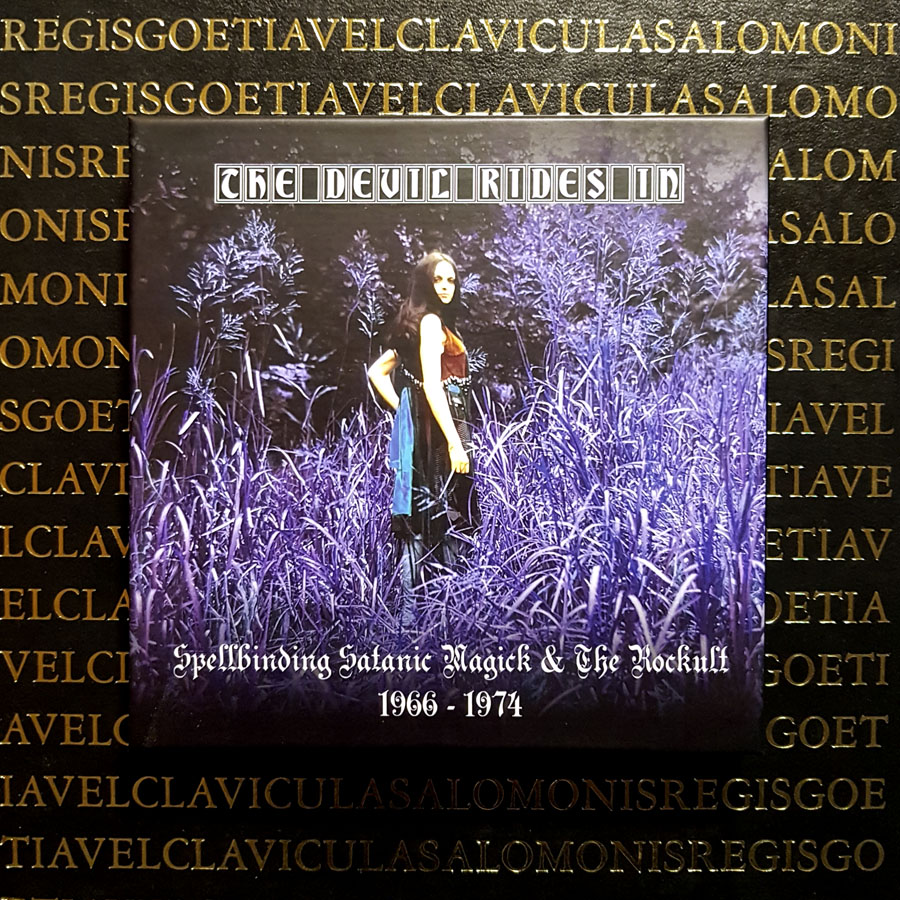
The Devil rode in at the weekend on three shiny compact discs crammed with Satanic psychedelia and the pentagram-branded rock music of the early 1970s: 55 tracks in all. I’d been hoping for some time that an enterprising anthologist might put together an officially-sanctioned collection like the series of mixes compiled by The Ghost of the Weed Garden. Cherry Red Records are ideal candidates for the task, having distinguished themselves in recent years with a series of multi-disc compilations that mine specific periods of British music: psychedelia, heavy rock, folk, punk, reggae, post-punk, experimental electronics, electro-pop, and so on. The Devil Rides In bears a subtitle that ties the collection to the prime years of the Occult Revival, “Spellbinding Satanic Magick & The Rockult 1966–1974”, a period when the Aquarian transcendence of the hippy world was jostling with darker trends in the media landscape. 1967 was the year the Beatles put Aleister Crowley on the cover of the Sgt Pepper album; it was also the year that Hammer were filming their first Dennis Wheatley adaptation, The Devil Rides Out. The song of the same name by Icarus appears on the second disc of this compilation, a single intended to capitalise on the publicity generated by the film. For all the serious occult interest that flourished during by this period many of the cultural associations were frivolous or superficial ones, either cash-ins like the Icarus single or exploitations by those who followed in Dennis Wheatley’s wake. Serious occultists no doubt abhorred the exploitation but it helped create a market for Man, Myth and Magic magazine, and for all the reprints of grimoires and other magical texts that were appearing in paperback for the first time. I’ve always enjoyed the frivolous side of the Occult Revival, probably because I grew up surrounded by it. Without Ace of Wands and Catweazle on the TV I might not have been so interested in my mother’s small collection of occult paperbacks, or gravitated eventually to the Religion and Spirituality shelves of the local library.

devil2.jpg

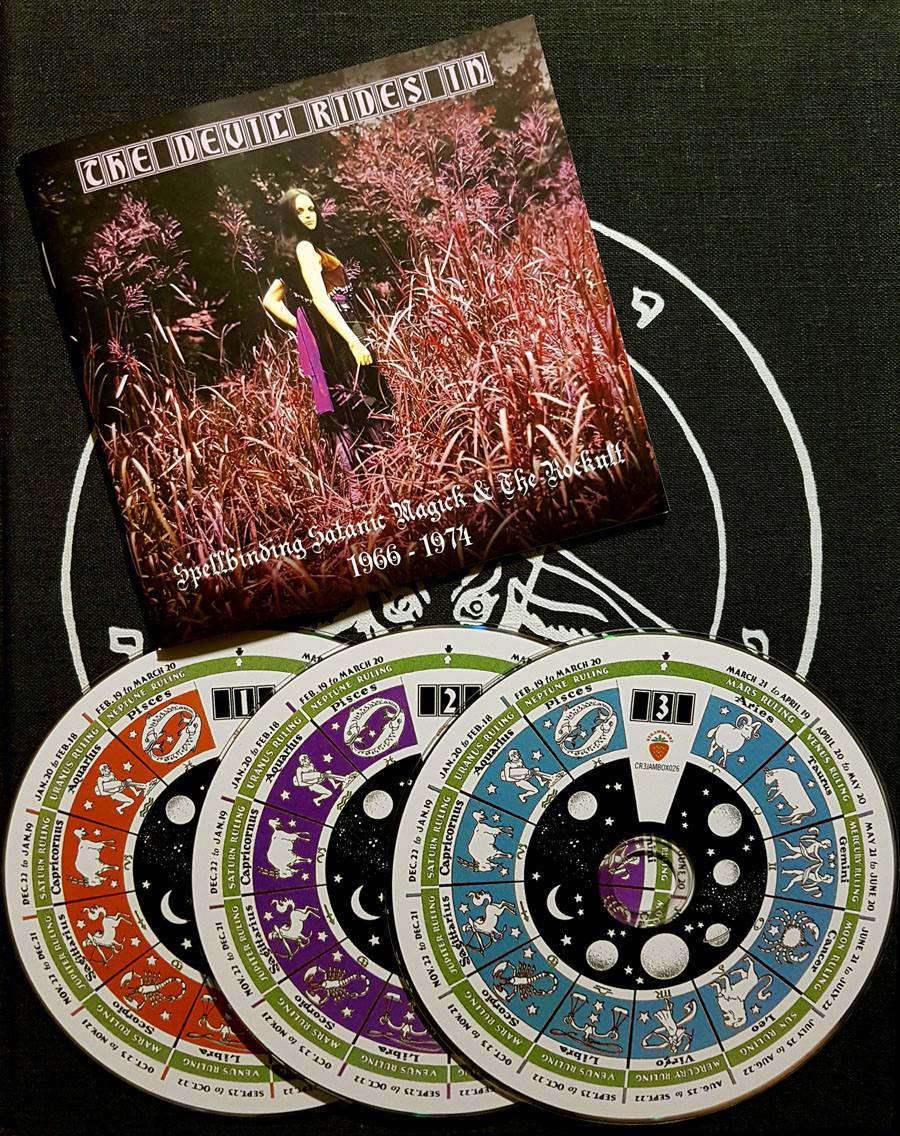
The Devil Rides In was conceived, designed and annotated by Martin Callomon, working here under the “Cally” pseudonym he uses for many of his activities. The accompanying booklet is evidence of a labour of love, the detailed notes being illustrated throughout with Occult Revival ephemera: film posters and magazines (the inevitable Man, Myth & Magic), also plenty of paperback covers which tend towards the lurid and exploitational end of the magical spectrum (the inevitable Dennis Wheatley). Cherry Red always take care with their sleeve notes but Cally’s booklet design has gone to considerable lengths to track down many obscure book covers, some of which I’d not seen before. The same diligence applies to the music, with the proviso that compilations are often restrained by the hazards of licensing law. There’s a track list on the Cherry Red page but this doesn’t tell you that the collection is divided into eight themed sections:

1) Buried Underground
2) Phantom Sabbaths
3) Popular Satanism
4) She Devils
5) Folk Devils
6) Evil Jazz
7) Beelzefunk
8) Let’s All Chant

Many of the selections on the first disc are the kinds of songs I’d usually avoid outside this collection, the lumbering heavy rock that filled the Vertigo catalogue for the first half of the 1970s. But groups that you wouldn’t want to hear at album length become palatable when placed in a context such as this.

blackwidow.jpg

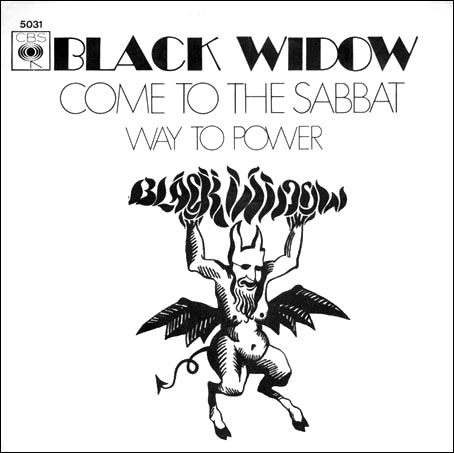
Among the immediate highlights I’d pick Race With The Devil by The Gun, already a favourite of mine by the group that launched Roger Dean’s career as a cover artist; Black Mass by Jason Crest, a psychedelic B-side whose subject matter and high-pitched wailing is a precursor of the heavy-metal future; and the perennially popular Come To The Sabbat by Black Widow. A few of the selections have been chosen more for their name than anything else, something I’m okay with so long as the choices are good ones. Cozy Powell’s Dance With The Devil, for example, is a drum-led instrumental with a musical theme swiped from Jimi Hendrix; it has nothing at all to do with the Devil but it’s still a great piece of music which was also a surprise UK chart hit in 1973. More of a reach is Magic Potion by The Open Mind, a song about psychedelic drugs not witches’ brews. I included this one on one of my psychedelic mixes so I can tolerate its presence here. Less tolerable is Long Black Magic Night by Jacula, an Italian prog band whose contribution features Vittoria Lo Turco as “Fiamma Dallo Spirito” stuck in one channel of the stereo mix where she intones monotonously in very poor English; the cumulative effect is diabolical in the wrong way. And I would have prefered Julie Driscoll’s long, slow version of Season Of The Witch instead of Sandie Shaw squeaking her way through Sympathy For The Devil. But you can’t always get what you want, as Mick Jagger reminds us elsewhere, something which is especially true of compilation albums.

Continue reading “Occult rock: The Devil Rides In”

Weekend links 736

jupiter.jpg

South Polar Map of Jupiter by the Cassini spacecraft, 2000.

• “A ghostly train journey on a forgotten branch line transports a son, Jozef, visiting his dying Father in a remote Galician Sanatorium. Upon arrival Jozef finds the Sanatorium entirely moribund and run by a dubious Doctor Gotard who tells him that his father’s death, the death that has struck him in his country has not yet occurred, and that here they are always late by a certain interval of time of which the length cannot be defined. Jozef will come to realise that the Sanatorium is a floating world halfway between sleep and wakefulness and that time and events cannot be measured in any tangible form.” The Quay Brothers have finished their third feature film, Sanatorium Under the Sign of the Hourglass, a combination of live action and animation which is being premiered next month at the Venice film festival. No sign of a trailer as yet but the curious can prime themselves by watching (or rewatching) the Quays’ Street of Crocodiles—their first adaptation of Bruno Schulz—or Hourglass Sanatorium, the first screen adaptation of Schulz’s stories by Wojciech Has.

• “No one is sure when the tremendous whirl—the largest and longest-lived storm in our current solar system, with a diameter wider than planet Earth and wind speeds of more than 260 miles per hour—began. Or why it’s red. Or even who first observed it…” Katherine Harmon Courage on Jupiter’s Great Red Spot.

• New music: Bórdice by Nestor, and Nightfall by Trentemøller, the latter with a video swiping shots from Maya Deren’s Meshes of the Afternoon. Nice song but musicians really need to stop plundering independent film-makers when they want some visual embellishment.

• At The Daily Heller: Steven Heller talks to Drew Friedman about Friedman’s new book of caricatures, Schtick Figures.

• Mixes of the week: A mix for The Wire by Miaux, and Isolatedmix 127 by David Douglas & Applescal.

• DJ Food’s latest psychedelic trawl is a collection of book covers, puzzles, etc, designed by Peter Max.

• At Unquiet Things: Vic Prezio’s Gothic book covers.

• At Dennis Cooper’s: Morgan Fisher Day.

• Jupiter (1990) by NASA Voyager Space Sounds | Jupiter! (Feed Your Head Mix) (1994) by System 7 | Jupiter Collision (2002) by Redshift

Inventions for echo guitars

echoes.jpg

I thought about calling this one A Young Person’s Guide to Echo Guitar but that would only end up attracting people expecting a tutorial of some kind. It’s not really a guide either, more an overview of a musical idiom whose predominant feature is guitar played through analogue or digital echo machines, often without additional instrumentation. I have a predilection for this kind of thing, something I was thinking about recently when listening to Michael Brook’s Cobalt Blue album.
copicat.jpg

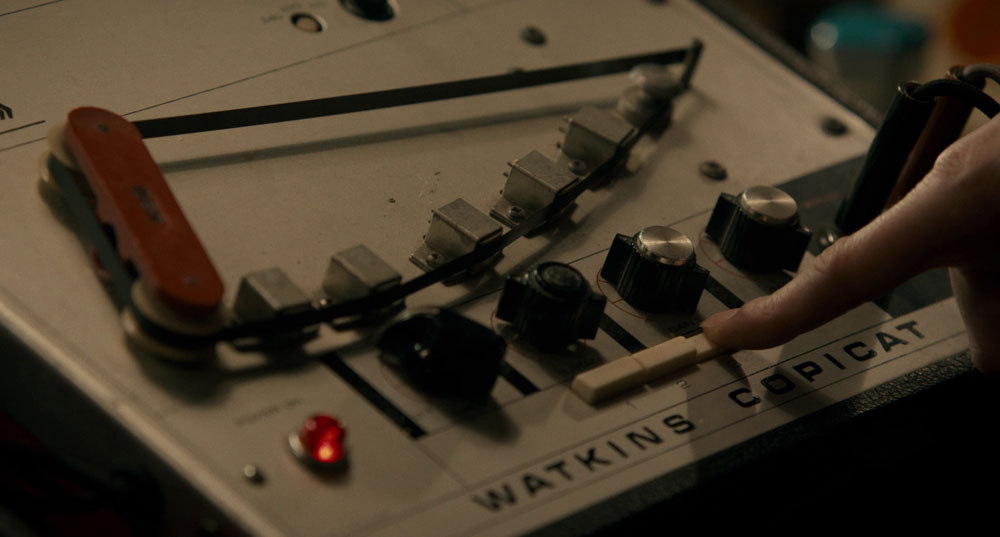
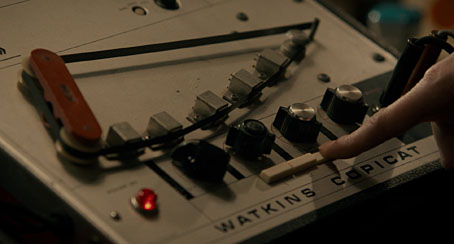
A Watkins Copicat as seen (and used) in Berberian Sound Studio.

This is also another example of technology inspiring the development of new forms of music. Echoed guitar dates back to the early days of rock’n’roll but it was the advent of echo machines like the Watkins Copicat that made it possible for guitarists to produce rich clusters of sound without any other instrumentation. The Copicat was portable and could be activated with a foot pedal, making it perfect for guitar players. These machines aren’t always credited in album notes but I’d guess that one or two of the earlier recordings on this list have been made using Copicats. (John Martyn, however, preferred an Echoplex.) As for the more recent examples, one reason to write this piece is to fish for suggestions of things I may have missed. I’m sure I put a Bandcamp discovery in one of the weekend lists that involved quantities of echo guitar but I’m going to have to trawl back through old posts to find it.

reichel.jpg

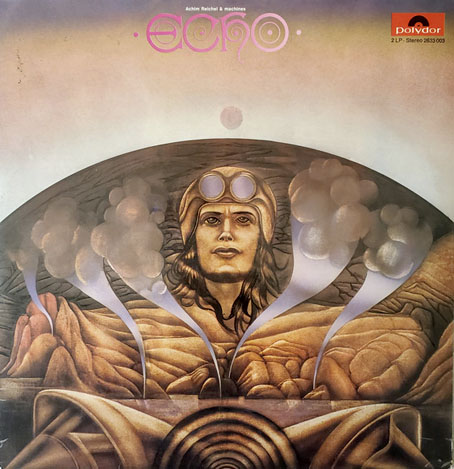
Echo (1972) by Achim Reichel and Machines

Achim Reichel is an odd character in German music. In the 1960s he was a singer and guitarist in a popular Beatles-like band, The Rattles, followed by a stint with a short-lived psychedelic outfit, Wonderland; by the 1980s he was a very successful German pop artist. For a few years in the 1970s, however, he recorded a handful of albums which in later years he seems to have found embarrassing despite their being regarded now as highlights of the so-called Krautrock era. Echo is the most adventurous of these, a double album which used to be a frustrating item, being praised by those who heard it while also being very difficult to find. The two discs contain four suites that fill each side, the first one opening with long stretches of echo-guitar which soon establish the mood of the album with their unpredictable evolution. Echo as a whole is a succession of unexpected swerves and musical detours, taking in orchestral arrangements, field recordings, snatches of song, heavy rock, and (regrettably) a long stretch of glossolalic jabbering that tests the listener’s patience. I forgive the latter when the rest of the album is so good. The guitar sound that Reichel developed here became a recurrent feature of his music for the next two years, especially in live performances.

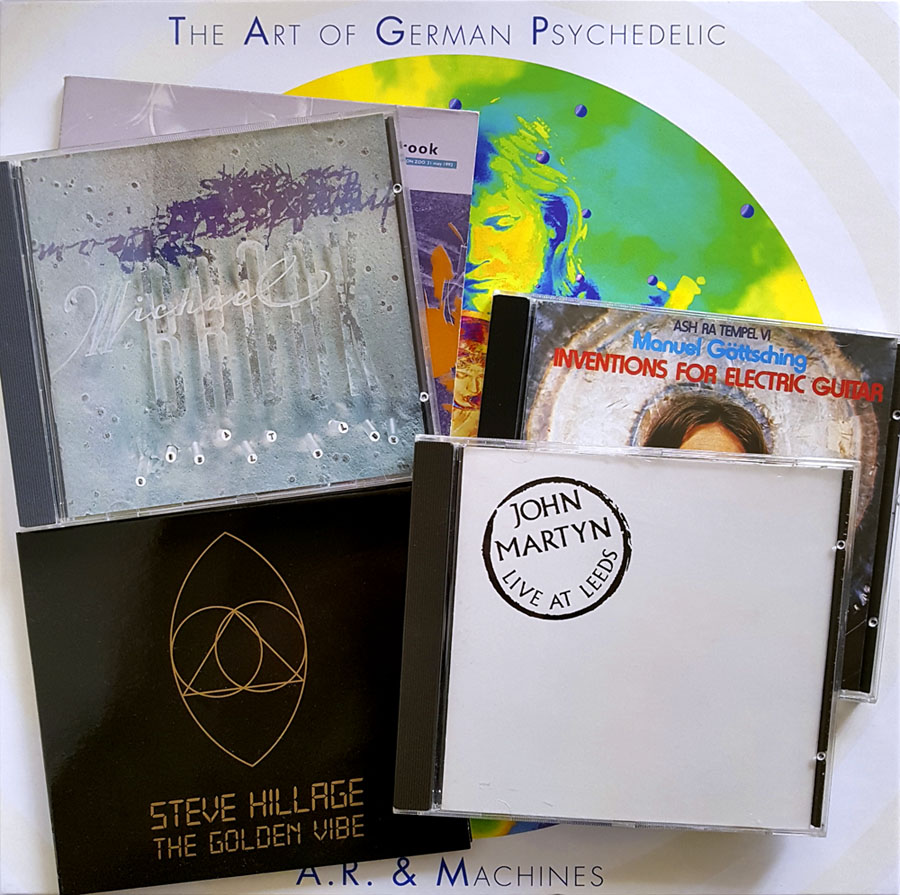
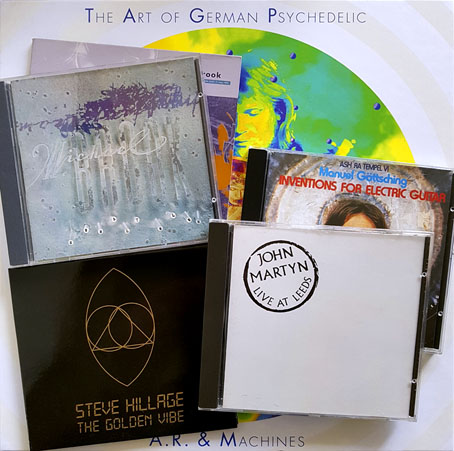
Reichel’s popularity has overshadowed his earlier recordings to an extent that Echo wasn’t given an official reissue until 2017 when he relented to persistent requests and put together a 10-disc CD set, The Art Of German Psychedelic 1970–74. This is too much Reichel for the casual listener but if you can bear his occasional lurches into Steppenwolf-style psych-rock there’s a great deal of excellent music in the collection. Among the exclusive offerings is a superb live performance of kosmische improvisation from 1973, also an entire disc of unaccompanied echo-guitar recordings.

• Einladung

burchette.jpg

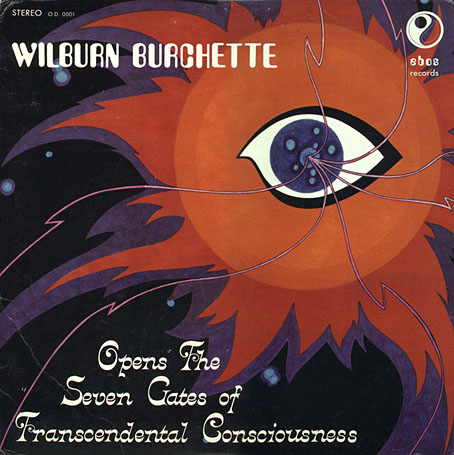
Wilburn Burchette Opens The Seven Gates Of Transcendental Consciousness (1972)

Many of Wilburn Burchette’s albums would be suitable here but I chose this one because I like the title and it has the grooviest cover. Burchette’s subtitle—“A Transcendental Ballet For The Mind Of God”—suggests something more overtly cosmic than the music itself which is less freeform than Achim Reichel. This is also the first self-released album in a list which coincidentally contains several such releases.

• Opens the Seven Gates of Transcendental Consciousness

gottsching.jpg

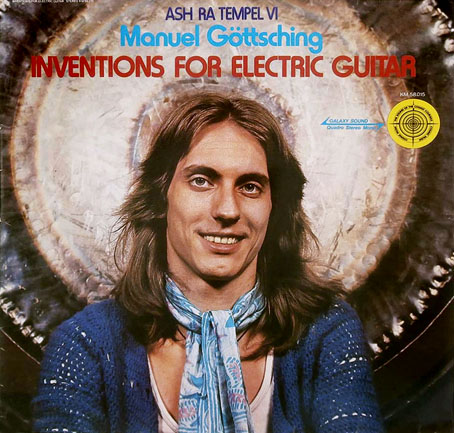
Inventions For Electric Guitar (1974) by Ash Ra Tempel/Manuel Göttsching

Cult album time. This one was labeled as the sixth release by Ash Ra Tempel but it’s really the first solo album by Manuel Göttsching, in which he used multi-track recording together with copious echo and other effects to create something that sounds more like the synthesizer music of 1974 than anything made with guitars. The cover art fixes the album in a specific time but the music itself is timeless. In 2010 he performed the album in its entirety at a Japanese music festival, assisted by three other guitarists: Steve Hillage, Elliott Sharp and Zhang Shouwang. If there’s a complete video of this concert I’ve yet to see it but there is this extract showing the musicians playing Pluralis.

• Echo Waves

Continue reading “Inventions for echo guitars”