The sphinx of Wolf City

wolfcity.jpg

Wolf City (1972) by Amon Düül II.

Behold another favourite album cover by a favourite band, one of several superb designs for Amon Düül II by Falk-U Rogner who was also the group’s keyboard player. Rogner’s suitably hallucinogenic cover images are worth a post of their own but this one requires attention today since I happened to solve the mystery of the location of the Düül sphinx during the recent hiatus.

Ever since I began these blog posts I’ve had a feeling that the endless trawling of image archives might one day turn up the location of this stone creature. It was only ever going to be something you’d find by accident, and that’s precisely what happened with the discovery of the drawing below in volume 4 of Materials and Documents of Architecture and Sculpture (1915) by A. Raguenet, a set of books I’ve been plundering recently for architectural details.

sphinx1.jpg

Compare with this photo.

The notes for the drawing offer enough information to trace the location to the Brunswick Monument in Geneva, a mausoleum built in 1879 for the Duke of Brunswick. The monument is a typically Gothic edifice guarded by a number of stone lions plus this splendid sphinx on a plinth by a pool of water. On the opposite side of the monument there’s a matching bird-headed sculpture. Amon Düül II were a German group so it was always likely that the sphinx would be in Europe somewhere, if not Germany itself. The photo below is a detail from this Flickr shot which is the best match I’ve found for the angle of the cover photo. Jean Franel was the monument architect but statues are often the work of specialist artists, and I’ve yet to find a name attached to these examples.

sphinx2.jpg

Photo by Till Westermayer.

Elsewhere on { feuilleton }
The album covers archive

Previously on { feuilleton }
Frémiet’s Lizard

Weekend links 209

soundcarriers.jpg

Soundcarriers poster by Julian House.

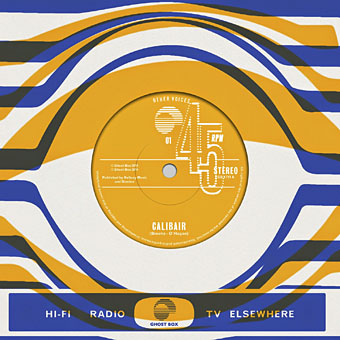
A new release on the Ghost Box label is always a welcome thing but Entropicalia by The Soundcarriers, out on May 20th, is one I’m especially looking forward to. Julian House has made a video for new song Boiling Point, and there’s also the poster above which can be downloaded at larger size here. The Ghost Box Guest Shop has a couple of new additions including the recent Man Woman Birth Death Infinity album by Raagnagrok.

• “It’s a funny time to be making music, because we’re a generation of people who make music with screens instead of with ears.” Ben Frost talking to Tristan Bath.

• At Dangerous Minds: You Gotta Say Yes to Another Excess, a rare glimpse of Yello live in concert, 1983.

Our movements about London are closely circumscribed, and while we may imagine ourselves to be free, the truth is that the vast majority of our journeys are undertaken for commercial imperatives: we travel either to work or to spend. All about us during our daily existence we are presented with buildings we cannot enter, fences we cannot climb and thoroughfares it would be foolhardy to cross. We are disbarred from some places because we don’t have the money — and from others because we don’t have the power. The city promises us everything, but it will deliver only a bit.

The place-hackers draw our attention to how physically and commercially circumscribed our urban existence really is. […] As more and more international capital flows into London, so public space is increasingly eroded — it’s just too valuable for us ordinary folk to paddle about in any more.

Give the freedom of the city to our urban explorers, says Will Self. Related: Robert Macfarlane accompanied urbexer Bradley Garrett on a night-time jaunt.

Black Sabbeth: Metal band Gonga covering a classic with Portishead’s Beth Gibbons on vocals.

• Pelican books take flight again; Paul Laity on the resurrection of the non-fiction imprint.

• Finland’s homoerotic stamps are an ocular feast for women, too, says Nell Frizzell.

• “I guess you could say I am a Pagan.” Kenneth Anger on the occult.

• “How much gay sex should a novel have?” asks Caleb Crain.

• Mix of the week: Secret Thirteen Mix 112 by Kyoka.

The Gibraltar Encyclopedia of Progressive Rock

Zombi’s Guide to Goblin

Decadence Comics

Zombie Warfare (1979) by Chrome | Escape From The Flesheaters (Zombie) (1979) by Fabio Frizzi | Zombie’ites (1993) by Transglobal Underground

The Rock Machine Turns You On

rockmachine.jpg

Discovered via the latest issue of The Wire magazine in a feature about compilation albums, The Rock Machine Turns You On (1968) was the first budget sampler album. Given the success of this release I’m sure I must have seen it over the years but that cover wasn’t familiar at all. I have to assume that the “Hey, pop kids!” title would have been enough of a turn-off to ensure the fingers kept flipping through the sleeves. Priorities change with the passing of time, however, and my attention was caught by the cover art alone, another example of the engraving-collage style whose evolution I’ve been tracing over the past few years. The only design credit on the sleeve is for the back cover photo by Wadham Artists. The front cover is credited online to Milton Glaser, some of whose album covers have already featured here. He was working for Columbia/CBS in the late 60s so it’s a possibility. If anyone out there has a copy of the vinyl then maybe they can tell me if that’s an artist credit in the lower right of the picture. A CD reissue in 1996 only copied the album credits.

rockmachine2.jpg

As to the music, it’s a pretty good compilation, lots of familiar names together with a track from cult favourites of mine The United States of America whose one and only self-titled album had been released that year. One of the few negatives about the superb United States of America album is the cover design which isn’t bad but does nothing to reflect the extraordinary musical invention within. It’s a shame that whoever designed The Rock Machine… couldn’t have worked on that sleeve as well.

Update: Rick Poynor writes to say that this cover appears in Milton Glaser: Pop, so the Glaser attribution is accurate.

Elsewhere on { feuilleton }
The album covers archive

Swinging Britain, 1967

pathe.jpg

My thanks to Jay for turning up this gem from the huge British Pathé archive which recently landed at YouTube. British Pathé provided short newsreel films for UK cinemas up until 1970. The flaws of these films have always been immediately apparent, chiefly an irritating editorial attitude manifested by patronising voiceovers and sequences staged for the camera. On the plus side, everything was being shot for cinema screens so 35mm film was used which means the footage always looks better than the TV news of the time.

Swinging Britain is an 8-minute jaunt from the Portobello Road and Carnaby Street, to the offices of Intro magazine (launched that year), Mary Quant’s boutique, a “happening” in a park, and various nightclubs (not the UFO, unfortunately). Most footage along these lines tends to concentrate exclusively on London but this one also includes scenes in Manchester and Newcastle. The voiceover is as sceptical as you’d expect, leavened with a few qualifying remarks: “It’s good business for Britain!” The event in the park was one of a number of happenings and art events staged by Keith Albarn (Damon’s dad). The Pathé archive has another film showing the interior of Albarn’s Fun City environment at Margate, Kent. Of more general interest is this film of one of the popular beat groups of the period, four young men who call themselves The Pink Floyd.

See also:
Woburn Love-In (1967)
Light Fantastic (1968)
Out Takes / Cuts From Cp 662 – Reel 1 Of 3 – Swinging Britain (1967)
Out Takes / Cuts From Cp 662 – Reel 2 Of 3 – Swinging Britain (1967)
Out Takes / Cuts From Cp 662 – Reel 3 Of 3 – Swinging Britain (1967)
Out Takes / Cuts From Cp 719 – Fun Palace, Air Cushion And Balloon Race (1968)

Previously on { feuilleton }
San Francisco by Anthony Stern
Smashing Time

Weekend links 208

sungwon.jpg

The Blue Girl (2013) by Sungwon.

• “Meanwhile, in her parents’ room [Max] Ernst painted aardvarks eating ants and big human hands around the windows. ‘Sexual connotations, I think,’ she says shyly.” Agnès Poirier talks to Cécile Eluard about her childhood among the Surrealists.

• “Thrilling and prophetic”: why film-maker Chris Marker‘s radical images influenced so many artists. Sukhdev Sandhu, William Gibson, Mark Romanek and Joanna Hogg on the elusive director.

• At Dangerous Minds: Throbbing Gristle live in Manchester in 1980, and Brian Butler talks about the rediscovered early print of Kenneth Anger’s Lucifer Rising. There’s a trailer!

• From 1981: The Art of Fiction No. 69 at The Paris Review, an interview with Gabriel García Márquez. Related: Thomas Pynchon reviewed Love in the Time of Cholera in 1988.

• “Seven years ago, a stolen first edition of Borges’s early poems was returned to Argentina’s National Library. But was it the right copy?” Graciela Mochkofsky investigates.

• “What was Walter Benjamin doing with his shirt off in Ibiza?” Peter E. Gordon reviews Walter Benjamin: A Critical Life by Howard Eiland & Michael W. Jennings.

• A video by Marcel Weber for Måtinden, a track from Eric Holm’s Andøya album. Another album on the Subtext label that I helped design.

• More Ian Miller: Boing Boing has pages from his new book, The Art of Ian Miller, and there’s an interview at Sci-Fi-O-Rama.

Outrun Europa, a free compilation of 80s-style electronic music. There’s a lot more along those lines here.

• Praise Be! Favourite religious and spiritual records chose by writers at The Quietus.

Ralph Steadman illustrated Alice’s Adventures in Wonderland in 1973.

British Pathé is uploading 85,000 of its newsreel films to YouTube.

• Drawings by Lebbeus Woods at The Drawing Center, New York.

• At Pinterest: Ian Miller and Kenneth Anger.

Lucifer Sam (1967) by Pink Floyd | The Surrealist Waltz (1967) by Pearls Before Swine | Which Dreamed It (1968) by Boeing Duveen And The Beautiful Soup