Pole position

pole1.jpg

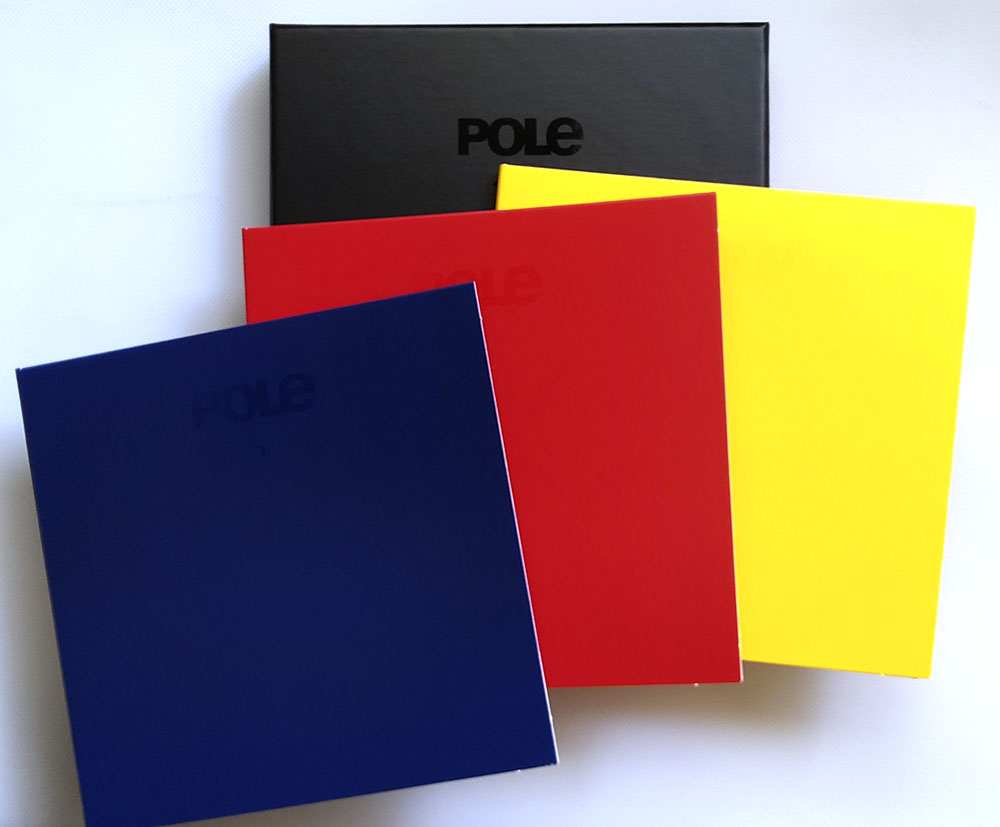
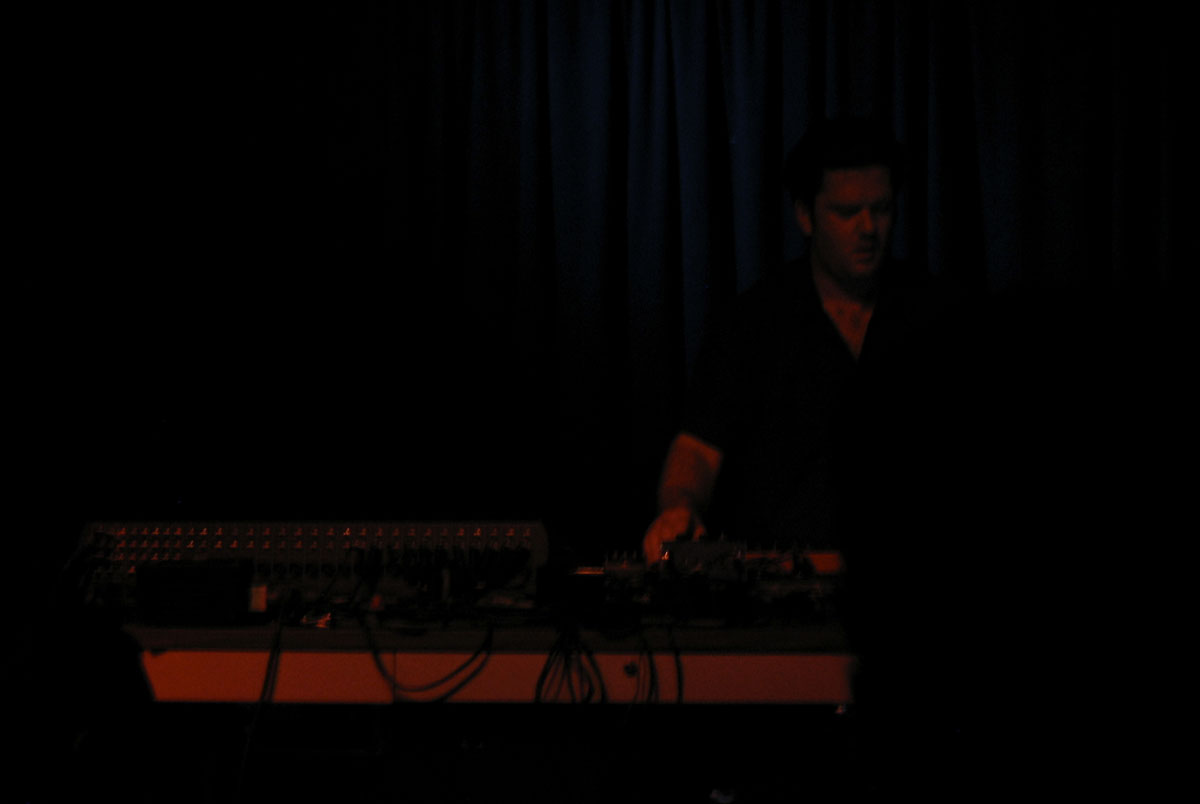
In today’s post, the recent Mute reissue of the first three albums by Stefan Betke, aka Pole. The photo below is one I took of Herr Betke in a club in Los Angeles in 2005. My old Canon camera was never very good in low-light conditions but a portrait of the artist emerging from gloom seems fitting for music whose reverberant pulses seem to evolve from an equally tenebrous void.

pole2.jpg

Weekend links 534

hasui.jpg

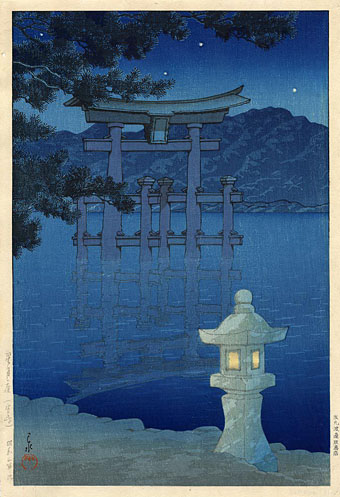
Beautiful night – moon and stars, Miyajima Shrine (1928) by Hasui Kawase.

• One announcement I’d been hoping for since last summer was the news of a second box of Tangerine Dream albums to follow the excellent In Search Of Hades collection. The latter concentrated on the first phase of the group’s Virgin recordings, up to and including Force Majeure. This October will see the release of a new set, Pilots Of Purple Twilight, which explores the rest of the Virgin period when Johannes Schmoelling had joined Froese and Franke. Among the exclusive material will be a proper release of the soundtrack for Michael Mann’s The Keep (previously a scarce limited edition), together with the complete concert from the Dominion Theatre, London. Also out in October, Dark Entries will be releasing a further collection of recordings from the recently discovered tape archive of Patrick Cowley. The new album, Some Funkettes, will comprise unreleased cover versions, one of which, I Feel Love by Donna Summer, is a cult item of mine that Cowley later refashioned into a celebrated megamix.

• “Did you know that Video Killed The Radio Star was inspired by a JG Ballard story?” asks Molly Odintz. No, I didn’t.

Casey Rae on the strange (musical) world of William S. Burroughs. Previously: Seven Souls Resouled.

• “And now we are no longer slaves”: Scott McCulloch on Pierre Guyotat’s Eden Eden Eden at fifty.

• At Dennis Cooper’s: Frank Jaffe presents…Dario Argento and his world of bright coloured blood.

• At Wormwoodiana: The Serpent Calls. Mark Valentine on a mysterious musical instrument.

• At Spoon & Tamago: Long-Exposure Photographs of Torii Shrine Gates by Ronny Behnert.

• Mix of the week: mr.K’s Soundstripe vol 4 by radioShirley & mr.K.

• Rising sons: the radical photography of postwar Japan.

• The illicit 1980s nudes of Christopher Makos.

• RIP Diana Rigg.

Garden Of Eden (1971) by New Riders Of The Purple Sage | Ice Floes In Eden (1986) by Harold Budd | Eden (1988) by Talk Talk

Weekend links 533

calvino.jpg

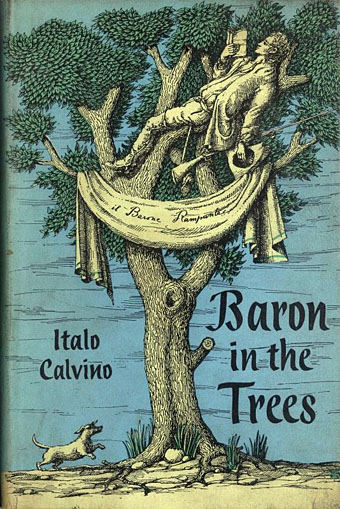
Cover art by Domenico Gnoli, 1959.

• After decades of ignoring the output of Tangerine Dream it feels strange to be interested in the group once again; musicians you’re compelled to dismiss seldom manage to recapture your attention later on. Stranger still when the group itself is now completely detached from its origins following the death of founder Edgar Froese in 2015. But it was Froese’s departure, and with it the disappearance of many years of poor aesthetic choices, that helped renew my interest. At FACT the group take up the against-the-clock challenge in which musicians are given 10 minutes to create a new piece of music.

• “We were both working at Sounds at the time and we thought that instead of listening to these terrible ’80s records like Haircut 100 we’d go off and look for Montague Summers books, so off we went!” Savage Pencil (Edwin Pouncey) on his enthusiasm for Summers, Austin Spare and Louis Wain.

• At the Paris Review: Valerie Stivers bakes pies for Italo Calvino. I’d like to see someone create a series of dishes based on every location from Invisible Cities. Elsewhere there’s William N. Copley on Joseph Cornell: “No art historian ever prophesied the coming of the box.”

• On the experimental realism of an eccentric Russian Anglophile: “For Sigizmund Krzhizhanovsky, strangeness was a matter of perspective,” says Caryl Emerson.

Nova Reperta: John Boardley on a series of 16th-century prints showing new inventions.

• RIP David Graeber. From 2014: “What’s the point if we can’t have fun?

• “Damn your blood”: John Spurr on swearing in early modern English.

• At Wormwoodiana: Mark Valentine maps the esoteric in Britain, 1920.

• At Dennis Cooper’s: Seijun Suzuki Day.

Big Fun/Holly-wuud (Take 3) (1972) by Miles Davis | Funtime (1977) by Iggy Pop | Funny Time Of Year (2002) by Beth Gibbons and Rustin Man

Recoil and Cabaret Voltaire

recoil1.jpg

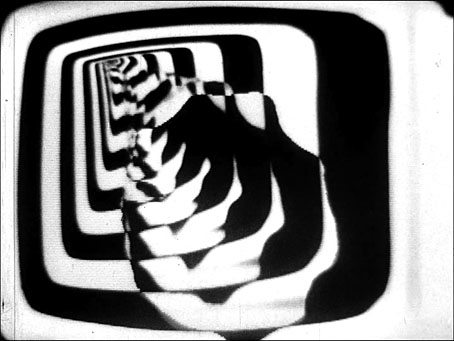
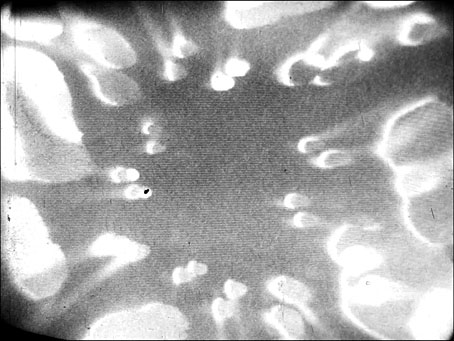
Since it was announced this week that Cabaret Voltaire will release a new album in November, here’s a short Cabs-related film that used to be impossible to see. A Sheffield art student, Nick Allday, made Recoil in 1981 as part of his course work, and managed to persuade Cabaret Voltaire to create a soundtrack:

The concept originated with raw material of video feedback and some sparse nuclear bomb footage available at the time. The idea was to represent in abstract form the cruel chaotic dysfunctional nature of the human condition with all its potential for self destruction. It was conceived as a manifestation of wretched anger, fury, and regret. (more)

Very typical of the early 1980s, in other words. The film was mentioned in a few of the group’s interviews around this time, and was also screened before some of their performances, but it otherwise remained a mystery until the footage was rediscovered and restored a few years ago. The copy of Recoil at Vimeo was uploaded by the organiser of the Gofundme launched to pay for the restoration, revealing music that sounds like an outtake from Red Mecca. (According to the post linked above this was mostly the work of Stephen Mallinder rather than the group as a whole.) And having written about Last and First Men a couple of days ago, it’s worth mentioning that Chris Watson, who was still a member of Cabaret Voltaire in 1981, recorded the natural sounds for Jóhann Jóhannsson’s film.

recoil2.jpg

As to the forthcoming album, Shadow Of Fear, I’m not the only person who finds everything credited to the group since Plasticity (1992) to be barely distinguishable from many of Richard Kirk’s solo works. Stephen Mallinder seems to be present in name only on these albums which makes you wonder what there is about a CV release that differs from a Kirk release, especially when the preview track, Vasto, sounds like more of the same. The real shadow of fear is the worry that a worthwhile project is being perpetuated for no good reason.

Previously on { feuilleton }
Pow-Wow by Stephen Mallinder
TV Wipeout revisited
Doublevision Presents Cabaret Voltaire
Just the ticket: Cabaret Voltaire
European Rendezvous by CTI
TV Wipeout
Seven Songs by 23 Skidoo
Elemental 7 by CTI
The Crackdown by Cabaret Voltaire
Neville Brody and Fetish Records

Weekend links 530

yoshino.jpg

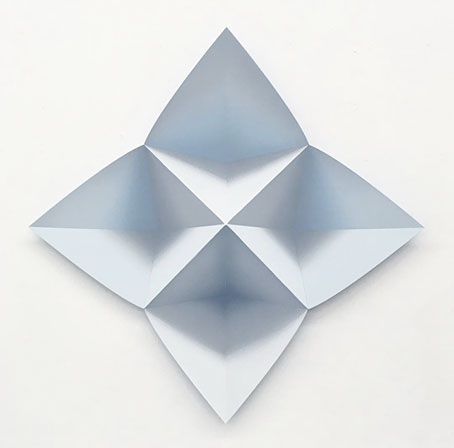
Kami #58 -bloom- (2019) by Momo Yoshino.

• “Set amid the countryside and the beaches of coastal Sussex, They depicts a world in which plundering bands of philistines prowl England destroying art, books, sculpture, musical instruments and scores, punishing those artistically and intellectually inclined outliers who refuse to abide by this new mob rule.” Lucy Scholes on They: A Sequence of Unease (1977) by Kay Dick, which she calls “a lost dystopian masterpiece”. This is revelatory in a minor way since for years I’ve remembered seeing a slim volume with the title They in a bookshop, and which I later thought might have been a Rudyard Kipling book (there’s a Kipling story with the same title). The timing is right, the sighting would have been in 1977 or 78. The combination of that short, one-word title with a stark cover image and a sinister description on the rear was hard to forget but I didn’t take note of the author’s name. (I also didn’t buy the book, opting instead for some inferior work.) A shame that it seems to be resolutely out of print.

• “The threat to civil liberties goes way beyond ‘cancel culture’,” says Leigh Phillips. It makes a change seeing this coming from Jacobin when so much of the left today can find nothing wrong with censorship so long as it’s in a good cause. (Every censor that ever lived believed they were acting in a good cause, were on “the right side of history”, etc, etc.) The piece includes a dismissal of the increasingly common riposte that “only the state can censor”: this would be news to my colleagues at Savoy Books who endured years of police harassment including the seizure and destruction of printed material; the same with the long history of police action against UK rap artists. Related: “Work that’s cancelled for being ‘of its time’ was probably objected to, at the time.” Dorian Lynskey on chronocentrism and “the narcissism of the present”.

• “Cruising baths, bars, and subway toilets, snorting poppers and ‘fist fucking with 40 guys for 14 hours’ (as he recalled in You Got to Burn to Shine, his 1993 collection of prose and poems), he found meaning in a religion of radical eros whose sacrament was anonymous sex.” Mark Dery reviewing Great Demon Kings: A Memoir of Poetry, Sex, Art, Death, and Enlightenment by John Giorno.

Aubrey Powell says his best photograph is the burning man from the cover of Wish You Were Here by Pink Floyd.

• Mixes of the week: Fact mix 770 by Lyra Pramuk, and mr.K’s Kooky Kuts Vol.4 by radioShirley & mr.K.

• The Alchemical Brothers: Brian Eno & Roger Eno interviewed by Wyndham Wallace.

• Origami-inspired optical illusion oil paintings by Momo Yoshino.

Alexander Larman on the demise of the second-hand bookshop.

• New music: Follow The Road by Yumah, and Röschen by Pole.

• At Dennis Cooper’s: Lighting.

• RIP Linda Manz.

My Boyfriend’s Back (1963) by The Angels | Carnival of the Animals, R. 125: VII. The Aquarium (Camille Saint-Saëns) (1975) by the Württemberg Chamber Orchestra, Heilbronn with Marylene Dosse & Anne Petit, conducted by Jörg Faerber | Kill All Hippies (2000) by Primal Scream