Weekend links 625

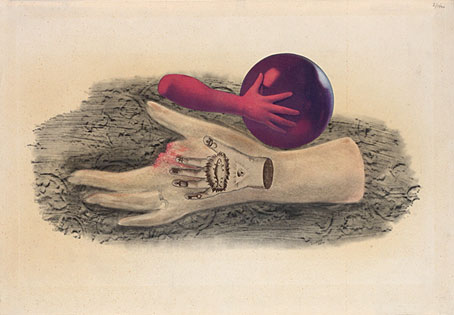
styrsky.jpg

Hand (1940) by Jindřich Štyrský.

• “I love very much Symbolist painters like Odilon Redon, Ferdinand Knopf or Léon Spilliaert. Or Nordic European painters such as Munch or Gallen-Kallela. I like the way they often mix nature and mythology. Some Surrealist painters are very inspiring too: De Chirico, Tanguy, Toyen, Styrsky, or Dorothea Tanning, for instance.” Lucile Hadžihalilović talking to Mark Cousins about her new film, Earwig, and her approach to cinema.

• “It was no accident that Mishima chose to experiment with science fiction. It was a genre he had long admired. He adored Arthur C. Clarke, and lavished praise on Godzilla…” Alexander Lee on Yukio Mishima’s sole venture into science fiction, Beautiful Star.

• Old music: Roforofo Fight by Fela Kuti, a great favourite round here, is receiving a 50th anniversary reissue.

Readers of Berlin’s Third Sex were confronted with a whole fête galante of misfits, deviants, and sexual mutineers cavorting on the legal edgelands of society. There’s the “gathering of obviously homosexual princes, counts and barons” discussing Wagner, the women-only ball where a “dark-eyed Carmen sets a jockey aflame”, the drag act burlesquing Isadora Duncan, a café in the city’s north where Jewish lesbians play chess, gaggles of gay labourers meeting up to gossip before tending to their needlework, the Russian baron distributing alms to hustlers in the Tiergarten, a canal-side tavern where soldiers from the nearby barracks find gay men only too willing to pick up their tab, and the encrypted classified ads with which the lonesome and horny sought to make the vast metropolis just a little smaller.

James Conway on the pioneering sexology of Magnus Hirschfeld

• At Aquarium Drunkard: The Miles Davis Septet playing live at Chateau Neuf, Oslo, in 1971.

Industrial Symphony No. 1 by David Lynch & Angelo Badalamenti featuring Julee Cruise.

• Mix of the week: Ghosts & Goblins 1 by The Ephemeral Man.

• New music: The Homeland Of Electricity by Scanner.

• Steven Heller’s font of the month is Pufff.

• Galerie Dennis Cooper presents Ilse Bing.

• RIP Paula Rego and Julee Cruise.

Teacher Of Electricity (1970) by Old Gold | Electricity (1980) by Orchestral Manoeuvres In The Dark | Night Electricity Theme (2017) by Dean Hurley


Weekend links 624

griffiths.jpg

An alphabet designed by Ben Griffiths. Via.

• “From the cellular to the galactic, via Paleolithic cave markings to the trace impressions left by drone photography on our mind’s eye, incorporating dancing plagues, communist psychedelic witches, hyper-sexual fungi, chthonic descents, and skyward ascents, The Neon Hieroglyph weaves together a series of painterly and poetic considerations on a feminized history of the rye fungus Ergot, the chemical basis of LSD.” Coming soon from Strange Attractor: The Neon Hieroglyph, a book, LP and folio of prints by Tai Shani.

• “3rd From The Sun was the last album of Chrome’s imperial phase, and it cemented their status as one of the most inhuman and superhuman rock bands that America ever produced. More people need to recognize.” Agreed. (previously)

• “People often say, ‘How can you be so disciplined?’ It’s easy. Otherwise, I would have to go work for somebody else!” John Waters (again). Also here.

I’ve always thought that literature should be entertaining as well as instructive—a very old-fashioned idea but one that I adhere to. When I set out to write in this way—particularly in this way, a political way, if you want to call it that—I intend to make a donation, to try to give something. There doesn’t seem to me to be any point in giving more misery or exacerbating unhappiness through some kind of hyper-intellectual, pyrotechnical writing about unhappiness and the shit that we all find ourselves in. That’s been done plenty. I think first of all that it doesn’t need to be done any more and second of all there’s a kind of reactionary aspect to it which is that the emphasizing of misery without any anti-pessimism, as you put it, would be simply seduction into inactivity and political despair. In other words, to do politics at all on any level, especially on a revolutionary or on an insurrectionary level, there has to be some anti-pessimism—I won’t say optimism because that sounds so fatuous, futile; but anti-pessimism is a nice phrase. And there’s a deliberate attempt at that in the writing. Then again it’s a matter of my personality, I guess, inclined towards the notion of the healing laugh to some extent. We have an anarchist thinker in America, John Zerzan, who wrote an essay against humour which maybe is one of the things I was reacting against. Even if irony is counter-revolutionary which I think it might be to a certain extent I don’t see any way in which you could say that laughter itself is counter-revolutionary. This doesn’t make any sense to me unless you mean to get rid of language and thought altogether, which is just another form of nihilism. So as long as you’re going to accept culture on some level you’re certainly going to have to accept humour. And as long as you’re going to have to accept humour you might as well see humour as potentially revolutionary.

Peter Lamborn Wilson aka Hakim Bey, who died last month. Many of Wilson’s writings are available at The Anarchist Library. From 2008: A poem for Leonora Carrington

• “It’s such a fundamental question,” says Midori Takada, “why do humans need to make rhythm, and the space that structure creates?”

• “14 Warning Signs That You Are Living in a Society Without a Counterculture” by Ted Gioia.

• A trailer for Earwig, the new film from Lucile Hadžihalilović, based on a story by Brian Catling.

• New music: Aura by Hatis Noit, and Warmth Of The Sun by Pye Corner Audio.

• At Dennis Cooper’s: Spotlight on…SE Hinton Rumble Fish (1975).

• “Hear tracks from the 1980s Peruvian electronic underground”.

Intermittent Eyeball Fodder at Unquiet Things.

West Tulsa Story (1983) by Stewart Copeland | Kála/Assassins Of Hakim Bey (1997) by Coil | Neon Lights (2000) by Señor Coconut Y Su Conjunto

Weekend links 623

blot.jpg

A symmetrical ink blot from Gobolinks, or Shadow Pictures for Young and Old (1896) by Ruth McEnery Stuart & Albert Bigelow Paine, a book where the blots are much more interesting than the interpretative verses that accompany them.

• “…within a year, they were on The Tube, performing their German-language extrapolation of Throbbing Gristle’s Discipline to a visibly nonplussed audience.” Alexis Petridis on the return of Propaganda. The group’s debut album, A Secret Wish (previously), has long been an obscure object of desire round here.

• RIP Alan White, drummer in Yes for much of the 1970s (see Sound Chaser for details), and also—although nobody mentioned this at the time—the originator of the drum sounds sampled on a Fairlight for Beat Box by the Art Of Noise.

• “For the anthropologist Stewart Guthrie, pareidolia is not a fringe phenomenon: it is at the core of religious experience.” Hunter Dukes on the interpretation of ink blots.

• “…self-righteousness is the one thing that I don’t agree with,” says John Waters. “We used humour to fight when I was young.”

• New music: October Cut Up by Black Glass Ensemble, and New Witness by Michael Begg.

• Also RIP Shiv Kumar Sharma, master of the santoor.

• “Scientists recreate Cleopatra’s favourite perfume.

Simon Fisher Turner’s favourite albums.

• At Dennis Cooper’s: Len Lye Day.

Cleopatra’s Barge (1962) by Alex North | Cleopatra’s Needle (1963) by Ahab And The Wailers | Cleopatra King Size (2002) by Jah Wobble & Temple Of Sound

Weekend links 622

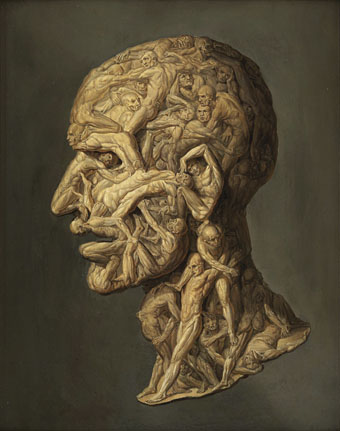
balbi.jpg

Testa Anatomica (1854) by Filippo Balbi.

The New School of the Anthropocene is “…an experiment. But it is also an act of repair. In partnership with October Gallery in London, we seek to reinstate the intellectual adventure and creative risk that formerly characterised arts education before the university system capitulated to market principles and managerial bureaucracy… (more)”

• “Every once in a while, you come across old music that generates a shock of new excitement.” Geeta Dayal on Oksana Linde whose electronic compositions are being released in a retrospective collection next month.

• More Walerian Borowczyk: Anatomy of the Devil, a collection of Borowczyk’s short stories, newly translated into English by Michael Levy, and with a cover design by the Quay Brothers.

• Washing machines, garden snails, and plastic surgery: A stroll through the Matmos catalogue. Related: “Why scientists are turning molecules into music.”

• Coming soon from Strange Attractor: Boogie Down Predictions, Hip Hop, Time and Afrofuturism, edited by Roy Christopher.

• At Spoon & Tamago: Exploring Japan’s historical landmarks and shrines in the middle of streets.

• New music: Adrian Sherwood Presents: Dub No Frontiers, music by female dub artists.

Winners of the 2022 Milky Way Photographer of the Year.

• A Vision In Many Voices: The art of Leo and Diane Dillon.

Molecular Delusion (1971) by Ramases | DNA Music (Molecular Meditation) (1985) by Riley McLaughlin | Pop Molecule (Molecular Pop 1) (2008) by Stereolab

Vangelis, 1943–2022

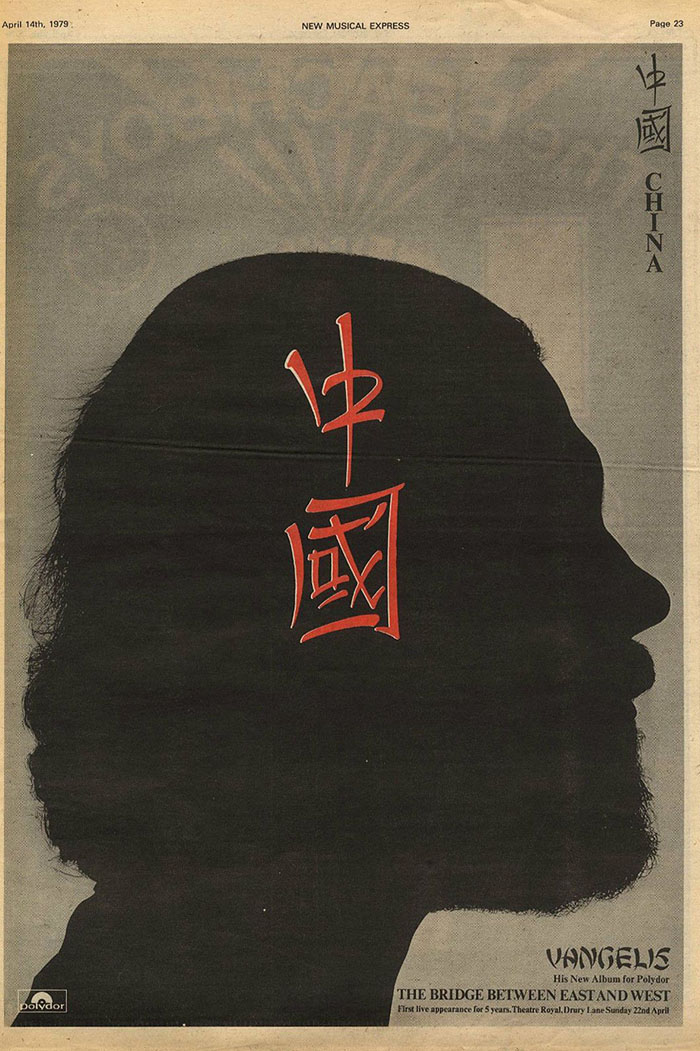
china.jpg

NME ad for the China album, April 1979. Via.

Farewell, Captain Nemo. In the past I’ve been known to describe Blade Runner as a very large and very expensive music video for a Vangelis album. (I mention this because so many of the headlines about the late musician are referring to Ridley Scott’s masterpiece and that boring film about athletes in big shorts.) Blade Runner is rather more than a music video, of course, but the viewpoint is a useful one if you’ve watched the damned thing so many times in so many different versions and formats that any re-viewing is almost enough to have you mouthing the dialogue along with the characters, like Charlton Heston in The Omega Man watching Woodstock for the 100th time. Vangelis recorded almost 40 albums under his own name, and many more as collaborations; he was much more than a soundtrack composer, which isn’t something you can always say about soundtrack composers.

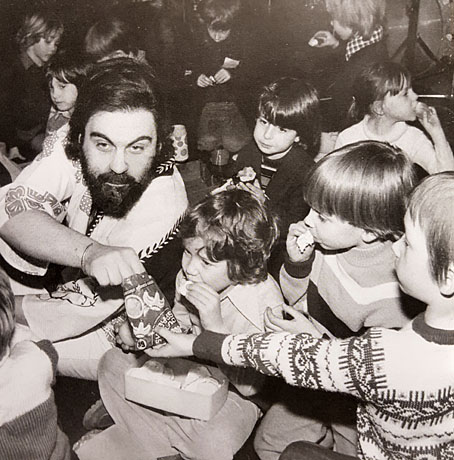
vangelis.jpg

He liked Outer Spacers. The composer accepts a chutney-flavoured cosmic snack, circa 1979.

All the same, film and score are so inextricably connected it’s impossible to imagine Blade Runner with any other soundtrack, just as it’s impossible to imagine Sergio Leone’s “Dollars” trilogy without Ennio Morricone’s whip-cracks, bells and whistles. The thing is—and this is the reason for my facetious music-video comment—Morricone’s Western scores were tailored to their content in a way that Blade Runner‘s music wasn’t at all. If Blade Runner had never been made, many of those musical cues would have worked perfectly well as another Vangelis solo album. Three of the albums he made before Blade Runner that feature his beloved Yamaha CS-80 keyboard—Spiral, Opera Sauvage and China—contain elements that coalesce in the film score; there you’ll find the same synthesizer timbres, filter sweeps, percussive crashes, Fender Rhodes solos and musical pastiche (Chinese rather than Middle Eastern). Another album, See You Later, is a patchy collection of songs, instrumentals and spoken-word pieces but it does contain the original version of Memories Of Green. That melancholy piano and all the bleeps, sirens and metallic square-waves that seem so intrinsic to the shots of Deckard moping around his apartment were recorded two years before the film soundtrack. For years I’ve been urging anyone who only knows Vangelis from his most famous soundtracks to listen to those earlier albums, especially Opera Sauvage (itself a soundtrack for a TV series that nobody ever mentions) and China.

Speaking of China, here’s a short film of Vangelis in his studio miming to pieces from the album. And I’m pleased to find that the Spanish TV film showing him in 1982 improvising on his CS-80 has resurfaced again. I linked to a copy years ago but YouTube is a useless archive so it vanished soon after. This clip seems to be better quality as well.

• “Vangelis wasn’t just a film composer – he blew apart the boundaries of pop

Previously on { feuilleton }
Blade Runner vs. Metropolis
Synthesizing
Salvador Dalí’s apocalyptic happening