Weekend links 656

escher.jpg

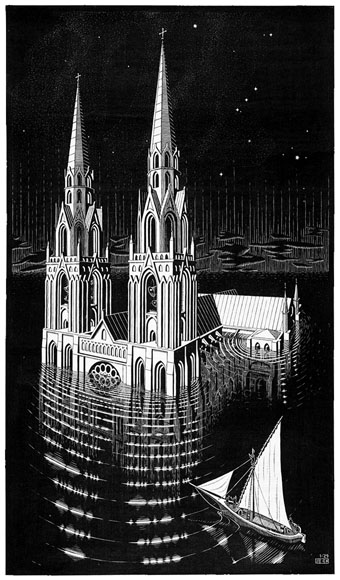
Mobius Strip II (1963) by MC Escher.

• Old music: Warp Records is reissuing two recent Jon Hassell discs later this year: The Living City (Hassell’s ensemble playing live in NYC, 1989) and Psychogeography (Zones Of Feeling) (remixes from City: Works Of Fiction), which will be available as standalone releases or bundled together as Further Fictions together with Hassell’s Atmospherics book.

• “His library is an immense and enviable wellspring, a demimonde of objects by murky creators who for decades have gnawed away at the inner organs of polite society.” Steven Heller talks to Glenn Bray about Library, an 800-page collection of scans from Bray’s trove of books, comics and print ephemera.

• New music: Tsathoggua, the latest in the Lovecraftian series of Cryo Chamber Collaborations which reminds me that I’m still missing the more recent entries. Also the non-Lovecraftian Coil by Ian Boddy.

• “Music is a way to express yourself beyond words,” says Hildur Guðnadóttir.

• See this year’s winners of the annual Close-up Photographer of the Year competition.

• At Dennis Cooper’s: Spotlight on…Ishmael Reed The Last Days of Louisiana Red (1974).

• A few new photos of Michael Heizer’s City in the Nevada desert.

City Of Night (1994) by David Toop & Max Eastley | City As Memory (1995) by John Foxx | City Appearing (2013) by Julia Holter


Weekend links 654

crm.jpg

Drawing for a New Year’s Card (c. 1900) by Charles Rennie Mackintosh.

• “Almanacs appealed to the perennial lust for wonder and weirdness in the world. They were the fantastic literature of the day.” Mark Valentine on English Almanacs 1500–1800. Reading this had me wondering whether Old Moore’s Almanac is still being published. Yes, it is.

• “Meet the designer of the fanciful subway entrances to the Paris Métro.” Susannah Gardiner on the architecture, design and anarchist philosophy of Hector Guimard.

• “Apocalypse is not alien to HR Giger,” says Steven Heller, reviewing Atomkinder, a book of the artist’s early cartoons for which he also provided an introduction.

• “Nabokov loved film, hopelessly.” Luke Parker on a short poem, The Cinema (1928), from Vladimir Nabokov’s Berlin years.

• From Loki to Behemoth: waves of the English coastline photographed by Rachael Talibart.

• Mix of the week: Winter Solstice 4: “In C” by ambientblog.

• At Dennis Cooper’s: Grace Zabriskie Day.

Atom Sounds (1978) by Jackie Mittoo | Atom Blaster (1985) by Vangelis | Atomic Buddha (1998) by Techno Animal

Pixillation, a film by Lillian Schwartz

pixillation.jpg

A new arrival at Rarefilmm, Pixillation (1970) is another example of short, abstract film-making which nevertheless may be unique in its combination of early computer graphics with organic effects created by illuminated oils and crystalline growths. This was Lillian Schwartz’s first film (made in collaboration with Ken Knowlton) after she become artist-in-residence at Bell Labs. Many more such films followed, continuing her exploration of computer graphics.

The electronic score for Pixillation is by Gershon Kingsley, a composer best known for the albums he recorded with Jean-Jacques Perrey, and for writing one of the first synthesized pop hits, Popcorn, although it was a cover of Kingsley’s tune that became an international success in 1972. Kingsley made a lot of electronic music but this is the first time I’ve encountered any of it as a film soundtrack. I think it’s also the first piece I’ve heard of his that isn’t a light-weight novelty.

Elsewhere on { feuilleton }
The abstract cinema archive

Previously on { feuilleton }
Switched-On… hits and misses

Manuel Göttsching, 1952–2022

ashra.jpg

Cover design for the French release by Peter Butschkow.

Another post about the recently deceased; my apologies. In an unhappy coincidence, Angelo Badalamenti’s death was also announced today. 2022 has been one of those years when you wish the good people could stick around for a while longer.

gottsching.jpg

upper left: Ash Ra Tempel (1971) by Ash Ra Tempel; upper right: Inventions For Electric Guitar (1975) by Ash Ra Tempel/Manuel Göttsching; lower left: New Age Of Earth (1976) by Ashra; lower right: E2–E4 (1984) by Manuel Göttsching.

If I had to make a choice, these discs are my four favourite Göttsching-related releases, although I’m partial to just about everything he was involved with, whether under his own name, in Ash Ra Tempel, Ashra or The Cosmic Jokers, the fake group concocted by Rolf-Ulrich Kaiser. The Ash Ra Tempel debut is a power trio on a Kosmische voyage, and remarkably assured considering that two of the players were still in their teens. Inventions For Electric Guitar is really Göttsching’s first solo album, a demonstration that you could create music that sounded “electronic” (in the Tangerine Dream sense) with nothing more than an overdubbed guitar, an echo unit and a four-track recorder. As for New Age Of Earth, if you can look past the hippyish title you’ll find one of the finest synthesizer albums of the decade, one that just happens to be made by a guitarist. E2–E4 is the album that took these explorations further while also predicting future developments. There was nothing else like it in the mid-1980s. The techno-heads who contribute to its inflated reputation only ever listen to vinyl but on CD it’s a single piece of music that runs for 59 minutes.

ashra2.jpg

Attention from those techno-heads has ensured that there’s a lot of live footage of Göttsching’s Ashra line-ups in later years. There’s very little from the 1970s or 80s, unfortunately, but Göttsching, Lutz Ulbrich and Harald Grosskopf did make this appearance on Musical Express for Spain’s Televisión Española in 1981. This was the same programme that filmed Vangelis improvising in his studio, embracing opportunities missed by the BBC. ¡Gracias!

• “Manuel Göttsching laid the groundwork for generations of electronic musicians,” says Brian Coney.
• From 2017: “Everything was in the moment.” Manuel Göttsching discussing his career with Robert Barry.

Weekend links 650

phillips.jpg

A detail from Tom Phillips’ cover design for Starless And Bible Black (1974) by King Crimson.

• RIP Tom Phillips. The term “polymath” is often used by monomaths to describe people who are proficient in two areas instead of just one. Tom Phillips was a model polymath, an artist whose work ranged wherever his curiosity took him, from conventionally realist portraiture to abstract painting and computer art, from collage, sculpture and stage design to 20 Sites n Years, a long-term photographic work. When Phillips decided to illustrate Dante’s Inferno he first translated the book himself; the Dante project subsequently evolved into a TV/film production made in collaboration with Peter Greenaway and Raúl Ruiz. As for A Humument, this is the artist’s book by which all others should be judged, a unique reworking of a Victorian novel which now exists in multiple editions and sub-works. Humument extracts became a kind of Phillips signature (you can see one at the top of this post), a series of often cryptic fragments and pronouncements that appeared in prints and paintings while also supplying the libretto for Phillips’ first opera, Irma, one of his many musical compositions. Some years ago I posted a quote by Brian Eno about his former art teacher; those words (from A Year With Swollen Appendices) are worth repeating:

It’s a sign of the awfulness of the English art world that he isn’t better known. Tom has committed the worst of all crimes in England. He’s risen above his station. You can sell chemical weapons to doubtful regimes and still get a knighthood, but don’t be too clever, don’t go rising above your station.

The smart thing in the art world is to have one good idea and never have another. It’s the same in pop—once you’ve got your brand identity, carry on doing that for the rest of your days and you’ll make a lot of money. Because Tom’s lifetime project ranges over books, music and painting, it looks diffuse, but he is a most coherent artist. I like his work more and more.

• “The most radical thing about Ever So Lonely is the instrumental when it breaks down and for eight glorious bars you’re dancing to a classical raga and loving it, whoever you are.” Sheila Chandra again on the fleeting pop career of Monsoon.

• Something to look forward to for next summer: Worlds Beyond Time: Sci-Fi Art of the 1970s, a book by Adam Rowe, curator of 70s Sci-fi Art at Tumblr.

• Mix of the week: Groove Orient: South Asian Elements in Psychedelic Jazz at Aquarium Drunkard.

• “Physicists create a wormhole using a quantum computer.” Natalie Wolchover explains.

Pattern Collider is a tool for generating and exploring quasiperiodic tiling patterns.

• “Infernal Affairs is still Hong Kong’s greatest crime saga,” says James Balmont.

Secret Satan, 2022, the essential end-of-year book list from Strange Flowers.

• Also no longer with us as of this week, comic artist Aline Kominsky–Crumb.

• New music: Violet Echoes by Subtle Energy.

Il Trio Infernale (1974) by Ennio Morricone | Firebird Suite: Infernal Dance Of King Kastchei (Stravinsky) (1975) by Tomita | Infernal Devices (2011) by Moon Wiring Club