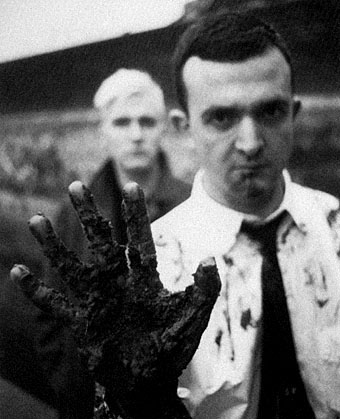
Peter Christopherson, 1955–2010

coil.jpg

Coil, circa 1984. John Balance (left) & Peter Christopherson (right). Photo by Lawrence Watson.

The depths of the night sky
Reflects in his eye
He says “Everything changes
And everyone dies.”

Coil, Blood From The Air (1986)

Yes, everyone dies but you don’t always expect it this soon, six years after the sudden loss of John Balance. Coil and Throbbing Gristle were refreshingly direct about the transience of existence so we should no doubt regard these moments with the necessary degree of philosophy. And yet… I’ve said for years that we lack an adequate complement of innovators, genuine creators, rare minds, and what Robert Anton Wilson used to call Intelligence Agents; such people always seem too few, especially in a world where hatred and ignorance are encouraged by those eager to keep us unfulfilled, the easier to manipulate and control. There’s a natural desire each time you discover a like-minded soul to want them to stay around for as long as possible, to help shine a thousand lights in a darkened room.

I never met Peter Christopherson but I saw him on stage with Psychic TV in Manchester in 1983, and as part of Coil for their thrilling performance at the Royal Festival Hall, London, in 2000. We corresponded sporadically via letter and email throughout the 1990s, and spoke on the phone a couple of times. Coil wanted me to create a cover for one of their releases and we talked about this on and off for several years but nothing ever came of the plans, something I regret to this day. Peter bought a drawing off me ten years ago (this one), and he remains one of the few people I’ve sold any artwork to. I broke my usual rule on that occasion out of respect for his work. That work is mostly acknowledged as being musical, and it’s the music—as a member of Throbbing Gristle, Psychic TV, Coil, and TG again—that other obituaries will rightly celebrate. But he was also a talented photographer and graphic designer whose earliest public works were for the design group Hipgnosis in the 1970s. He joined Storm Thorgerson and Aubrey Powell as an assistant in the mid-70s and became a full partner in 1980. As a freelance photographer he shot the first promo pictures of the Sex Pistols in 1976, photos which (if I remember correctly) Malcolm McLaren decided not to use because they looked too heavy. Or maybe too queer…see this appraisal by John Gill from his book Queer Noises. It was Peter Christopherson’s design authority that gave the Throbbing Gristle releases a quality many other independent productions lacked in the post-punk era. He brought the same visual finesse to Psychic TV in 1982 and it was painfully obvious when that finesse was withdrawn after he and John Balance left PTV in 1983 to form Coil. I owe Coil more than I can easily articulate. I’ve spent hours and hours listening to their music whilst working; the full range of their interests probably matched mine more completely than any other group I’ve encountered. It was a real shock when everything crashed to an end in 2004. It’s good to know that the Coil site at Brainwashed has a wealth of interviews and articles going back through the years. And there’s still the music, of course.

Fellow TG members Cosey Fanni Tutti and Chris Carter issued some words of remembrance a few hours ago which they end by saying: “Peter was a kind and beautiful soul. No words can express how much he will be missed.” A few examples of his photography and design work follow.

Update: Full Guardian obituary by Alexis Petridis | Genesis P-Orridge Pays Tribute To Sleazy.
Continue reading “Peter Christopherson, 1955–2010”

Weekend links: Hodgson edition

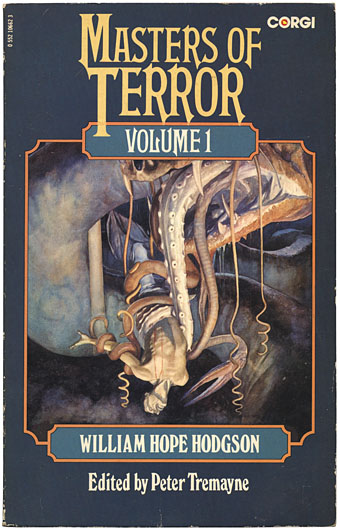
hodgson.jpg

Masters of Terror, Vol 1, Corgi Books, 1977. No illustrator credited.

It was all happening this week so there’s a lot to get through. Are you ready? Deep breath…

For ye Hogge doth be of ye outer Monstrous Ones, nor shall any human come nigh him nor continue meddling when ye hear his voice, for in ye earlier life upon the world did the Hogge have power, and shall again in ye end.

The Hog (c. 1910) by William Hope Hodgson.

• “The Hog is Hodgson’s most nakedly Jungian setpiece; fetid waves of archetypes sweep repeatedly against the thin walls of quotidian reality.” Thus Iain Sinclair, writing in a 1991 afterword to Carnaki the Ghost-Finder which I highly recommend to both Hodgson and Sinclair enthusiasts. China Miéville dissected Hodgson’s Hog on Wednesday and a few hours later a student protest in London turned into an assault on the Tory HQ. Coincidence? Here at {feuilleton} we only offer the facts, it’s up to you to join the dots. M John Harrison approved. Of the protest, that is, not the raising of Porcine Malevolence from the Gulfs Beyond, although he might approve of that as well.

• Further Hodgsonia: Science of The Night Land: Dying Suns and Earth Energy while for real devotees there’s Andy Robertson’s Night Land site.

• “Amplifying the vibrations of the ether” for a view “beyond the limits of ordinary life”: The Fugitive Futurist (1924), a remarkable short film at the BFI’s YouTube channel in which Trafalgar Square is flooded, a monorail crosses Tower Bridge and a dirigible takes to the air over the Houses of Parliament. Also Trafalgar Square Riot (1913), a newsreel with suffragettes at the centre of a civil disturbance. Some of the critics of Wednesday’s events seem to have forgotten that women gained the vote in this country only after repeatedly smashing windows and causing trouble.

• Related to the above: How to Hex a Corporation at Arthur magazine. And let’s not forget Hakim Bey’s Occult Assault on Institutions.

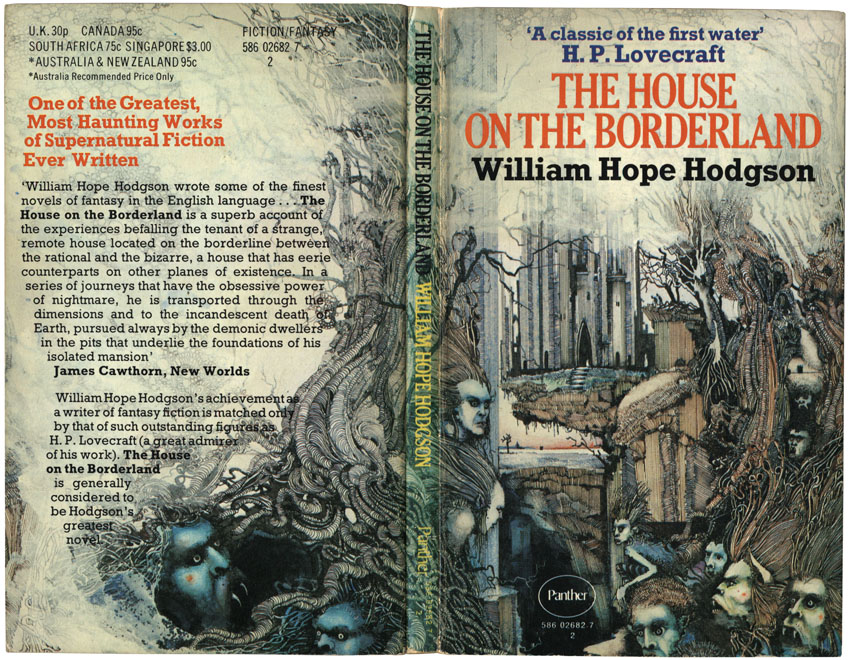
ian_miller4

Cover illustration by Ian Miller (1972). The other great cover for THOTB was by Ed Emshwiller in 1962.

The wanderings of the Narrator’s spirit through limitless light-years of cosmic space and Kalpas of eternity, and its witnessing of the solar system’s final destruction, constitute something almost unique in standard literature.

HP Lovecraft reviewing Hodgson’s The House on the Borderland in Supernatural Horror in Literature.

• Lovecraft has long cast a shadow over Hodgson’s fevered visions even though words of praise like those above have done much to keep the earlier writer’s work in print. I’ve been talking for years about doing a series of illustrations for The House on the Borderland and may yet make good on that threat; never say never. Meanwhile, Rick Poyner returned to Design Observer this week pondering the challenge of non-Euclidean architecture in What does HP Lovecraft look like?

hodgson2.jpg

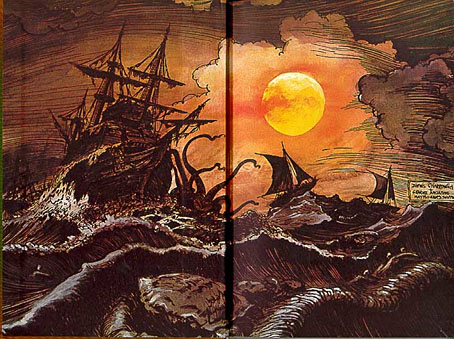
Druillet illustrates Hodgson (1971).

• In his latest piece of Barney Bubbles detective work, Paul Gorman discovered the identity of BB’s first design employer, the alluded to but never named Michael Tucker. More surprising for me than the Robert Brownjohn connection is that there’s now a tenuous link between Barney Bubbles and William Gerhardi.

777 classical music album covers from the collection of Dr Horst Scherg. Related: The Golden Age of Wacky Classical LP Covers — Westminster Gold and the Westminster Gold discography.

Chez Fini: Little Augury looks at the work and workplaces (and cats!) of the marvellous Leonor Fini.

• There’s yet more Lovecraft (and much else besides) in Nomad Codes, a new book from Erik Davis.

• The Irrepressibles: “They’re scared of what we’re going to do next”.

• New Scientist asks Is this evidence that we can see the future?

Of Electricity And Water: A Thomas Dolby Interview.

Jarvis Cocker talks to Brian Eno.

Fuck Yeah, Gay Vintage

Hog Callin’ Blues (1962) by Charles Mingus. Play loud and often.

Design as virus 13: Tsunehisa Kimura

kimura.jpg

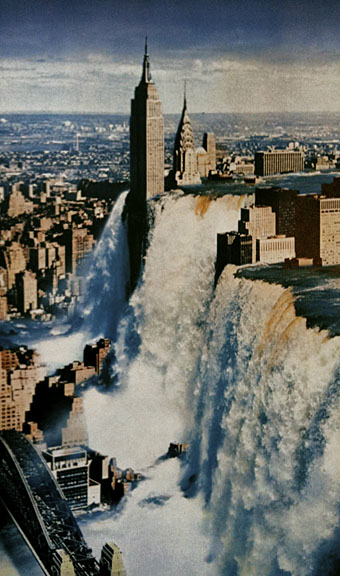
Waterfall by Tsunehisa Kimura.

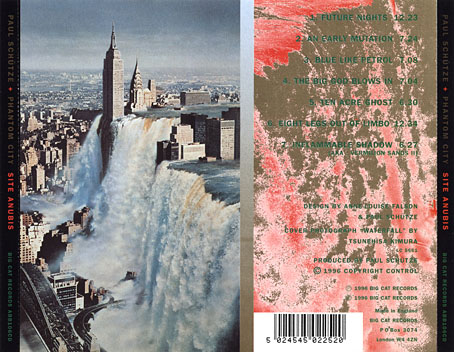
Continuing an occasional series. Japanese artist Tsunehisa Kimura (1928–2008) was initially inspired by the polemical graphics of John Heartfield to create his own photomontages, a painstaking collage technique now rendered obsolete by Photoshop. Kimura’s work exchanges Heartfield’s satire for an overt and frequently apocalyptic Surrealism, as in his most visible piece, Waterfall. The copy above is one of a number of pictures reproduced by Geoff Manaugh at BLDGBLOG from a 1979 Kimura collection, Visual Scandals by Photomontage.

schutze1.jpg

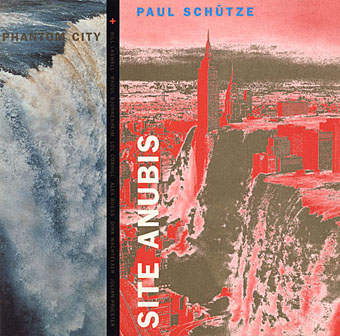
Design by Anne-Louise Falson & Paul Schütze.

I was first startled by Waterfall in 1996 when Paul Schütze released his Site Anubis album, the product of a “virtual group” comprised of musicians recording in different studios around the world:

The musicians comprising Phantom City—the name, incidentally, originating from the book title Topology of a Phantom City by French novelist Alain Robbe-Grillet—never met for the recording of Site Anubis, as each one recorded in a different studio in a different country: guitarist Raoul Björkenheim in Helsinki, bass- and contra-bass clarinetist Alex Buess in a Basel studio, soprano saxophonist Lol Coxhill in London, bassist Bill Laswell at Green Point Studio in Brooklyn, New York, trombonist Julian Priester in Seattle, drummer Dirk Wachtelaer in Brussels, and Schütze himself in London and Basel. Incredibly, Laswell had only Schütze’s electronic backing track to respond to. Wachtelaer had Laswell and Schütze to play against, Björkenheim had drums and bass,—in short, certain players had more information than others.

schutze2.jpg

Kimura’s picture is an ideal accompaniment to this excellent album, especially when you note a Ballard reference in the titles (not the first in Schütze’s oevre), and read the scene-setting piece of fiction on the CD insert, an explanation of the album title:

That morning a report came in from an unmarked helicopter somewhere over the city. The waters were subsiding and the smoke from a thousand fires had begun to drift inland revealing an impossible new structure. Towering some eight hundred feet over the gleaming devastation of the streets, its base occupying an entire city block, was a colossal black basalt figure. The body was male and human, – the head, which stared expectantly toward the boiling western horizon, was the head of a jackal. From the air it was clear that the pattern of destruction on the ground was radial and that the massive figure was sited precisely at its centre.

Continue reading “Design as virus 13: Tsunehisa Kimura”

Weekend links: the Halloween edition

goddem.jpg

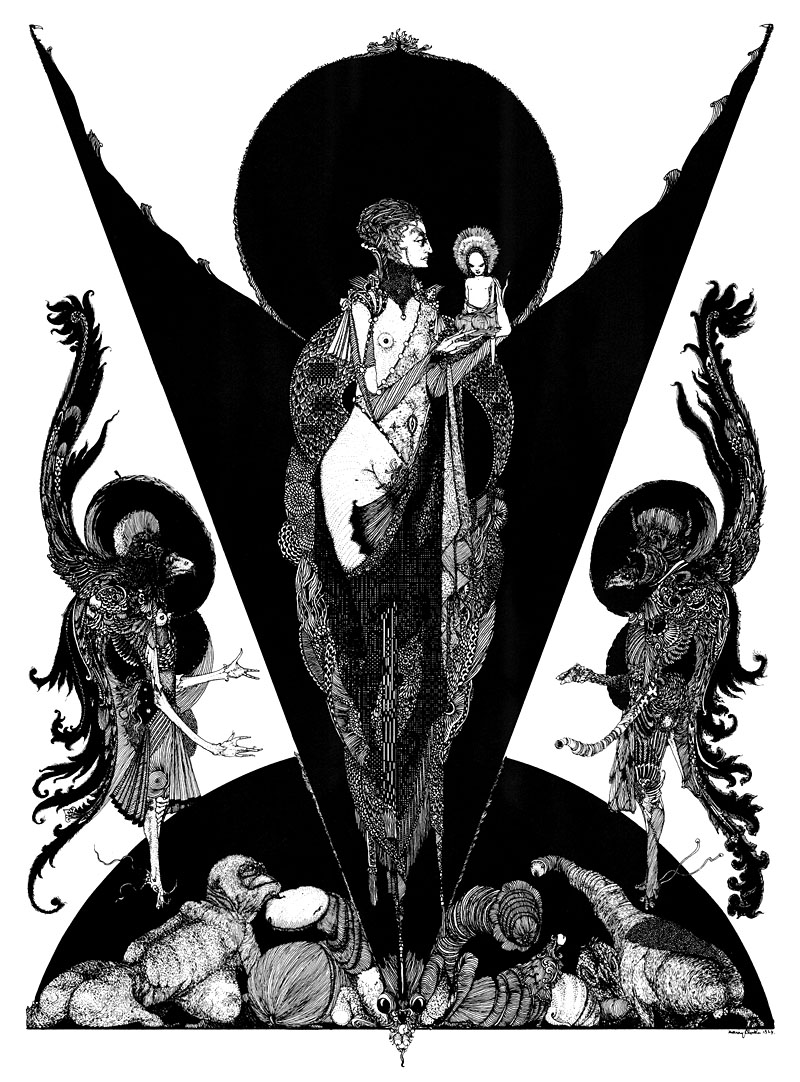
Goddem with Attendants (1924) by Harry Clarke.

• Some of Harry Clarke’s extraordinary illustrations from Goethe’s Faust can be seen at A Journey Round My Skull. And a reminder for anyone who missed them, Clarke’s Poe illustrations at Golden Age Comic Book Stories.

HP Lovecraft – Audio Books, Radio Plays, & Audio Documentaries. Out-of-print recordings and (no doubt) pirate copies of more recent things. I found this page by accident so it was a surprise to see my 1999 Lovecraft portrait used there. I used to own the David McCallum Dunwich Horror, an album with a singularly appalling sleeve illustration.

• Better album sleeves can be found here: Prospective 21e Siècle, a collection of foil designs from 1967. Some of the very challenging music within can be downloaded at the Avant Garde Project archive. Related: Have an electroacoustic Halloween with İlhan Mimaroğlu’s Le Tombeau d’Edgar Poe (1964) and Wings of the Delirious Demon (1969).

startrails.jpg

Star Trails and the Captain’s Ghost, a photo by Chris Kotsiopoulos at Astronomy Picture of the Day.

• “The horror industry is totally male dominated from its directors to its slashers, and even its bloggers…and I think that needs to change.” Day of the Woman, a blog for the feminine side of fear.

6 of the Scariest Queer Horror Books Ever. I think I’d agree with the commenter in picking The Haunting of Hill House by Shirley Jackson.

• Designer Jonathan Barnbrook (pictured in a graveyard by the looks of things) is interviewed at MyFonts.

A Weird and Scratching Beauty: The Art of John Coulthart and Call of Cthulhu.

Is the Royal Masonic School for Boys the scariest building in Britain?

50-million-year-old insect trove found in Indian amber.

The Café Kaput Samhain 2010 mixtape.

The Groovy Age of Horror.

Monster Mash (1962) by Bobby “Boris” Pickett & The Crypt-Kickers.

A playlist for Halloween: Drones and atmospheres

zeit.jpg

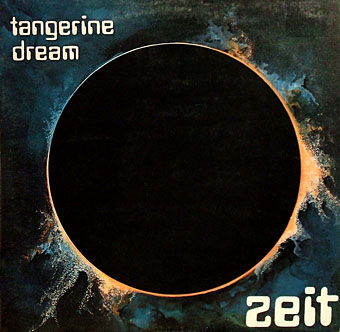
Cover painting by Edgar Froese.

I have seen the dark universe yawning
Where the black planets roll without aim,
Where they roll in their horror unheeded,
Without knowledge or lustre or name.

HP Lovecraft, The Haunter of the Dark, 1935.

It’s become traditional to do this each Halloween so here we go again with another music list, ten releases to soundtrack your way into another world. Should you be curious, a number of these works are probably difficult to find but a couple of the Discogs links have YouTube clips on the pages. Some of the selections were featured on an earlier list but this time they’re grouped with similar recordings.

Zeit (1972) by Tangerine Dream
All you need is Zeit. I was tempted to write an entire post extolling the virtues of my favourite Tangerine Dream album, to note how I’ve been listening to it for thirty years and will never tire of it, to mention how much I love Edgar Froese’s Black Sun cover painting (which ties it to another pet obsession of mine), how much I relish its pretentious subtitle “A largo in four movements” and the cello drones which open Birth Of Liquid Plejades then grade to Moog doodles by Popol Vuh’s Florian Fricke; the endless rumbling, howling minimalism of the whole enterprise… This was an enormously audacious album for its time which predicts many of the subsequent recordings on this list. One of the Kosmische masterworks, and so far out there that every move made by the group thereafter could only be a retreat.

Nature Unveiled (1984) by Current 93
Much as I respect David Tibet for his championing of esoteric culture I’ve never much liked the music he produces. The first Current 93 album was an interesting collage work, however, created by a kind of supergroup from the Industrial music scene of the time which included members of Coil, Nurse With Wound and 23 Skidoo. The second side provides an ideal Halloween piece with The Mystical Body of Christ in Chorazaim, a blending of Gregorian loops and guitar feedback over which Annie Anxiety rants in Spanish about…penises? I still don’t know. The whole thing sounds like something you’d expect to be playing over the landscapes in Wayne Barlowe’s Inferno.

Soliloquy For Lilith (1988) by Nurse With Wound
As for Nurse With Wound, this collection of eight electronic (?) drones achieves the typical NWW state of being simultaneously fascinating and irritating in equal measure.

Nunatak Gongamur (1990) by Thomas Köner
The master of what he calls “grey noise” made his first album by “miking-up gongs, then rubbing, scraping and electronically treating the sounds to the point where their origin is unrecognisable.” (More.) The result very effectively conjures the icy wastes alluded to by its title, and would make a perfect soundtrack for reading Lovecraft’s At the Mountains of Madness or The Terror by Dan Simmons.

angels.jpg

How To Destroy Angels. Cover painting by Derek Jarman.

How To Destroy Angels (Remixes and Re-Recordings) (1992) by Coil
Coil created a similar effect to Köner by treating the sounds of their first 12″ release from 1984 to electronic processing, stretching metallic noises into reverberant shudders. One of the remixes is by Steven Stapleton of Nurse With Wound, while track title Dismal Orb will always make me think of the cover of Zeit.

The Monstrous Soul (1992) by Lustmord
Almost everything released by Lustmord could be labelled “drones and atmospheres” and choosing one doom-laden work over another is a difficult matter. I opted for this one on account of its occult track titles and the well-chosen dialogue samples from The Night of the Demon.

Treetop Drive (1994) by Deathprod
One from the 2006 list. I couldn’t say it any better than I did four years ago: Helge Sten is a Norwegian electronic experimentalist whose solo work is released under the Deathprod name. “Electronic” these days often means using laptops and the latest keyboard and sampling equipment. Deathprod music is created on old equipment which renders its provenance opaque leaving the listener to concentrate on the sounds rather than be troubled by how they might have been created. The noises on the deceptively-titled Treetop Drive are a disturbing series of slow loops with squalling chords, anguished shrieks and some massive foghorn rumble that seems to emanate from the depths of Davy Jones’ Locker. Play it in the dark and feel the world ending.

Night Passage (1998) by Alan Lamb
Not music at all but treated sounds made from recordings of a length of telegraph wire vibrated by the wind somewhere in Western Australia. Night Passage Demixed was a collection of remixes by artists including Thomas Köner and Lustmord’s Brian Williams.

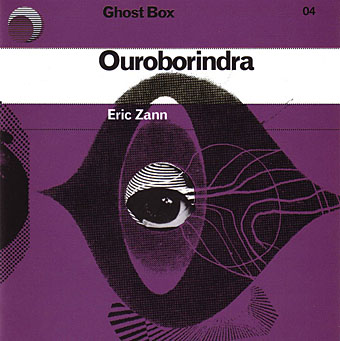
ouroborindra.jpg

Design by Julian House.

Ouroborindra (2006) by Eric Zann
Another from the 2006 list and the most deliberately horror-oriented work on the Ghost Box label. An artist name borrowed from HP Lovecraft and track titles from Arthur Machen.

The Air Is On Fire (2007) by David Lynch
David Lynch’s friend and genius of a sound designer Alan Splet created the template for many of the works listed here with his groundbreaking soundtrack for Eraserhead in 1976. Following his death in 1994 Lynch’s films have never had quite the same feel of visceral menace despite their considerable qualities in other areas. This CD was created by Lynch himself for an exhibition of his paintings and other artwork, and if it doesn’t possess the uncanny otherness of Splet’s rumblings it still makes for some very disturbing listening. Far better than recent Lynchian musical excursions like the Blue Bob album, and well worth seeking out.

Previously on { feuilleton }
A playlist for Halloween: Voodoo!
Dead on the Dancefloor
Another playlist for Halloween
White Noise: Electric Storms, Radiophonics and the Delian Mode
The Séance at Hobs Lane
Thomas Köner
A playlist for Halloween
Ghost Box