Weekend links 357

brzezanska.jpg

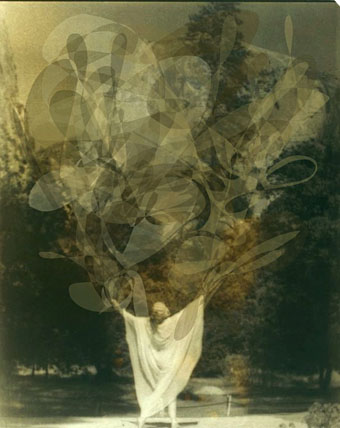
Ruth St Denis (2010) by Agnieszka Brzezanska.

As Above, So Below: Portals, Visions, Spirits & Mystics is an exhibition of occult-oriented art at IMMA, Dublin. “An alternative history of art of the last century,” says Aidan Dunne.

THIS IS THE SALiVATION ARMY: a Tumblr archive of Scott Treleavan’s queer-pagan-punk zine, 1996–1999.

• Mixes of the week: Secret Thirteen Mix 219 by Paper Dollhouse, and a Mika Vainio Tribute Mix by broken20.

• Valdimar Ásmundsson’s Icelandic translation of Bram Stoker’s Dracula has been translated back to English.

• First evidence for higher state of consciousness found (thanks to psychedelic drugs).

• At Bibliothèque Gay: Narkiss (1908) by Jean Lorrain.

Boyd White on finding Arthur Machen’s bookplate.

Barry Adamson’s favourite albums.

John Waters: By the Book.

Dread: Lustmord in dub.

XXY Oscilloscope

Vampire (1976) by Devon Irons | Keep On Dubbing (1976) by Augustus Pablo | African Dub (1977) by The Silvertones

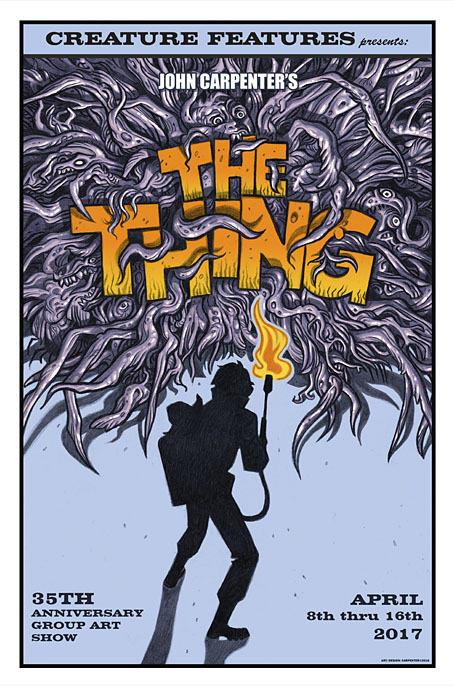
The Thing Group Art Show

creaturefeatures.jpg

People or, indeed, things in the Los Angeles area may be interested in the Thing Group Art Show which opens this Saturday at Creature Features in Burbank. The gallery will be displaying prints and original artwork from the forthcoming The Thing: Artbook including a print of my own contribution. Some of the prints are for sale, as mine will be, so Coulthart collectors (I know there’s one or two out there) should head to Magnolia Boulevard.

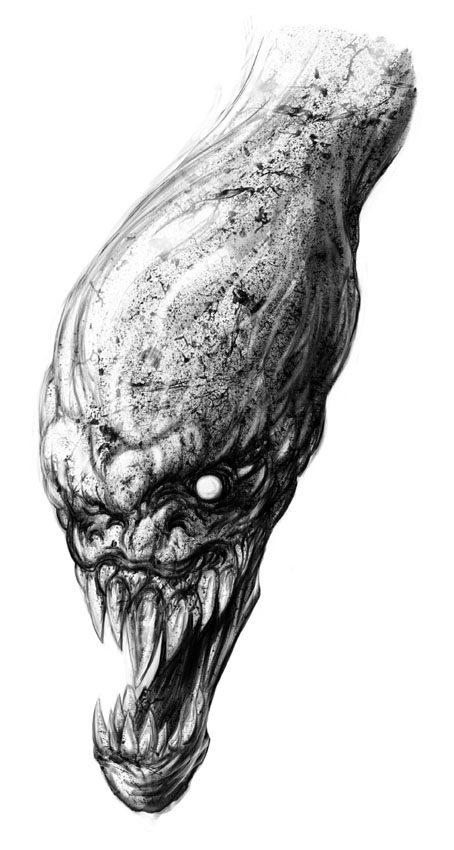
The publishers of The Thing: Artbook, Printed In Blood, have requested that the artists refrain from showing their contributions until the book is launched in July. I can show this Thing head, however, a manifestation that I couldn’t fit into my final composition. Even before I began work on my piece I suspected that many of the other artists would be doing their own versions of favourite moments from the film, an accurate prediction as it turns out. So my intention was to try and show some of the nastiness that might be occurring between the filmed scenes, to which end I produced a number of sketches of fanged heads. The one below would have worked better attached to a body (or at least some limbs) but I was running out of time so it was left aside. The Thing: Artbook may be pre-ordered here.

thing.jpg

Previously on { feuilleton }
Things

Weekend links 353

tuke.jpg

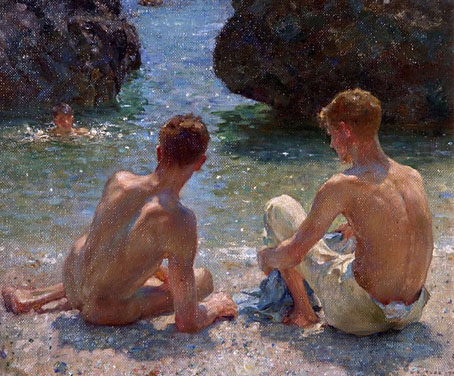
The Critics (1927) by Henry Scott Tuke.

• Geeta Dayal talks to ambient musician Midori Takada about Through The Looking-Glass (1983), an album being reissued this month by Palto Flats/We Release Whatever The Fuck We Want Records.

Jacob Brogan reviews The Abominable Mr. Seabrook by Joe Ollmann, a graphic biography of writer, occultist, explorer and determined cannibal, William Seabrook.

• More from the usual suspects (on these pages at least): Jonathan Meades on his new cookbook and a recent bout of heart surgery; and Iain Sinclair on The Last London.

The law only applied to men, but that didn’t mean same-sex relationships between women were immune to opprobrium. Dorothy Todd was hired as the editor of British Vogue in 1922. Under her visionary stewardship, the magazine became a bastion of high modernist style, swapping petticoats and corsets for Picasso, Cocteau, Man Ray and Woolf. Todd lived with her lover, the fashion editor Madge Garland. Sacked in 1926 because of declining circulation, she planned to sue the magazine, but was silenced when the publisher Condé Nast threatened to publicly expose her “morals”.

In such an inimical climate, it’s not surprising that art became a zone of enchantment as well as resistance. The plenitude of camp aesthetics, the lush excess, the cross-pollination of high and low forms might be conceived as a direct response to the paucity and hostility of the culture at large. From the mannered decadence of Aubrey Beardsley’s naughty woodcuts, to Cecil Beaton’s portraits of Stephen Tennant as a radiant boy prince, to the cabaret high jinks of Danny La Rue, to the wickedly doctored library book covers made by the playwright Joe Orton (a crime for which he received a jail sentence), camp offered a way of remaking the world, cutting it down to size and reassembling it in richly strange and strangely rich new forms.

Olivia Lang on the British artists working in defiance of iniquitous laws prior to the (partial) decriminalisation of homosexual acts in 1967.

• Due for publication later this year, You Should Come With Me Now, a new collection of short fiction by M. John Harrison.

Daniel Marner reviews Scarred For Life Volume One: The 70s, a book about the dark side of British pop culture.

Jay Babcock talks to Erik Davis about the end of Arthur magazine and his new life in the Californian desert.

• The nature photography of Nobuyuki Kobayashi and the ruin photography of Gina Soden.

Jon Forss of design team Non-Format on his time designing The Wire magazine.

Mac McClelland on how doctors treat mental illness with psychedelic drugs.

• Mix of the week: Secret Thirteen Mix 216 by WSR.

Hisham Matar on Jorge Luis Borges.

London Boys (1976) by T. Rex | Last Train To London (1979) by Electric Light Orchestra | London (2004) by Patrick Wolf

Weekend links 352

taggart.jpg

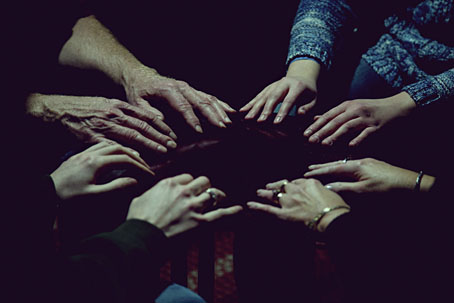
Table-Tipping Workshop at Rev. Jane’s House, Erie, Pennsylvania, 2014 by Shannon Taggart.

• Canadian electronic musician Sarah Davachi talks to Erik Davis about analogue synthesizers, reverberating cathedrals, attention spans, and her ambient drone album All My Circles Run.

• Orson Welles’ The Other Side of the Wind may now be released by Netflix. (I’m restraining my excitement for the moment since this one has been a long time arriving.)

• Mixes of the week: VF Mix 86: Jah Shaka by Roly Porter, Secret Thirteen Mix 215 by Twins, and What Good Is God? (1:11:11.111 Melon Collie Mix) by Gregg Hermetech.

• Making sense of The Weird and the Eerie: Roger Luckhurst reviews the final book from the late Mark Fisher.

• Pye Corner Audio has been very productive this year (I’m not complaining); the latest release is The Spiral.

• “I don’t like acceptance,” says Cosi Fanni Tutti, “it makes me think I’ve done something wrong.”

• Jon Brooks on the Continental inspiration for his next album, Autres Directions.

Séance: Spiritualist Ritual and the Search for Ectoplasm by Shannon Taggart.

• Corny and clichéd: Matthew Bown on bad painting in the twentieth century.

• At Wormwoodiana: Douglas A. Anderson on Borges and a forgotten book.

• At the BFI: Samuel Wigley chooses 10 great films set in the jungle.

Jungle Flower (1951) by Les Baxter | Jungle Fever (1973) by The Upsetters | The Jungle Dream (1973–1980) by Patrick Cowley

The Eerie Book

macdougall01.jpg

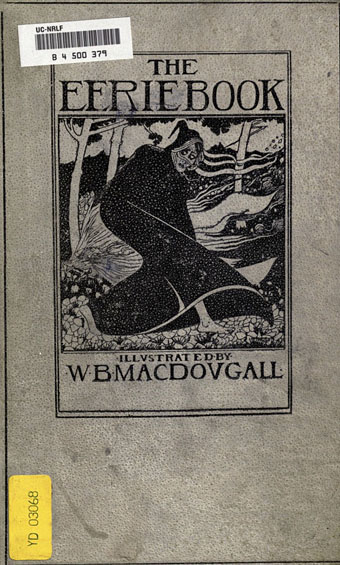
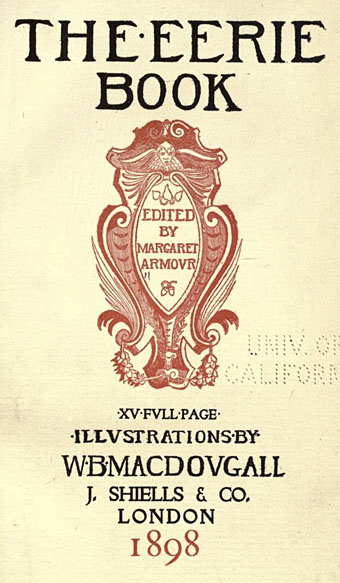
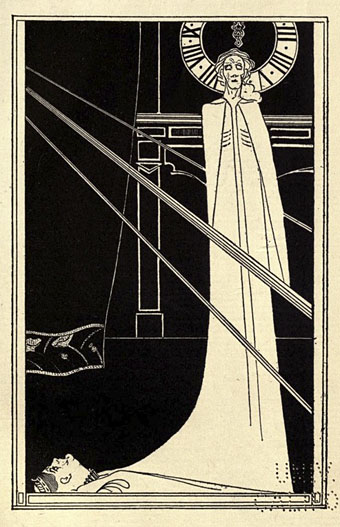
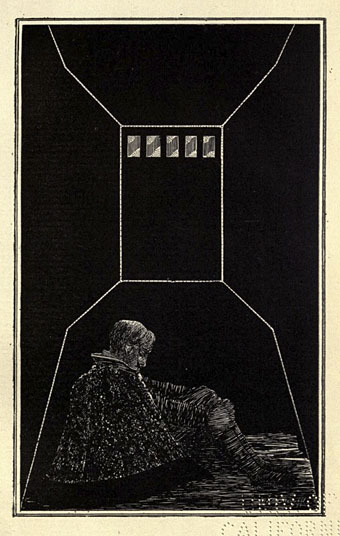
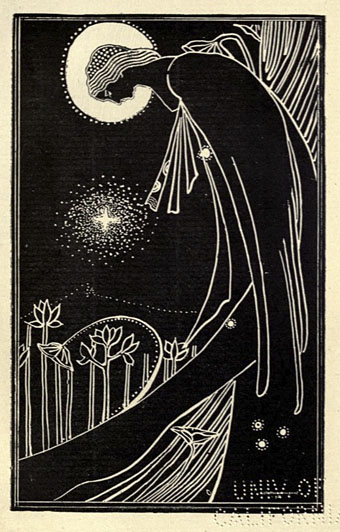
Work-wise, I’m still preoccupied with Edgar Allan Poe so I’ve been delving into the Internet Archive’s stock of scanned books more than usual. I’m not looking now for earlier Poe illustrations but a search last month turned up this collection of horror stories edited by Margaret Armour, and illustrated by William Brown Macdougall. Armour and Macdougall were married, and collaborated on several illustrated books; they also knew Aubrey Beardsley—Macdougall contributed to both The Yellow Book and The Savoy—so many of the illustrations in this volume are in the post-Beardsley manner. As Beardsleyesque drawings go they’re not as successful as, say, those of Will Bradley; some of Macdougall’s faces are rather dopey, and the cross-hatching doesn’t always work with this style of black-and-white art, as Beardsley himself discovered. But Macdougall’s drawing for The Masque of the Red Death is a better illustration than Beardsley’s own, horror not being one of Aubrey’s strengths. The Eerie Book may be browsed in full here.

macdougall02.jpg

macdougall03.jpg

The Masque of the Red Death.

macdougall04.jpg

The Iron Coffin.

macdougall05.jpg

The Mother and the Dead Child.

Continue reading “The Eerie Book”